Artwork
Baptismal Wish for Catarina Titzlir
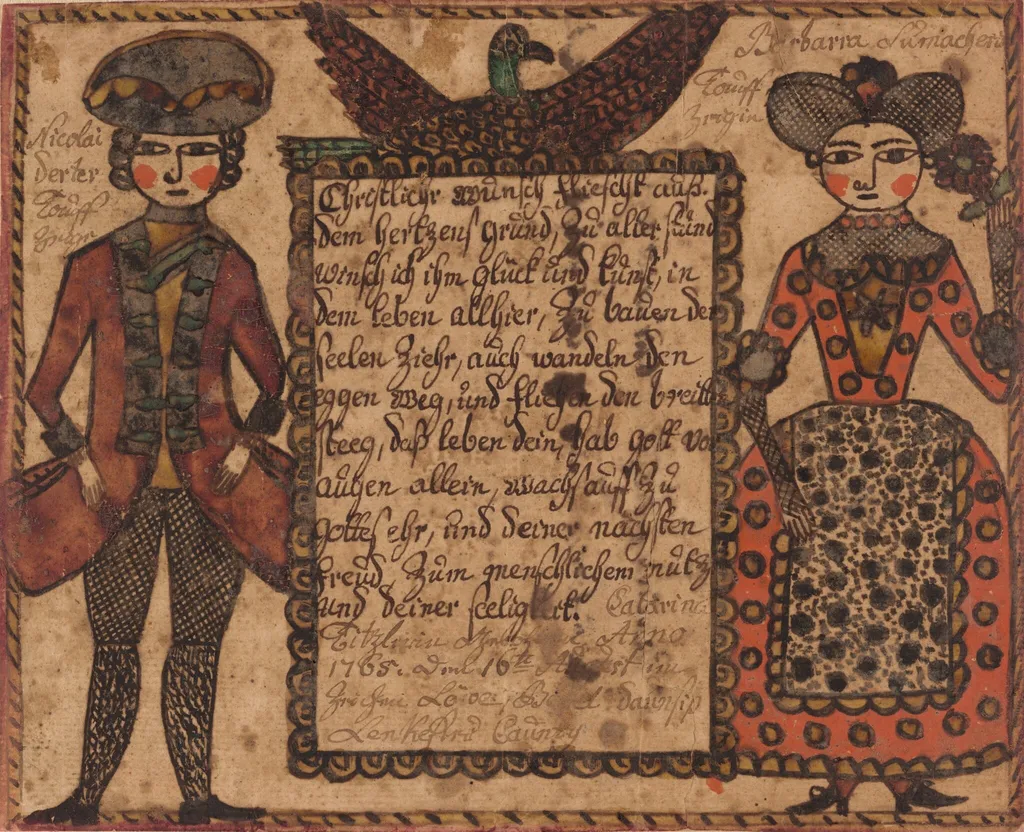
Baptismal Wish for Catarina Titzlir is an ink drawing by the Romanticist artist Sussel-Washington Artist. It dates from 1765 and is held in the collection of the National Gallery of Art. Created circa 1765, this fraktur drawing serves as a baptismal greeting for Catarina Titzlir.
- Inscription
- Inscribed:In German: upper left:in pen and brown ink: Nicolai Derter, Tauff Zeugr [Nicolai Derter, Baptismal Witness]; upper right in pen and brown ink: Barbarra Lumacherin, Tauff Zeugin [Barbara Schumacher, Baptismal Witness]; center in pen and brown ink: Ehrstlichr wunsch flieseht aus / dem Herzens Grund, zu aller Stund / Winsch ich ihm glück und Gunst, in / dem leben allhier, Zu bauen der / Seelen Ziehr, auch wandeln den / eggen Weg, und fliehen den breiten / Steeg, das Leben dein, Gab Gott vor / augen allein, wacht auff zu / Gottes ehr, und deiner nahchsten / Freud, Zum menschlichem nutz / und deiner Seeligkeit. Catarina / Fitzlei(?) Geboren Anno / 1765. Dom 16th August im / Zeichen Löwe; Bettel daunsip / Lenkestru County [The most important wish flows out of the depths of the heart, I wish him luck and goodwill at all hours, to build the soul’s ornament in this life, also wander the narrow path and flee the broad path, God gave you life before his eyes alone, awaken to God’s honor and your closest joy, for human benefit and your salvation. Catarina Fitzlei(?) Born Year 1765. Sunday, 16. August in the sign of Leo; Bethel Township Lancaster]
About this work
Overview
Its purpose is to convey a celebratory wish for the child’s baptism, a common function of fraktur pieces in the eighteenth‑century German‑American community.
Created circa 1765, this fraktur drawing serves as a baptismal greeting for Catarina Titzlir. Executed by the unidentified Sussel‑Washington Artist, a prolific Pennsylvania‑German practitioner of the genre, the work combines pen, brown ink, and both transparent and opaque watercolors on laid paper. Its purpose is to convey a celebratory wish for the child’s baptism, a common function of fraktur pieces in the eighteenth‑century German‑American community.
Subject & Meaning
The composition presents two figures standing side by side, rendered in vivid, patterned attire that reflects folk costume. Their faces are rendered with flat, bold outlines, emphasizing stylization over realism. Between the figures runs an extended poem in an archaic script, framed by an ornamental border of tiny circles and geometric motifs, functioning as a textual blessing addressed to Catarina.
Technique & Style
The artist employed fine pen work and brown ink to define contours, then applied layers of watercolor, both transparent washes and opaque pigments, to achieve earthy reds, browns, and greens. The laid paper substrate adds a textured surface that interacts with the pigment. Decorative borders populated with minute motifs are characteristic of fraktur’s blend of calligraphic and pictorial elements.
History & Provenance
Attributed to the Sussel‑Washington Artist, an anonymous figure active in the 1770s‑1780s, the drawing aligns with other surviving fraktur pieces that borrow textual formulas from European Goettlebriefe. Its survival offers insight into the transmission of Germanic baptismal customs to the Pennsylvania colonies, though the work’s later ownership record remains undocumented.
Context
Fraktur served as a visual record of life‑cycle events among Pennsylvania Germans, merging literacy, folk art, and religious sentiment. By the mid‑eighteenth century, such pieces were often commissioned for baptisms, births, and marriages, reflecting both personal devotion and communal identity. The decorative richness of this drawing illustrates the cultural importance placed on ritual documentation within the immigrant community.
Own this work as a print
Artist & collection
Artist
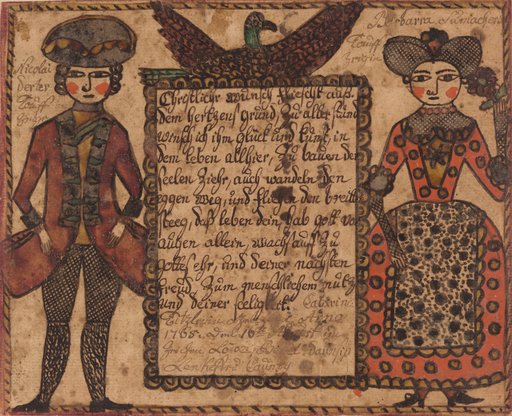
The Sussel-Washington Artist was an American fraktur artist active during the 1770s and 1780s.

- Gilet décor Louis Gillet parlant avec 2 paysans et leur fille, projets de broderies de gilet, XVIIIème siècle
 Playing Cards
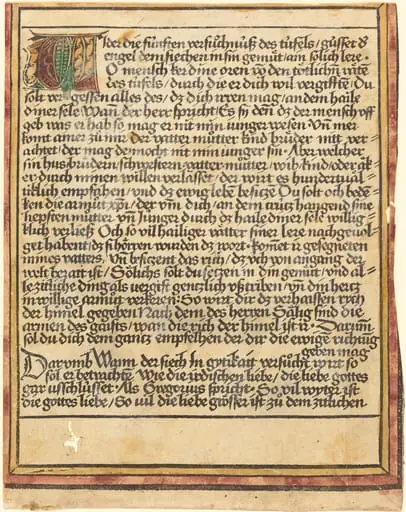 Exhortation Against Avarice
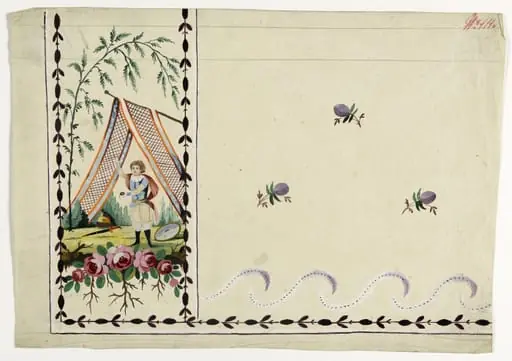 Gilet guerrier dans un paysage, projets de broderies de gilet, XVIIIème siècle
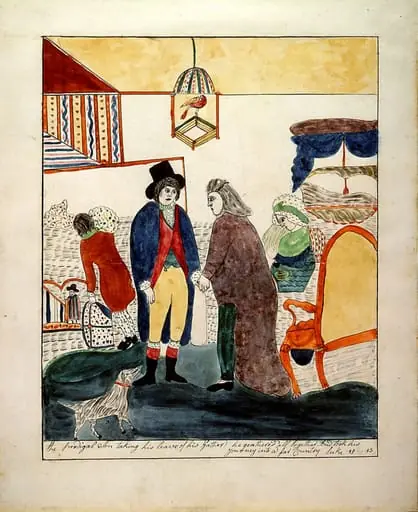 The Prodigal Son Taking Leave of His Father
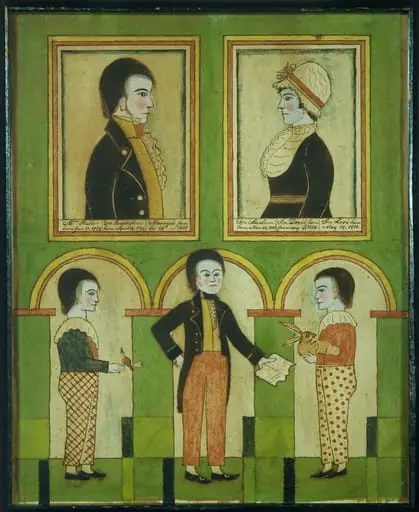 The Abraham Pixler Family
 Untitled
 Gilet décor Louis Gillet délivrant une paysanne, projets de broderies de gilet, XVIIIème siècle
 Playing Card
 Cartouches Modernes avec des Enfans qui representant les Modes d'Augsbourg
 Endpaper - "Zwarg Gesellschaft"
 Kvinde i schweizisk nationaldragt