Artwork
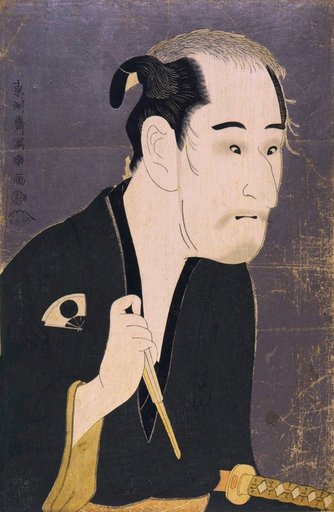
東洲斎写楽画 尾上松助の松下酒之進 『敵討乗合話』|Onoe Matsusuke I as Matsushita Mikinojō in the Play "Katakiuchi noriyaibanashi"
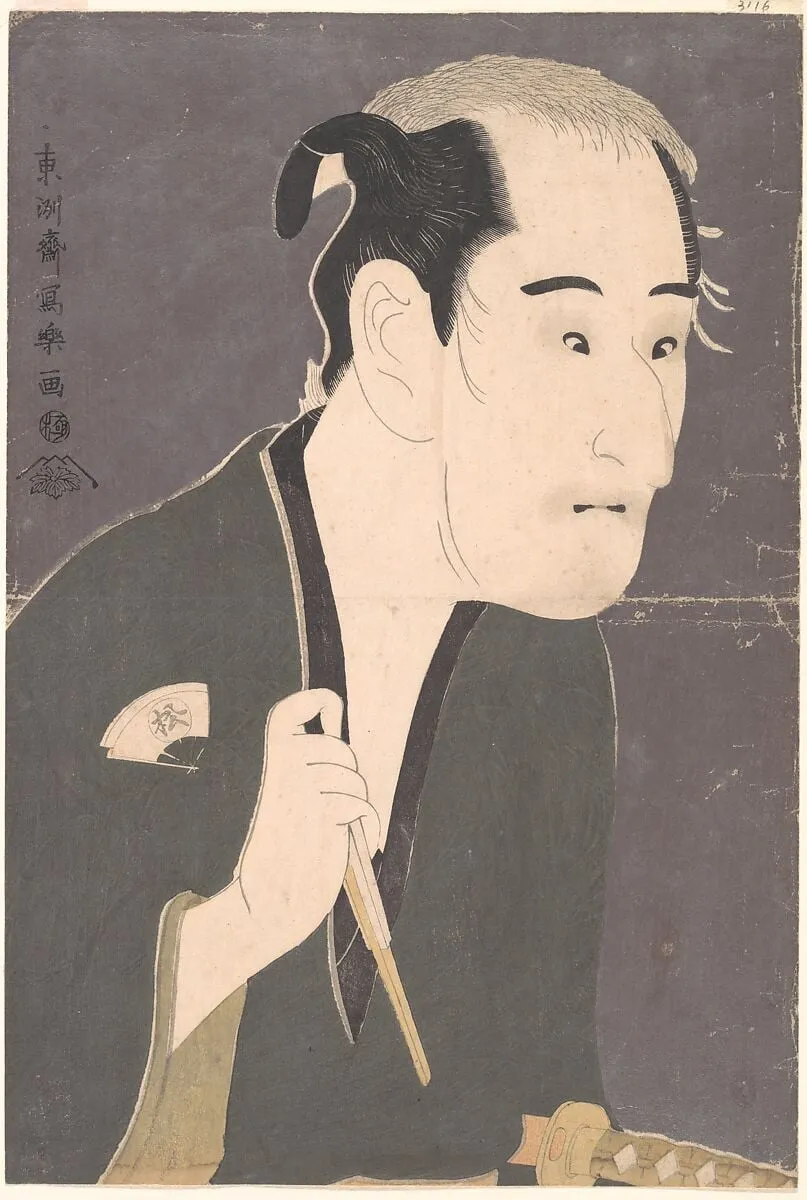
東洲斎写楽画 尾上松助の松下酒之進 『敵討乗合話』|Onoe Matsusuke I as Matsushita Mikinojō in the Play "Katakiuchi noriyaibanashi" is an ink print by the Romanticist artist Tōshūsai Sharaku. It dates from 1794 and is held in the collection of the Metropolitan Museum of Art.
About this work
If you like this sharp, quick style, look up ukiyo-e, Japanese woodblock prints of everyday life and theater.
A man in a dark kimono glares sideways, his face half-lit, one eyebrow raised. The print is small, about the size of a postcard, but the expression feels huge.
Sharaku made these actor portraits for only ten months in 1794. No one knows why he stopped. The white mica background makes the ink pop like wet paint.
If you like this sharp, quick style, look up ukiyo-e, Japanese woodblock prints of everyday life and theater.
Overview
This woodblock print, created by Tōshūsai Sharaku in 1794, is a portrait of Onoe Matsusuke I as Matsushita Mikinojō in the play 'Katakiuchi noriyaibanashi'. The print is characterized by its bold expression and striking visual elements.
Subject & Meaning
The print depicts an actor in a dramatic pose, wearing a dark kimono and displaying a intense facial expression with a raised eyebrow and sideways glare. The image captures a moment from a theatrical performance.
Technique & Style
The use of white mica on the background creates a sense of depth and makes the ink colors appear vibrant. The overall style is typical of ukiyo-e, a genre of Japanese woodblock prints known for its bold and dynamic representations of everyday life and theater scenes.
History & Provenance
Sharaku's production of actor portraits was limited to a brief period of ten months in 1794, after which he ceased creating such works for unknown reasons.
Artist & collection

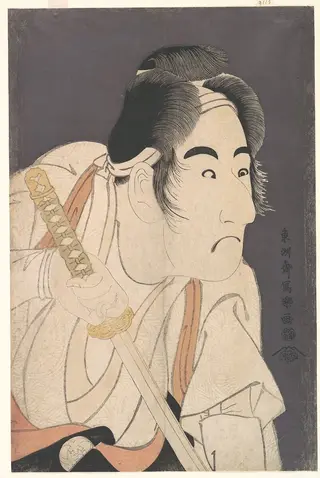 東洲斎写楽画 二世坂東三津五郎の石井源蔵 『花菖蒲文禄曽我』|Bandō Mitsugorō II as Ishii Genzō in the Play "Hana-ayame Bunroku Soga"
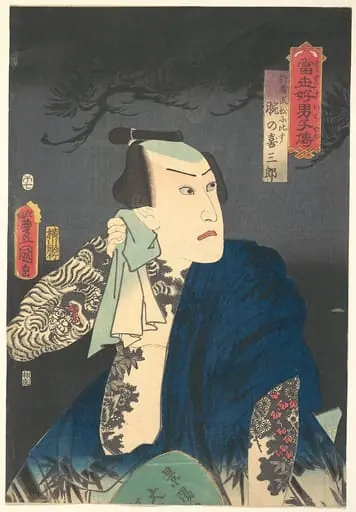 「当世好男子伝」松 「行者武松に比す腕の喜三郎」 初代河原崎権十郎|The Actor Kawarazaki Gonjūrō I as Ude no Kisaburō, likened to Wu Song the Ascetic (Gyōja Bushō ni hisu), from the “Pine” triptych of the series A Modern Water Margin (Tōsei suikoden)
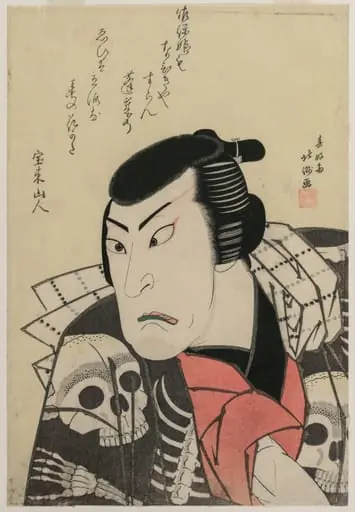 Actor Ichikawa Ebijūrō I as Tōken (China Dog) Jūbei, in the play Red and Purple, Rich Dyes of Osaka (Benimurasaki ai de someage)
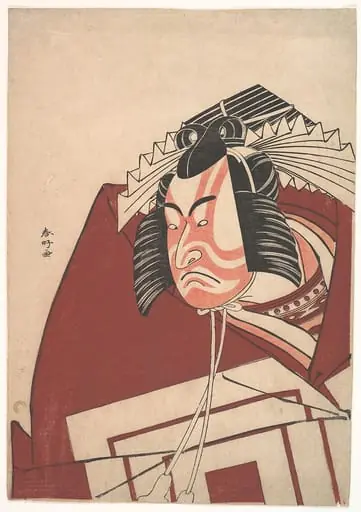 勝川春好画 二代目市川門之助|Ichikawa Monnosuke II in a Shibaraku Performance
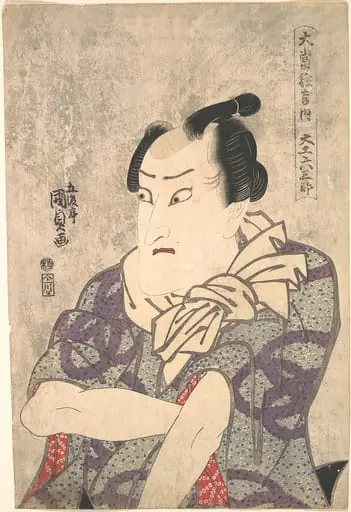 O Ateri Kyogen Uchi|Wild Words - a Play
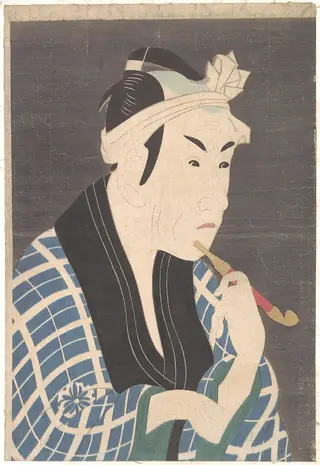 Untitled
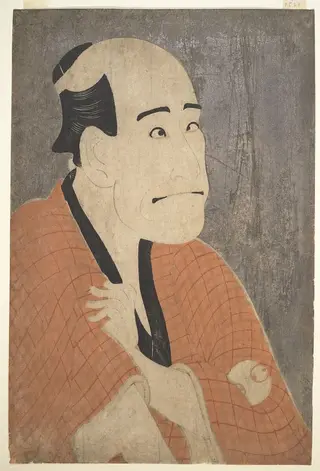 Untitled
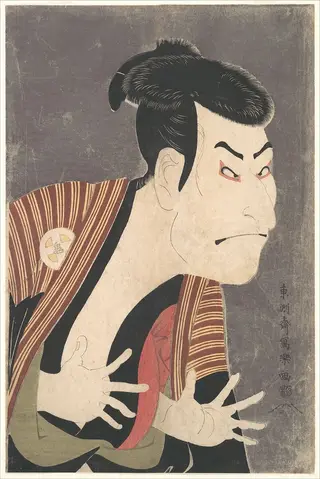 東洲斎写楽画 三代目大谷鬼次の奴江戸兵衛|Kabuki Actor Ōtani Oniji III as Yakko Edobei
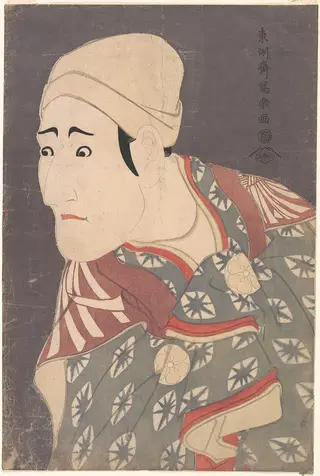
- 八代目守田勘弥の鴬の次郎作|Kabuki Actor Morita Kan’ya VIII as the Palanquin-Bearer in the Play A Medley of Tales of Revenge (Katakiuchi noriaibanashi)
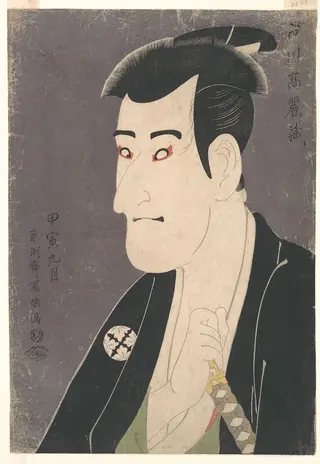 三代目市川高麗蔵の志賀大七|Kabuki Actor Ichikawa Komazō III as Shiga Daishichi in the Play A Medley of Tales of Revenge (Katakiuchi noriaibanashi)
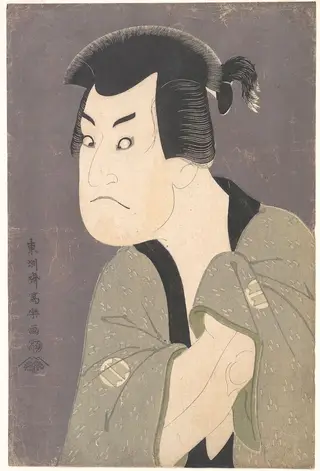 東洲斎写楽画 三世坂田半五郎の藤川水右衛門 『花菖蒲文禄曽我』|Sakata Hangorō III as Fujikawa Mizuemon in the Play "Hana Ayame Bunroku Soga"
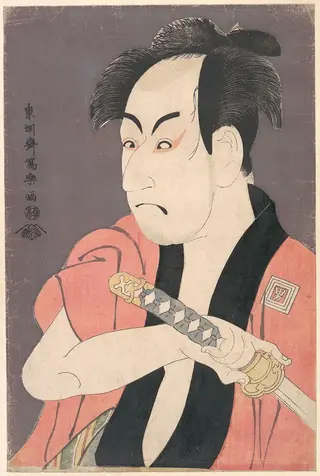 東洲斎写楽画 初代市川男女蔵の奴一平 『恋女房染分手綱』|Ichikawa Omezō I in the Role of Yakko Ippei from the Play "Koinyōbō somewake tazuna"