Artwork
Untitled
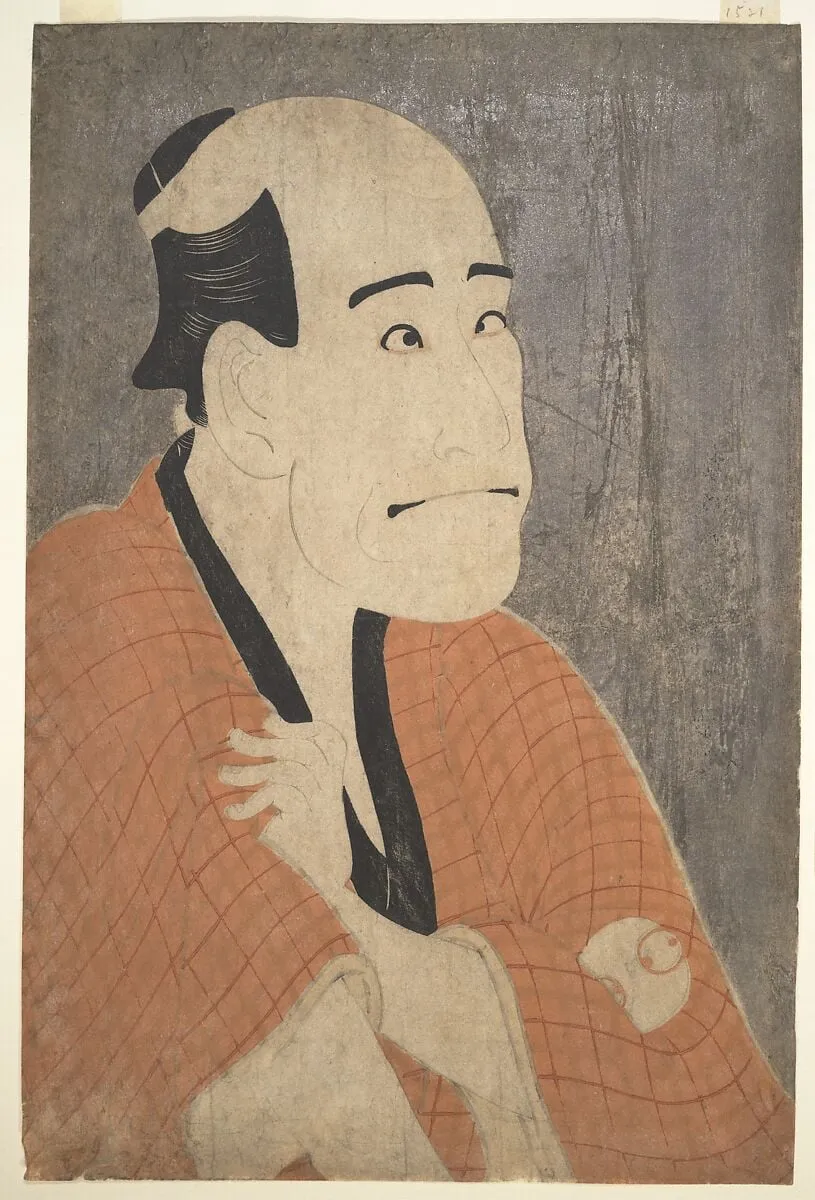
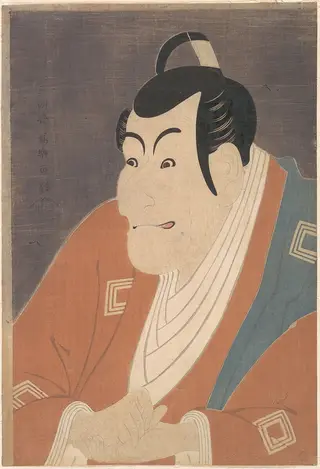
Untitled is an ink print by the Romanticist artist Tōshūsai Sharaku. It dates from 1794 and is held in the collection of the Metropolitan Museum of Art.
About this work
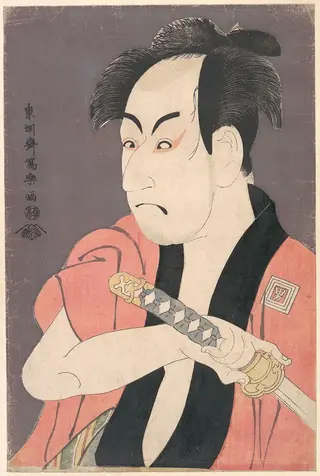
A man in a dark robe glares at you, one eyebrow raised, lips pressed tight.
A man in a dark robe glares at you, one eyebrow raised, lips pressed tight. His face is white like powder, his hair a wild black cloud. The print feels almost too close, like he’s about to step out of the frame.
This is an actor from Kabuki theater, caught in a single, tense moment. Sharaku made these prints for only ten months in 1794, then vanished. No one knows why he stopped or who he really was. The white mica background makes the ink glow, like moonlight on skin.
Look up other Kabuki actor portraits by the same subject.
Overview
Untitled is a woodblock print by the Japanese ukiyo-e artist Tōshūsai Sharaku, created in 1794 during the artist's brief ten-month career. The print measures 37.1 by 24.7 centimeters and is executed in ink, color, and white mica on paper. It depicts a male kabuki actor in the ōkubi-e format, a close-cropped portrait showing the head and upper chest. The work is held in the collections of the Brooklyn Museum and the Metropolitan Museum of Art. Sharaku's prints are considered among the greatest achievements in the ukiyo-e genre, distinguished by their psychological intensity and unflinching realism in portraying kabuki performers. This particular print exemplifies the qualities that have made Sharaku one of art history's most celebrated and mysterious figures: a bold directness of observation combined with technical mastery of the woodblock medium, produced without any apparent formal apprenticeship.
Subject & Meaning
The subject is a single male kabuki actor shown in three-quarter view, turned toward the right, with his head and upper torso filling the vertical composition. His shaved pate retains black hair at the sides and back, arranged in a traditional topknot, while his face is elongated with arched black eyebrows, wide eyes directed upward and to the right, and a small downturned mouth. The actor's right hand grips the black collar of a rust-orange garment decorated with a fine dark grid pattern and a single light-colored circular crest on the left sleeve. This costume detail and the figure's intense expression suggest he is captured in a specific theatrical role rather than as a generic type. The upward gaze and hand gesture imply a moment of dramatic tension or reaction within a performance. The restrained palette of orange, black, gray, and pale flesh tones, combined with the flat, mottled gray background with visible vertical streaking, focuses attention entirely on the actor's physiognomy and psychological state. The absence of narrative context or identifying inscriptions in this particular print shifts emphasis toward the universal qualities of performance and human expression that characterize Sharaku's best work.
Technique & Style
The print employs the nishiki-e technique of multi-block color printing, with the luxurious addition of white mica in the background, a material reserved for deluxe commissions. The surface shows flat areas of color with crisp outlines, minimal shading, and no visible brushstrokes, consistent with the printed rather than painted nature of the medium. Light appears even and diffuse, with no strong shadows or modeling, creating a stark, immediate presence. The overall handling demonstrates the precise, fine line work that distinguishes Sharaku's first-period works, when he produced 28 ōban-format ōkubi-e with black mica backgrounds. The current condition shows age cracks and slight discoloration throughout, with surface wear visible in the background streaking. This print belongs to the earliest phase of Sharaku's output, when he collaborated with the prestigious publisher Tsutaya Jūzaburō to produce actor portraits of unprecedented psychological directness. The technical refinement, including the even application of mica and the sharp registration of multiple color blocks, suggests access to skilled carvers and printers despite the artist's lack of documented training.
History & Provenance
The print was created in 1794, the fifth month of the Kansei 6 era, as part of Sharaku's explosive debut when 28 ōban actor portraits appeared simultaneously at Edo's three major kabuki theaters. These prints were published by Tsutaya Jūzaburō, the leading publisher of the period who promoted numerous major ukiyo-e artists. The work is now held in two institutional collections: the Brooklyn Museum and the Metropolitan Museum of Art. The specific accession histories and prior ownership chains for these impressions are not documented in the available sources. The survival of multiple impressions of Sharaku's ōkubi-e designs, some known in as many as 20 copies, suggests that despite contemporary reports of poor sales, a dedicated group of patrons preserved these works more carefully than collectors did for other artists of the period. The print's presence in major American museum collections indicates it was among the works rediscovered and acquired by Western collectors in the late 19th and early 20th centuries, when Sharaku's reputation was reestablished after a century of relative obscurity.
Context
Sharaku emerged during the Kansei era (1789-1801), a period of economic hardship and restrictive government policies under the shogunate's senior councilor Matsudaira Sadanobu. The Kansei Reforms targeted theatrical excesses and limited actors' incomes, yet paradoxically created conditions for innovation as theater managers sought new promotional methods. When a major fire disrupted the Yoshiwara pleasure district in spring 1794, publisher Tsutaya Jūzaburō, seeking to enter a new market, took the risk of promoting an unknown artist. Sharaku's contemporaries in actor portraiture, including Utamaro, Toyokuni, and members of the Katsukawa school, typically idealized their subjects or employed stereotyped features. The ōkubi-e format had been introduced by Katsukawa Shunshō in the 1760s, with mica backgrounds adding luxury. Sharaku's radical departure was to apply this format with unflinching realism, capturing not the actor's celebrated persona but the strain and concentration of performance itself. Contemporary audiences found this approach uncomfortable; the artist and writer Ota Nanpō recorded that Sharaku's excessive realism was considered strange. Theories about Sharaku's identity have proliferated since the 19th century, with the most plausible, proposed by historian Saitō Gesshin in 1844, identifying him as Saitō Jūrōbei, a Nō actor in the troupe of the Lord of Awa, whose documented presence in Edo from 1793 to 1796 coincides with Sharaku's working period. Stylistic connections to the Osaka master Ryūkōsai and Sharaku's particular interest in Osaka actors performing in Edo lend circumstantial support to an Osaka-trained background, though no theory has achieved scholarly consensus.
Legacy
Sharaku's reputation underwent a dramatic transformation from near-anonymity to canonical status. After his disappearance in early 1795, his work was largely forgotten until the beginning of the twentieth century, when rediscovery by Western collectors and scholars established him as a master of yakusha-e portraiture. His inclusion in major museum collections worldwide, including the Metropolitan Museum of Art, the Museum of Fine Arts Boston, and the British Museum, confirms his position as one of the last significant portrait print artists of the eighteenth century. Modern critical assessment values precisely what contemporary audiences rejected: the psychological penetration that anticipates later developments in portraiture. Sharaku's faces, with their bulging eyes, twisted mouths, and exposed tension, have been described as closer to expressionism than traditional ukiyo-e, making him appear eerily contemporary to modern viewers. The mystery surrounding his identity and the abrupt termination of his career have only amplified his cultural resonance. Unlike Hokusai or Hiroshige, whose long careers allow for tracing of stylistic evolution, Sharaku offers a single, concentrated moment of vision. His legacy rests on intensity rather than duration, on the proposition that art can exist to reveal rather than to please. In an age of curated identities and performed selves, Sharaku's unflinching portraits continue to challenge viewers with their fundamental question: what appears when the mask slips?
Artist & collection

 Untitled
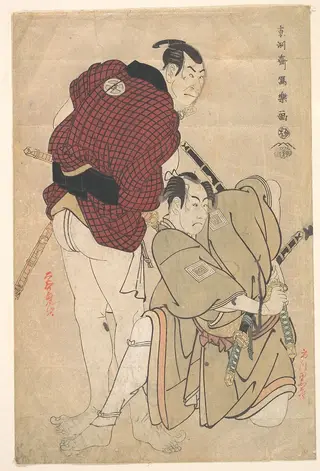 Untitled
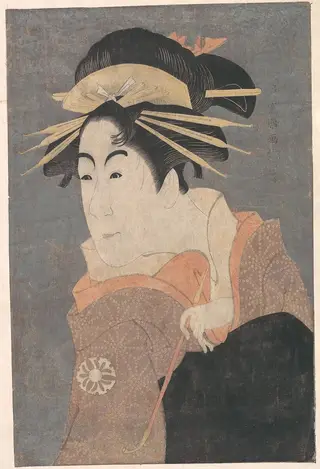 Untitled
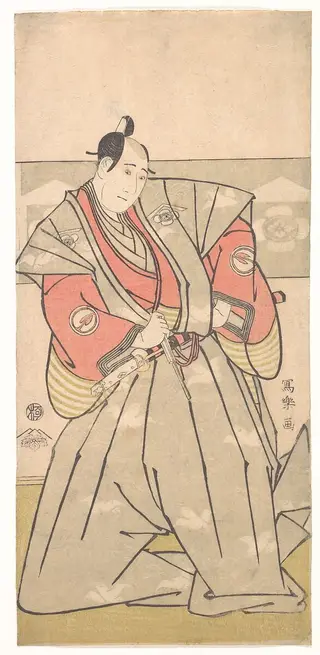 Untitled
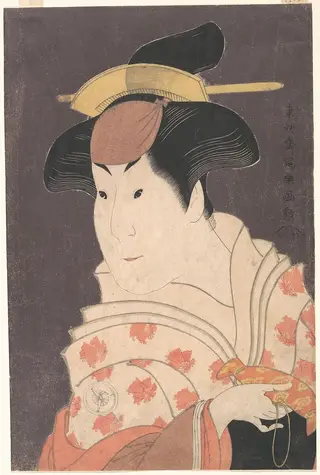 東洲斎写楽画 四代岩井半四郎の重の井 『恋女房染分手綱』|Iwai Hanshirō IV as Shigenoi in the Play "Koinyōbō Somewake Tazuna"
 東洲斎写楽画 初代市川男女蔵の奴一平 『恋女房染分手綱』|Ichikawa Omezō I in the Role of Yakko Ippei from the Play "Koinyōbō somewake tazuna"
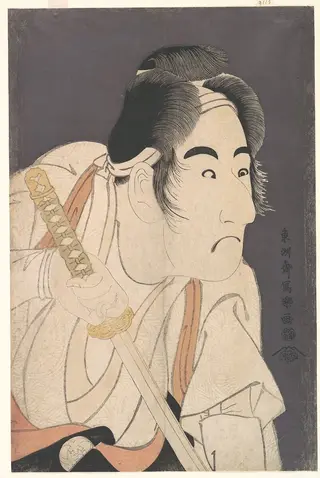 東洲斎写楽画 二世坂東三津五郎の石井源蔵 『花菖蒲文禄曽我』|Bandō Mitsugorō II as Ishii Genzō in the Play "Hana-ayame Bunroku Soga"
 Untitled
- Untitled
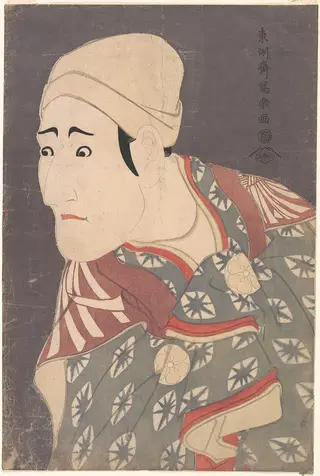 八代目守田勘弥の鴬の次郎作|Kabuki Actor Morita Kan’ya VIII as the Palanquin-Bearer in the Play A Medley of Tales of Revenge (Katakiuchi noriaibanashi)
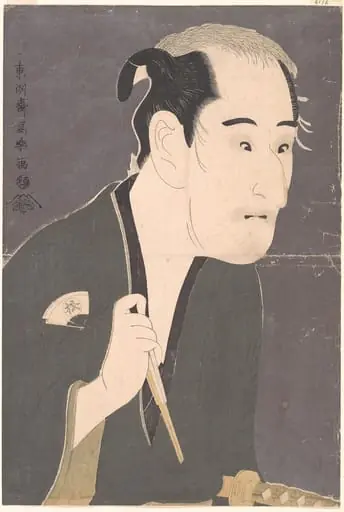 東洲斎写楽画 尾上松助の松下酒之進 『敵討乗合話』|Onoe Matsusuke I as Matsushita Mikinojō in the Play "Katakiuchi noriyaibanashi"
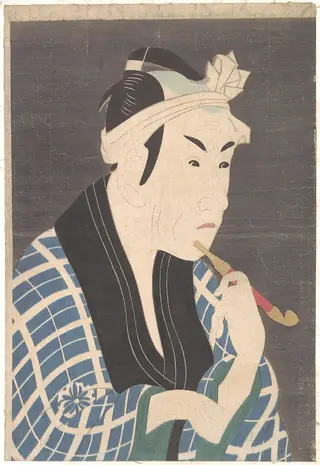 Untitled
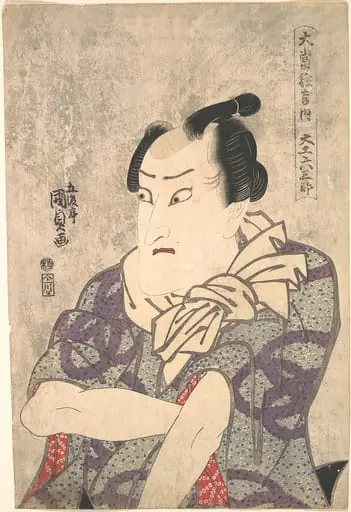 O Ateri Kyogen Uchi|Wild Words - a Play
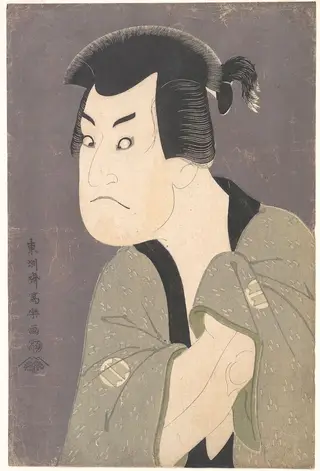 東洲斎写楽画 三世坂田半五郎の藤川水右衛門 『花菖蒲文禄曽我』|Sakata Hangorō III as Fujikawa Mizuemon in the Play "Hana Ayame Bunroku Soga"
 Untitled
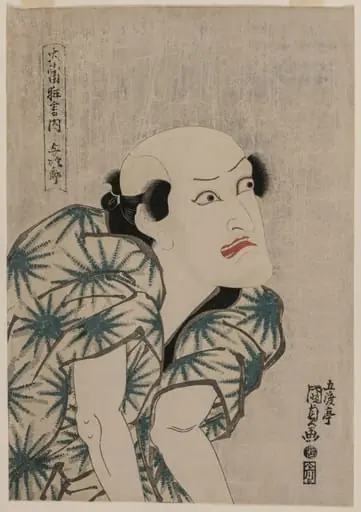 Nakamura Utaemon III as the Monkey Trainer Yojiro (from the series Famous Kabuki Plays)
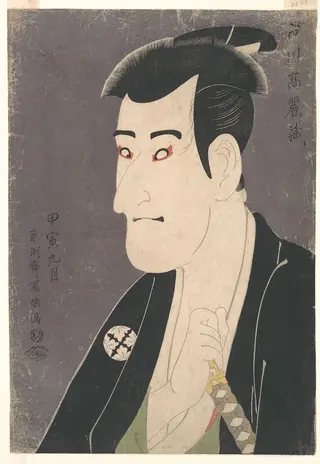 三代目市川高麗蔵の志賀大七|Kabuki Actor Ichikawa Komazō III as Shiga Daishichi in the Play A Medley of Tales of Revenge (Katakiuchi noriaibanashi)
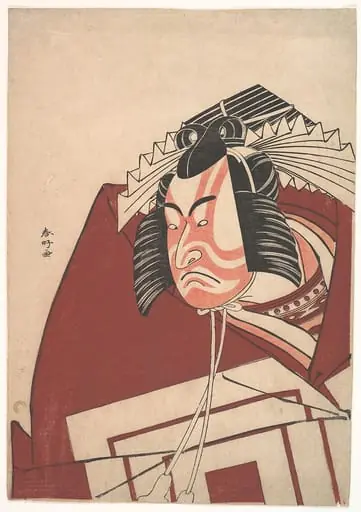 勝川春好画 二代目市川門之助|Ichikawa Monnosuke II in a Shibaraku Performance
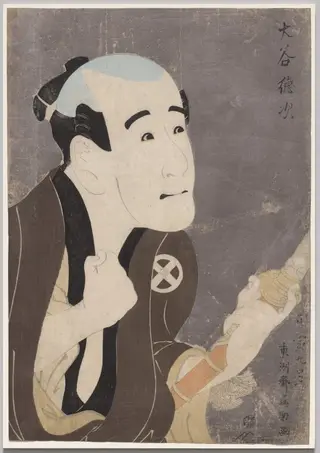 Otani Tokuji I as the Retainer Sodesuke in "Flowering Irises: A Soga Vendetta of the Bunroku Era"
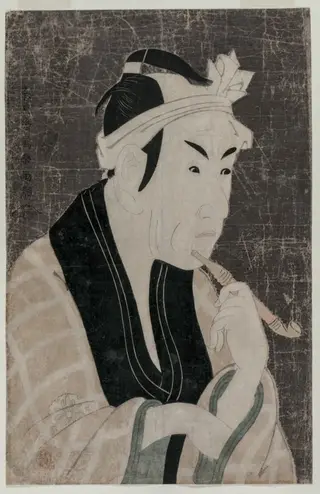 Matsumoto Koshiro IV as Gorobei, the Fish Seller from Sanya