Artwork
Untitled
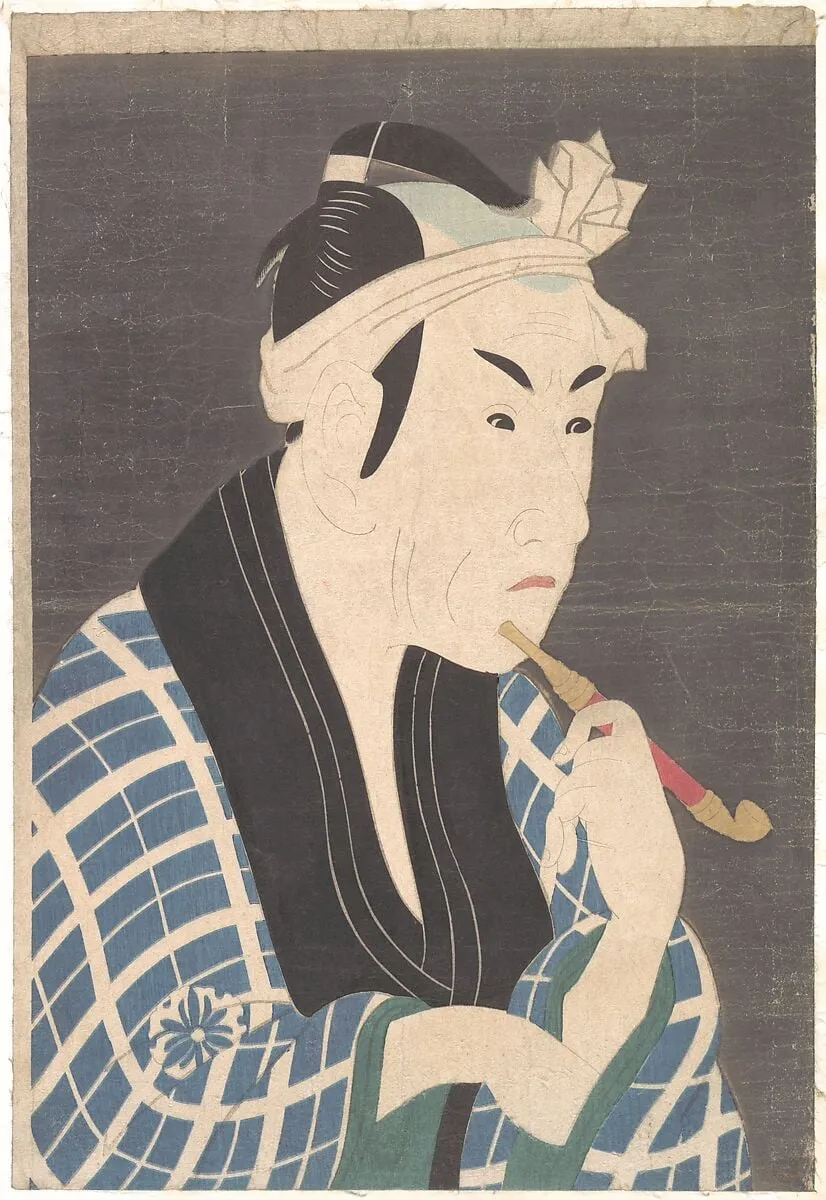
Untitled is an ink print by the Impressionist artist Tōshūsai Sharaku. It is held in the collection of the Metropolitan Museum of Art.
- Accession no.
- JP734
About this work
Subject & Meaning
The print is a yakusha-e, a kabuki actor portrait, depicting the kabuki actor Matsumoto Kōshirō IV.
The print is a yakusha-e, a kabuki actor portrait, depicting the kabuki actor Matsumoto Kōshirō IV. Sharaku specialized in this genre during a brief but intense period of activity in 1794, producing close-up, psychologically charged likenesses of Edo-period stage performers. The work belongs to the ōkubi-e sub-genre, the large-head bust portrait format that became Sharaku's signature, isolating the actor's face and upper torso to convey dramatic intensity and individual character rather than narrative scene.
The mica ground lends the surface a shimmering, reflective quality typical of luxury ukiyo-e productions of the period, elevating the print's visual impact and signaling its status as a high-end object. As a nishiki-e, the image is rendered in full polychrome woodblock printing, a technique that allowed for the rich coloration and tonal modeling Sharaku used to heighten the actor's expression and theatrical presence.
Technique & Style
Created in 1794, this work is a woodblock print executed in ink and color on paper. The artist, Tōshūsai Sharaku, utilized a mica ground to enhance the visual texture of the support. Classified within the ukiyo-e tradition, the piece specifically falls under the genres of nishiki-e (polychrome print), yakusha-e (actor print), and ōkubi-e (large-head portrait).
The handling of the medium emphasizes the formal qualities of a large-head portrait, focusing intensely on the depicted figure, Matsumoto Kōshirō IV, while employing the distinctive stylistic conventions of Edo-period Japanese printmaking.
History & Provenance
Created in 1794, this woodblock print was produced by the artist Tōshūsai Sharaku. The work, titled Untitled, depicts the actor Matsumoto Kōshirō IV and is executed in ink and color on paper featuring a mica ground. It is classified as an ōkubi-e portrait within the ukiyo-e tradition. The piece is currently held in the collection of the Metropolitan Museum of Art.
Context
The print portrays the renowned kabuki actor Matsumoto Kōshirō IV, reflecting Sharaku's focus on individual theatrical personalities during the late Edo period. Its production in 1794 places it within the flourishing ukiyo-e market for actor portraiture, specifically the ōkubi-e (large-headed) style that emphasized expressive detail. The work's reception was contemporary with Sharaku's brief but influential series of celebrity portraits, which combined innovative color techniques with mica ground effects to heighten visual drama.
Legacy
The print's striking realism and exaggerated physiognomy reshaped kabuki portraiture, inspiring later ukiyo-e artists to adopt sharper character studies. Its focus on contemporary actors, rather than idealized figures, broadened the genre's expressive range and influenced subsequent woodblock traditions.
The work remains a benchmark for ukiyo-e innovation, cited in major exhibitions and academic studies as a pivotal moment in Japanese printmaking.
Its enduring reputation rests on both artistic daring and role in documenting Edo-period theatre culture, securing its place in collections like the Metropolitan Museum of Art.
Overview
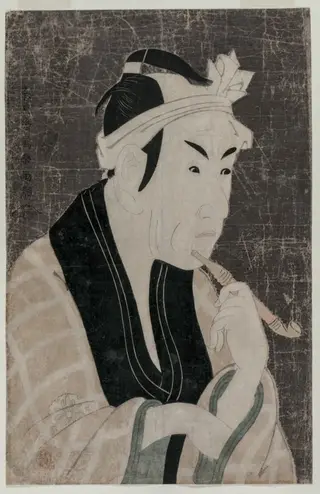
This untitled woodblock print, attributed to Tōshūsai Sharaku and dated circa 1890, is a portrait of the Japanese actor Matsumoto Kōshirō IV. Executed in ink and color on paper with a mica ground, the work showcases Sharaku's distinctive approach to capturing theatrical figures.
Artist & collection

 Untitled
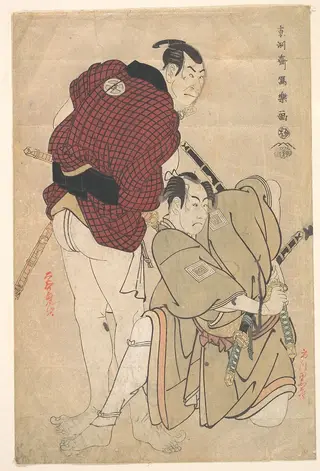 Untitled
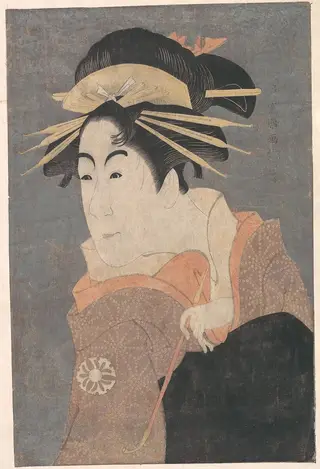 Untitled
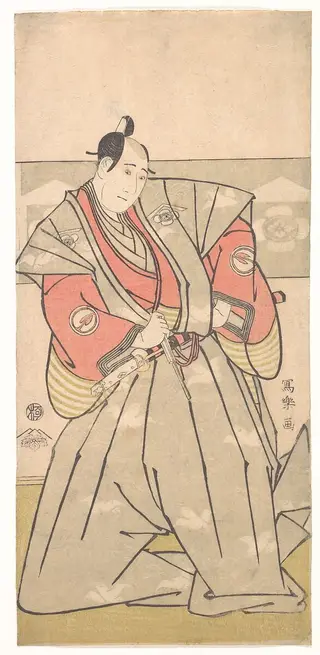 Untitled
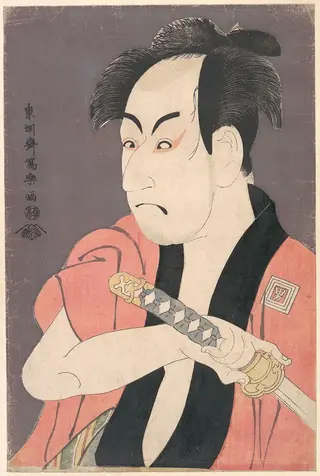
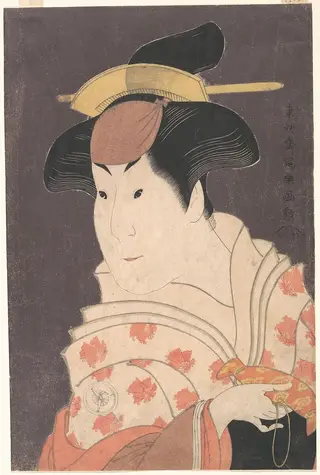 東洲斎写楽画 四代岩井半四郎の重の井 『恋女房染分手綱』|Iwai Hanshirō IV as Shigenoi in the Play "Koinyōbō Somewake Tazuna"
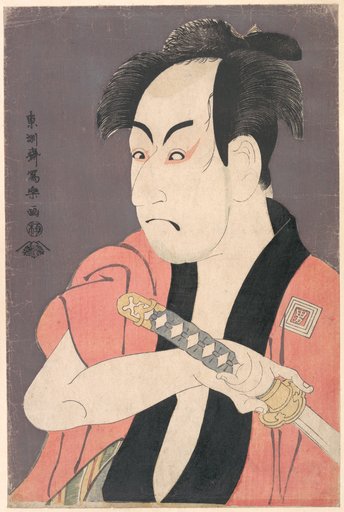
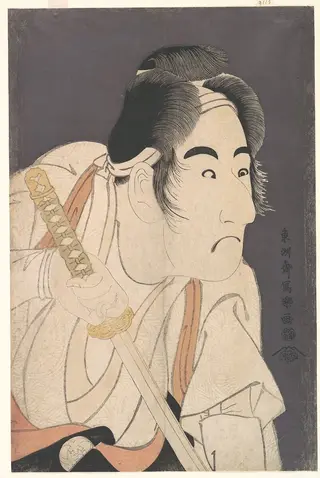
 東洲斎写楽画 初代市川男女蔵の奴一平 『恋女房染分手綱』|Ichikawa Omezō I in the Role of Yakko Ippei from the Play "Koinyōbō somewake tazuna"
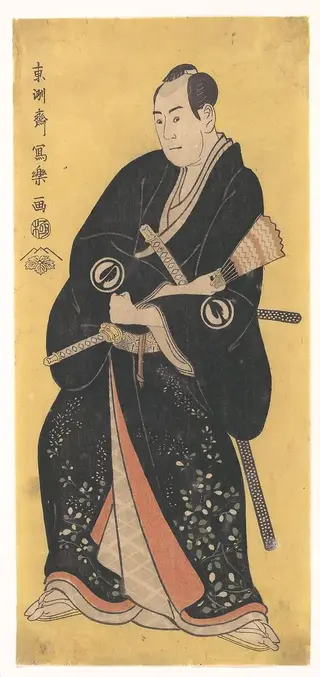
 東洲斎写楽画 二世坂東三津五郎の石井源蔵 『花菖蒲文禄曽我』|Bandō Mitsugorō II as Ishii Genzō in the Play "Hana-ayame Bunroku Soga"
 Untitled
- Matsumoto Koshiro IV as Gorobei, the Fish Seller from Sanya
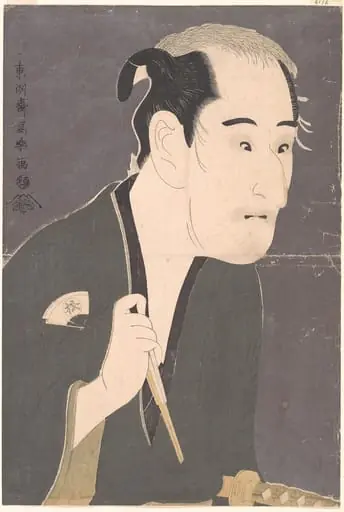 東洲斎写楽画 尾上松助の松下酒之進 『敵討乗合話』|Onoe Matsusuke I as Matsushita Mikinojō in the Play "Katakiuchi noriyaibanashi"
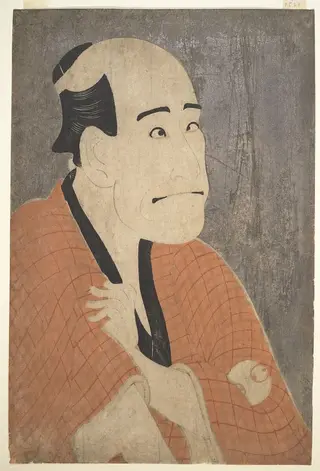 Untitled
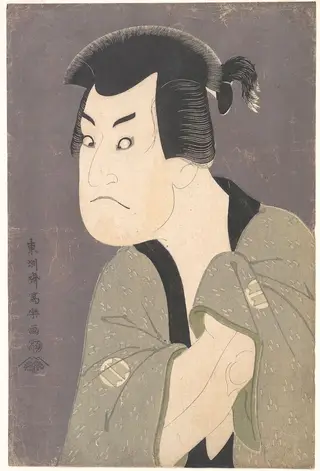 東洲斎写楽画 三世坂田半五郎の藤川水右衛門 『花菖蒲文禄曽我』|Sakata Hangorō III as Fujikawa Mizuemon in the Play "Hana Ayame Bunroku Soga"
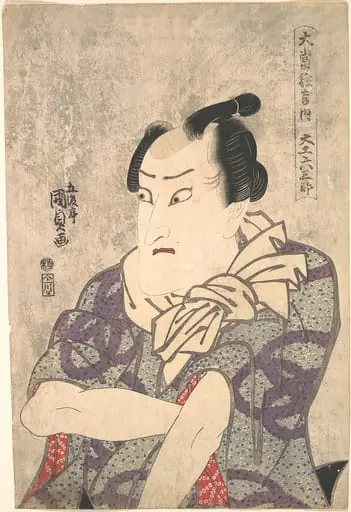 O Ateri Kyogen Uchi|Wild Words - a Play
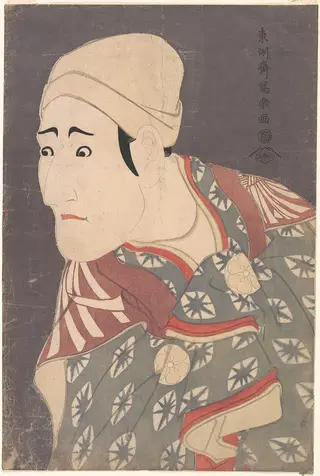 八代目守田勘弥の鴬の次郎作|Kabuki Actor Morita Kan’ya VIII as the Palanquin-Bearer in the Play A Medley of Tales of Revenge (Katakiuchi noriaibanashi)
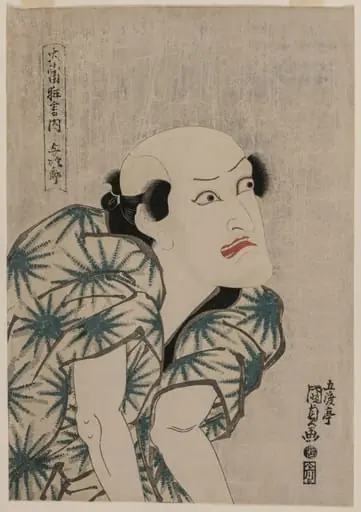 Nakamura Utaemon III as the Monkey Trainer Yojiro (from the series Famous Kabuki Plays)
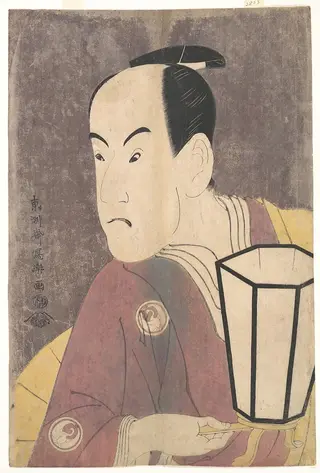 Untitled
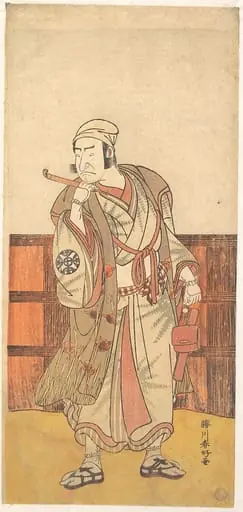
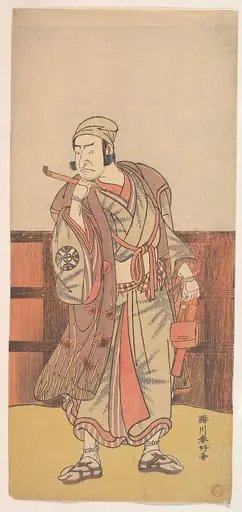 勝川春好画 初代中村仲蔵|Kabuki Actor Nakamura Nakazō I
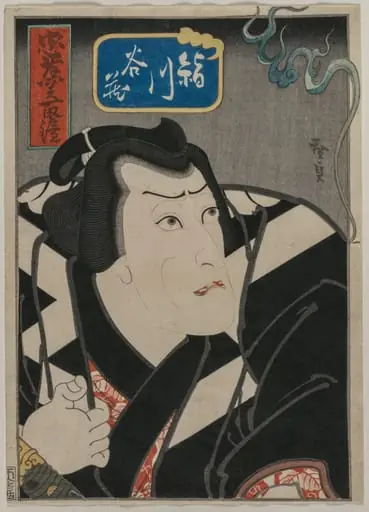 Kinugawa Tanizō in A Mirror of Brave and Loyal Wrestlers (Chūkō Sekitori Kagami)
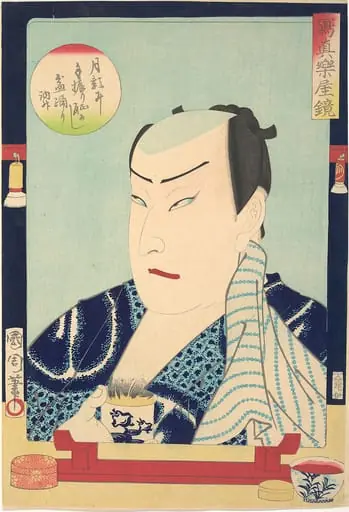 写真楽屋鑑 2代目澤村 訥升|Sawamura Tosshō II (1838–86), from the series Mirror of Photographs Backstage (Shashin gakuya kagami - Sawamura Tosshō nisei)
 Untitled