Artwork
東洲斎写楽画 三代目大谷鬼次の奴江戸兵衛|Kabuki Actor Ōtani Oniji III as Yakko Edobei
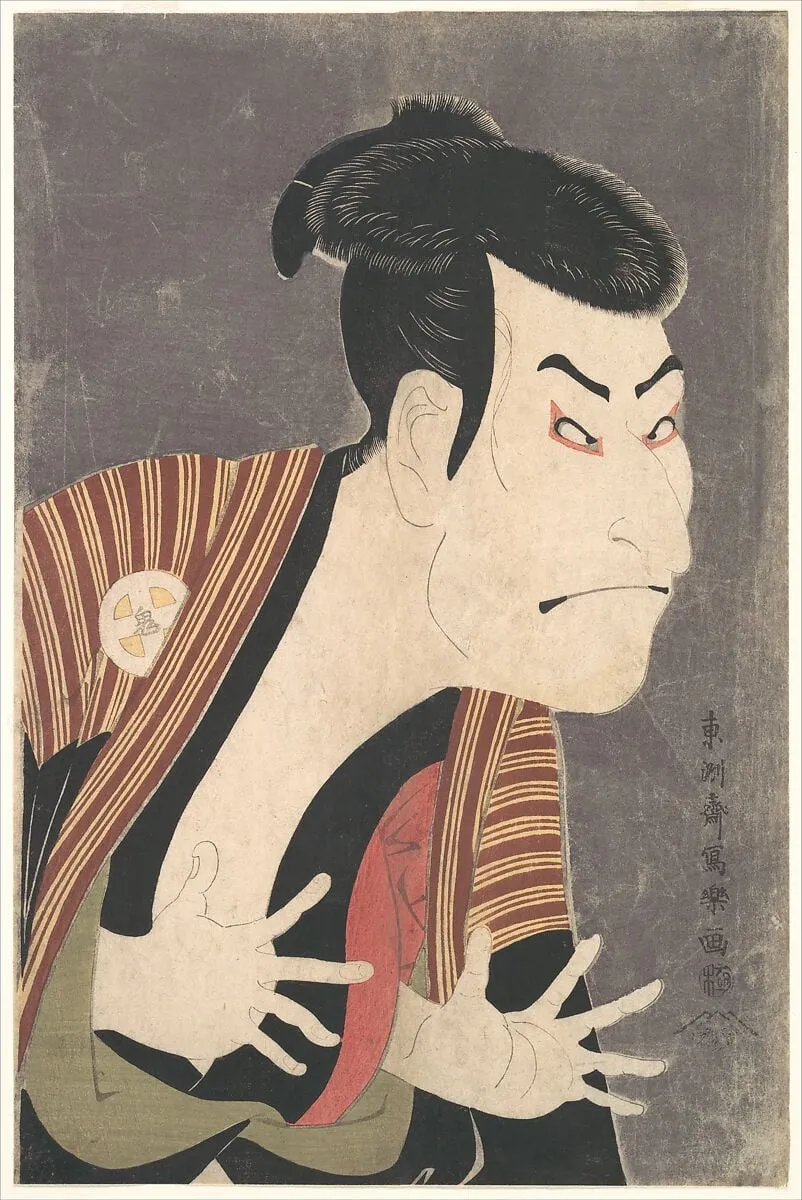
東洲斎写楽画 三代目大谷鬼次の奴江戸兵衛|Kabuki Actor Ōtani Oniji III as Yakko Edobei is an ink print by the Romanticist artist Tōshūsai Sharaku. It dates from 1794 and is held in the collection of the Metropolitan Museum of Art.
- Accession no.
- JP2822
- Credit line
- Henry L. Phillips Collection, Bequest of Henry L. Phillips, 1939
About this work
The print was made in 1794, when theater stars were like today’s movie celebrities, fans collected these portraits the way we buy posters.
A man in a wild black wig and white face makeup snarls, teeth bared. His red-and-gold robe swirls as he lunges forward, one hand gripping a sword hilt.
This is a kabuki actor playing a rough servant, frozen mid-scene. The print was made in 1794, when theater stars were like today’s movie celebrities, fans collected these portraits the way we buy posters. The white mica background makes the colors pop like glitter under stage lights. No one knows who Sharaku really was; he vanished after only ten months of making prints.
Look up more prints of actors to see how other artists drew the same dramatic poses.
Subject & Meaning
The print depicts the kabuki actor Ōtani Oniji III in the role of Yakko Edobei, a villainous servant who attacks a rival to steal money in the play Koi nyōbō somewake tazuna. Sharaku captures the mie, the climactic moment of heightened emotion in kabuki, through the actor’s exaggerated facial expression, bristling hair, and outstretched hands, conveying the character’s merciless nature and defiant hatred.
The composition centers on the actor’s chalk-white makeup, angular features, and jutting chin, directing the viewer’s gaze downward toward an absent rival. Sharaku’s use of thick outlines and simplified forms flattens the figure against the grey background, emphasizing the dramatic intensity of the moment rather than naturalistic detail.
Technique & Style
Created in 1794, this work is a woodblock print (nishiki-e) executed with ink and color on paper, distinguished by the application of white mica. The composition employs a large-head format (ōkubi-e), presenting the subject in a three-quarter view against a flat, gray background. Sharaku utilizes thick, simplified lines to define the figure, which appears nearly two-dimensional yet dynamic.
The artist captures the actor at the peak of emotional intensity, known as mie, characterized by a defiant expression of hatred and lust. Formal elements such as the protruding chin, downward gaze toward an unseen rival, erect hair, and outstretched hands visually convey the character's ruthless nature. The curvature of the chest leading to the white-painted face further emphasizes the dramatic personality of the role.
History & Provenance
The work was designed and printed by Tōshūsai Sharaku in 1794, during the Edo period, as a woodblock print employing ink, color, and white mica on paper. It belongs to Sharaku’s yakusha-e ōkubi-e (large‑head actor) series, a nishiki‑e (multi‑color) format typical of his brief but influential output. The technique showcases Sharaku’s characteristic bold lines and expressive mica highlights. The print is presently in the collection of the Metropolitan Museum of Art.
Context
The print presents Ōtani Oniji III in the role of Yakko Edobei, a servant in a tragic love story from the Kabuki drama Koi nyōbō somewake tazuna?. Sharaku rendered the actor at the climactic mie moment, emphasizing the character's ruthless nature through a white-painted face, fierce expression, spiked hair, and outstretched hands. The composition isolates the figure against a muted background, using bold lines and simplified forms to convey personality. This portrait exemplifies Sharaku's focus on capturing the essence of Kabuki actors rather than idealized beauty.
The work is recognized as an iconic example of Sharaku's yakusha-e series, reflecting the dynamic energy of Edo-period theater. Its cultural resonance was highlighted in 2017 when Hirosaki City created a large-scale replica using thousands of apples to promote local agriculture, underscoring the print's enduring symbolic presence beyond the museum context.
Legacy
The print is frequently characterized as an iconic work within the artist's oeuvre, celebrated for its intense psychological portrayal of the kabuki actor. Its cultural resonance extended into modern promotional campaigns, notably in 2017 when a massive reproduction was created in Aomori Prefecture to highlight Hirosaki's status as a leading apple producer. This temporary installation, measuring seventeen by nine meters, utilized thirty thousand apples in five distinct shades of red and yellow to recreate the image near Hirosaki Castle.
The project drew stylistic parallels to local rice paddy art traditions, demonstrating the enduring recognizability of Sharaku's composition in contemporary Japanese visual culture.
Overview
This woodblock print, created in 1794 by Tōshūsai Sharaku, depicts a kabuki actor in a dramatic pose. The artist's identity remains unknown, as they ceased producing work after a mere ten months.
Artist & collection

 Untitled
 Untitled
 Untitled
 Untitled
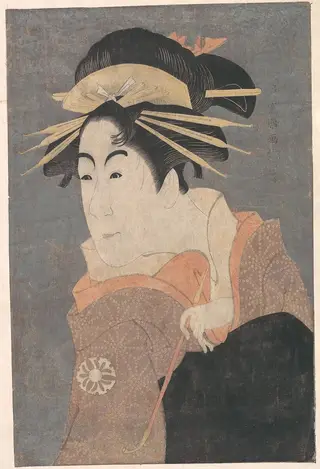
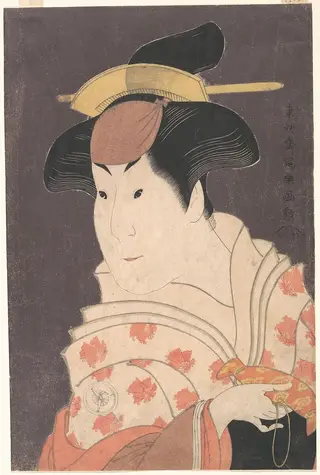 東洲斎写楽画 四代岩井半四郎の重の井 『恋女房染分手綱』|Iwai Hanshirō IV as Shigenoi in the Play "Koinyōbō Somewake Tazuna"
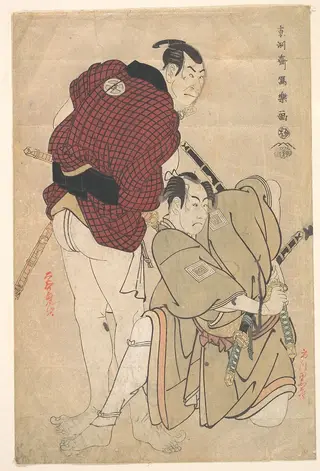
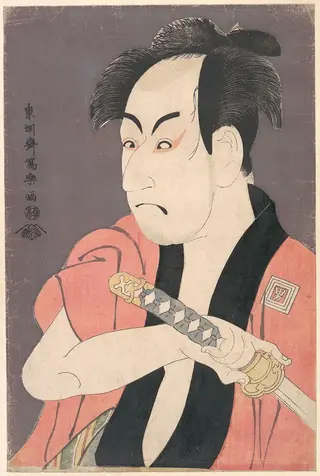 東洲斎写楽画 初代市川男女蔵の奴一平 『恋女房染分手綱』|Ichikawa Omezō I in the Role of Yakko Ippei from the Play "Koinyōbō somewake tazuna"
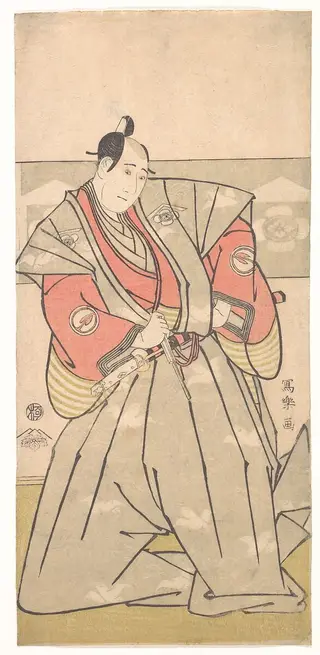
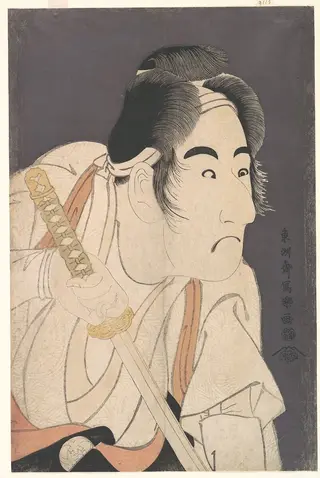 東洲斎写楽画 二世坂東三津五郎の石井源蔵 『花菖蒲文禄曽我』|Bandō Mitsugorō II as Ishii Genzō in the Play "Hana-ayame Bunroku Soga"
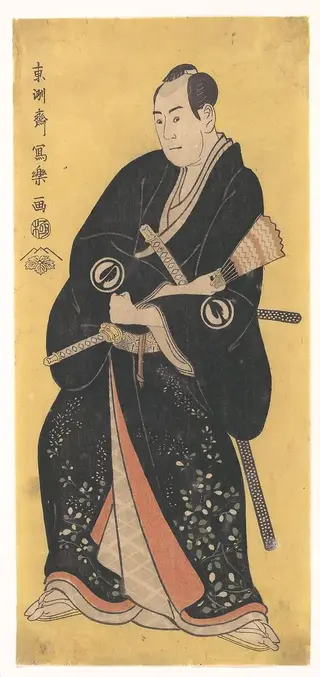 Untitled
- 三代目市川高麗蔵の志賀大七|Kabuki Actor Ichikawa Komazō III as Shiga Daishichi in the Play A Medley of Tales of Revenge (Katakiuchi noriaibanashi)
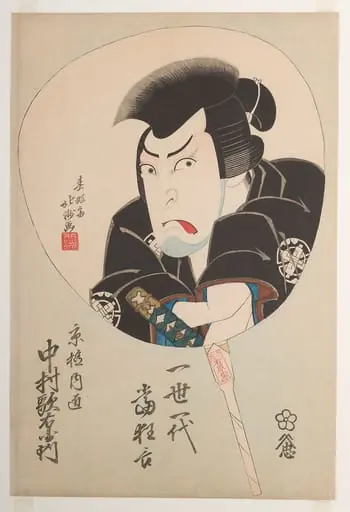 春好斎北洲画 三代目中村歌右衛門 『一世一代当狂言』|Kabuki Actor Nakamura Utaemon III as the Sword Master Kyōgoku Takumi, from the series Issei ichidai atari Kyōgen (Hits of a Lifetime of Kyōgen)
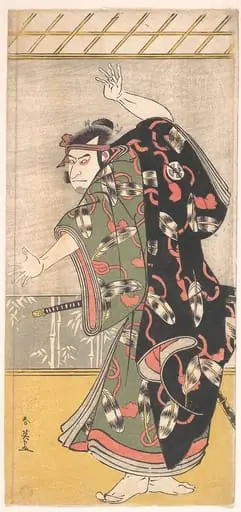 勝川春英画 三代目大谷鬼次|Kabuki Actor Ōtani Oniji III
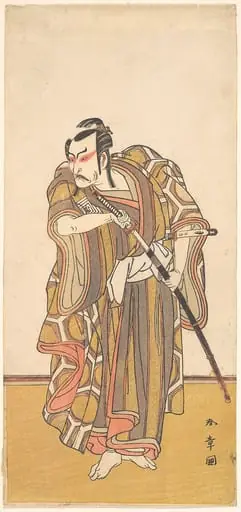 四代目市川團蔵|Kabuki Actor Ichikawa Danzō IV
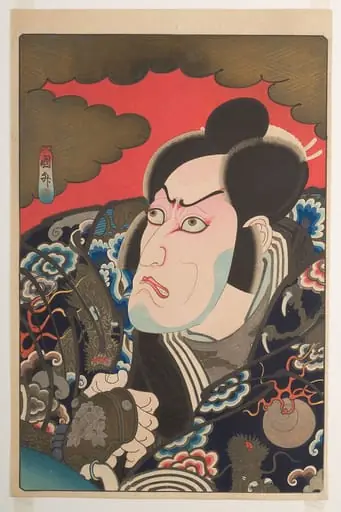 歌川国升画 五代目市川海老蔵 「熊谷次郎直実」|Kabuki Actor Ichikawa Ebizō V as Kumagai Jirō Naozane
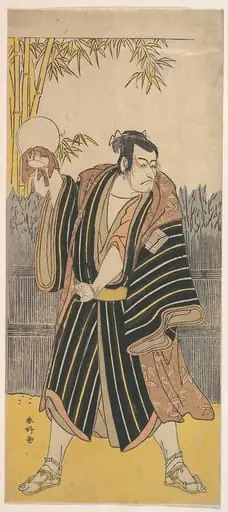 勝川春好画 七代目片岡仁左衛門 五代目市川團十郎|Kabuki Actor Ichikawa Danjūrō V