Artwork
Tablou, ulei pe pânză, „Omagiu”, nesemnat. Nicolae Ceaușescu este prezentat în mijlocul oamenilor muncii vegheat de ”fantomele” eroilor neamului : Burebista, Decebal, Traian, Mircea cel Bătrân, Iancu de Hunedoara, Vlad Țepeș, Ștefan cel Mare, Mihai Viteazul, Dimitrie Cantemir, Nicolae Bălcescu, Alexandru Ioan Cuza (de la stânga la dreapta). Comandat și oferit de Comitetul Județean de Partid Tulcea, 22 ianuarie 1978.
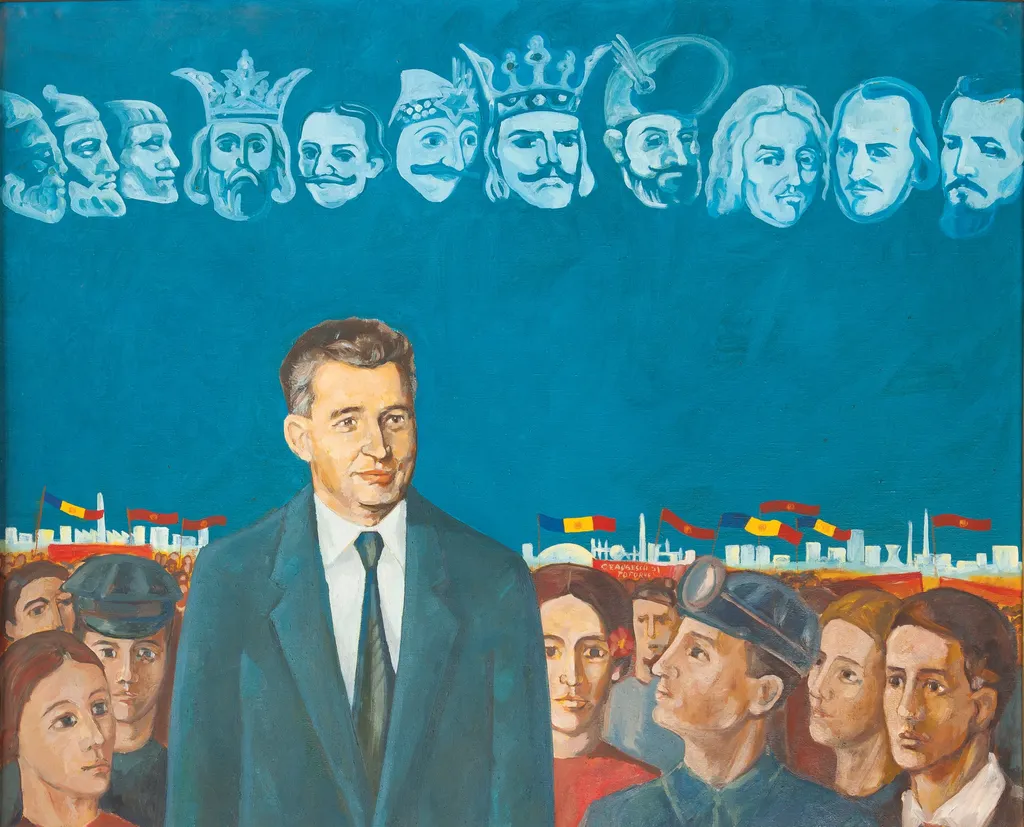
Tablou, ulei pe pânză, „Omagiu”, nesemnat. Nicolae Ceaușescu este prezentat în mijlocul oamenilor muncii vegheat de ”fantomele” eroilor neamului : Burebista, Decebal, Traian, Mircea cel Bătrân, Iancu de Hunedoara, Vlad Țepeș, Ștefan cel Mare, Mihai Viteazul, Dimitrie Cantemir, Nicolae Bălcescu, Alexandru Ioan Cuza (de la stânga la dreapta). Comandat și oferit de Comitetul Județean de Partid Tulcea, 22 ianuarie 1978. is an unspecified painting by the Social Realist artist Unknown. It dates from 1850 and is held in the collection of the National Museum of Romanian History.
About this work
Overview
The work was presented as a symbolic tribute, blending contemporary political imagery with national mythologies.
A large oil-on-canvas portrait, unsigned and commissioned in 1978 by the Tulcea County Party Committee, depicts Nicolae Ceaușescu centrally positioned among spectral figures of Romania’s historical leaders. The work was presented as a symbolic tribute, blending contemporary political imagery with national mythologies. It remains unattributed to a known artist and is now held in the Museum of Ethnography.
Subject & Meaning
Ceaușescu is placed at the visual and ideological center, flanked by eleven historical figures, ranging from ancient Dacian kings to 19th-century reformers, rendered as translucent, ghostly silhouettes. Their passive, fading presence suggests a lineage of authority passing to him, reinforcing state propaganda that framed his rule as the natural culmination of Romanian historical destiny. The blurred figure on the far right implies incomplete execution or deliberate ambiguity.
Technique & Style
The painting employs muted tones, gray, washed red, and ochre, to create an ethereal, almost sepulchral atmosphere. The historical figures are painted with loose, indistinct brushwork, contrasting with Ceaușescu’s more defined, solid form. This visual hierarchy elevates the living leader while subordinating the past to a hazy, symbolic backdrop, evoking both reverence and impermanence.
History & Provenance
Commissioned on January 22, 1978, the work was a state-sponsored gift, likely intended for display in a party or cultural institution. After the 1989 revolution, it was removed from public view and later transferred to the Museum of Ethnography, where it remains as a relic of state iconography rather than a celebrated artwork. Its unsigned status and ambiguous origin reflect the anonymous nature of propaganda production under the regime.
Context
Created during Ceaușescu’s cult of personality peak, the painting draws on nationalist historiography promoted by the regime to legitimize his leadership. By aligning him with medieval rulers and revolutionaries, the image sought to naturalize his authority through myth. The ghostly treatment of historical figures may reflect both artistic limitation and an intentional metaphor for the past’s subordination to the present regime.
Legacy
The painting survives not as a celebrated work of art but as a document of political symbolism. Its muted palette and unfinished quality underscore the fragility of the ideology it sought to immortalize. In its current museum context, it functions as a historical artifact, inviting reflection on how power constructs and manipulates national memory through visual representation.
Artist & collection









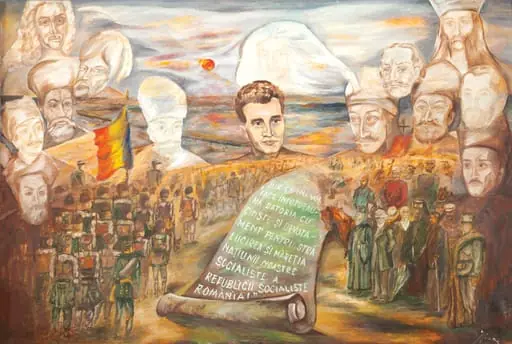
- Tablou, ulei pe pânză, executat de Cercul Pionerilor din Drăgănești. A fost realizat, probabil, pentru aniversarea centenarului Independenței (1977). În parte inferioară este reprezentată trercerea Dunării de către armatele române (inspirat dintr-o coromolitografie a Institutuli de Arte Grafice București). În centrul tabloului este figura lui Nicolae Ceaușescu și un pergament pe care este notat jurământul rostit la investitură ”Jur că îmi voi face întodeauna datoria cu cinste și devotament pentru strălucirea și măreția națiunii noastre socialiste a Republicii Socialiste România”. Pe fundal chipurile eroilor neamului ce-l veghează pe ”marele erou” : Dimitrie Cantemir, Ioan Vodă cel Cumplit, Alexandru cel Bun, Avram Iancu, Constantin Brâncoveanu, Matei Basarab, Neagoe Basarab, Iancu de Hunedoara, Vlad Țepeș, Mihai Viteazul, Alexandru Ioan Cuza, Tudor Vladimirescu. Comandat și oferit de Comitetul Județean de Partid Olt, 24 ianuarie 1978.
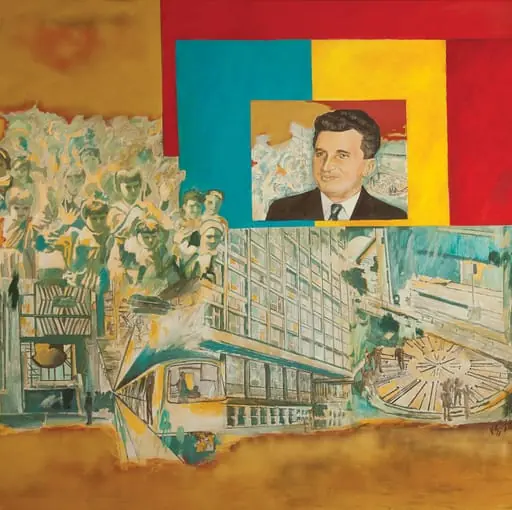 Tablou „Omagiu”, semnat Ion Bitzan și Vladimir Setran.Tabloul prezintă portretul lui Nicolae Ceaușescu încadrat de tricolor în partea dreaptă sus. Restul tabloului este completat de realizările epocii socialiste. Comandat de Comitetul Municipal de Partid 1981.
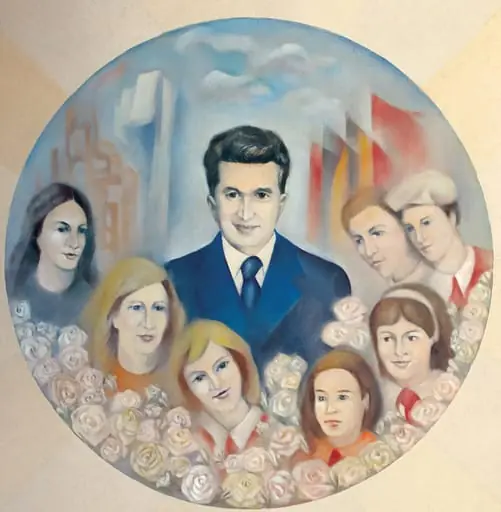 Tablou ulei pe pânză, „Nicolae Ceaușescu”, nesemnat, atribuit lui Ion Pantilie, nedatat. Nicolae Ceaușescu este reprezentat în mijlocul copiilor și tinerilor. Comandat și oferit de Comitetul Județean de Partid Argeș (1988).
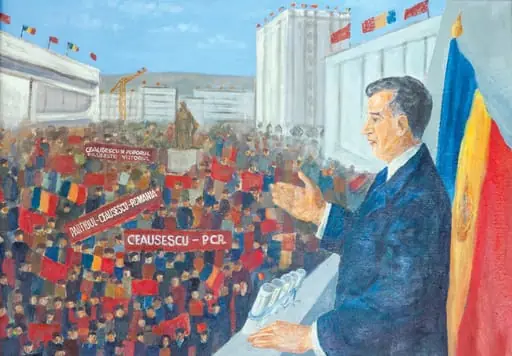 Tablou, ulei pe pânză, „Adunarea populară din Vaslui, iulie 1975”. Realizat de Cercul de Artă Plastică „Arta Vaslui”. Nicolae Ceaușescu vorbește de la balcon oamenilor muncii adunați în centrul civic din Vaslui. Se distinge statuia lui Ștefan cel Mare. Oamenii muncii flutură steaguri și pancarte (”Ceaușescu PCR”, ”Partidul - Ceaușescu - România”, ”Ceaușescu și Poporul Făurește Viitorul”. Oferit de Comitetul Județean de Partid Vaslui, 23 ianuarie 1978.
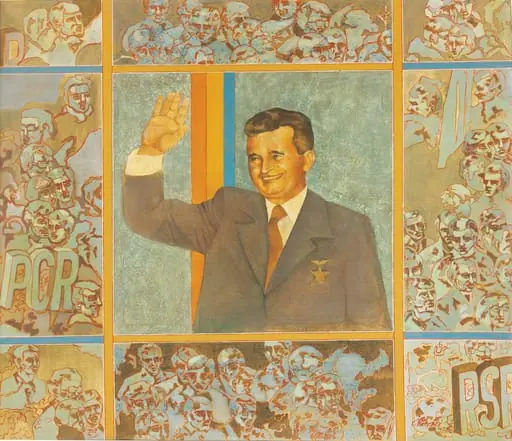 Tablou, ulei pe pânză, „Portret Nicolae Ceaușescu”, semnat în partea dreaptă jos C.Macavei și datat 1978. Tablou împărțit în mai multe registre, în plan central Nicolae Ceaușescu salutând oamenii muncii din celelalte registre. Comandat și oferit de Comitetul Județean de Partid Ilfov, 23 ianuarie 1978.
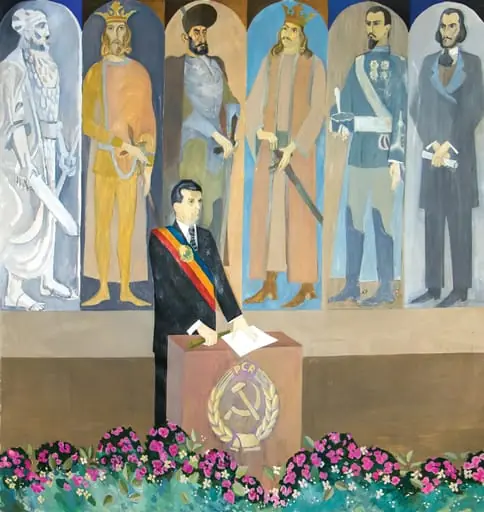 Tablou, ulei pe pânză, ”Omagiu”, semnat Constantin Piliuță. Nicolae Ceaușescu la un pupitru cu însemnele PCR depunând jurământul de învestire; poarte însemnele prezidențiale eșarfa tricoloră cu stema RSR, sceptrul, însemnul de ”Erou al Republicii Socialiste România”. Pe fundal sunt reprezentați Burebista, Mircea cel Bătrân, Mihai Viteazul, Ștefan cel Mare, Alexandru Ioan Cuza, Nicolae Bălcescu, personajele au o mimică solemnă, dau impresia că sunt garanții jurământului pe care-l face Nicolae Ceaușescu. Comandat și oferit lui Nicolae Ceaușescu de Consiliul Culturii și Educației Socialiste, ianuarie 1978.
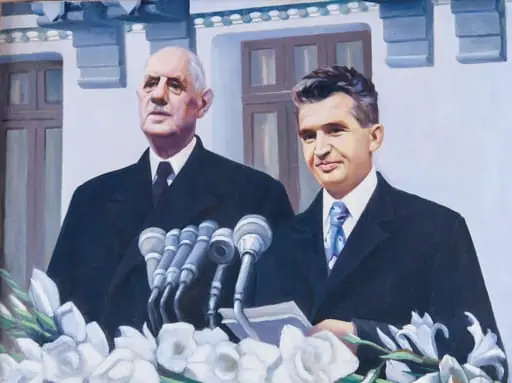 Tablou, ulei pe pânză, Nicolae Ceaușescu și Charles de Gaulle la o adunare populară în Piața Unirii din Craiova, nesemnat, nedatat. Tablou realizat în urma vizitei generalului du Gaulle în România din mai 1968. A fost prima vizită a unui conducător de stat din Occident în România după 1945. Oferit lui Nicolae Ceaușescu în 1973.
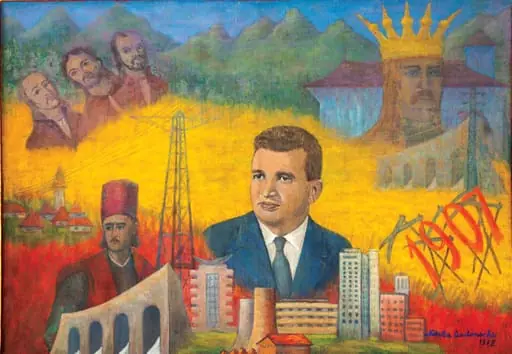 Tablou, ulei pe pânză, „Nicolae Ceaușescu și scene din istoria poporului”, semnat Natalia Gadonschi și datat 1972 în partea dreaptă jos. Nicolae Ceaușescu este reprezentat înconjurat de personalități și evenimenta cu trecut revoluționar: Horia, Cloșca și Crișan, Tudor Vladimirescu, Răscoala de la 1907, Ștefan cel Mare (în fața uneia din ctitoriile sale). Nicolae Ceaușescu este reprezentat ca un ctitor al socialismului. Tablou oferit de Natalia și Nicolae Gadonschi – Țepeș, cu ocazia aniversării zilei de naștere al lui Nicolae Ceaușescu, ianuarie 1978.
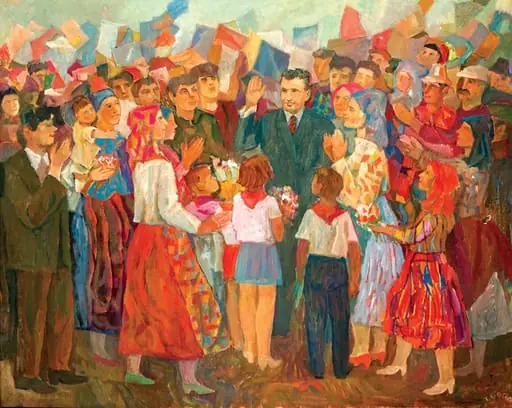 Tablou, ulei pe pânză, „Moment de sărbătoare bihoreană”, semnat T. Goga în partea dreaptă jos. Nicolae Ceaușescu este reprezentat în mijlocul oamenilor munci și al tinerilor din județul Bihor care-l întâmpină cu flori și aplauze. Comandat de Comitetul Județean de Partid Bihor,oferit lui Nicolae Ceaușescu în ianuarie 1978.
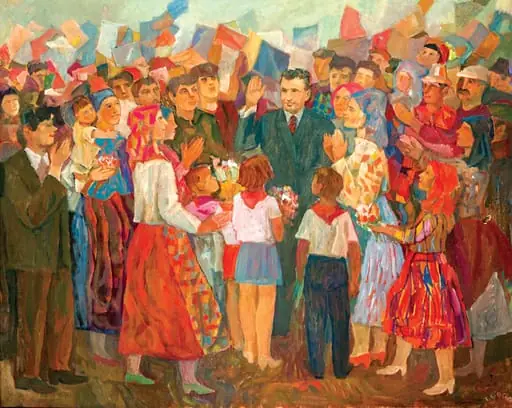 Tablou, ulei pe pânză, „Moment de sărbătoare bihoreană”, semnat în partea dreaptă jos T. Goga. Nicolae Ceaușescu este prezentat în mijolocul oamenilor muncii, bărbați si femei îl înconjoară, pionierii îi oferă flori în semn de bun venit. Oferit de Comitetul Județean de Partid Bihor, 22 ianuarie 1978.
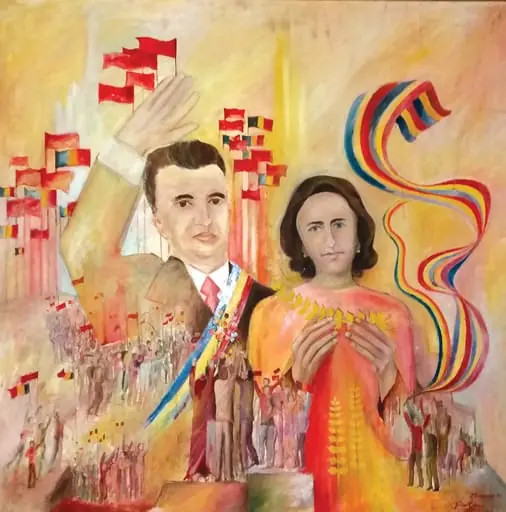 Tablou, ulei pe pânză, ”23 August”, nesemnat, atribuit Teodor Cioată. Nicolae și Elena Ceaușescu sunt prezentați în mijlocul mulțimii. Proporțiile reprezentării personajelor principale, soții Ceaușescu, nu sunt respectate de către artist - capetele sunt prea mari, la fel și mâinile care sunt ținute în poziții nefirești. În partea de jos a tabloului oameni ai muncii cu steaguri ovaționând. Tablou oferit de autor, Iași, august 1974.
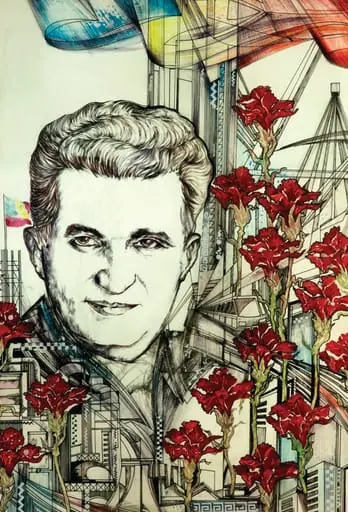 Grafică „Epoca Nicolae Ceaușescu”, tablou atribuit lui Lucian Cociuba. Tabloul îl prezintă pe Nicolae Ceaușescu alături de marile reralizări ale Epocii Socialiste; realizări ornate cu garoafe roșii și tricolor. Comandat de Comitetul Județean de Partid Arad (1988).