Artwork
Waka Poem: “Across the fields and hills…”
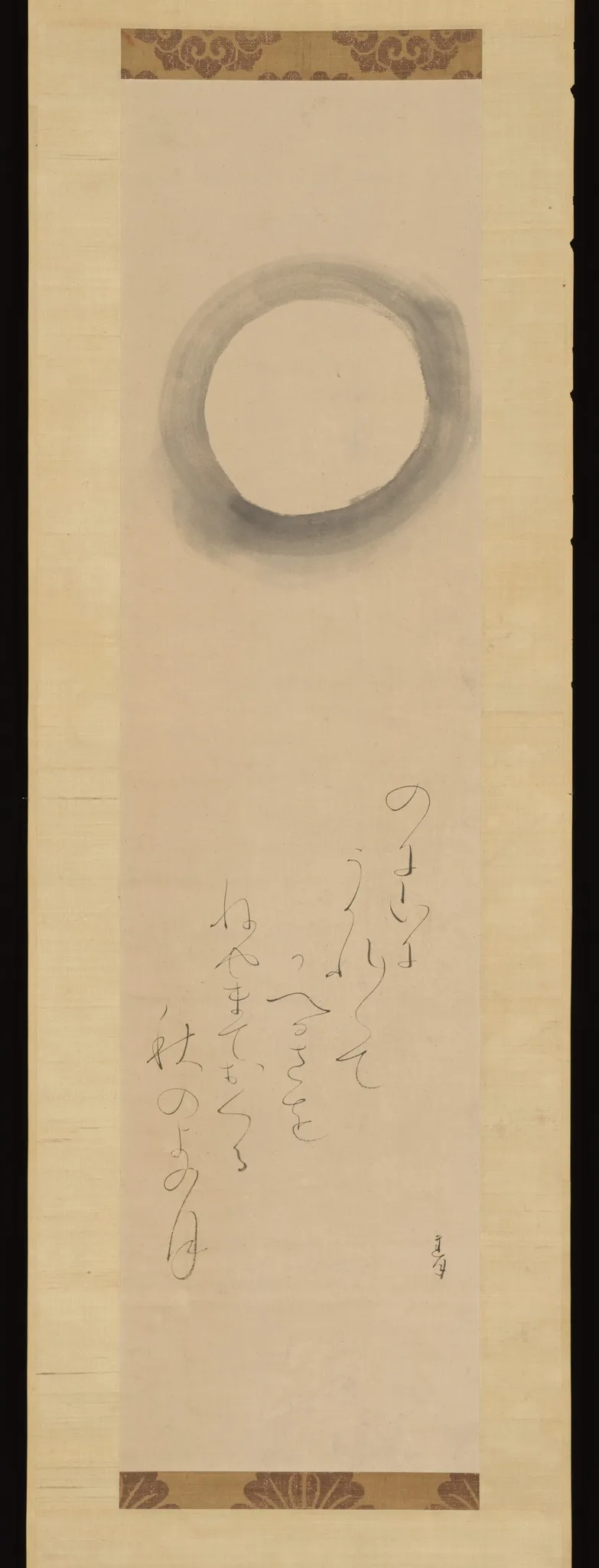
Waka Poem: “Across the fields and hills…” is an unspecified painting by the Nihonga artist Ōtagaki Rengetsu. It dates from 1834 and is held in the collection of the Metropolitan Museum of Art.
About this work
History & Provenance
Its provenance is documented through the museum's acquisition records, establishing its journey from creation to current custodianship.
Ōtagaki Rengetsu created the work in 1834 in Japan, marking its date of creation and origin. The painting entered the collection of the Metropolitan Museum of Art, where it remains today, reflecting a continuous ownership chain from its inception to the present. Its provenance is documented through the museum's acquisition records, establishing its journey from creation to current custodianship.
The painting Waka Poem: "Across the fields and hills..." by Ōtagaki Rengetsu is held in the collection of the Metropolitan Museum of Art in New York. Created in 1834 in Japan, the work remains part of the museum's holdings. No specific accession number or details regarding its exhibition history are provided in the available sources.
Context
Ōtagaki Rengetsu created a waka poem painting titled "Across the fields and hills..." in 1834, reflecting her mastery of poetic inscription within visual art. The work is housed in the Metropolitan Museum of Art collection, underscoring its significance within the broader context of Japanese painting traditions. Scholarship highlights Rengetsu’s integration of calligraphy and painting as a distinct artistic practice during the Edo period, situating this piece within her prolific output of waka-themed works that blend spiritual and aesthetic sensibilities.
Legacy
The waka poem attributed to Ōtagaki Rengetsu, titled “Across the fields and hills...”, has been recognized for its lyrical portrayal of nature and seasonal change, influencing subsequent Japanese poetic and visual traditions. Its inclusion in the Metropolitan Museum of Art’s collection has contributed to broader scholarly discussion of Meiji-era women artists, highlighting Rengetsu’s role in bridging courtly poetry with contemporary painting practices.
Overview
Created in 1834 by the Japanese poet‑artist Ōtagaki Rengetsu, this small painting combines ink calligraphy with a minimalist visual element. It is part of the collection of the Metropolitan Museum of Art in New York. The work presents a brief waka poem rendered in flowing Japanese characters against a plain, light‑toned surface.
Subject & Meaning
The poem, whose opening line translates as “Across the fields and hills...,” evokes a sense of travel and contemplation of the landscape. The solitary dark circle positioned near the top suggests a moon or halo, reinforcing the nocturnal or reflective mood suggested by the verse.
Technique & Style
Rengetsu employed a single brushstroke of dark ink to form the circular motif, allowing it to hover against the unadorned paper. The accompanying text is written in a loose, uneven hand, characteristic of her spontaneous calligraphic approach, which emphasizes natural rhythm over formal precision.
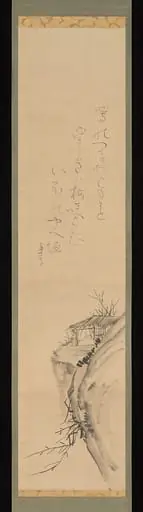
Artist & collection


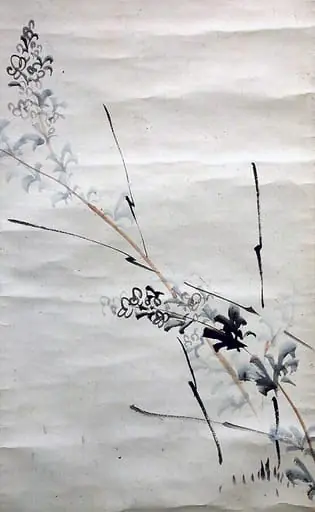
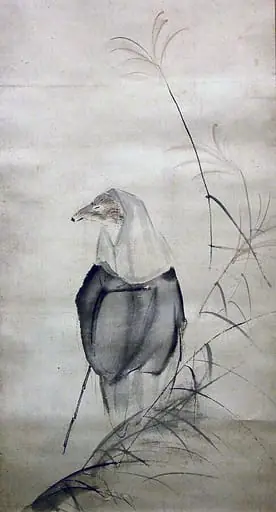
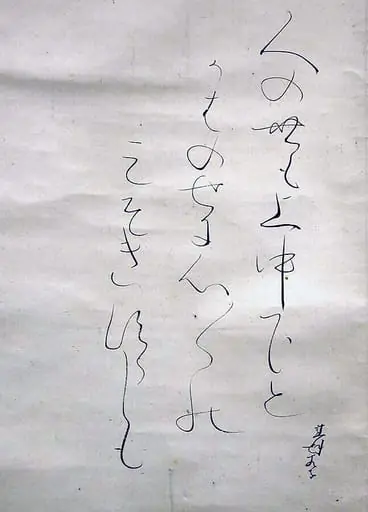
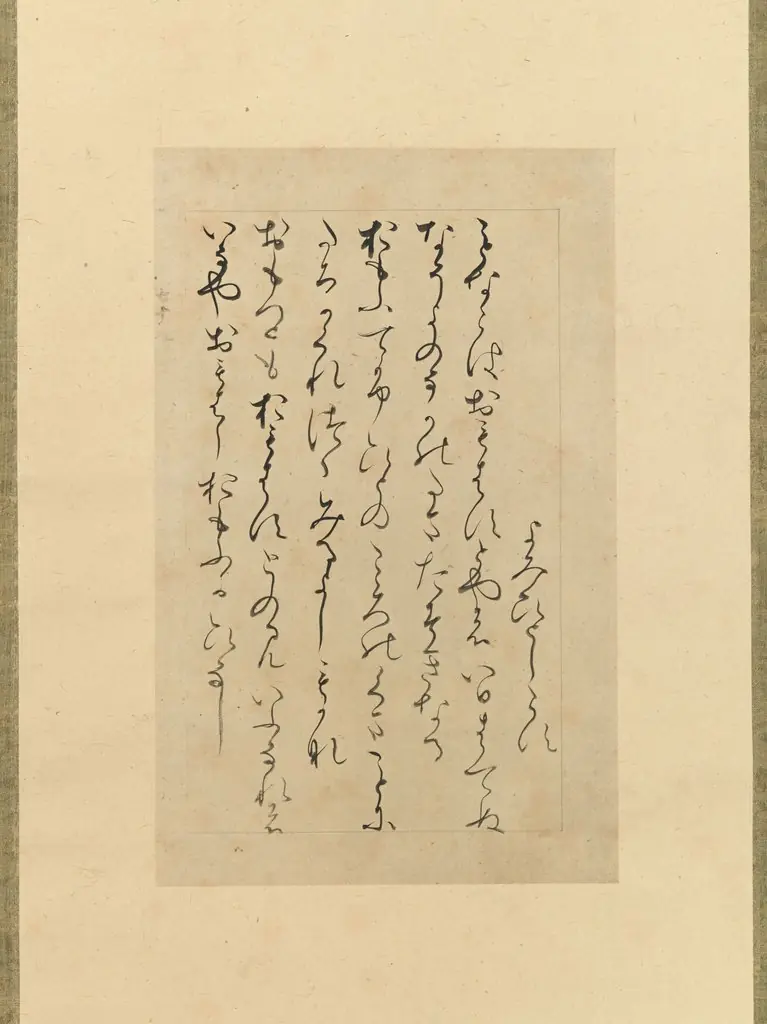
- Three poems from the “Collection of Poems Ancient and Modern” (Kokin wakashū), known as the “Imaki Fragment” (Imaki-gire)
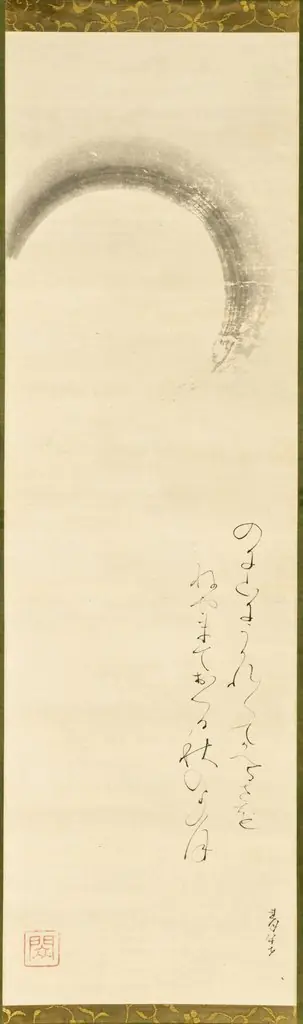 Autumn Moon
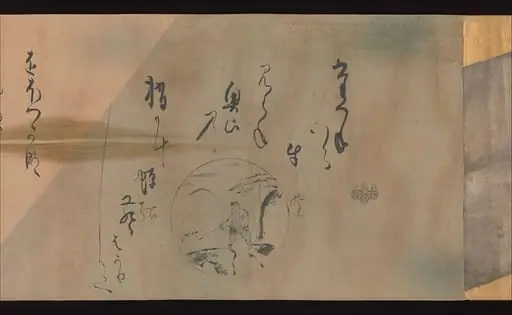 烏丸光広筆 十牛図歌賛図巻|Ten Oxherding Songs
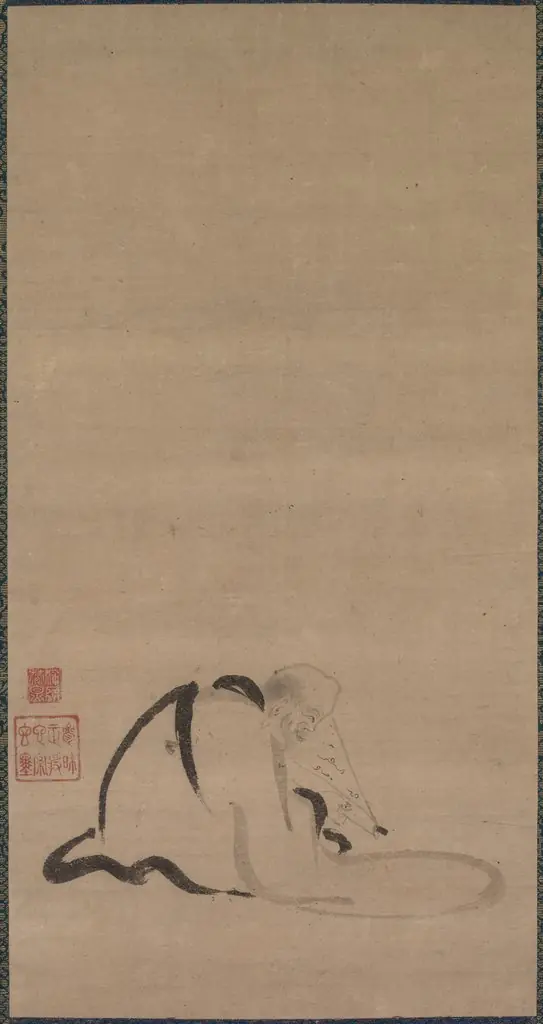 Seated Priest
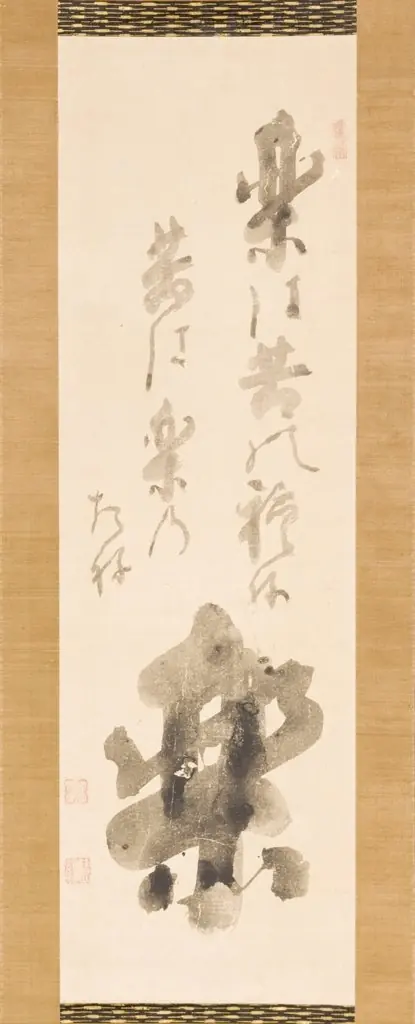 'JOY: In joy lie the seeds of sufferings; in sufferings lie the seeds of joy (RAKU: Raku wa kū no tane; Kū wa raku no tane)'
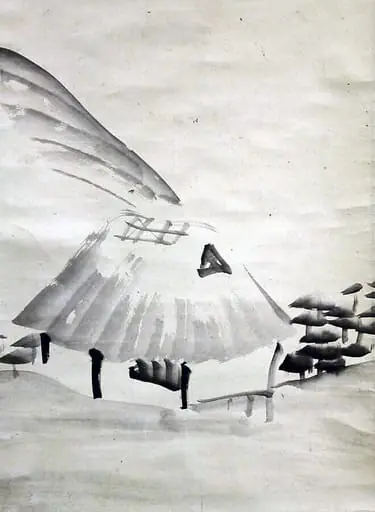
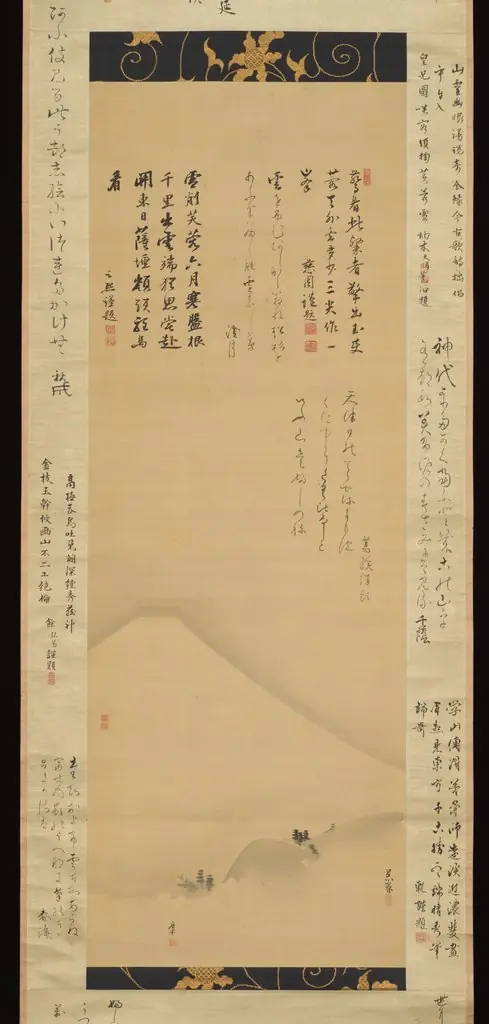 Gassaku: Mount Fuji 合作・富士山図 (Gassaku Fujisan zu)
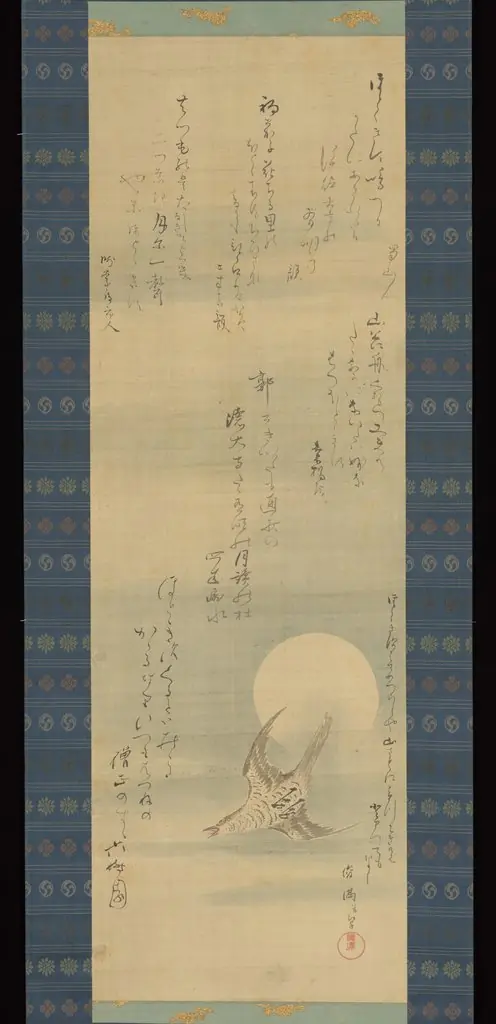 Hototogisu
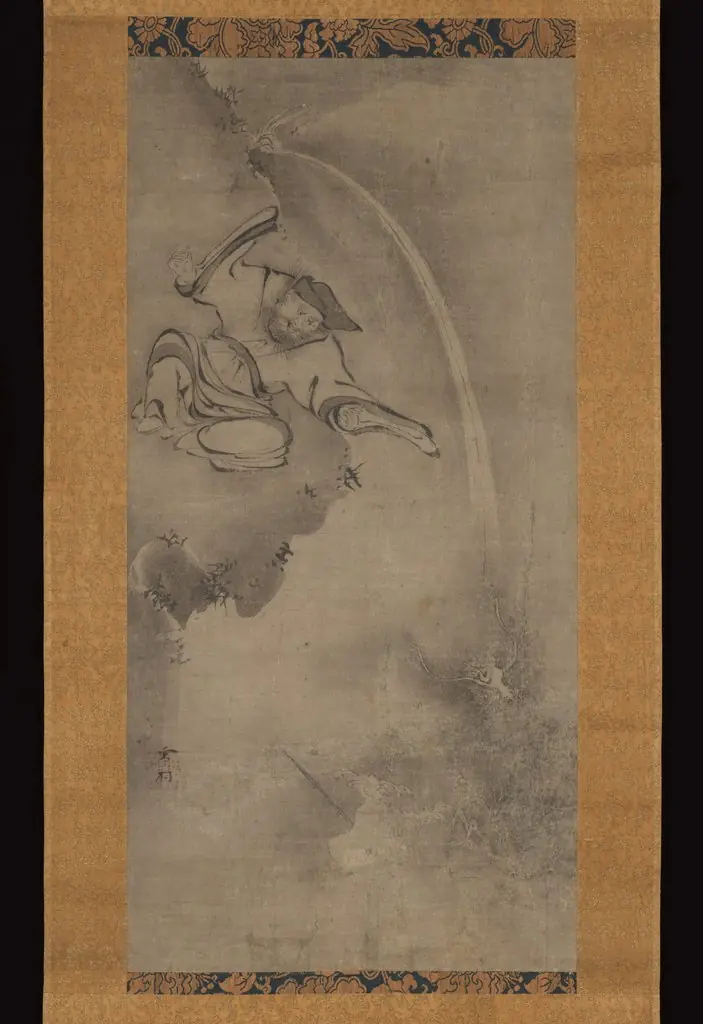 Daoist Master Fei Zhangfang with a Dragon
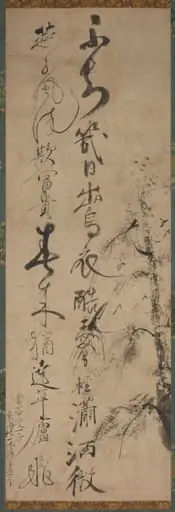 Calligraphy with Willow and Swallows
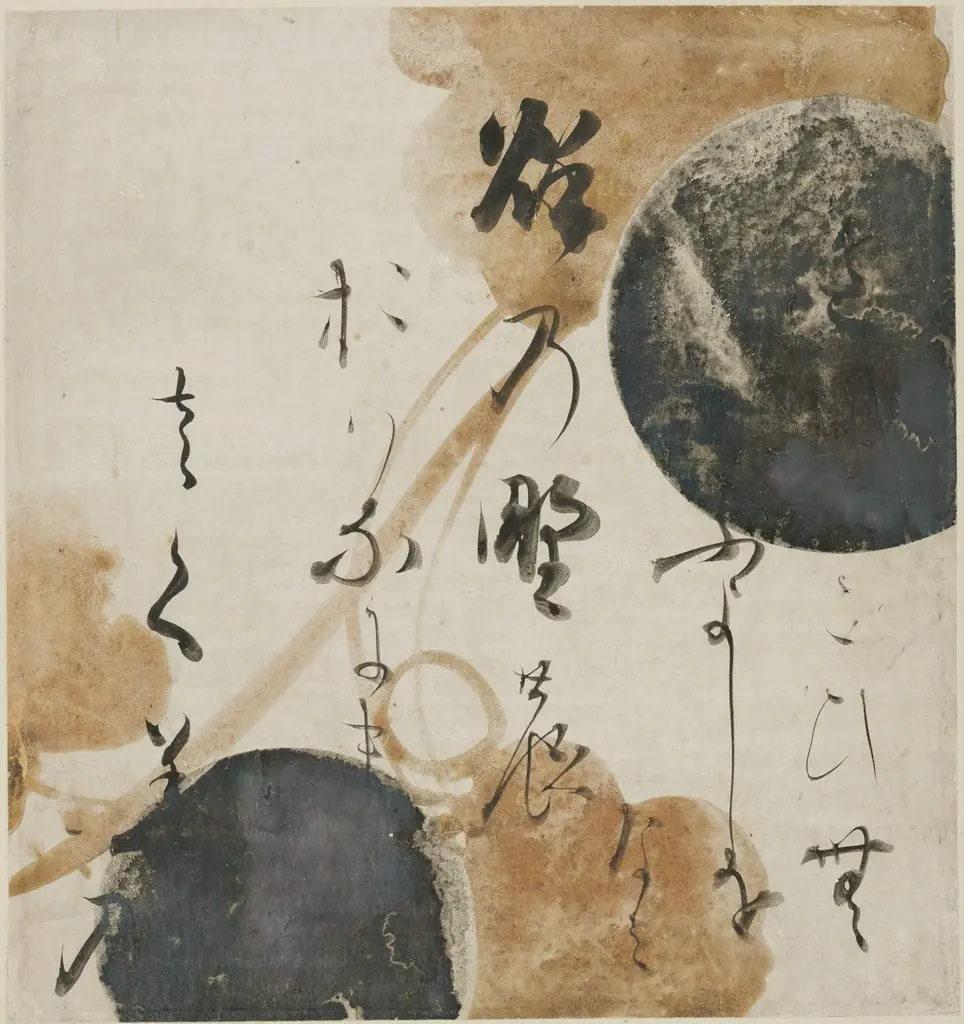 Poem from the Kokin Wakashu ("Collection of Japanese Poems of Ancient and Modern Times")