Artwork
高橋草坪筆 牡丹図|Peony
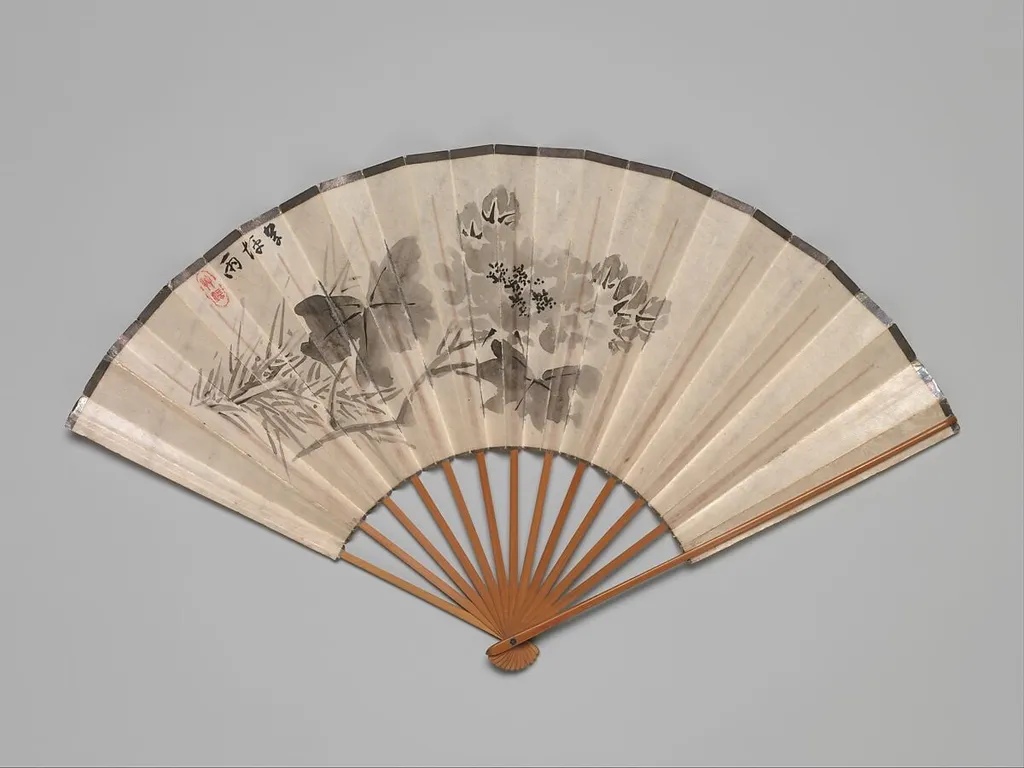
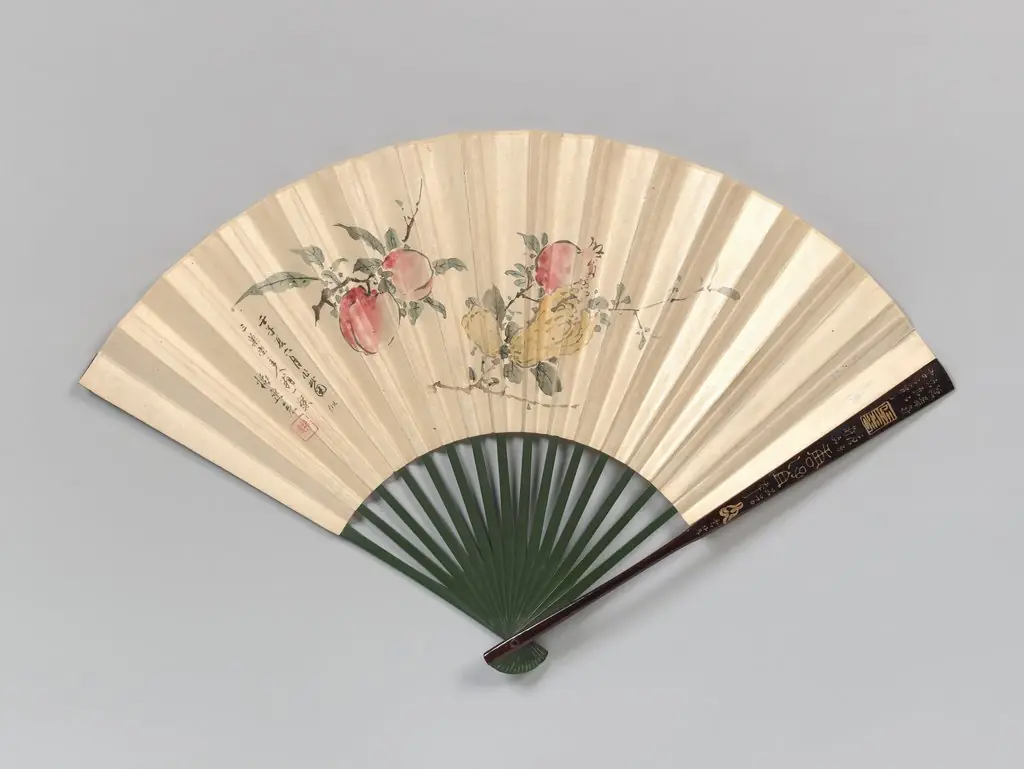
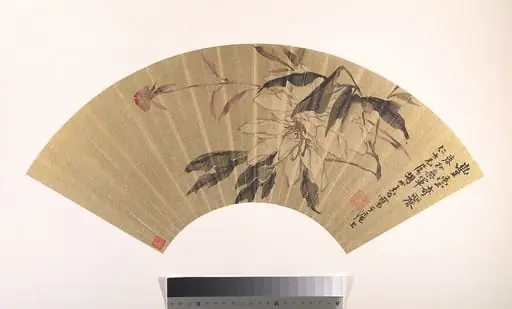
高橋草坪筆 牡丹図|Peony is an ink painting by the Nihonga artist Takahashi Sōhei. It dates from 1819 and is held in the collection of the Metropolitan Museum of Art.
About this work
Subject & Meaning
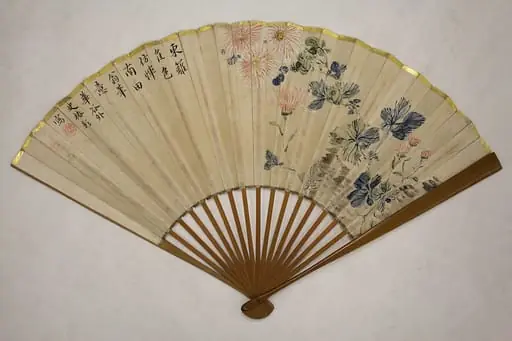
Its depiction on a folding fan, an object linked to elite cultural display, further underscores themes of refined appreciation and seasonal celebration.
The painting depicts a peony, a flower long associated in East Asian art with wealth, honor, and the height of spring. In Chinese and Japanese visual traditions, the peony’s lush blooms and layered petals symbolize prosperity and nobility, often standing for the aristocratic ideal of beauty and abundance. Its depiction on a folding fan, an object linked to elite cultural display, further underscores themes of refined appreciation and seasonal celebration.
The work’s date, 1819, situates it within the late Edo period, when literati aesthetics and vernacular botanical imagery intersected in private collecting and connoisseurship.
Technique & Style
Created in 1819, this work by Takahashi Sōhei is executed as a painting on a folding fan support. The artist utilized ink on paper as the primary medium to depict the subject of peonies. Measuring 25.8 centimeters in height and 43.1 centimeters in width, the piece originates from Japan.
Classified within the still-life genre, the artwork demonstrates the formal qualities of ink wash painting applied to the curved, fan-shaped format. The composition focuses on the botanical representation of the Paeonia, rendered through traditional Japanese painting techniques characteristic of the early 19th century.
History & Provenance
Created in 1819 by the Japanese artist Takahashi Sōhei, this ink-on-paper work depicts peonies on a folding fan. The piece was produced in Japan during the early nineteenth century. While specific details regarding its original commission or intermediate ownership history are not provided in the available records, the artwork is currently held in the collection of the Metropolitan Museum of Art.
The museum lists the work's inception date as January 1, 1819, and documents its physical dimensions as 25.8 cm in height and 43.1 cm in width. The object is classified within the museum's paintings department, representing a still-life genre subject.
The painting is held by the Metropolitan Museum of Art, where it is catalogued under the accession number JP2464. Executed in 1819, the work is a folding fan painted in ink on paper and depicts peonies. It has been associated with the museum’s holdings as part of its Japanese collection since its acquisition.
Overview
This painting, titled Peony, was created by Takahashi Sōhei in 1819. Executed with ink on paper, it is rendered on a folding fan. The artwork features a singular peony bloom, presented as a still life.
This piece exemplifies the artist's approach to depicting natural forms within the specific format of a functional object, highlighting the flower's presence without extensive detail.
Artist & collection