Artwork
清 胡遠 芍藥 扇面|Herbaceous Peony
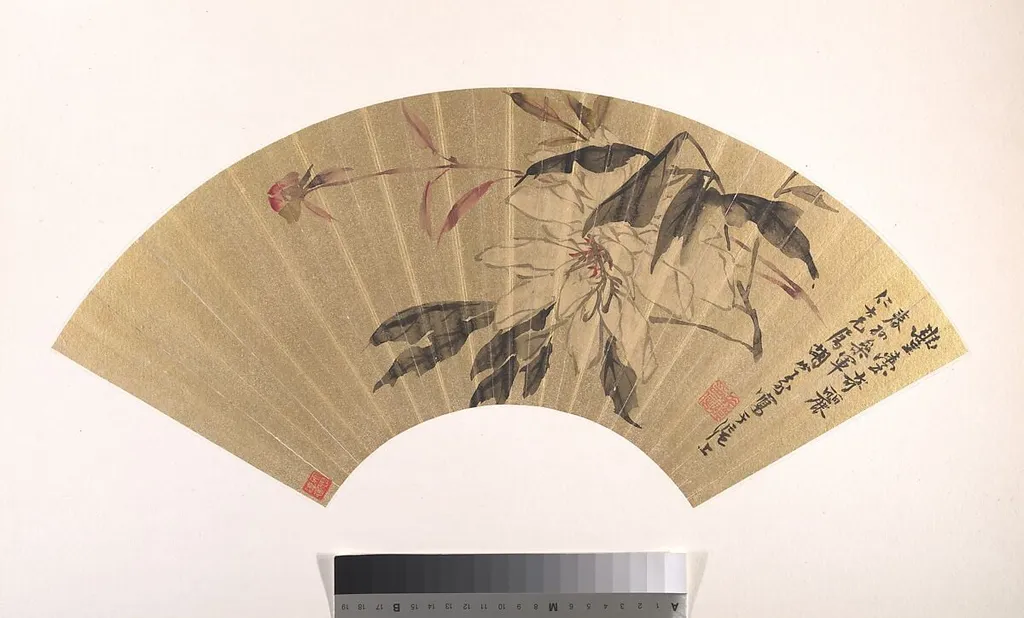
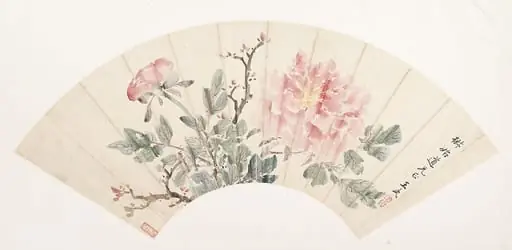
清 胡遠 芍藥 扇面|Herbaceous Peony is an ink painting by the Qing dynasty painting artist Hu Yuan. It dates from 1854 and is held in the collection of the Metropolitan Museum of Art.
About this work
Subject & Meaning
Executed on gold paper, the piece belongs to the still-life genre, isolating the flower to emphasize its natural form and botanical characteristics.
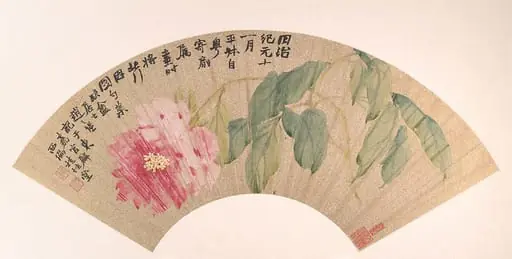
The artwork depicts a herbaceous peony (Paeonia), a subject explicitly identified in the metadata as the sole focus of Hu Yuan's 1854 composition. Executed on gold paper, the piece belongs to the still-life genre, isolating the flower to emphasize its natural form and botanical characteristics. While the provided sources confirm the visual representation of the Paeonia species and its creation by the artist Hu Yuan (also referenced as Hu Gongshou) in the mid-19th century, they do not elaborate on specific traditional iconographic associations or symbolic meanings attributed to the flower within this specific context.
Consequently, the work's meaning is derived strictly from its classification as a floral still life, presenting the herbaceous peony as the primary aesthetic and representational element without further allegorical interpretation in the available records.
Technique & Style
The work is a Qing‑period folding fan that was later mounted as an album leaf; its support consists of gold‑paper, upon which Hu Yuan applied ink outlines and muted polychrome washes to render a single herbaceous peony (Paeonia). The fan measures 18.1 cm in height and 52.7 cm in width, a size recorded in the Metropolitan Museum of Art catalogue (1854). Executed in China, the piece exemplifies Qing still‑life techniques through fine brush lines, subtle gradations of colour, and a restrained compositional balance.
The ink‑and‑color medium on gold paper preserves a delicate handling that has remained stable in the museum’s collection.
History & Provenance
Created in 1854 by the Chinese artist Hu Yuan (also known as Hu Gongshou), this work depicts herbaceous peonies rendered in ink and color on gold paper. Originally executed as a folding fan, the piece was subsequently mounted as an album leaf. The artwork was produced in China and currently resides in the collection of the Metropolitan Museum of Art.
While the specific circumstances of its commission or intermediate ownership history prior to entering the museum are not detailed in the available records, the date of inception is firmly established as 1854.
The folding fan painting titled Herbaceous Peony by Hu Yuan, dated 1854, is held in the collection of the Metropolitan Museum of Art. The work, executed in ink and color on gold paper, depicts the herbaceous peony and measures 18.1 by 52.7 centimeters. While the artist is identified as Hu Yuan in some records, the metadata also associates the creator with the name Hu Gongshou.
The piece is classified as a painting within the museum's holdings and originates from China. No specific accession number or detailed exhibition history is provided in the available records.
Context
Hu Yuan’s 1854 folding‑fan album leaf, titled Herbaceous Peony, exemplifies Qing‑dynasty flower‑and‑bird painting through its precise ink and color rendering on gold paper. The work’s classification as a still_life and its depiction of Paeonia reflect the period’s fascination with botanical subjects and the genre’s integration into decorative arts. Its inclusion in the Metropolitan Museum of Art’s collection and the existence of a dedicated Wikidata entry indicate sustained scholarly attention and institutional validation.
As a representative example of mid‑19th‑century Chinese art, the piece contributes to the narrative of how traditional motifs were adapted for private album formats, informing broader assessments of Qing artistic production.
Overview
Created in 1854 by Hu Yuan (1823–1886), this work depicts a single herbaceous peony rendered in ink and color on gold-flecked paper. Executed as a folding fan later mounted as an album leaf, the composition centers on a large bloom with soft pink and white petals that spill dynamically across the surface. The artist employs quick, dark strokes to define the curling leaves, creating a textural contrast against the shimmering, metallic ground.
This piece reflects the mid-19th-century Qing dynasty practice of producing high-quality fan paintings for wealthy collectors, where the use of gold paper served as a marker of luxury and refined taste. Hu Yuan, a prominent figure in the Shanghai School, is known for his elegant floral subjects that balance traditional brushwork with a vibrant, decorative sensibility. The work exemplifies his ability to adapt the intimate scale of fan painting to a format suitable for album viewing, preserving the immediacy of the brush while utilizing the opulent material to enhance the visual impact of the floral motif.
Artist & collection