Artwork
高橋草坪筆 墨竹図|Bamboo in Summer
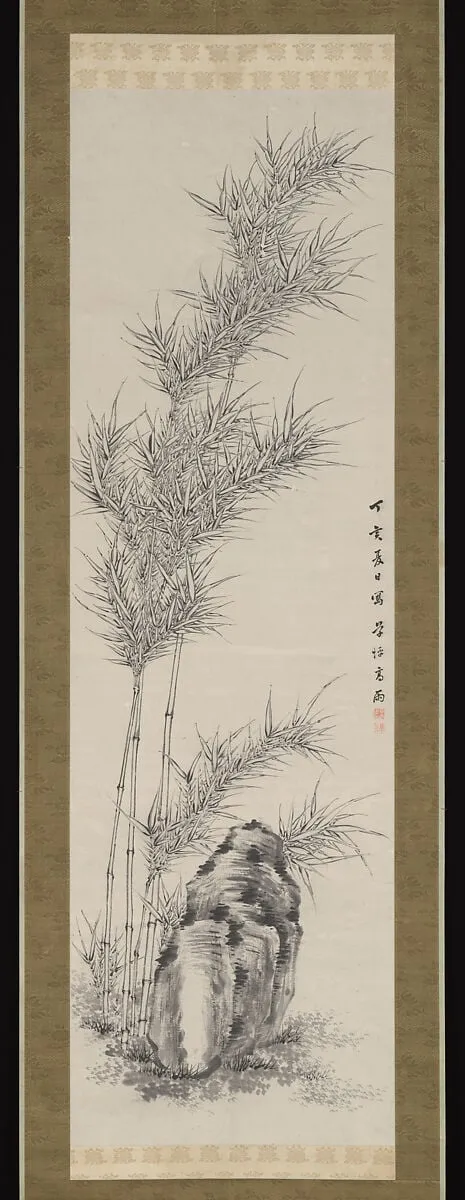
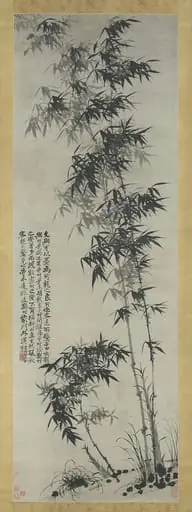
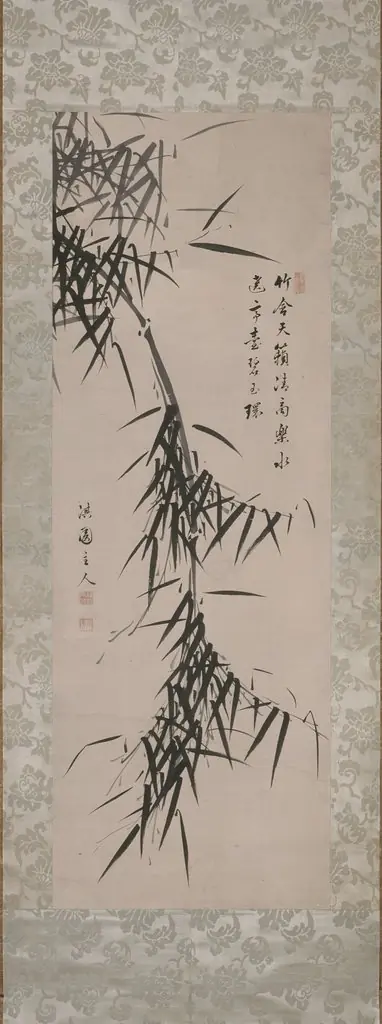
高橋草坪筆 墨竹図|Bamboo in Summer is an ink painting by the Romanticist artist Takahashi Sōhei. It dates from 1827 and is held in the collection of the Metropolitan Museum of Art.
- Accession no.
- 2005.172
- Credit line
- Gift of Gitter-Yelen Collection, 2005
About this work
Subject & Meaning
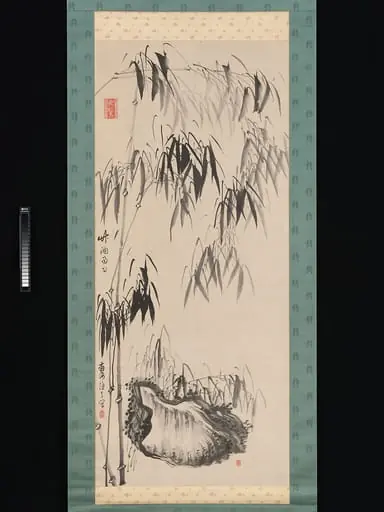
Executed as an ink-on-paper hanging scroll, the piece belongs to the landscape genre and presents a naturalistic image of bamboo, emphasizing the plant's form.
The painting 高橋草坪筆 墨竹図, created in 1827 by Takahashi Sōhei, depicts bamboo (Bambusoideae) as its central subject. Executed as an ink-on-paper hanging scroll, the piece belongs to the landscape genre and presents a naturalistic image of bamboo, emphasizing the plant's form. By focusing on this subject, the artwork conveys the artist's interest in natural motifs characteristic of early-19th-century Japanese painting, situating bamboo as both a visual motif and a subject of study within the broader tradition of landscape depiction.
Technique & Style
Created in 1827, Bamboo in Summer is executed as a hanging scroll using ink on paper, a medium characteristic of traditional Japanese painting. The piece is attributed to Takahashi Sōhei and belongs to the landscape genre. The formal composition focuses on the botanical subject, rendered without color and relying solely on the tonal variations of ink to define the form and texture of the bamboo stalks and leaves. The work is currently held in the collection of the Metropolitan Museum of Art.
History & Provenance
Takahashi Sōhei painted Bamboo in Summer in 1827 in Japan, producing a hanging scroll of ink on paper that depicts bamboo. The work is classified as a landscape painting created in the early nineteenth century. It entered the collection of the Metropolitan Museum of Art, where it remains part of the institution's holdings of Japanese art. No documentation of a specific commission or earlier owners is available, leaving the early ownership chain unspecified.
Context
The work is a hanging scroll by Takahashi Sōhei dated 1827, executed in ink on paper, categorized as a landscape painting depicting bamboo. Its inclusion in the Metropolitan Museum of Art collection signals scholarly recognition of its significance within early 19th-century Japanese monochrome traditions. Art historians have examined the piece as part of Sōhei's oeuvre, highlighting how his treatment of bamboo reflects contemporary aesthetic interests in natural subjects and the literati tradition.
Legacy
The hanging scroll by Takahashi Sōhei, dated 1827, is part of the Metropolitan Museum of Art collection. It depicts bamboo and is recognized as a representative example of early 19th-century Japanese landscape painting. The work's inclusion in major exhibitions and catalogues has reinforced Takahashi Sōhei's reputation as a practitioner of ink bamboo, ensuring the piece's place within the canon of Japanese painting.
Overview
Takahashi Sōhei created Bamboo in Summer (墨竹図) in 1827. This hanging scroll, rendered with ink on paper, presents a focused depiction of a single bamboo stalk. The artwork exemplifies a common subject in East Asian painting, where natural elements are explored through minimalist techniques.
It offers a quiet contemplation of the plant's form and vitality, characteristic of the artist's approach to landscape.
Artist & collection