Artwork
清 湯貽汾 山水圖 軸|Landscape
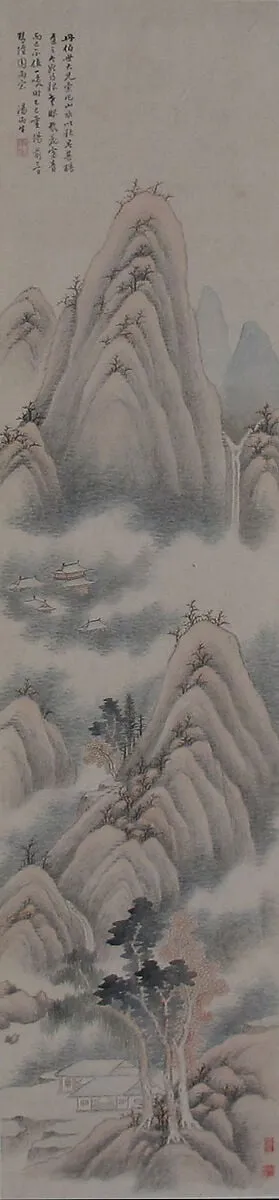
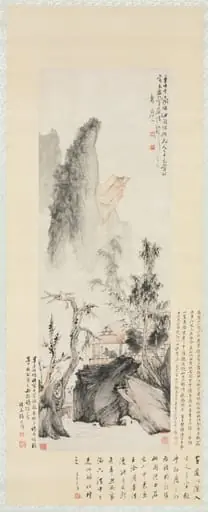
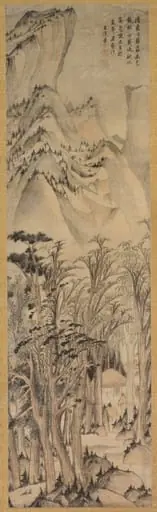
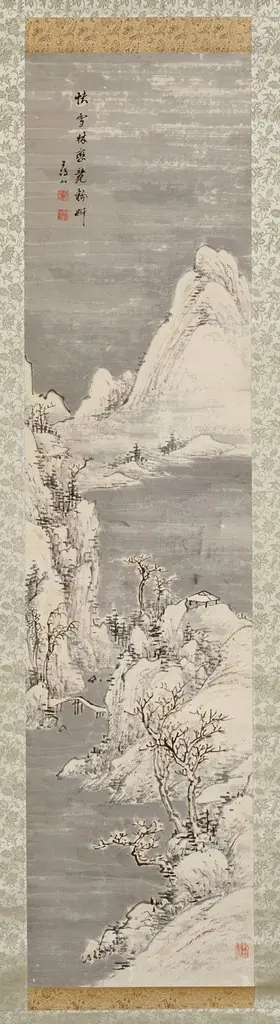
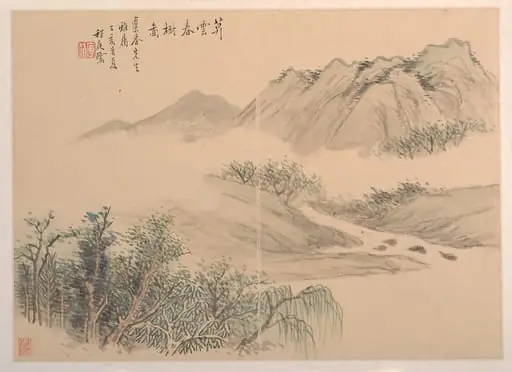
清 湯貽汾 山水圖 軸|Landscape is an ink painting by the Qing dynasty painting artist Yu Sheng. It dates from 1845 and is held in the collection of the Metropolitan Museum of Art. Tang Yifen's "Landscape" (山水圖 軸), created in 1845, is an ink-on-paper hanging scroll.
About this work
Subject & Meaning
Its subject consists of a stylized mountain formation within a broader landscape, a motif commonly associated with the visual language of Chinese scholarly art.
The hanging scroll landscape titled 清 湯貽汾 山水圖, painted by Tang Yifen in 1845 in China, portrays a traditional mountain scene rendered in ink on paper. As documented in the Metropolitan Museum of Art’s catalogue, the work belongs to the landscape painting genre and is classified as a Chinese landscape artwork. Its subject consists of a stylized mountain formation within a broader landscape, a motif commonly associated with the visual language of Chinese scholarly art.
The painting is part of the Metropolitan Museum of Art’s collection, reflecting its significance within the museum’s holdings of 19th‑century Chinese works.
History & Provenance
The hanging scroll titled 清 湯貽汾 山水圖 was created in 1845 by the Chinese painter Tang Yifen. Executed in ink on paper, the work depicts a mountain landscape typical of the period. According to the Metropolitan Museum of Art’s catalogue, the scroll entered the museum’s collection and remains on view in its Chinese painting galleries.
The piece was produced in China and is classified as a landscape painting within the museum’s holdings. Its dating is confirmed by the museum’s records, which list the inception date as 1845.
清 湯貿 山水圖 軸, painted by Tang Yifen in 1845, is a hanging scroll in ink on paper that belongs to the collection of the Metropolitan Museum of Art in New York. The museum’s catalogue lists the work within its Chinese painting holdings but does not assign a separate accession number in the available documentation. Exhibition records are not mentioned in the cited sources, suggesting the scroll has not been included in documented exhibitions to date.
Its current location is the Metropolitan Museum of Art, where it is preserved as part of the institution’s Asian art collection.
Legacy
The painting by Tang Yifen, dated 1845, is regarded as a significant example of Qing-era landscape art and has shaped later scholarship on Chinese ink-wash traditions. Its classification as a hanging scroll depicting mountains places it within the broader lineage of Chinese landscape painting, influencing subsequent artists who studied its compositional techniques. The work’s inclusion in the Metropolitan Museum of Art’s collection has increased its visibility in Western art history, making it a reference point for exhibitions and academic studies of 19th-century Chinese art.
Documentation of its creation in China and its genre as landscape painting underscore its role in the transnational exchange of artistic ideas.
Overview
Tang Yifen's "Landscape" (山水圖 軸), created in 1845, is an ink-on-paper hanging scroll. This painting exemplifies traditional Chinese landscape art, presenting a serene natural environment. The composition centers on a towering mountain, rendered with delicate brushwork that suggests a tranquil, immersive experience for the viewer.
Technique & Style
Executed entirely in ink on paper, this work showcases a nuanced command of monochrome techniques. Tang Yifen employed dry, textured brushstrokes to delineate the rugged forms of the mountains and rocks. These contrast with soft, diluted washes that create the misty atmosphere and expansive sky.
The absence of color, combined with this varied brushwork, imbues the scene with a delicate, almost ethereal quality, suggesting a living, breathing landscape.
Context
This hanging scroll aligns with the venerable tradition of Chinese landscape painting, often referred to as shanshui (mountain-water) painting. Such works frequently explore themes of human integration with the natural world, philosophical reflection, and the pursuit of inner peace. Tang Yifen's composition exemplifies these enduring aesthetic and conceptual principles, offering a characteristic representation of the genre's contemplative spirit.
Artist & collection

Artist
Tang Yifen (Wade–Giles: T'ang I-fen, traditional: 湯貽汾, simplified: 汤贻汾, pinyin: Tāng Yífén); ca.