Artwork
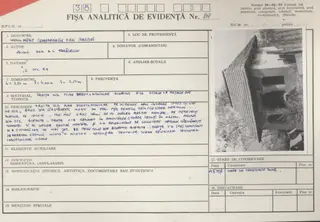
Monument al eroilor căzuți în Primul Război Mondial
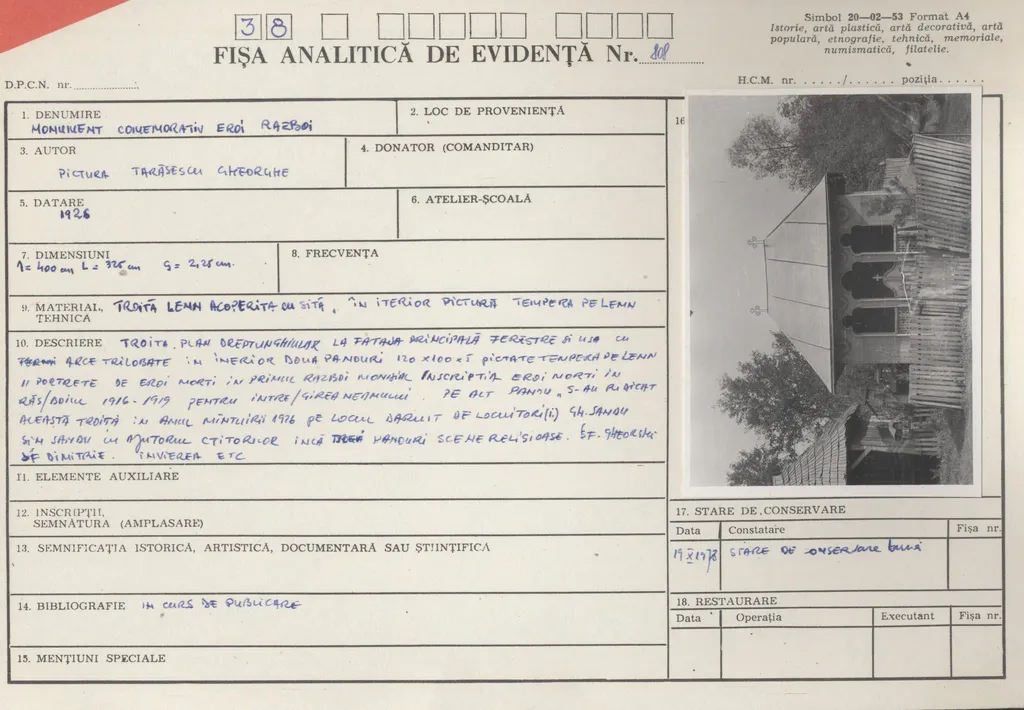
Monument al eroilor căzuți în Primul Război Mondial is an unspecified painting by Tarăsescu Gheorghe. It dates from 1926 and is held in the collection of the National Heritage Institute, Bucharest.
About this work
The building looks like a church or public monument, with a simple but strong design.
This painting shows a tall, dark building with a mix of brick and stone. The structure has a steep roof, narrow windows, and a tower on the right side. Trees and a hill appear in the background, giving it a quiet, slightly old feel.
The artist painted it in 1926 as a memorial for soldiers who died in World War I. The building looks like a church or public monument, with a simple but strong design.
If you like this style, check out the Museum of Ethnography for more pieces like it.
Overview
Created in 1926 by Gheorghe Tarăsescu, this work records a solemn architectural scene that serves as a tribute to those who perished in the First World War. The image is part of the collection of the Museum of Ethnography, where it is presented as a historical and visual document of post‑war commemoration.
Subject & Meaning
The central figure of the composition is a tall, dark edifice whose mixed brick and stone façade conveys a sense of permanence. Its steeply pitched roof, narrow apertures and a solitary tower on the right suggest a civic or ecclesiastical monument, deliberately evoking collective memory of the fallen soldiers.
Technique & Style
Tarăsescu renders the structure with restrained detail, emphasizing solid geometric forms over decorative excess. The limited palette and careful handling of light create a muted atmosphere, while the inclusion of distant trees and a low hill adds depth without detracting from the building’s austere presence.
History & Provenance
The piece was produced shortly after the war’s end, aligning with a broader wave of memorial art in Romania. It entered the Museum of Ethnography’s holdings early in the institution’s development, where it remains catalogued as a visual record of early twentieth‑century commemorative practices.
Context
In the interwar period, public monuments often blended religious and secular motifs to foster national unity. This work reflects that trend, using architectural symbolism to embody sacrifice and remembrance within a landscape that hints at both rural tranquility and the lingering impact of conflict.
Artist & collection
Artist
Museum
National Heritage Institute, Bucharest
Continue through works from the same source collection.
- Monument al eroilor căzuți în Primul Război Mondial și în Al Doilea Război Mondial
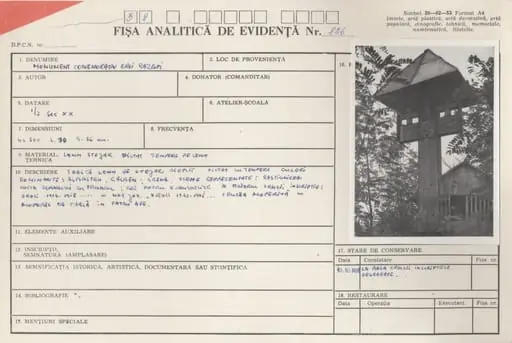 Monument al eroilor căzuți în Primul Război Mondial
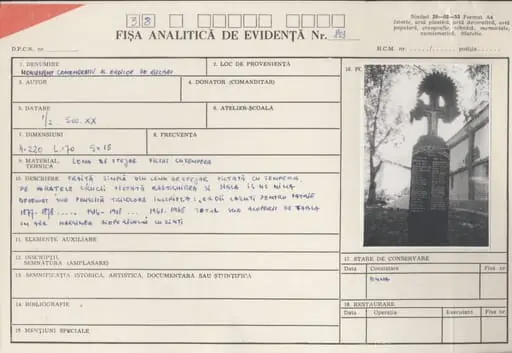 Monument al eroilor căzuți în Războiul de Independență, în Primul Război Mondial și în Al Doilea Război Mondial
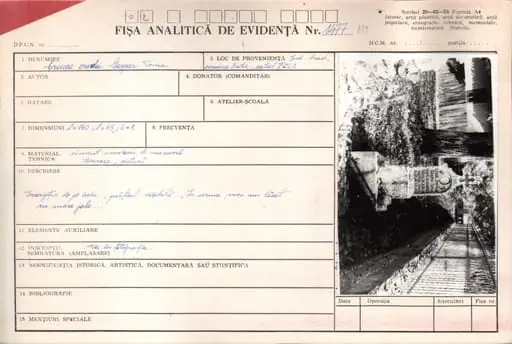 Monument al eroilor căzuți în Al Doilea Război Mondial
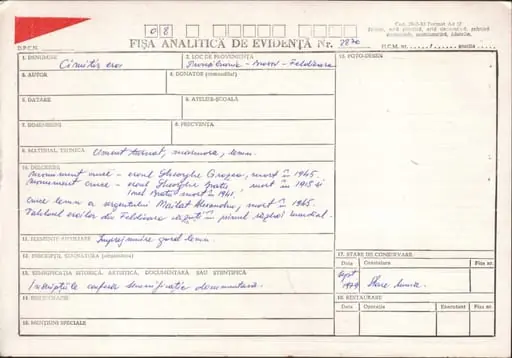 Monument al eroilor căzuți în Primul Război Mondial și în Al Doilea Război Mondial
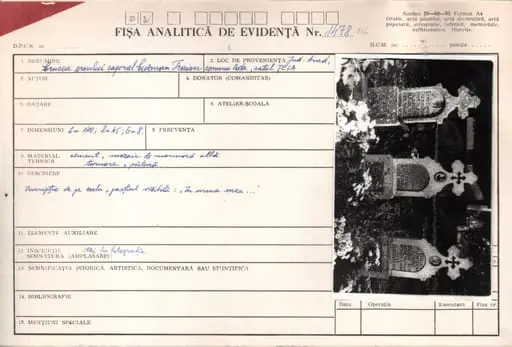 Monument al eroului Cuzman Traian căzut în Al Doilea Război Mondial
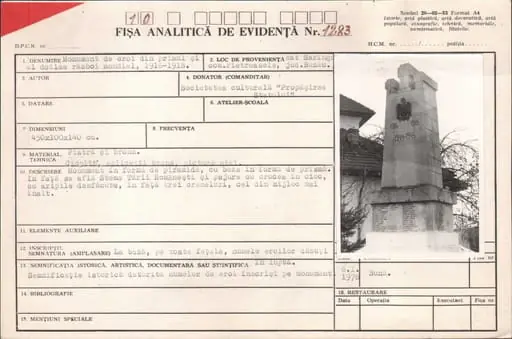 Monument de eroi din Primul și Al Doilea Război Mondial
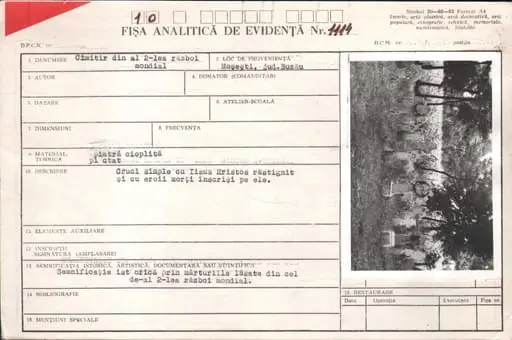 Cimitir din Al Doilea Război Mondial
 Monumentul Independenței Tulcea