Artwork
Monument al eroilor căzuți în Războiul de Independență, în Primul Război Mondial și în Al Doilea Război Mondial
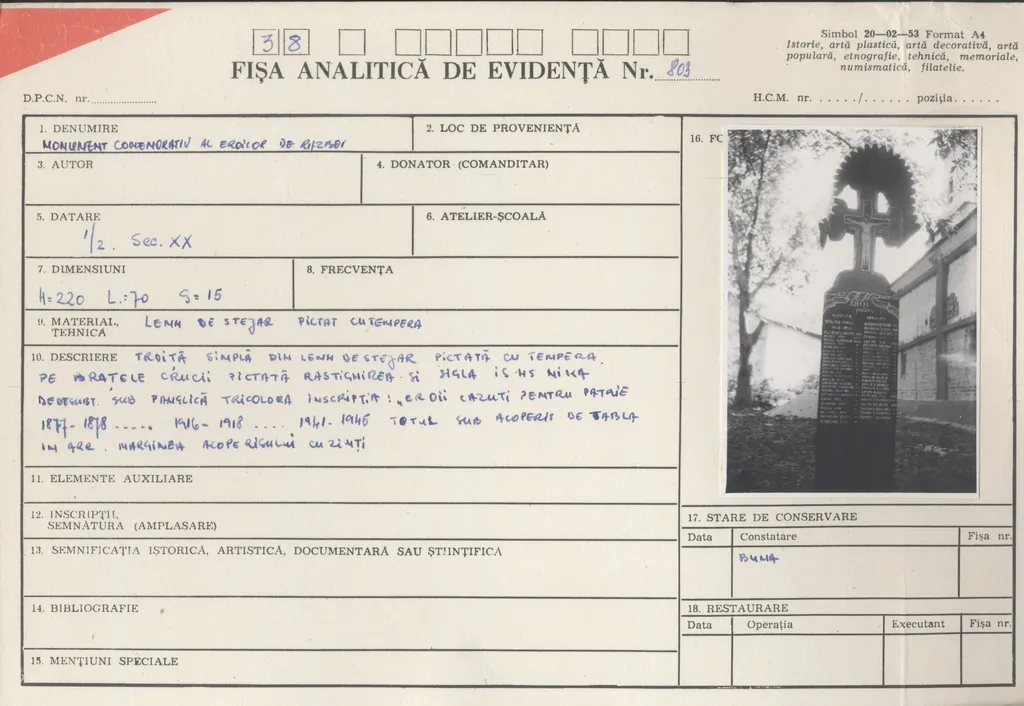
Monument al eroilor căzuți în Războiul de Independență, în Primul Război Mondial și în Al Doilea Război Mondial is an unspecified painting by Unknown. It dates from 1850 and is held in the collection of the National Heritage Institute, Bucharest.
About this work
Overview
The monument, titled Monument al eroilor căzuţi în Războiul de Independenţă, în Primul Război Mondial şi în Al Doilea Război Mondial, consists of a tall wooden cross erected outdoors. The cross, rough‑hewn and painted with tempera, is surmounted by a carved figure wielding a sword, and rests on a stone plinth that bears the names of the deceased.
Subject & Meaning
The carved figure symbolizes the armed struggle of the nation, while the inscription on the stone base records the individuals who perished in three distinct conflicts: the War of Independence, the First World War, and the Second World War. The monument functions as a collective site of remembrance for local soldiers across generations.
Technique & Style
The cross is constructed from timber and finished with a tempera coating, a straightforward, weather‑resistant paint suitable for outdoor use. The stone base is capped by a metal roof, a practical element designed to shield the engraved names from the elements, preserving legibility over time.
History & Provenance
Erected to honor combatants from three major wars, the memorial reflects a regional tradition of wayside crosses that serve both religious and commemorative purposes. Its precise date of installation is not recorded in the source, but the inclusion of World War II names indicates it was established after 1945.
Context
Such wooden crosses are common in Romanian rural landscapes, where they mark sacred spaces and function as focal points for communal mourning. The monument’s placement outdoors, combined with protective roofing, aligns with the practical considerations of preserving memory in a public, accessible setting.
Artist & collection
Museum
National Heritage Institute, Bucharest
Continue through works from the same source collection.








- Monument al eroilor căzuți în Primul Război Mondial
 Monument al eroilor căzuți în Primul Război Mondial și în Al Doilea Război Mondial
 Monument al eroilor căzuți în Al Doilea Război Mondial
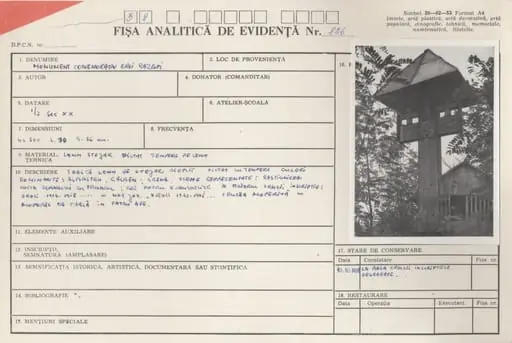 Monument al eroilor căzuți în Primul Război Mondial
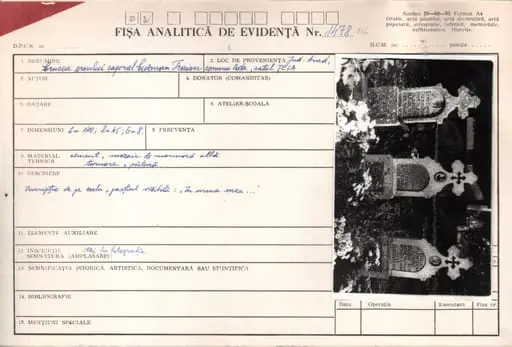 Monument al eroului Cuzman Traian căzut în Al Doilea Război Mondial
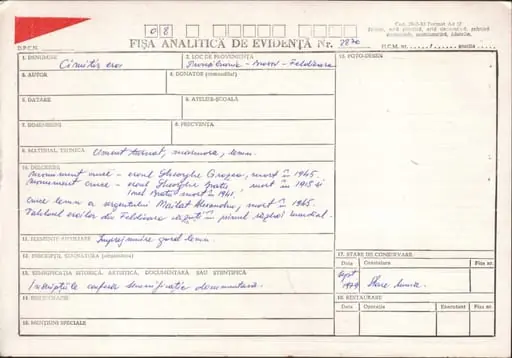 Monument al eroilor căzuți în Primul Război Mondial și în Al Doilea Război Mondial
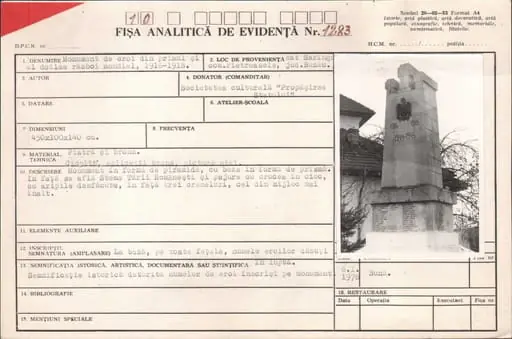 Monument de eroi din Primul și Al Doilea Război Mondial
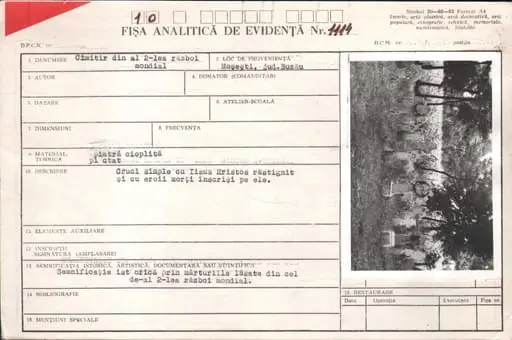 Cimitir din Al Doilea Război Mondial
 Monumentul Independenței Tulcea