Artwork
Monument al eroilor căzuți în Primul Război Mondial
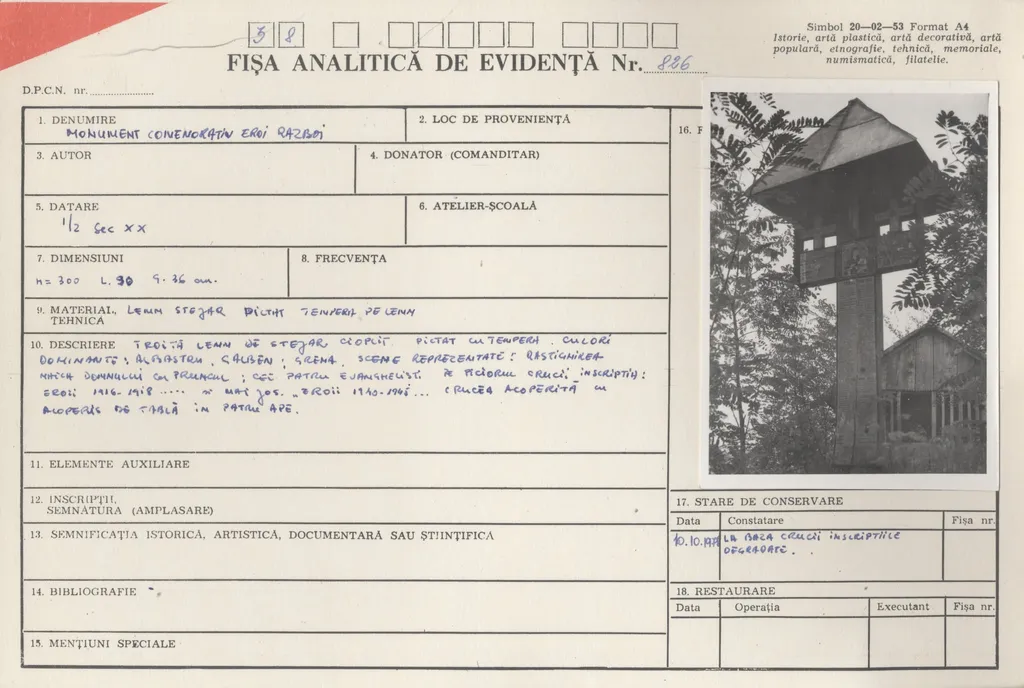
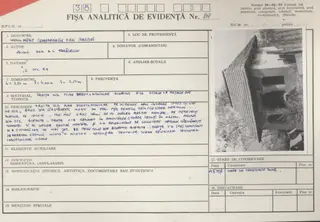
Monument al eroilor căzuți în Primul Război Mondial is an unspecified painting by Unknown. It dates from 1850 and is held in the collection of the National Heritage Institute, Bucharest. The photograph depicts a modest wooden wayside shrine situated within a forested setting.
About this work
The photo is part of a museum record, noting it’s a painted wooden memorial for fallen soldiers.
This image shows a black-and-white photo of a wooden structure in a wooded area. It looks like a small chapel or memorial with a steep, triangular roof. The building has a cross carved into its front, and there’s a plaque or sign above the door.
The photo is part of a museum record, noting it’s a painted wooden memorial for fallen soldiers. The description mentions dates like 1916–1918, but the artist is unknown.
Look up wayside cross to see how these memorials work in history.
Overview
The photograph depicts a modest wooden wayside shrine situated within a forested setting. Its steep, triangular roof shelters a carved cross that dominates the façade, while a plaque positioned above the entrance bears an inscription commemorating soldiers who perished in the First World War between 1916 and 1918. The structure’s simple, unadorned form emphasizes its function as a local memorial rather than an elaborate monument.
Subject & Meaning
The shrine serves as a focal point for remembrance of the community’s war dead, linking the natural landscape with the spiritual symbolism of the cross. By situating the memorial amid trees, the design suggests a convergence of earthly sacrifice and transcendent hope, inviting passersby to pause and reflect on the human cost of the conflict.
Technique & Style
Constructed of painted timber, the memorial exhibits the vernacular craftsmanship typical of early twentieth‑century rural Romania. The steep gable roof and carved crucifix reflect the traditional wayside cross motif, while the painted surface protects the wood from weathering. The overall aesthetic is restrained, prioritizing durability and symbolic clarity over ornamental detail.
History & Provenance
Erected sometime during or shortly after the 1916‑1918 war, the shrine’s precise date and creator remain undocumented. It was recorded in a museum collection as a painted wooden memorial, indicating its preservation as a cultural artifact that embodies local commemorative practices of the period.
Context
Wayside crosses like this one emerged across Eastern Europe as communal markers of faith and remembrance, often erected by villagers to honor those lost in war or tragedy. Their placement along roads or within natural settings provided accessible sites for collective mourning, integrating religious iconography with everyday landscapes.
Artist & collection
Museum
National Heritage Institute, Bucharest
Continue through works from the same source collection.








- Monument al eroilor căzuți în Al Doilea Război Mondial
 Monument al eroilor căzuți în Primul Război Mondial
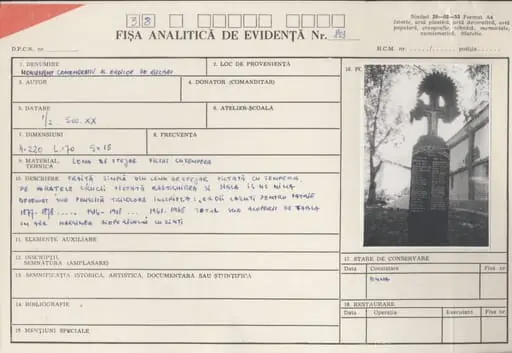 Monument al eroilor căzuți în Războiul de Independență, în Primul Război Mondial și în Al Doilea Război Mondial
 Monument al eroilor căzuți în Primul Război Mondial și în Al Doilea Război Mondial
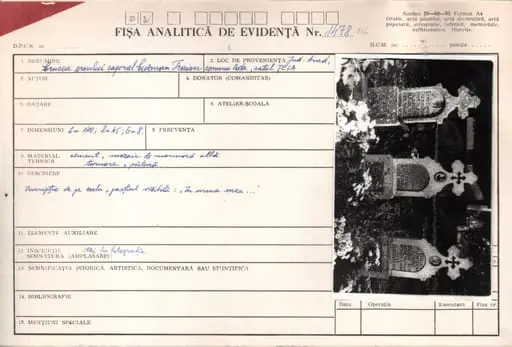 Monument al eroului Cuzman Traian căzut în Al Doilea Război Mondial
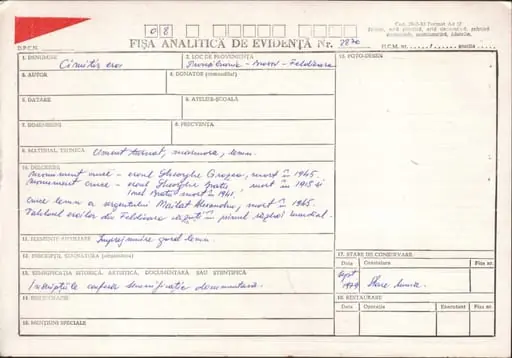 Monument al eroilor căzuți în Primul Război Mondial și în Al Doilea Război Mondial
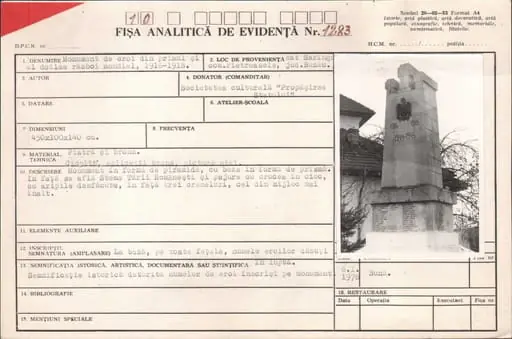 Monument de eroi din Primul și Al Doilea Război Mondial
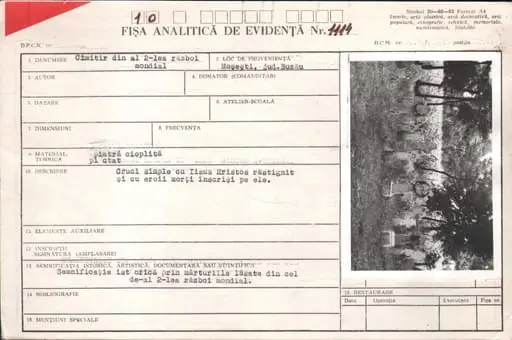 Cimitir din Al Doilea Război Mondial
 Monumentul Independenței Tulcea