Artwork
Abraham Entertaining the Angels
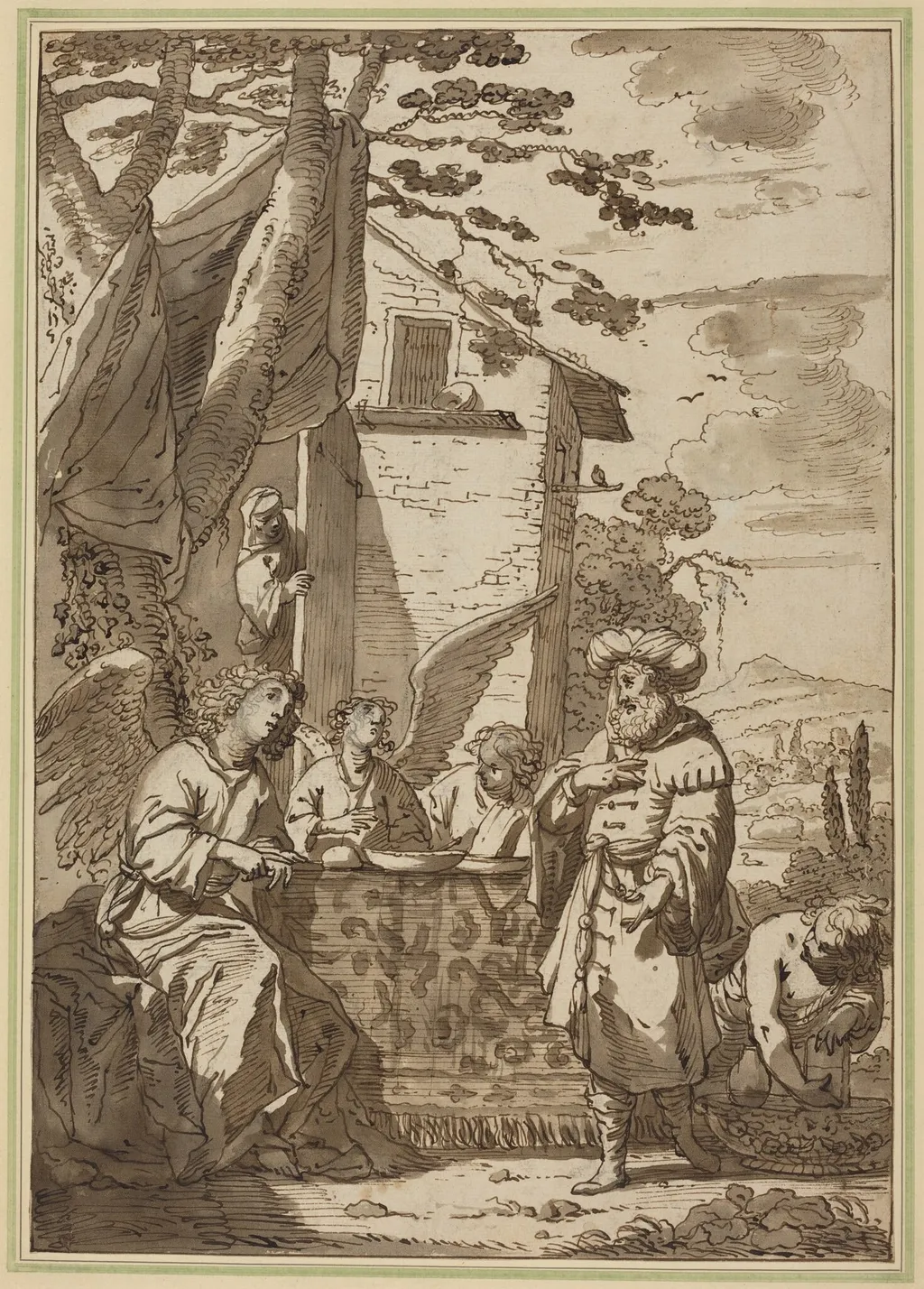
Abraham Entertaining the Angels is a chalk drawing by the Baroque artist Jan Tengnagel. It dates from 1615 and is held in the collection of the National Gallery of Art.
- Inscription
- Inscribed:all by later hand, center verso in graphite: Pieter Lastman / Amsterdam / 1583-1633; lower left verso in graphite: ABRAHAM-THE ANGEL; lower right verso in graphite: Colnagy Collectio
About this work
Overview
Its place in Tengnagel's oeuvre and its value for the study of Dutch Golden Age drawing practices make it an important object for scholars of the period.
Abraham Entertaining the Angels is a drawing by the Dutch artist Jan Tengnagel, dated to circa 1610/1620. Executed in pen and brown ink with wash over black chalk and graphite on laid paper, the work measures 33.6 by 23.7 centimeters and is currently held in the collection of the National Gallery of Art in Washington, D.C., under accession number 1990.63.1. The drawing represents a significant example of early seventeenth-century Dutch draftsmanship, combining precise linear technique with fluid wash to render a biblical narrative scene. Its place in Tengnagel's oeuvre and its value for the study of Dutch Golden Age drawing practices make it an important object for scholars of the period.
Subject & Meaning
The drawing depicts the biblical episode from Genesis 18, known as the Lord appearing to Abraham by the oaks of Mamre, in which three angels visit Abraham and Sarah. In Tengnagel's composition, three winged figures are gathered around a stone table in an outdoor setting. One angel faces right, engaging with a standing bearded man, Abraham, who wears a turban and gestures with his right hand toward his chest. A small child kneels beside Abraham near a jug on the ground. Behind the table, Sarah peers from behind draped fabric that hangs between two tree trunks. The table holds a round object and a shallow dish, suggesting the meal Abraham has prepared for his divine guests. The iconography follows established conventions for this subject, emphasizing hospitality, divine revelation, and the promise of offspring to the aged couple. The inclusion of the child and the jug reinforces themes of domestic provision and humble service, while Sarah's partial concealment acknowledges her initial disbelief at the angels' prophecy.
Technique & Style
The drawing is executed in pen and brown ink with wash over black chalk and graphite on laid paper, which has been laid down onto a larger support measuring 39.8 by 29.5 centimeters. The overall dimensions of the drawn image are 33.6 by 23.7 centimeters. The technique combines precise linear detail with fluid wash to create depth and volume, with fine parallel hatching and cross-hatching defining forms and shadows throughout the composition. The entire scene is rendered in monochrome brown tones, and the composition is framed by a thin green border. The handling demonstrates the draftsmanship characteristic of early seventeenth-century Dutch practice, with careful attention to spatial recession through the depiction of a simple building with a sloped roof and shuttered window in the middle ground, birds in the sky, and distant hills with scattered trees and swirling clouds in the background. The work is not signed. The layered technique, beginning with black chalk underdrawing and building through graphite and ink to final wash, indicates a deliberate, finished approach to the drawing medium.
History & Provenance
The provenance of the drawing is documented from at least the early twentieth century. An old inscription on the verso records its earliest known association with the Colnagy Collection. The work was subsequently handled by the Herbert Feist Gallery in New York in 1973, where it was exhibited that same year as part of European Drawings, and was there attributed to Lambert Jacobsz. By 1977 it had entered the collection of Alice Steiner of Larchmont, New York. Steiner lent the drawing to two exhibitions in 1977: Seventeenth Century Dutch Drawings from American Collections, organized by the International Exhibitions Foundation, and Renaissance and Baroque Drawings from the Collections of John and Alice Steiner, which opened at the Fogg Art Museum in Cambridge, Massachusetts, and subsequently toured through 1978. In 1990, Alice Steiner gave the drawing to the National Gallery of Art in honor of the institution's fiftieth anniversary. It was subsequently included in Art for the Nation, Gifts in Honor of the 50th Anniversary of the National Gallery of Art, in 1991. Later inscriptions on the verso, all by a later hand, include a center verso attribution in graphite to Pieter Lastman with dates 1583-1633, a lower left inscription reading ABRAHAM-THE ANGEL, and a lower right notation of Colnagy Collectio.
Context
Jan Tengnagel was active in Amsterdam during the early seventeenth century, a period of vigorous artistic production in the Dutch Republic. The drawing's earlier misattribution to Pieter Lastman, recorded in a later inscription on the verso, reflects the interconnected nature of Amsterdam's artistic circles, as Lastman was a prominent history painter and the teacher of Rembrandt van Rijn. The 1973 exhibition attribution to Lambert Jacobsz further indicates the challenges of distinguishing hands within this period of Dutch draftsmanship. Werner Sumowski's 1975 publication, Zeichnungen von Lastman und aus dem Lastman-Kreis, addressed drawings by Lastman and his circle, suggesting the scholarly attention devoted to sorting out attributions among these artists. Tengnagel's own place in this milieu has been clarified over subsequent decades, allowing this drawing to be firmly assigned to his hand. The work exemplifies the Dutch interest in biblical narrative subjects rendered with naturalistic detail and intimate scale, suitable for private contemplation and collection.
Legacy
As a publicly held work in the National Gallery of Art, Abraham Entertaining the Angels contributes to the understanding of Jan Tengnagel's artistic output and the broader field of Dutch seventeenth-century drawing. Its inclusion in the 1977 traveling exhibition Renaissance and Baroque Drawings from the Collections of John and Alice Steiner brought it to scholarly and public attention across multiple venues. The drawing's availability through digital platforms, including the National Gallery of Art's online collection and Google's Arts and Culture initiative, has extended its reach for teaching and research. The work remains accessible as a case study in attribution history, demonstrating how connoisseurship has evolved from earlier attributions to Lambert Jacobsz and Pieter Lastman to its current acceptance as by Tengnagel. Its presence in one of the major American public collections ensures continued visibility and scholarly engagement with early Dutch draftsmanship.
Own this work as a print
Artist & collection
Artist
Jan Tengnagel (baptised 9 September 1584– buried 23 March 1635) was a Dutch draughtsman and painter.

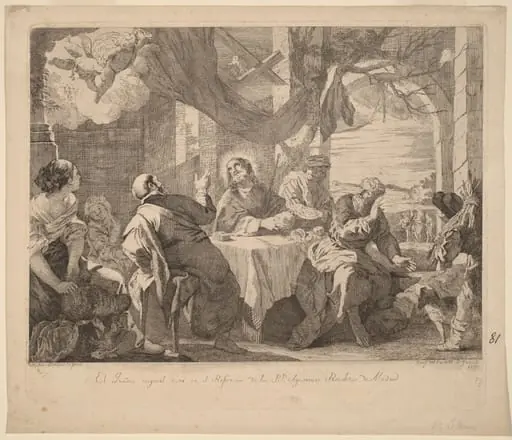 The Supper at Emmaus
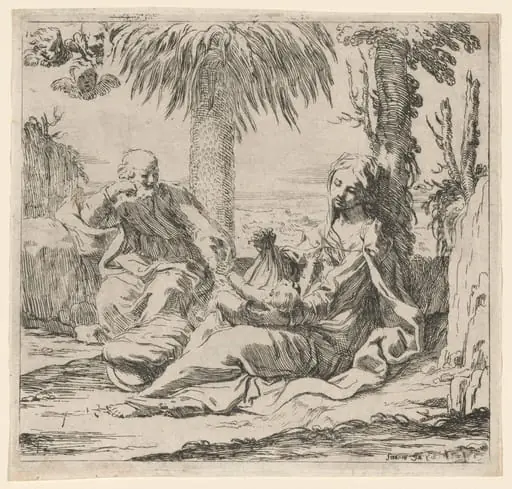 Rest on the Flight into Egypt
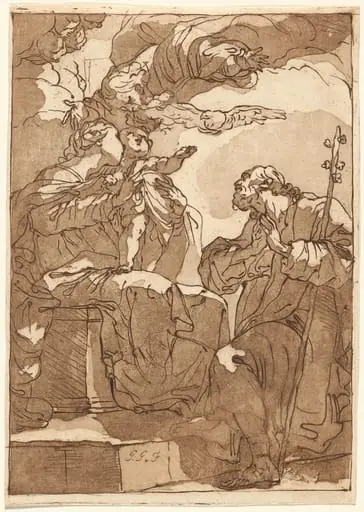 The Holy Family with God the Father
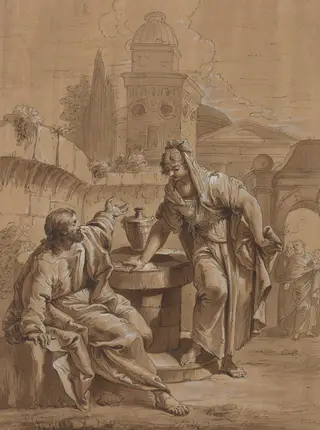 Christ and the Woman of Samaria
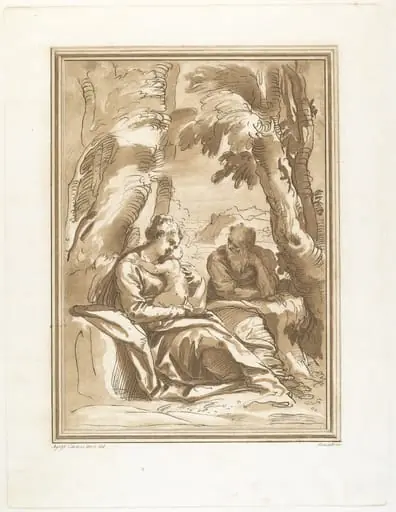 Rest on the Flight into Egypt
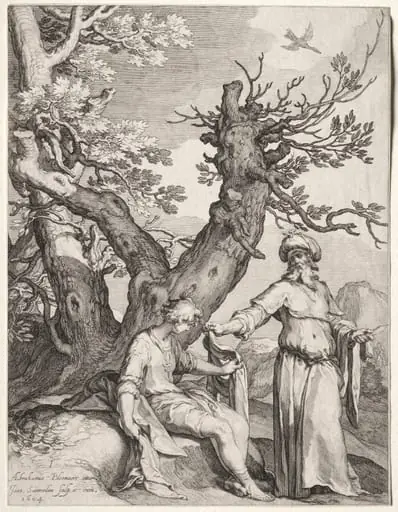 Ahijah and Jeroboam
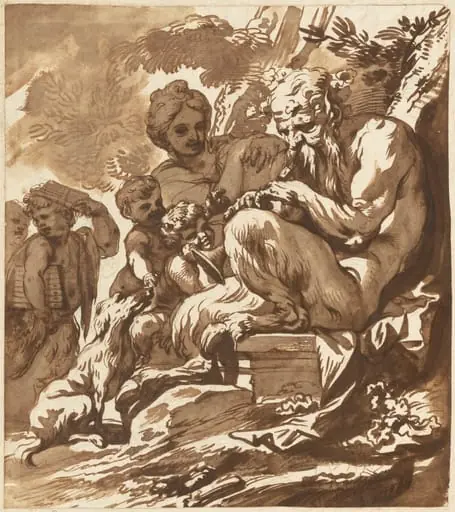 A Satyr Entertaining His Family
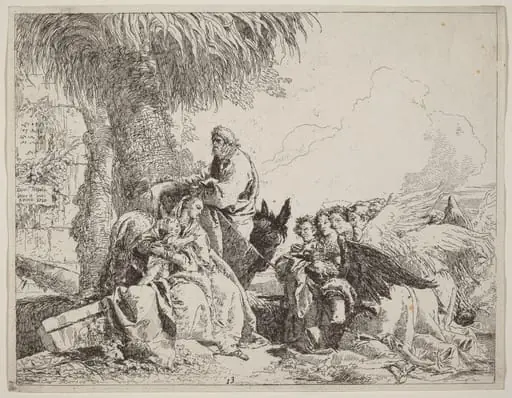 The Rest on the Flight, with Adoring Angels
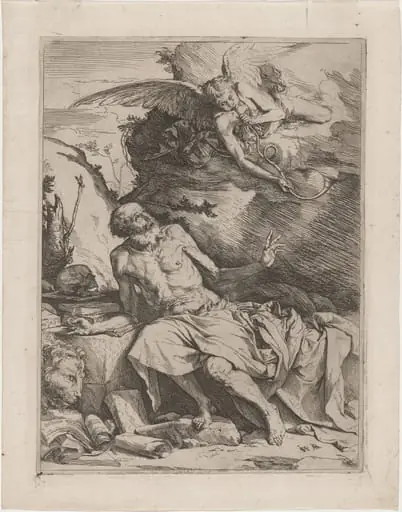 Saint Jerome Hearing the Trumpet of the Last Judgment
 The Dream of Aeneas