Artwork
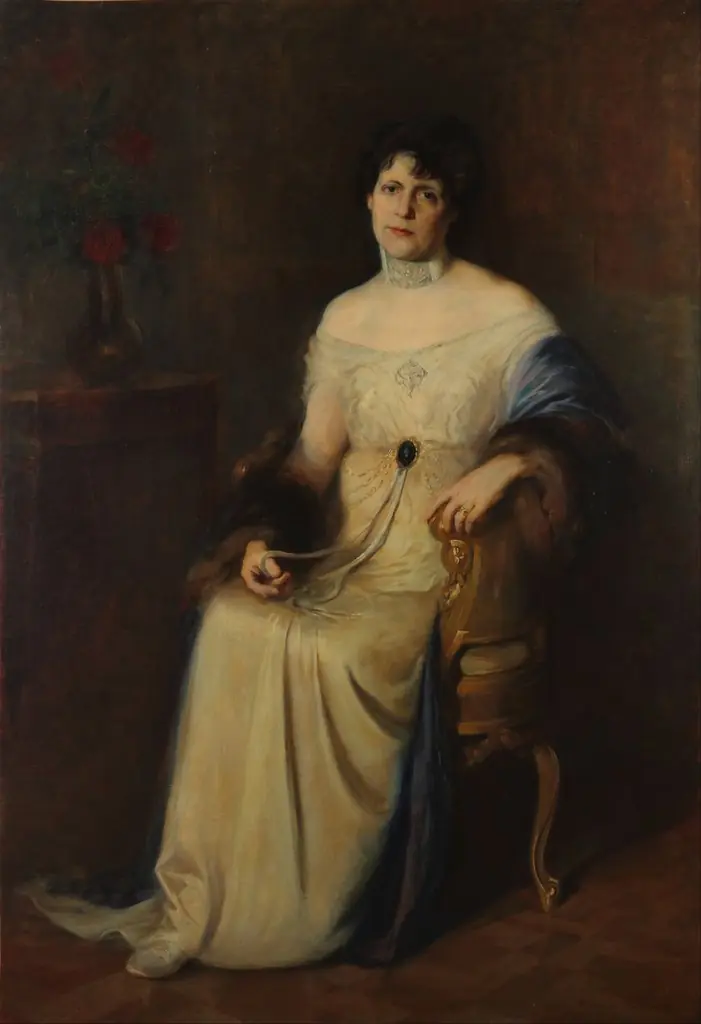
Portrait of Izabela Szembekowa
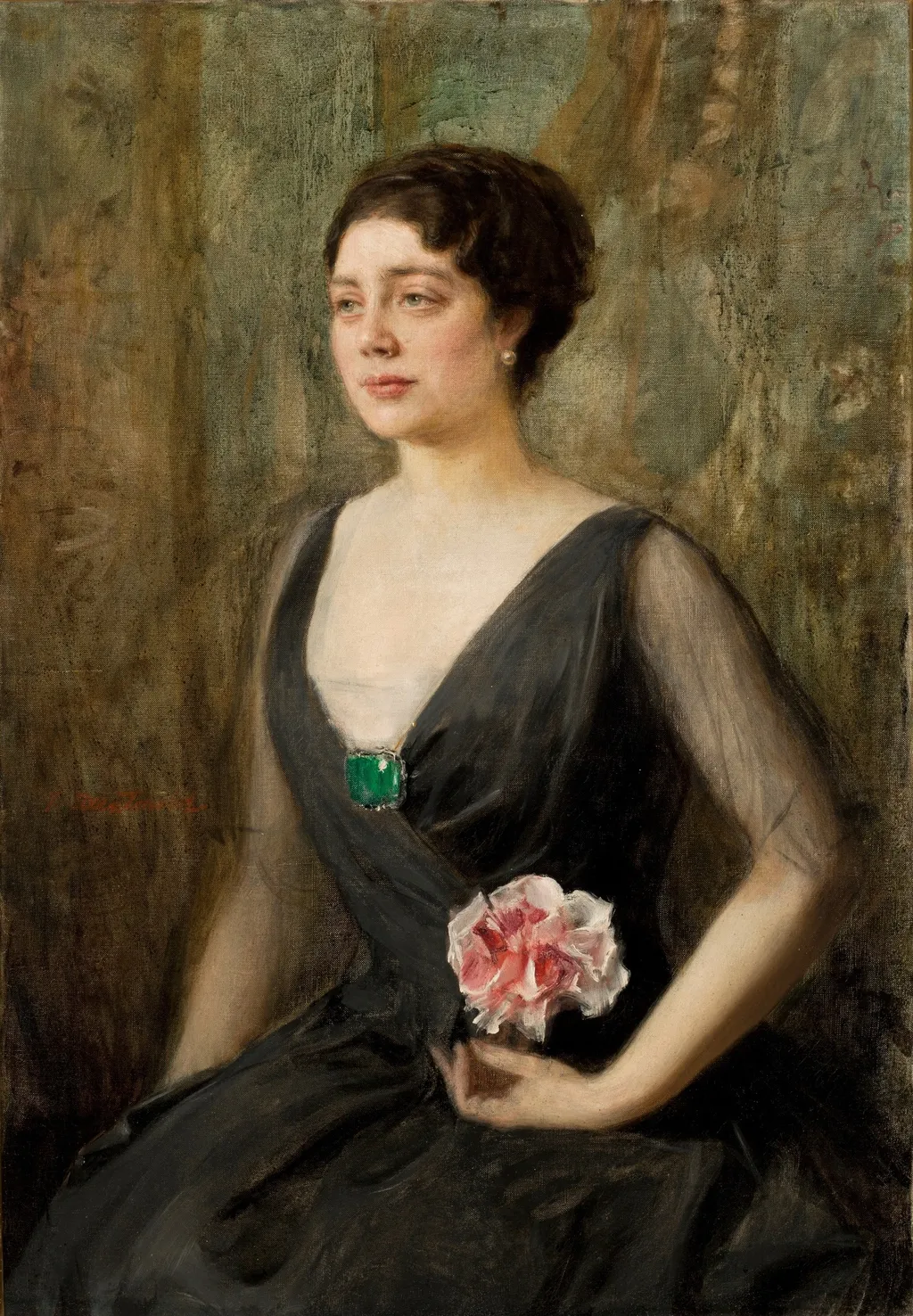
Portrait of Izabela Szembekowa is an oil painting by the Art Nouveau artist Teodor Axentowicz. It dates from 1912 and is held in the collection of the National Museum in Kraków.
About this work
Overview
Painted in 1912 by Teodor Axentowicz, this oil portrait captures Izabela Szembekowa, a Polish noblewoman.
Painted in 1912 by Teodor Axentowicz, this oil portrait captures Izabela Szembekowa, a Polish noblewoman. Axentowicz, known for his portraiture and depictions of Carpathian communities, completed the work during his tenure as rector of the Kraków Academy of Fine Arts. The painting is held in the National Museum in Kraków and reflects his refined approach to capturing individual presence through restrained color and careful composition.
Subject & Meaning
Izabela Szembekowa is portrayed with quiet dignity, her gaze turned away from the viewer, suggesting introspection rather than performative poise. Her attire, a black dress accented by an emerald brooch and a single pink flower, hints at refined taste without ostentation. The composition avoids theatricality, emphasizing stillness and personal gravity, consistent with early 20th-century portraiture that valued psychological nuance over social display.
Technique & Style
Axentowicz employs muted tones and subtle chiaroscuro to model the figure against a neutral background of earthy greens and browns. The lighting gently defines the contours of the face and hands, creating depth without dramatic contrast. The brushwork is controlled, with soft transitions between tones, aligning the work with Art Nouveau’s emphasis on elegance and fluidity, though without ornamental excess.
History & Provenance
The painting entered the collection of the National Museum in Kraków shortly after its completion. It remained within Polish cultural institutions throughout the 20th century, surviving political upheavals without relocation or damage. Its consistent presence in the museum’s holdings reflects its recognition as a representative example of Axentowicz’s mature portraiture during the interwar period.
Context
Created during a period when Polish artists were redefining national identity through cultural expression, the portrait reflects a shift toward intimate, psychologically grounded imagery. While Axentowicz was known for scenes of Hutsul life, this work demonstrates his ability to convey social stature and inner life in urban elite subjects, bridging folk-inspired aesthetics with bourgeois portraiture traditions.
Legacy
The portrait endures as a quiet example of early 20th-century Polish portraiture, valued for its restraint and emotional subtlety. It is not widely reproduced outside institutional contexts, but within Polish art history, it is cited as evidence of Axentowicz’s skill in capturing character without sentimentality. Its preservation in Kraków underscores its role in documenting the visual culture of Poland’s intelligentsia.
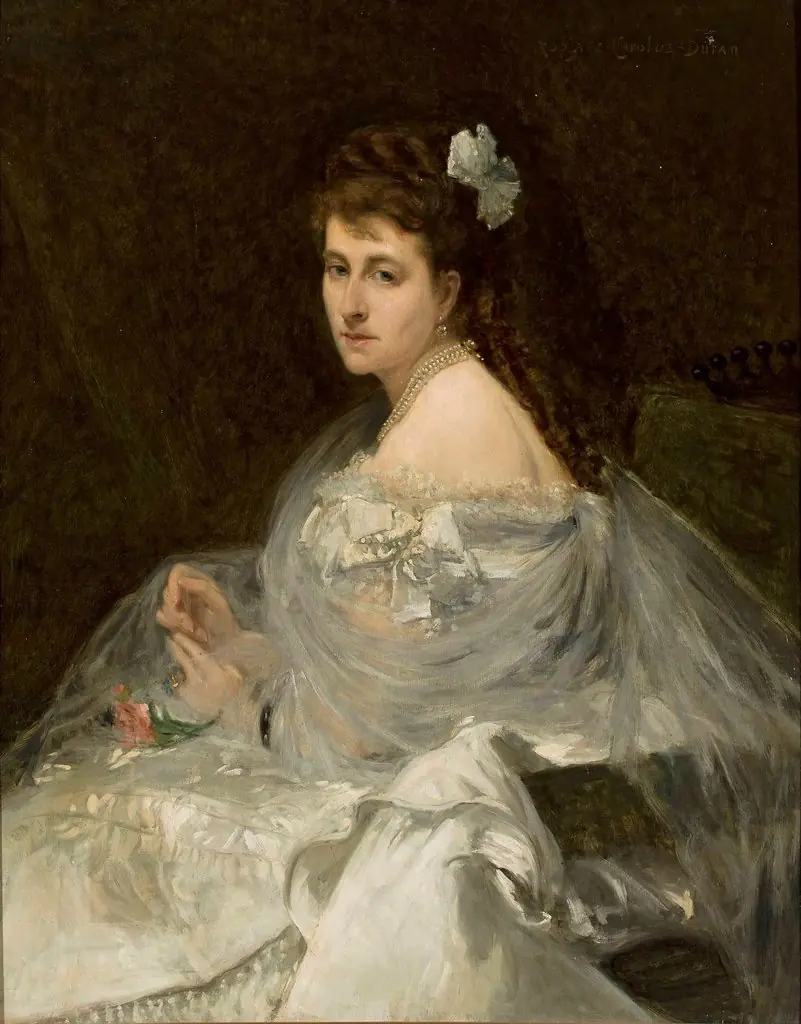
Own this work as a print
Artist & collection
Artist
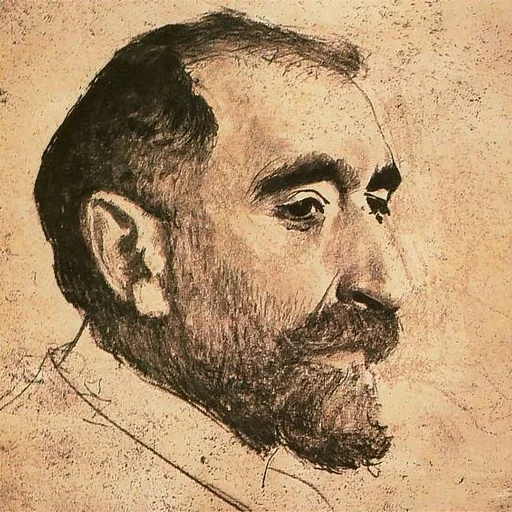
Teodor Axentowicz (Armenian: Թեոդոր Աքսենտովիչ, romanized: Tʻeodor Akʻsentovichʻ; 13 May 1859 – 26 August 1938) was a Polish-Armenian painter and university professor.

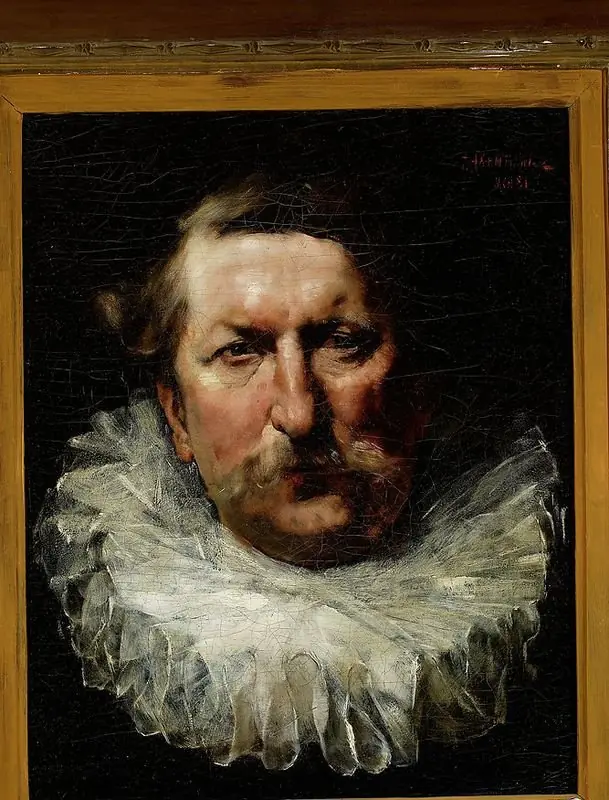
 Retrato de la esposa del autor
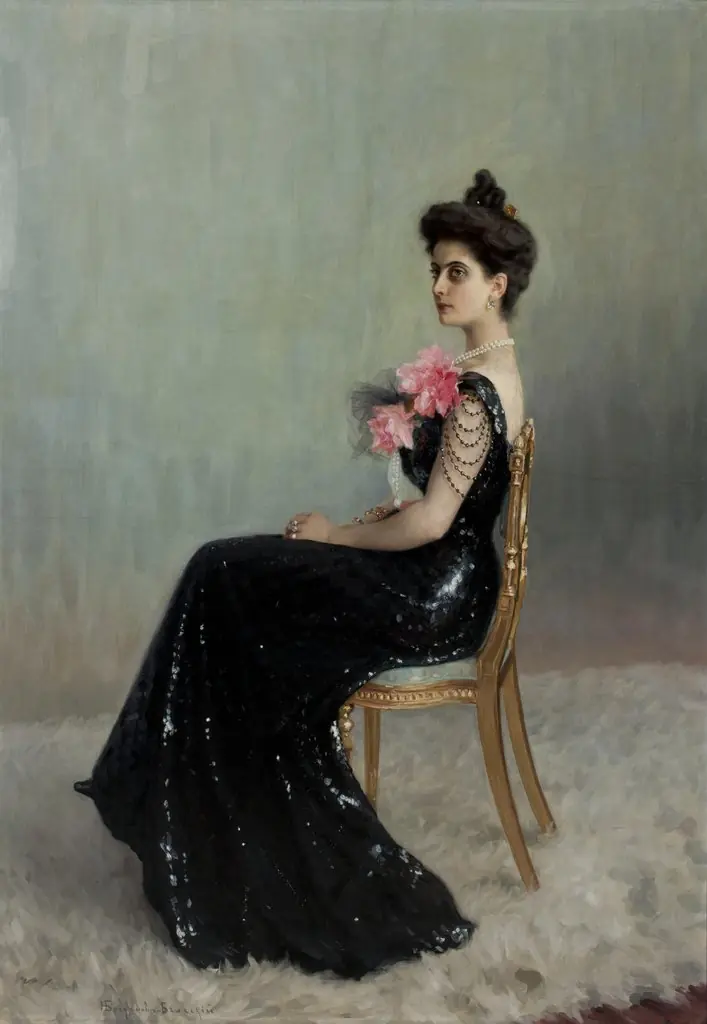 Portrait of Princess Maria Abamelek-Lazareva
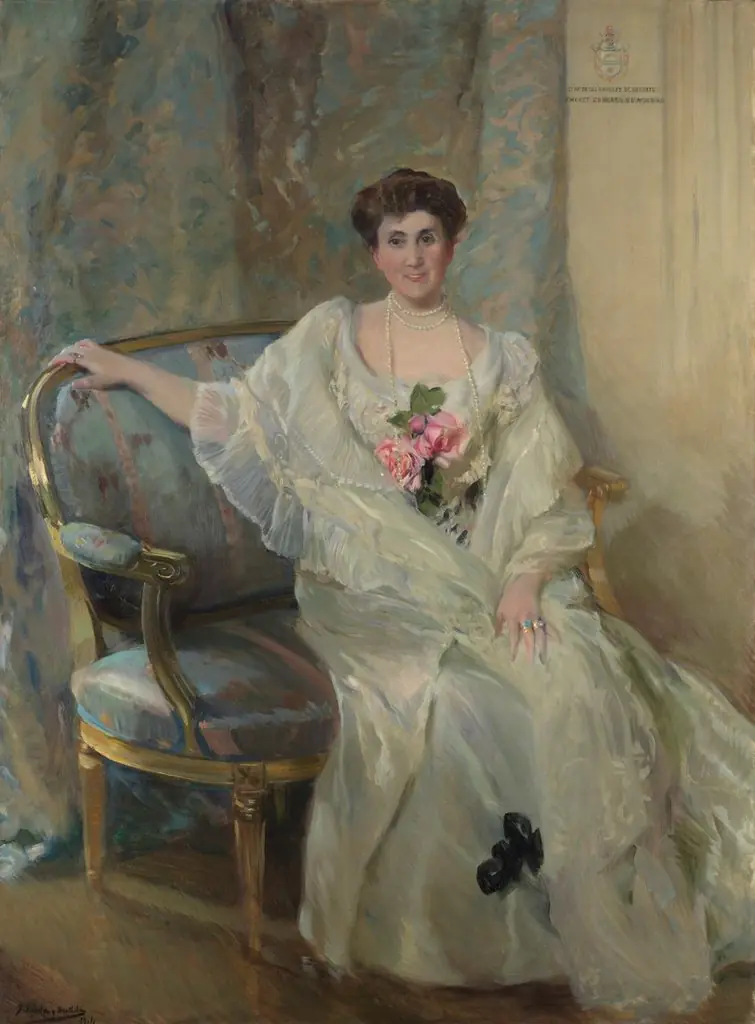 María de los Ángeles Beruete y Moret condesa viuda de Muguiro
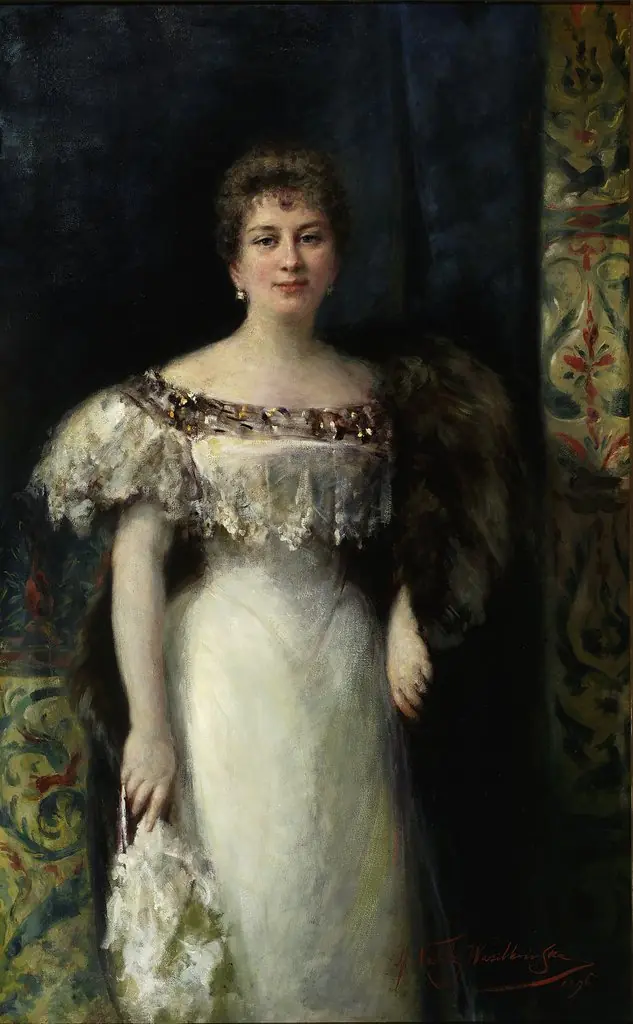 Portrait of Mrs. W.R.
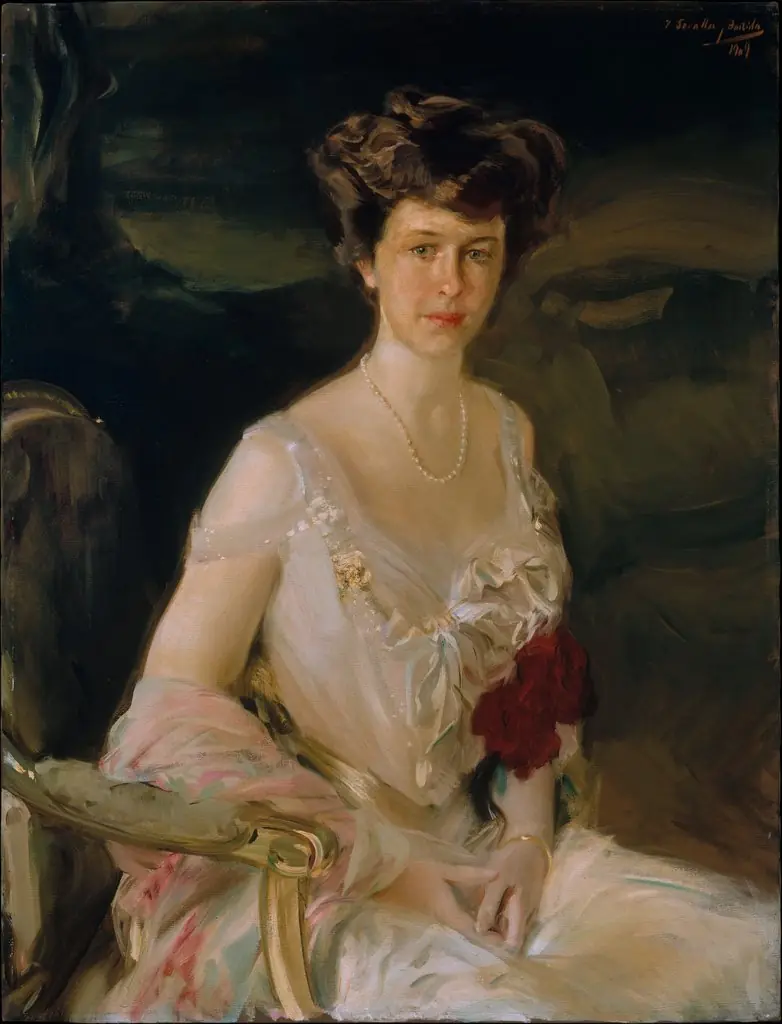 Mrs. Winthrop W. Aldrich (Harriet Alexander, 1888–1972)
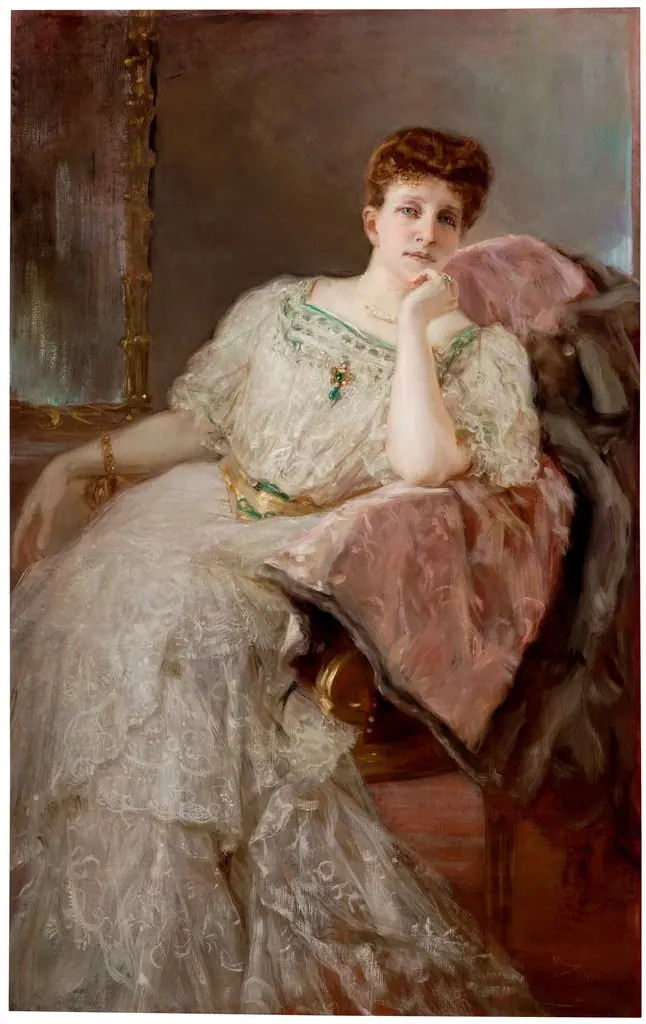 Matilde Noever de Vogel
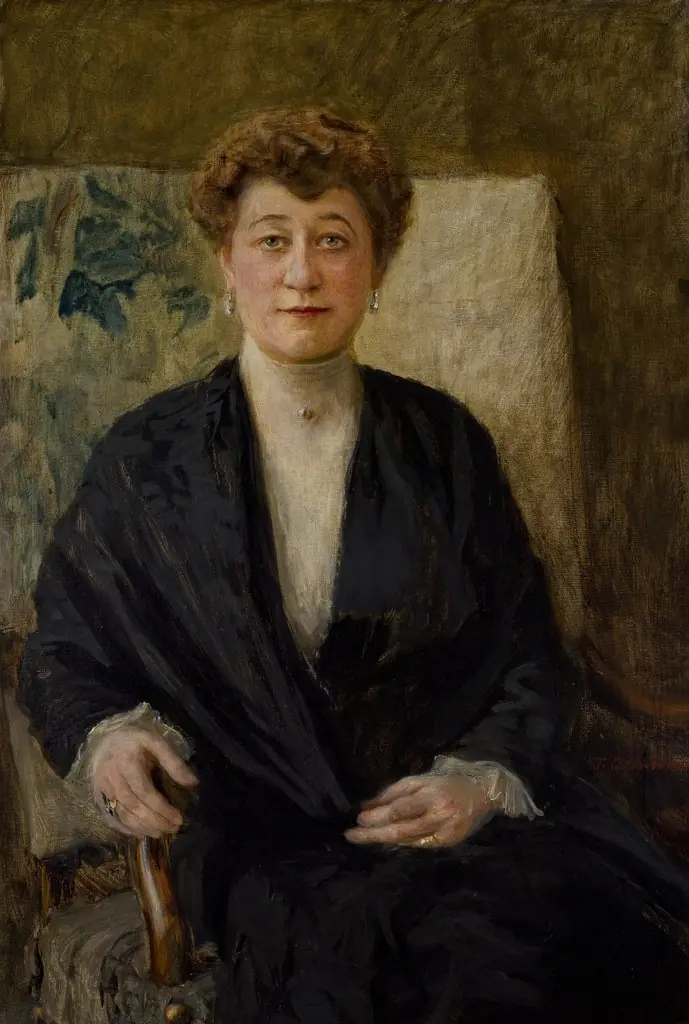 Portrait of Zofia Dolińska née Niesiołowska
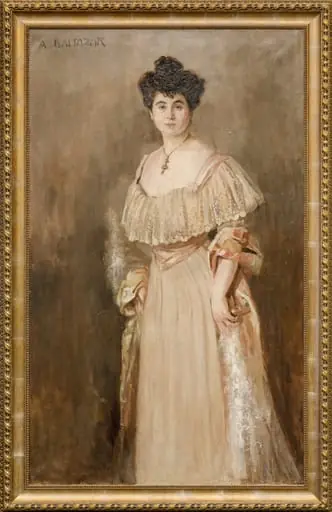 Portret de femeie
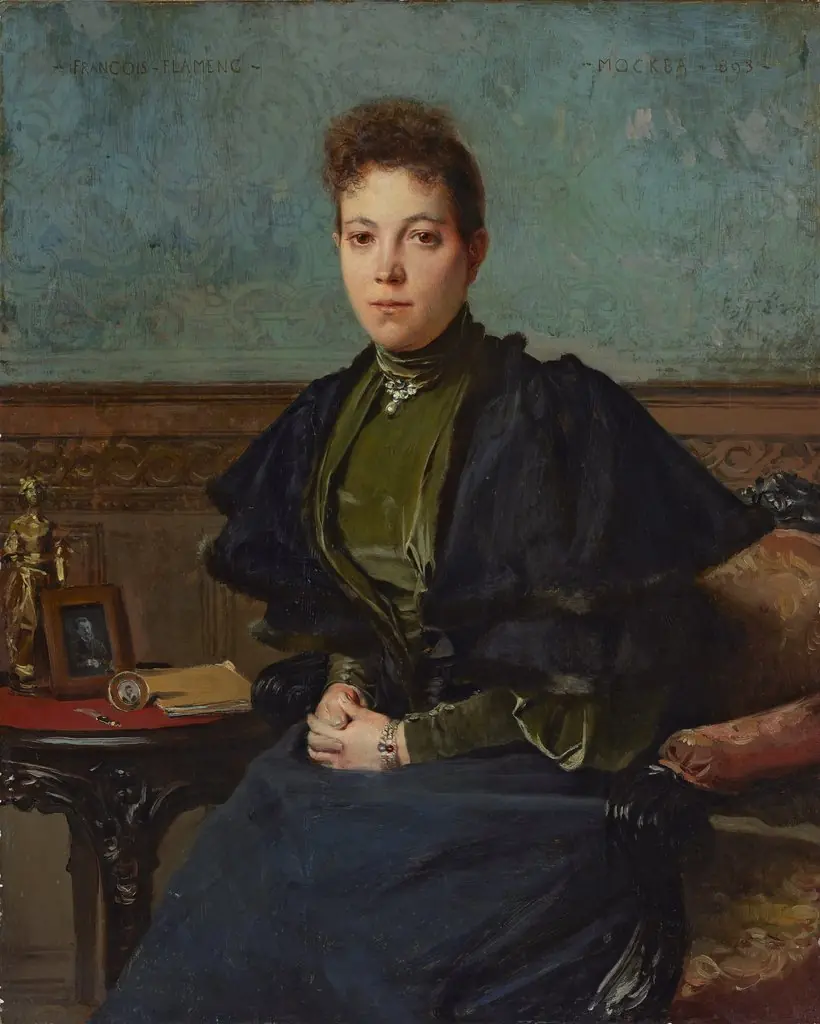 Portrait of Vera Kharitonenko
 Standing lady
 Portrait of Elizabeth Gottschalk de Hirsch
- Portrait of Izabela Tyszkiewicz née Tyszkiewicz (1835–1907)