Artwork
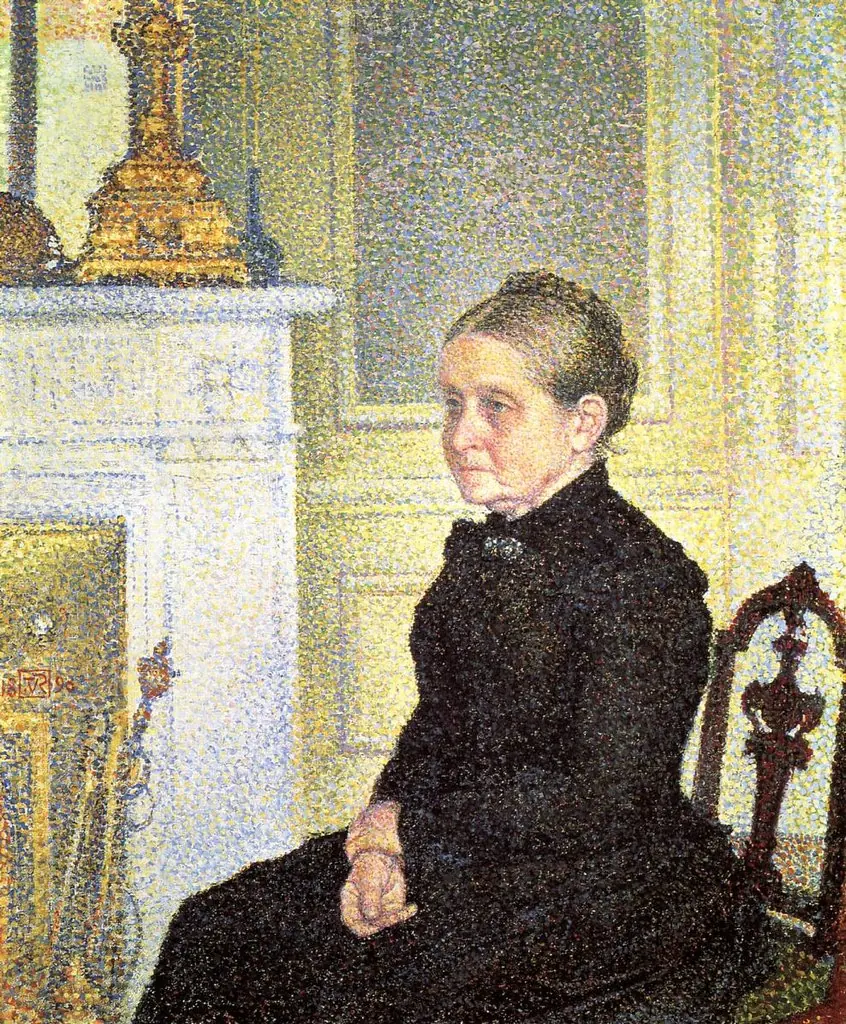
Madame Constantin Meunier
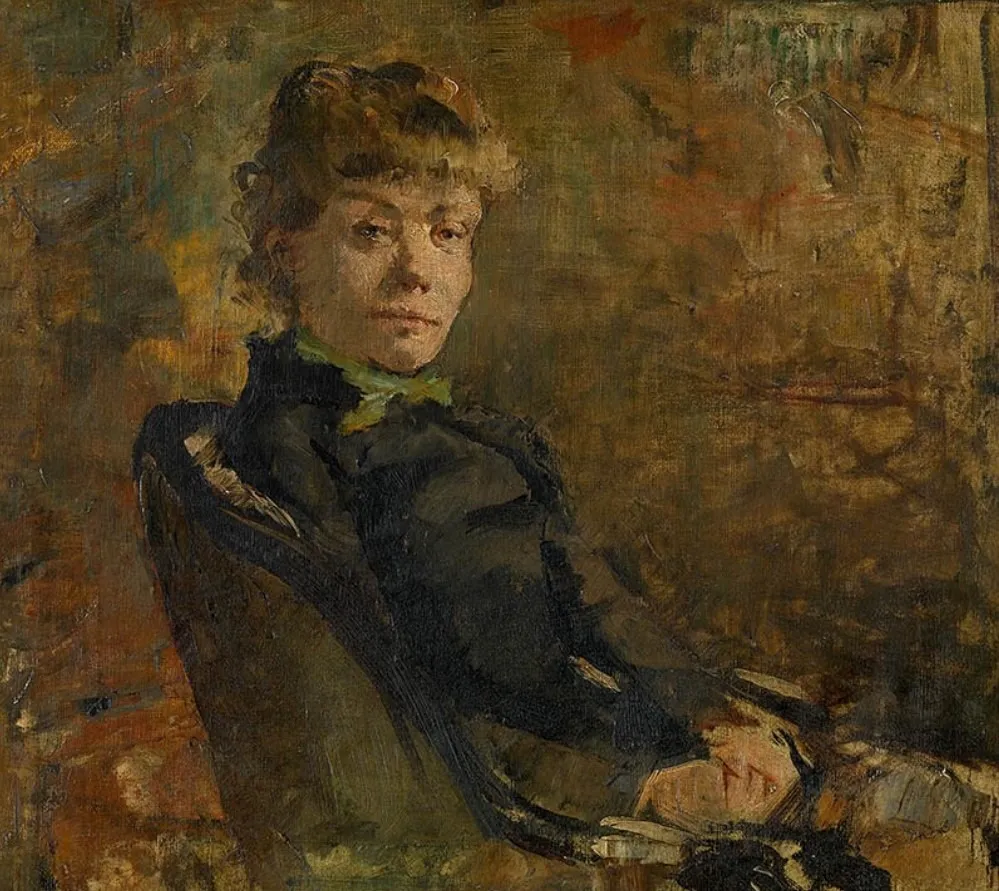
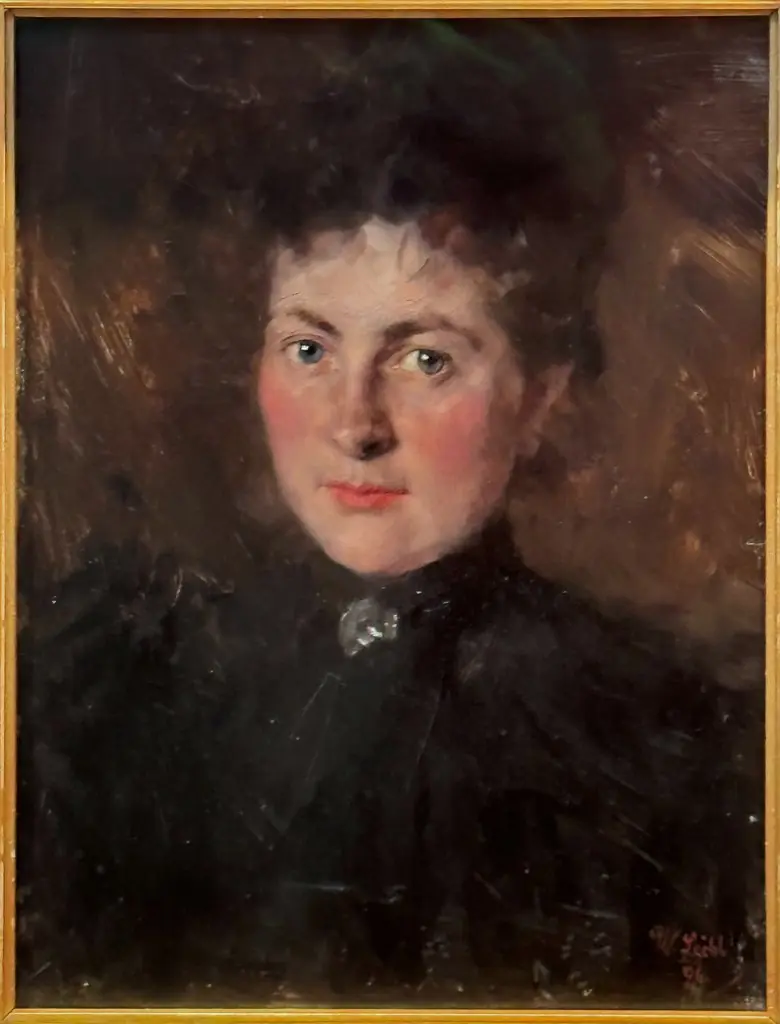
Madame Constantin Meunier is an oil painting by the Post-Impressionist artist Théo van Rysselberghe. It dates from 1892 and is held in the collection of the Royal Museum of Fine Arts Antwerp.
About this work
Overview
The sitter is depicted seated in a three-quarter view, wearing a dark garment accented by a light green collar, with her hair pulled back neatly.
Théo van Rysselberghe's 'Madame Constantin Meunier,' executed in 1892, is a portrait of the wife of the Belgian sculptor Constantin Meunier. The work exemplifies the artist's mature Pointillist style, characterized by the application of distinct, small dots of pure color that optically blend when viewed from a distance. The sitter is depicted seated in a three-quarter view, wearing a dark garment accented by a light green collar, with her hair pulled back neatly.
She holds a small, indistinct object in her hands, contributing to a sense of quiet, introspective stillness. The background consists of warm brown and green tones rendered with the same divisionist technique, creating a soft, atmospheric depth that isolates the figure without sharp outlines. Painted during the height of the Neo-Impressionist movement in Belgium, this portrait demonstrates van Rysselberghe's ability to adapt the rigorous scientific color theories of Georges Seurat to the intimate demands of portraiture.
It stands as a significant example of his contribution to the Belgian avant-garde, capturing the dignity of his subject through a harmonious balance of light and color rather than traditional modeling.
Subject & Meaning
The sitter, identified only as Madame Constantin Meunier, is presented in a calm, contemplative pose. The modest attire and restrained expression suggest a private, domestic setting rather than a public or allegorical narrative, emphasizing personal presence over symbolic content.
Technique & Style
Van Rysselberghe employs a combination of smooth modeling for the figure and a looser, impasto‑rich handling of paint in the surrounding area. Thick, textured brushstrokes accentuate the woman's face and dress, while the background is rendered in softer, blurred tones of brown and green, creating a subtle contrast that isolates the subject.
History & Provenance
Since its creation in the early 1890s, the portrait has remained in Belgium, eventually entering the holdings of the Royal Museum of Fine Arts Antwerp. The museum acquired the piece as part of its effort to represent the work of Belgian artists active in the late‑19th century.
Context
The painting belongs to the period when van Rysselberghe was exploring pointillist and neo‑impressionist techniques, yet here he adopts a more subdued, tonal approach. The work reflects the broader shift among Belgian painters toward intimate portraiture that balances modern brushwork with traditional compositional clarity.
Artist & collection

Artist
Théophile "Théo" van Rysselberghe was a Belgian neo-impressionist painter, who played a pivotal role in the European art scene at the turn of the twentieth century.

- Thora Bendix, née Anne Victoria Sundberg
 Portrait of Irena Zbigniewicz née Serda
 Bildnis Lola Leder
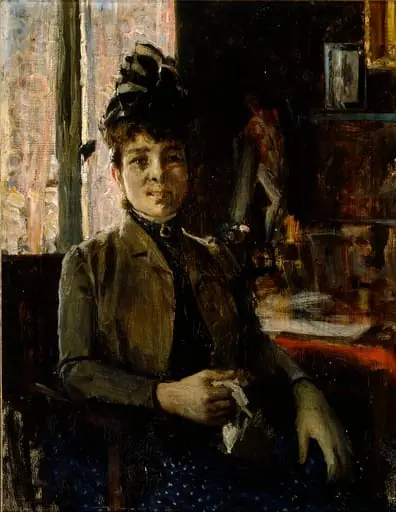 Kreivitär Berthe de Vallombreuse
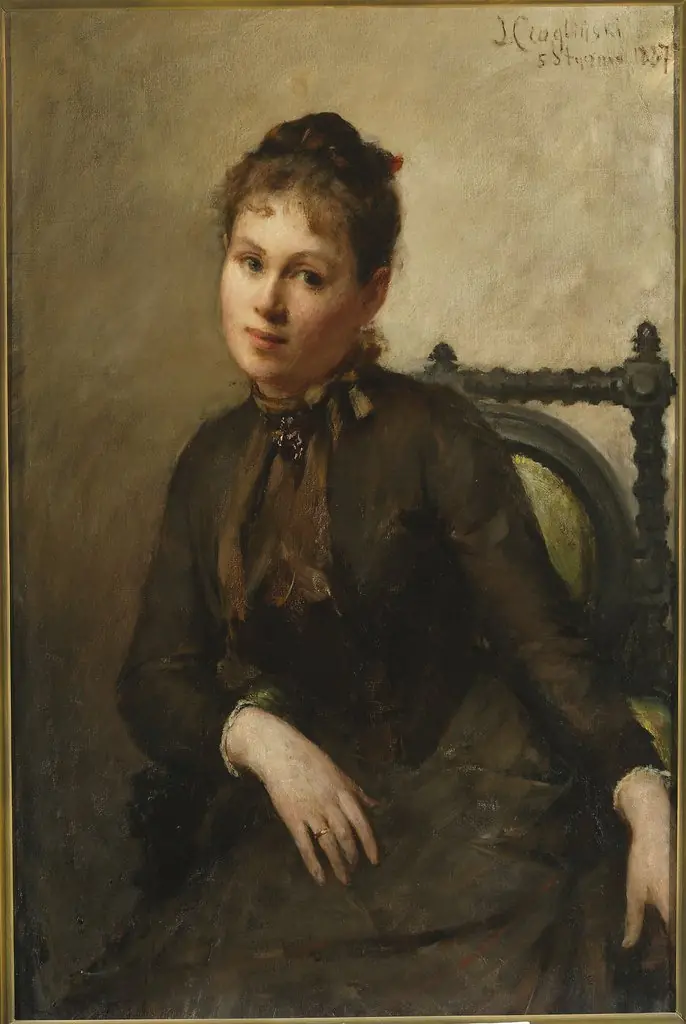 Portrait of Helena Piltz née Rymowicz
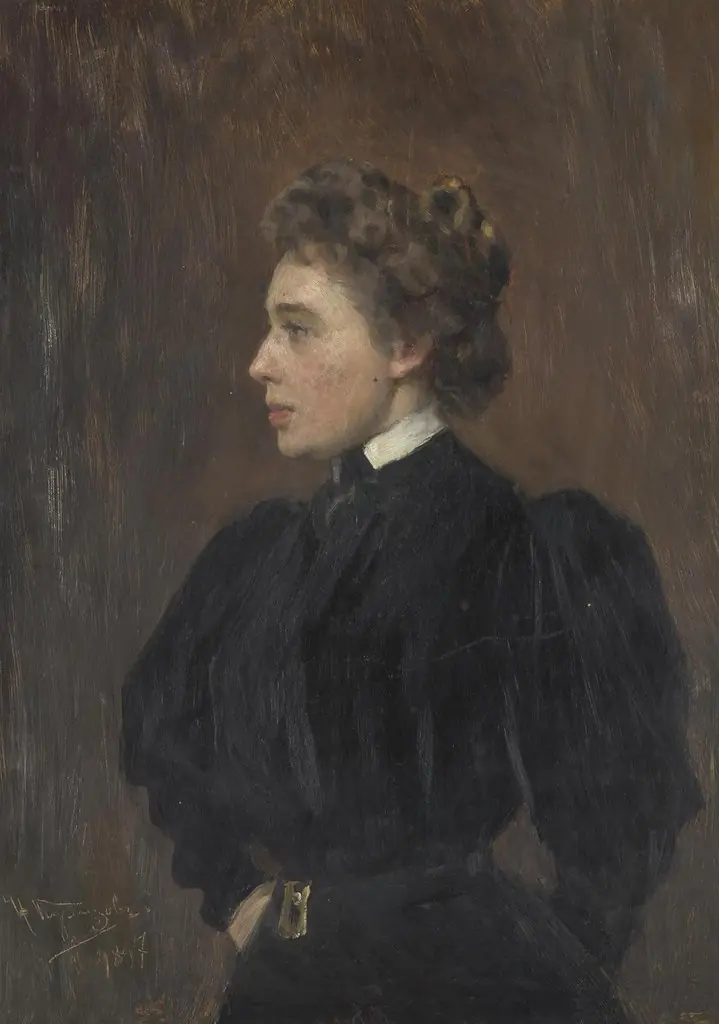 Aleksandra Botkina
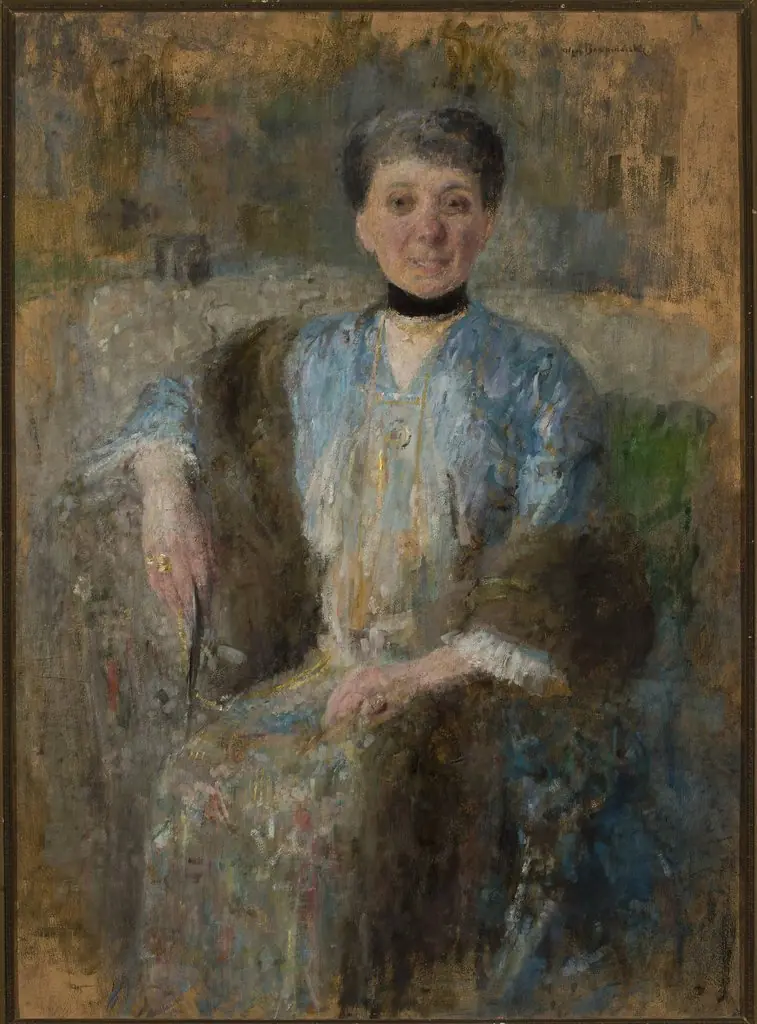 Portrait of Maria Morzycka
 Portrait of Mrs Getter – two-sided painting
 Female Portrait
 Portrait of Berta Dylion
 Portrait of Vera Kharitonenko
 Felicia Kirchdorffer, die Nichte des Künstlers