Artwork
Maria Sèthe
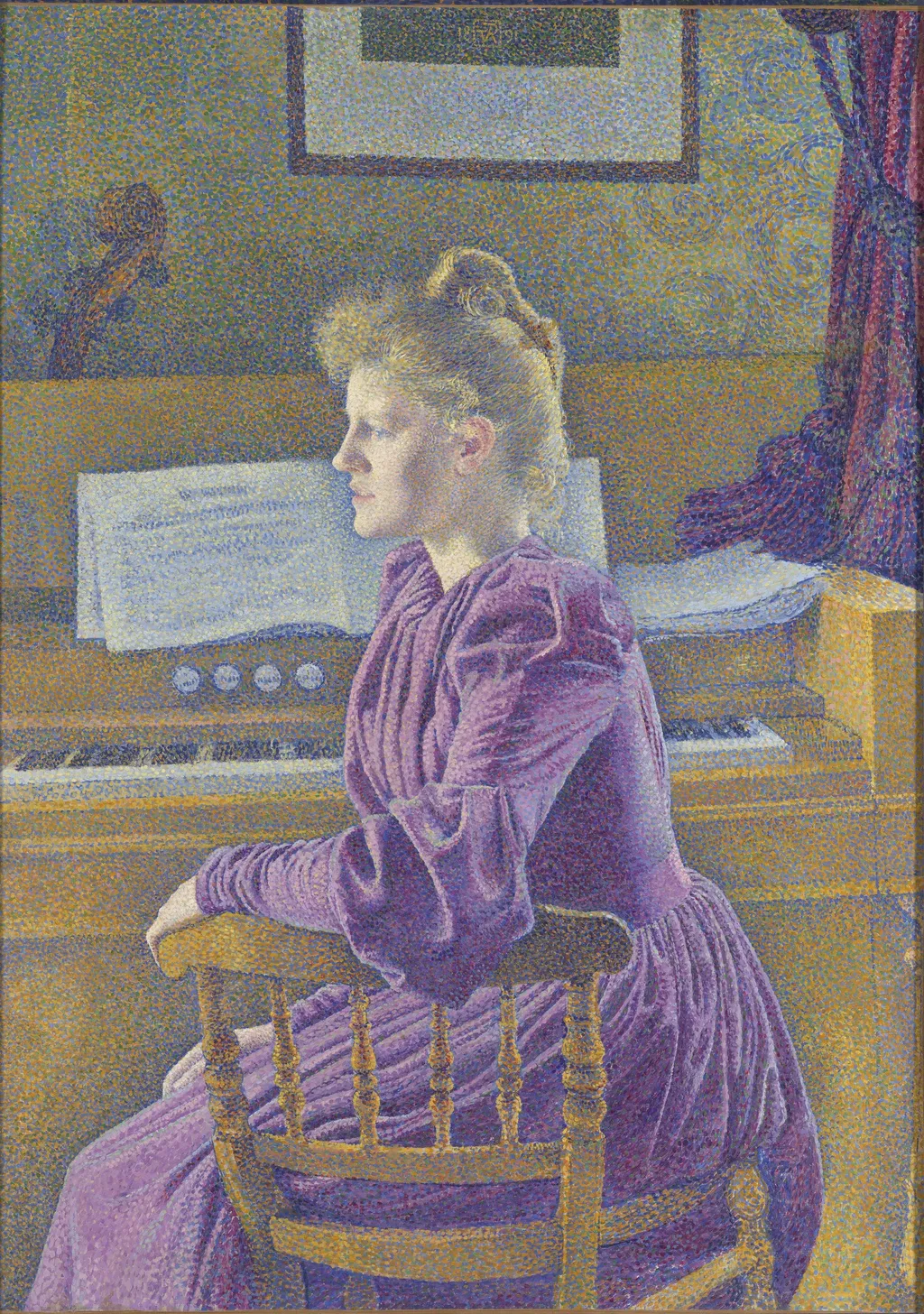
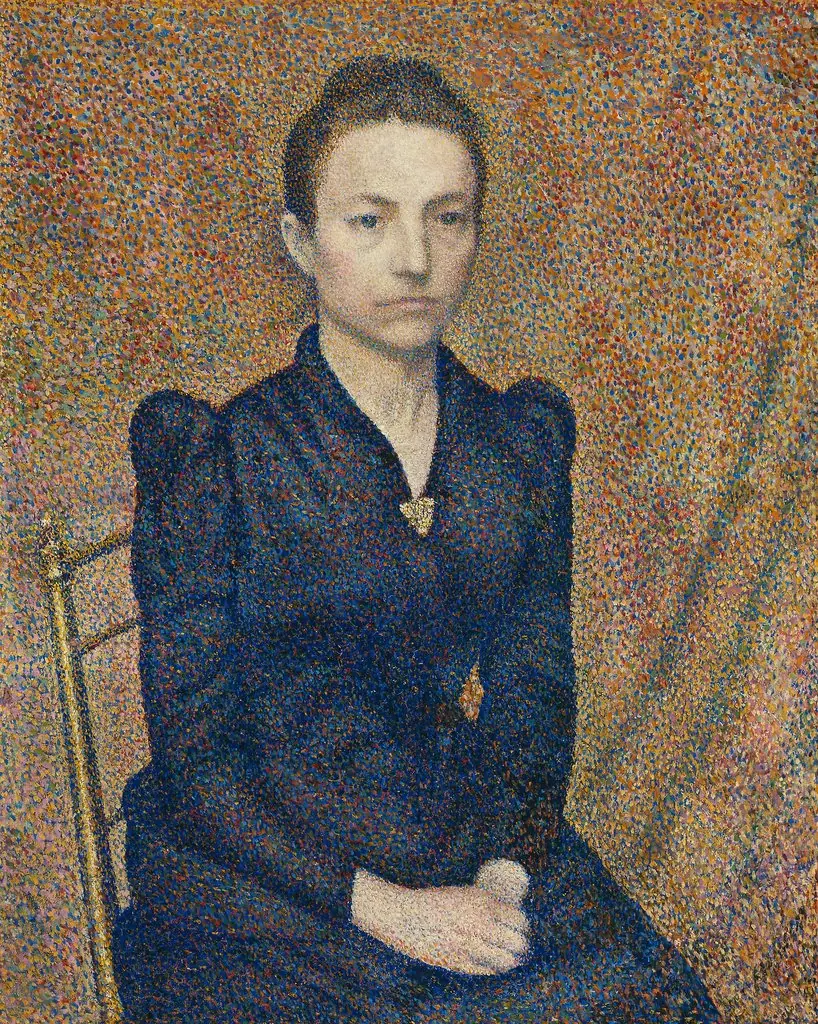
Maria Sèthe is an oil painting by the Neo-Impressionist artist Théo van Rysselberghe. It dates from 1896 and is held in the collection of the Royal Museum of Fine Arts Antwerp.
About this work
This painting shows Maria Sèthe, a woman from a wealthy musical family, sitting at a harmonium.
This painting shows Maria Sèthe, a woman from a wealthy musical family, sitting at a harmonium. Théo van Rysselberghe painted her in 1891 using oil paints. She faces left, not playing the instrument, just gazing.
Her purple dress and blonde hair are the main colors you’ll notice. The artist keeps things simple here, no busy background, just Maria and her quiet moment.
Check out more by Théo van Rysselberghe.
Overview
Théo van Rysselberghe’s 1891 oil painting portrays Maria Sèthe seated before a harmonium. The composition is restrained, focusing on the sitter in profile as she looks to the left, her blonde hair gathered and her purple dress catching the eye. The work captures a quiet moment, with the instrument present but untouched, emphasizing presence over action.
Subject & Meaning
Maria Sèthe belonged to a prosperous family known for its musical patronage and cultural engagement. By placing her beside a harmonium, a symbol of domestic music-making, van Rysselberghe hints at her social milieu and the genteel leisure of the era, while her contemplative gaze suggests introspection rather than performance.
Technique & Style
Executed in oil on canvas, the painting reflects van Rysselberghe’s neo‑impressionist approach, employing precise brushwork and a limited palette that foregrounds the violet of the dress and the warm tones of the hair. The background is deliberately muted, allowing the figure’s form and the subtle interplay of light to dominate the visual field.
History & Provenance
Created in 1891, the portrait entered the collection of the Sèthe family before passing through private hands. It later became part of a public museum acquisition, where it has been displayed as an example of Belgian neo‑impressionism and the artist’s portraiture of contemporary cultural figures.
Context
The work emerges from a period when Belgian artists were engaging with pointillist techniques while maintaining a personal, often intimate subject matter. Van Rysselberghe’s focus on a single figure within an unadorned setting aligns with the broader shift toward modernist simplicity and the exploration of light and color as expressive tools.
Own this work as a print
Artist & collection

Artist
Théophile "Théo" van Rysselberghe was a Belgian neo-impressionist painter, who played a pivotal role in the European art scene at the turn of the twentieth century.

- Miss Stevens
 Portret van jonkvrouwe Maria Francisca Louisa Dommer van Poldersveldt (Ubbergen 1848 - 1925 ’s-Hertogenbosch)
 Interior
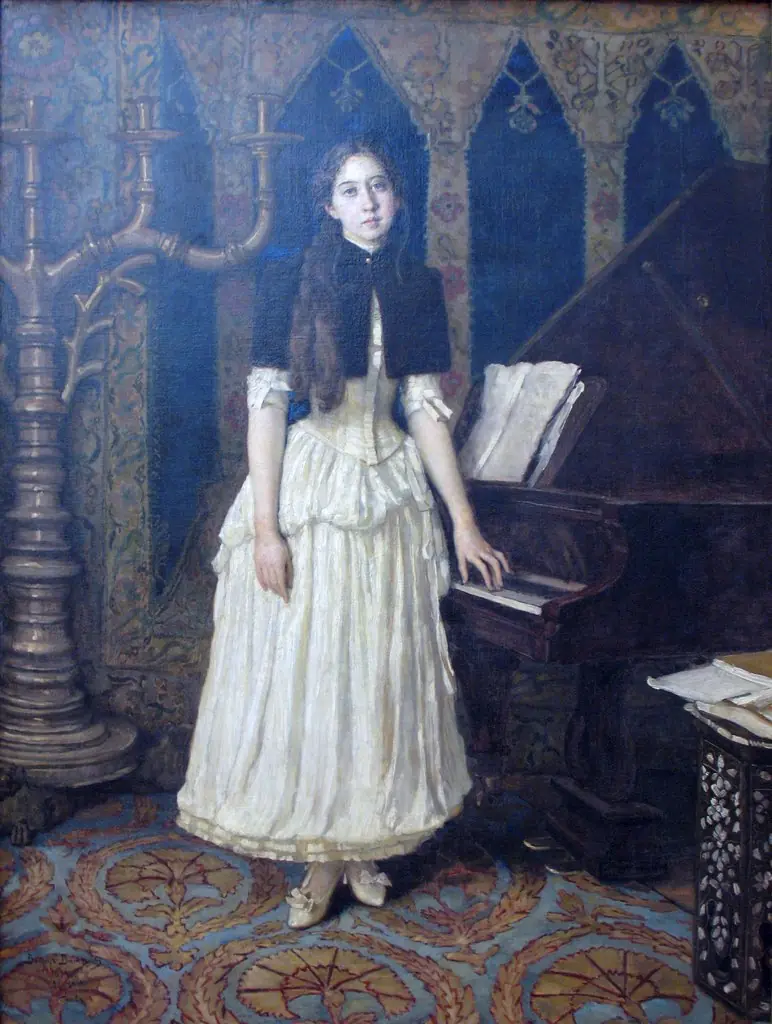 Portrait von E.A. Prakhova
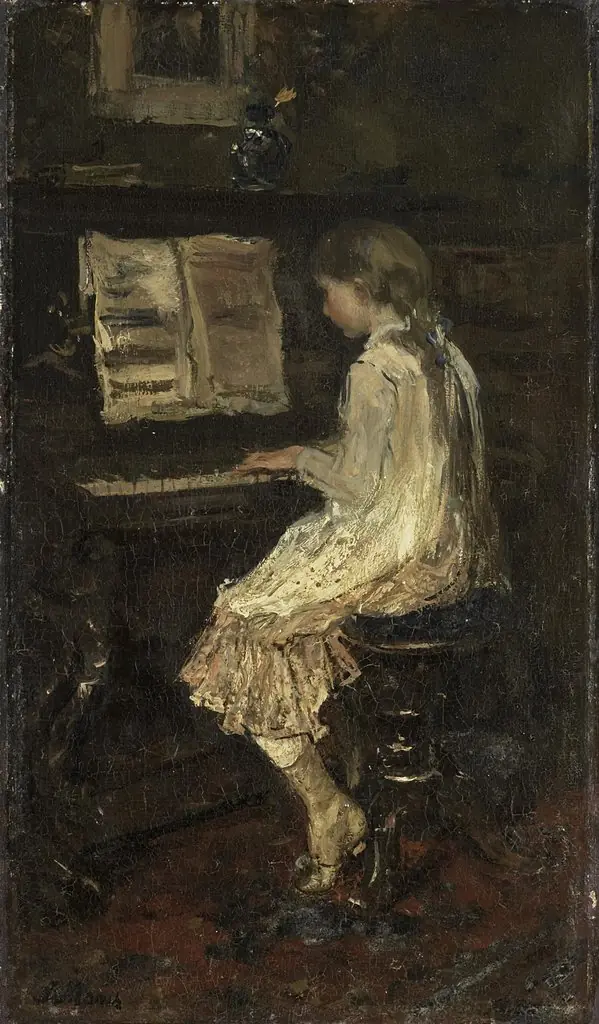 Girl at the Piano
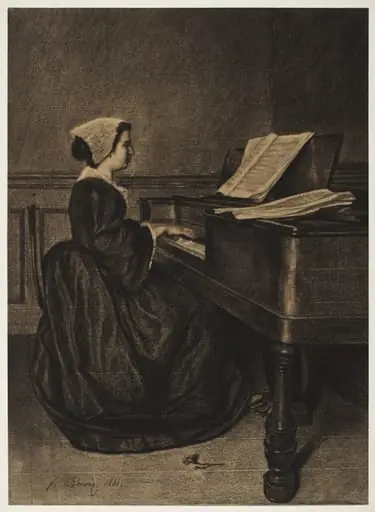 Woman at the Spinet
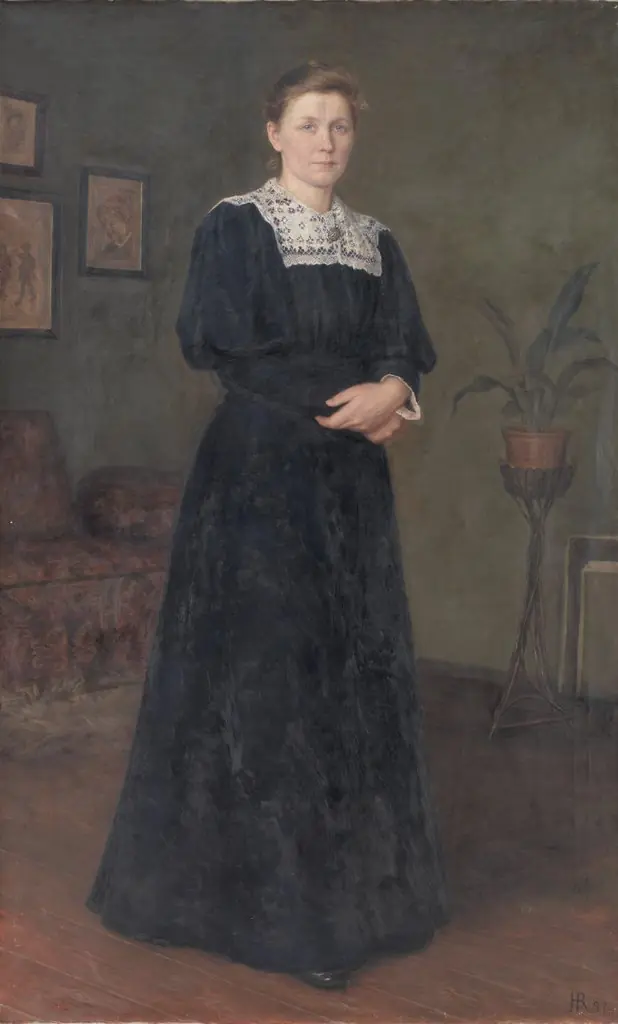 The Painter Ane Marie Hansen
 Girl at the Piano
 Fată de țăran sas
 Girl at Piano
 A Painter's Studio with a Model Wrapped in Japanese Silk
 Portrait of the Artist's Sister