Artwork
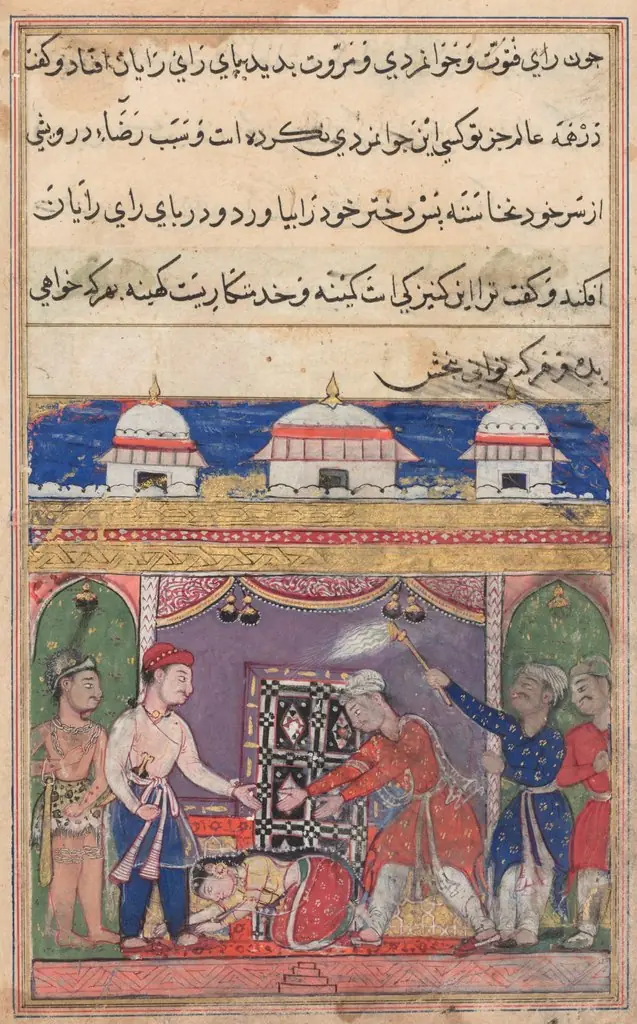
The three suitors again begin to quarrel among themselves for the hand of the devotee’s daughter, from a Tuti-nama (Tales of a Parrot): Twentieth Night
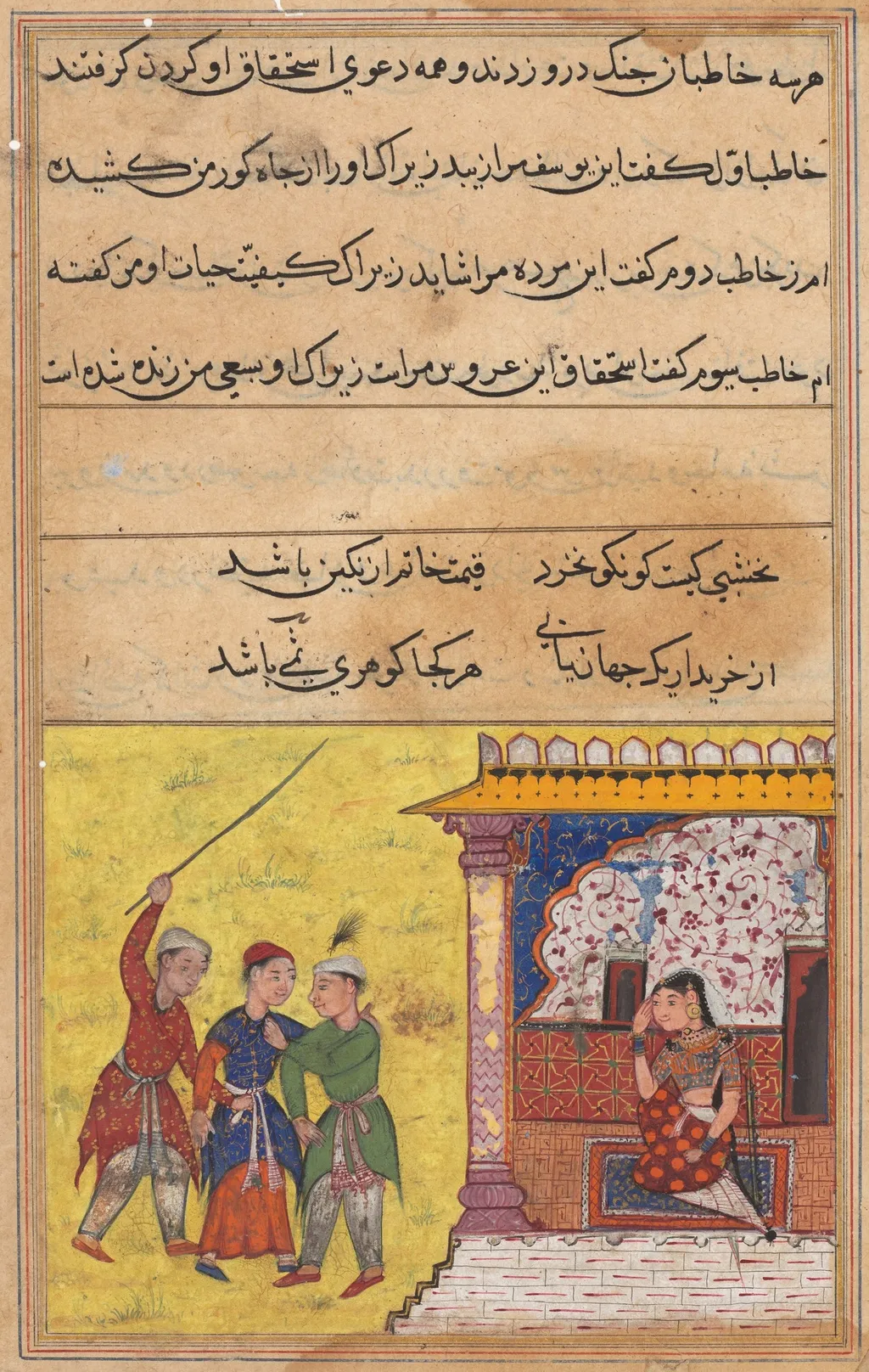
The three suitors again begin to quarrel among themselves for the hand of the devotee’s daughter, from a Tuti-nama (Tales of a Parrot): Twentieth Night is an unspecified painting. It dates from 1560 and is held in the collection of the Cleveland Museum of Art.
About this work
Subject & Meaning
The scene depicts a confrontation among three suitors vying for the hand of a devotee’s daughter, drawn from the Twentieth Night of the Tuti-nama manuscript.
The scene depicts a confrontation among three suitors vying for the hand of a devotee’s daughter, drawn from the Twentieth Night of the Tuti-nama manuscript. The narrative illustrates a moral conflict involving desire and social propriety within a Sufi teaching context. Iconographically, the figures are rendered in the distinctive Mughal miniature style, emphasizing flat spatial planes and intricate patterning characteristic of 16th-century Indian court art.
Symbolically, the quarrel underscores themes of worldly temptation versus spiritual devotion, a recurring motif in the parabolic tales of the Tuti-nama. The composition reflects the cultural milieu of the Mughal Empire, where narrative paintings served both aesthetic and didactic purposes in manuscript illumination.
History & Provenance
The painting is dated to 1560 and was produced in the Mughal Empire as an illustration for the Tuti-nama (Tales of a Parrot) manuscript. Its creator is unknown. The work entered the Cleveland Museum of Art in 1962, where it is catalogued under accession number 1962.279.147.a and remains in the museum’s collection. No further details about earlier ownership, commission, or subsequent provenance are provided in the available sources.
Overview
The work illustrates a narrative episode from the Tuti‑nama (Tales of a Parrot), specifically the twentieth night in which three suitors dispute the hand of a devotee’s daughter. The composition is divided between an exterior courtyard, where the men argue, and an interior space where the woman sits on a raised platform, observing the confrontation.
Technique & Style
Executed in a flat, decorative manner, the painting employs bold, saturated colors and simplified geometric forms. The interior walls feature swirling ornamental patterns that echo Persian miniature traditions, while the figures are rendered with minimal modeling, emphasizing narrative clarity over naturalistic detail.
Context
The Tuti‑nama is a 14th‑century Persian literary work that combines moral instruction with romantic adventure, often illustrated in miniature form. This painting reflects the broader cultural practice of visualizing episodic storytelling, where each night’s episode is rendered as a distinct scene, integrating text and image for didactic purposes.
Artist & collection

- The three suitors again begin to quarrel among themselves for the hand of the devotee’s daughter, from a Tuti-nama (Tales of a Parrot): Twentieth Night
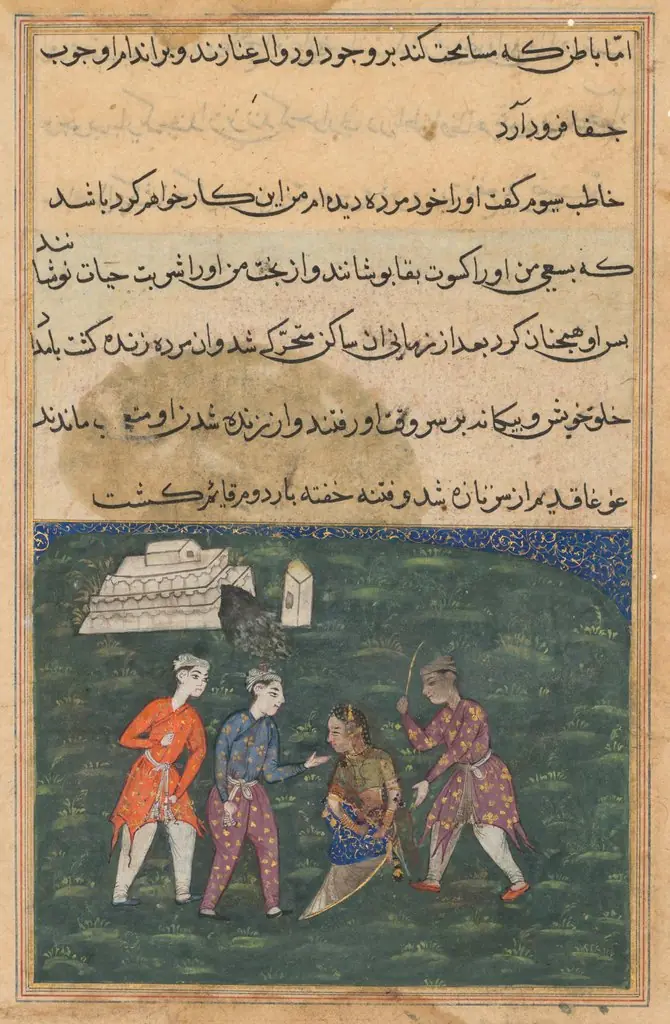 The third suitor strikes the devotee’s daughter and thus restores her to life, from a Tuti-nama (Tales of a Parrot): Twentieth Night
 The third suitor strikes the devotee’s daughter and thus restores her to life, from a Tuti-nama (Tales of a Parrot): Twentieth Night
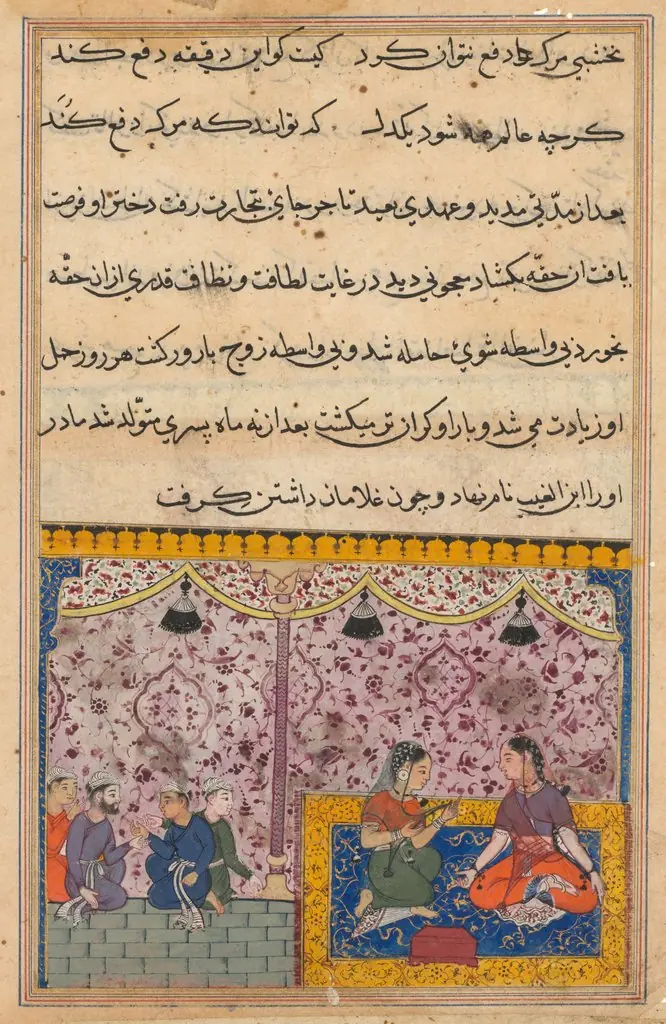 The merchant’s daughter gives birth to a son as a result of eating out of the box. The clever child recognizes the false gems from true, from a Tuti-nama (Tales of a Parrot): Twenty-third Night
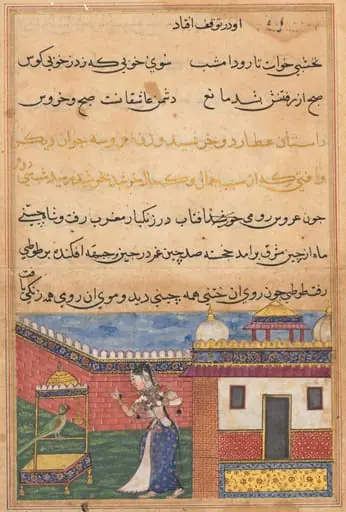 The parrot addresses Khujasta at the beginning of the thirty-second night, from a Tuti-nama (Tales of a Parrot)
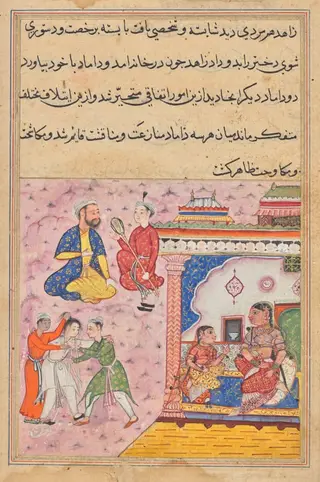 Three suitors fight amongst themselves for the hand of the devotee’s daughter, from a Tuti-nama (Tales of a Parrot): Twentieth Night
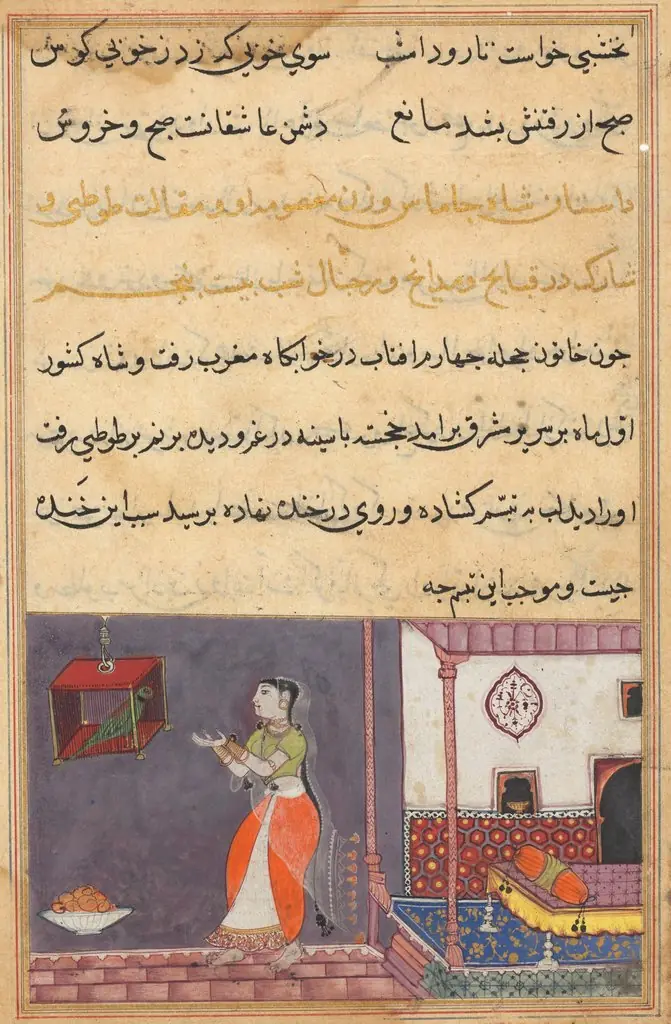 The Parrot Addresses Khujasta at the Beginning of the Twenty-fifth Night, from a Tuti-nama (Tales of a Parrot)
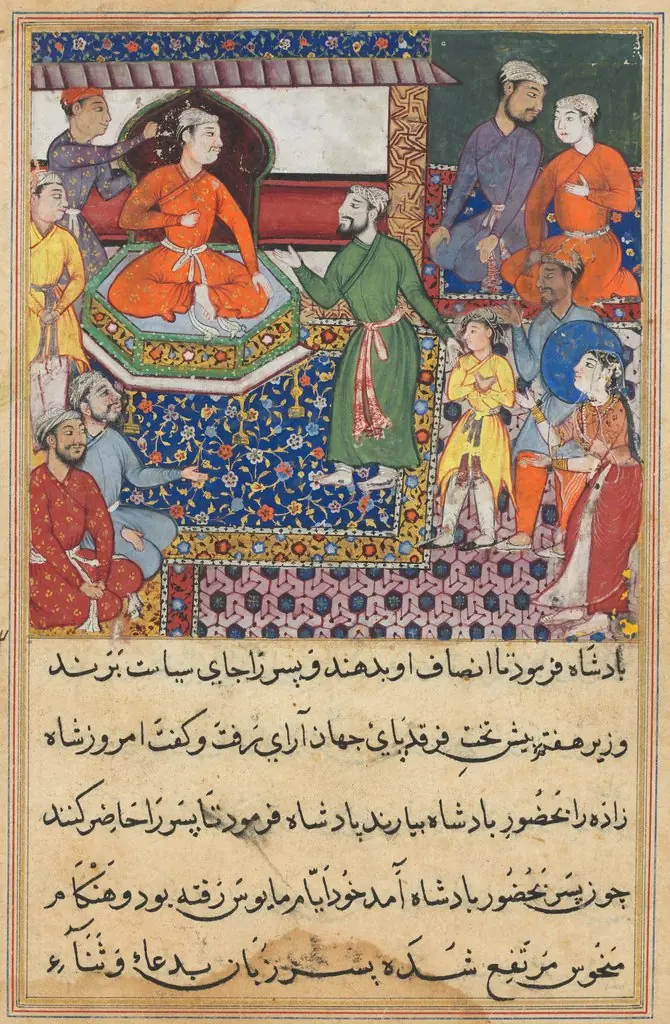 The handmaiden again pleads for the death of the prince, from a Tuti-nama (Tales of a Parrot): Eighth Night
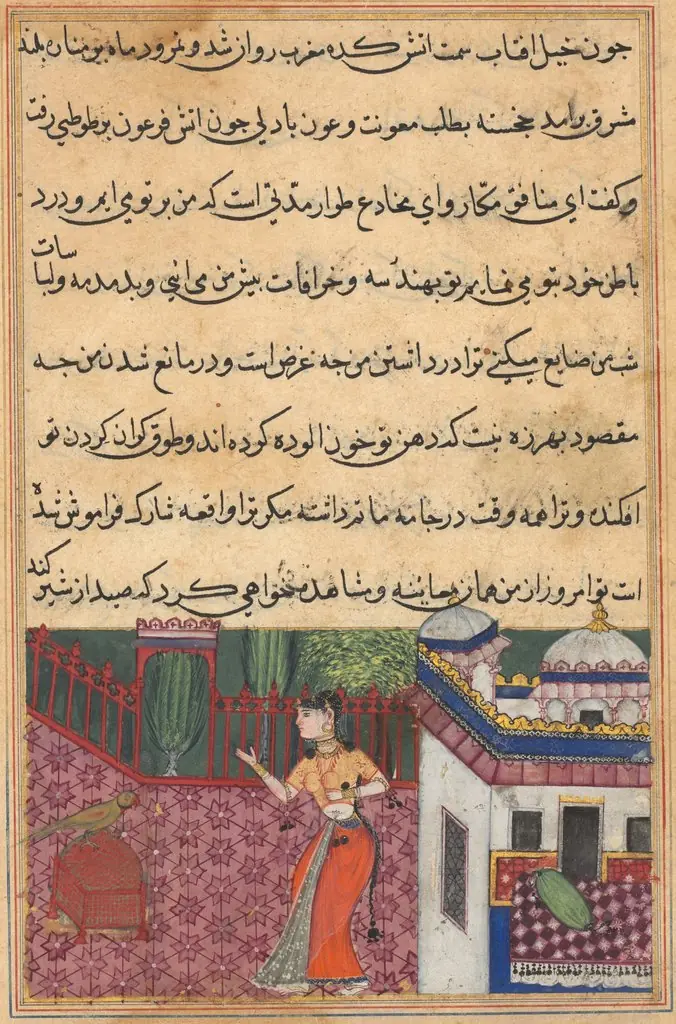 The parrot addresses Khujasta at the beginning of the thirty-third night, from a Tuti-nama (Tales of a Parrot)
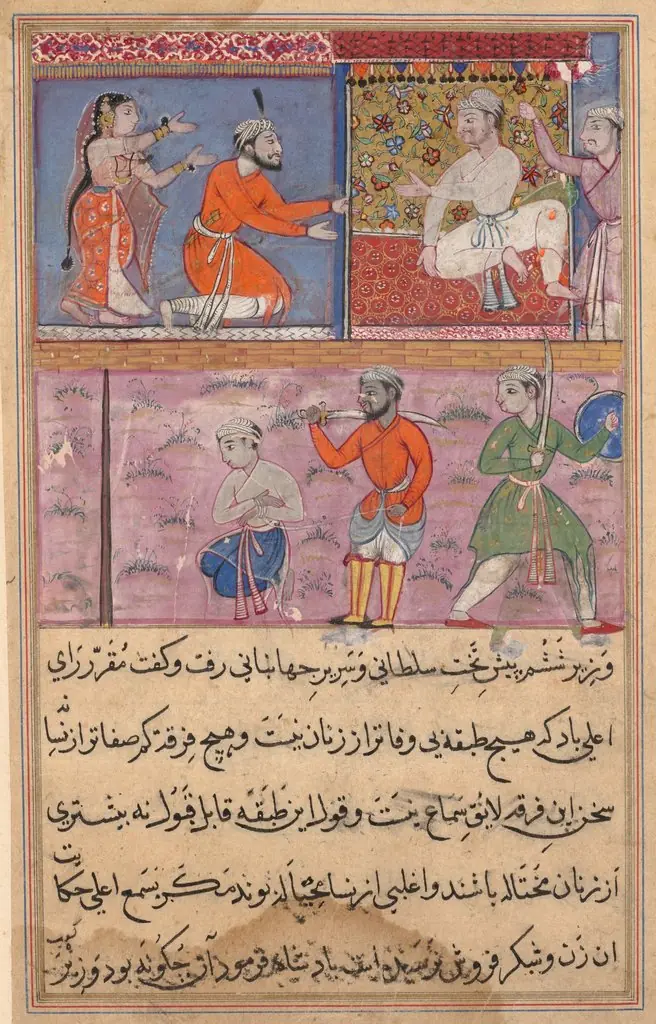 Page from Tales of a Parrot (Tuti-nama): text page
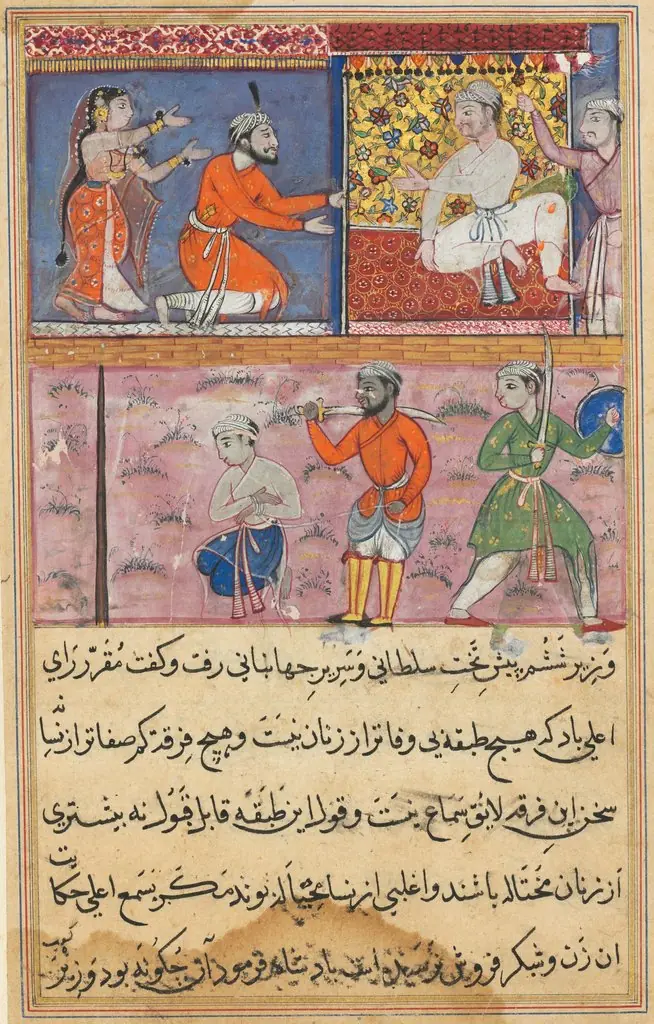 The prince sent back to the place of execution for the sixth time, from a Tuti-nama (Tales of a Parrot): Eighth Night
 The king of Bahilistan offers his daughter to the King of Kings, from a Tuti-nama (Tales of a Parrot): Seventh Night