Artwork
Khalis repays the prince for his kindness by changing into a snake and sucking the poison from the king’s daughter, from a Tuti-nama (Tales of a Parrot): Eighteenth Night
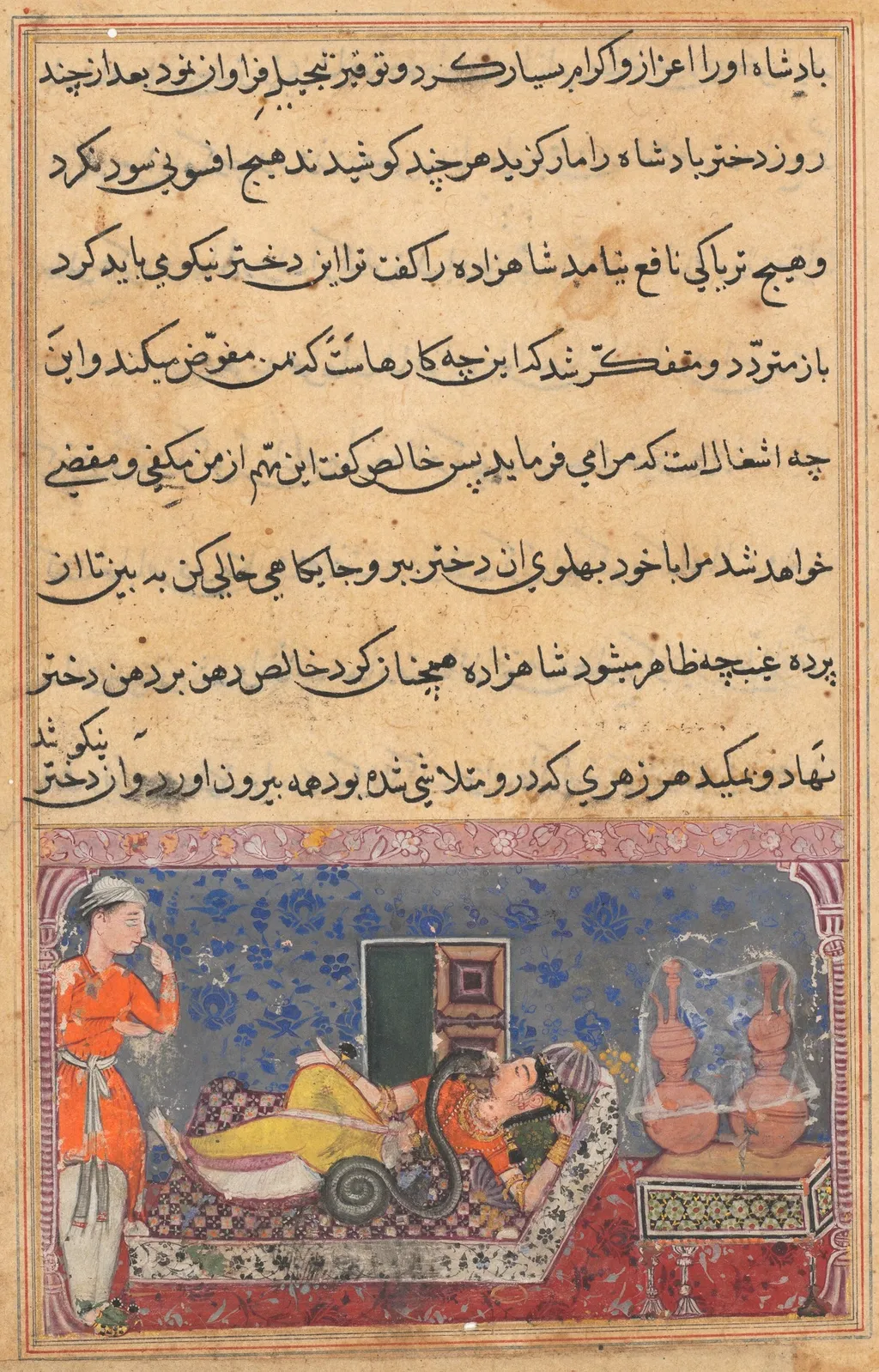
Khalis repays the prince for his kindness by changing into a snake and sucking the poison from the king’s daughter, from a Tuti-nama (Tales of a Parrot): Eighteenth Night is an unspecified painting. It dates from 1560 and is held in the collection of the Cleveland Museum of Art. The miniature illustrates a narrative episode from the eighteenth night of the Tuti‑nama, a Persian collection of fables.
About this work
Technique & Style
It serves as an illustration for the Eighteenth Night of the Tuti-nama, depicting the narrative of Khalis transforming into a snake to save the king's daughter.
Created in 1560 within the Mughal Empire, this work is classified as a painting. It serves as an illustration for the Eighteenth Night of the Tuti-nama, depicting the narrative of Khalis transforming into a snake to save the king's daughter. The piece is executed on a standard support typical of Mughal manuscript illumination from this period, though specific details regarding the exact ground, pigment composition, or current physical condition are not provided in the available records.
Stylistically, the artwork reflects the early phase of Mughal painting, characterized by the integration of Persian miniature traditions with emerging naturalistic observations.
History & Provenance
Created in 1560 within the Mughal Empire, this painting illustrates a scene from the Eighteenth Night of the Tuti-nama (Tales of a Parrot). The work was produced by an unknown artist during the height of the Mughal manuscript tradition. It is currently held in the collection of the Cleveland Museum of Art, where it is cataloged under the accession number 1962.279.136.a.
The piece represents a specific moment of narrative action where a character named Khalis transforms into a snake to save a king's daughter.
The painting is held at the Cleveland Museum of Art in Cleveland, Ohio. The museum’s permanent collection includes the work under accession number 1962.279.136.a. This accession number indicates that the piece entered the collection in 1962.
No exhibition history for the work is recorded in the available sources. The object remains housed in the museum’s holdings. The work is not known to have been lent to other institutions according to the sources.
Context
The painting depicts a narrative from the Tuti-nama, a 16th-century Persian illustrated manuscript, showing the moment when the loyal minister Khalis transforms into a snake to extract poison from the king’s daughter. Executed in 1560 during the Mughal period, it exemplifies the synthesis of Persian storytelling and Indian courtly artistic traditions. Its composition and symbolic use of metamorphosis reflect broader themes explored in Mughal manuscript painting, where moral allegory intertwines with visual innovation.
The work is held in the collection of the Cleveland Museum of Art and contributes to scholarly discussions on cross-cultural narrative transmission in early modern Eurasian art.
Overview
The miniature illustrates a narrative episode from the eighteenth night of the Tuti‑nama, a Persian collection of fables. A brightly coloured figure in orange leans on a staff, observing a scene in which a man in green and white reclines on a bed beside a sleeping woman. A serpent coils around the woman’s arm, while a servant offers a pitcher, all set against a blue background adorned with stylised floral motifs.
Subject & Meaning
The composition depicts the moment when Khalis, repaying a prince’s kindness, transforms into a snake to draw poison from the king’s daughter, thereby saving her life. The presence of the servant with a pitcher suggests the ritual of cleansing, while the attentive onlooker underscores the moral emphasis on gratitude and self‑sacrifice within the tale.
Artist & collection

- Khalis repays the prince for his kindness by changing into a snake and sucking the poison from the king’s daughter, from a Tuti-nama (Tales of a Parrot): Eighteenth Night
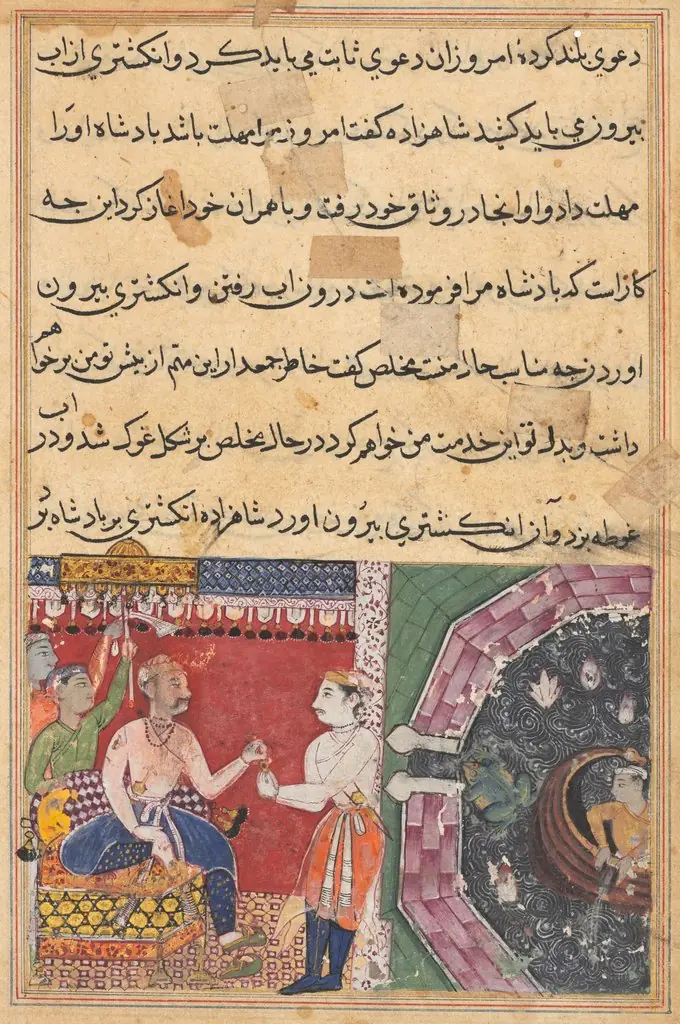 The prince, with the help of Mukhlis who changes into a frog, recovers the ring lost in the sea, and returns it to the king, from a Tuti-nama (Tales of a Parrot): Eighteenth Night
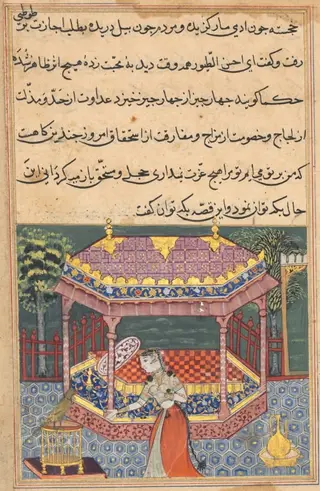 The parrot addresses Khujasta at the beginning of the thirty-seventh night, from a Tuti-nama (Tales of a Parrot)
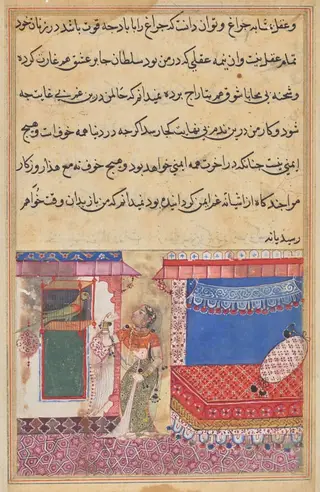 The Parrot Addresses Khujasta at the Beginning of the Eighteenth Night, from a Tuti-nama (Tales of a Parrot)
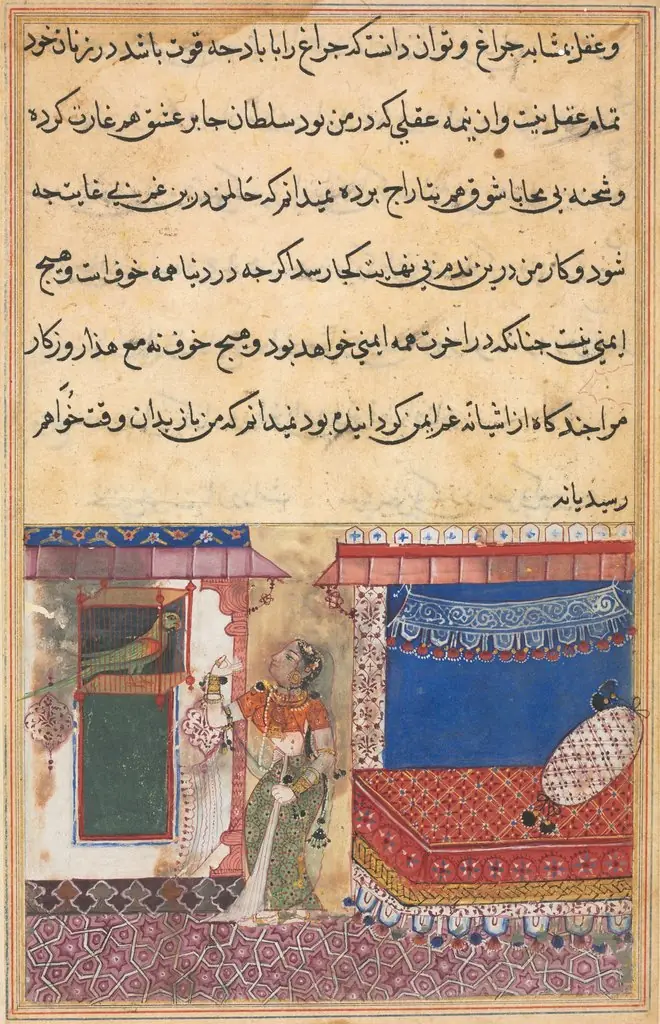 The Parrot Addresses Khujasta at the Beginning of the Eighteenth Night, from a Tuti-nama (Tales of a Parrot)
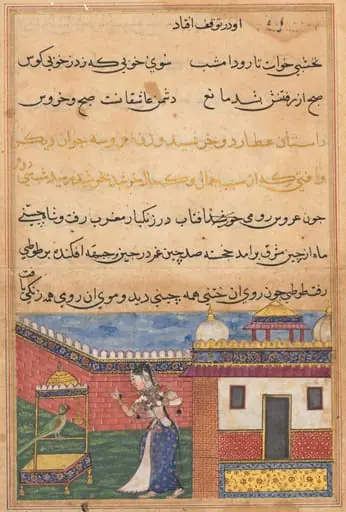 The parrot addresses Khujasta at the beginning of the thirty-second night, from a Tuti-nama (Tales of a Parrot)
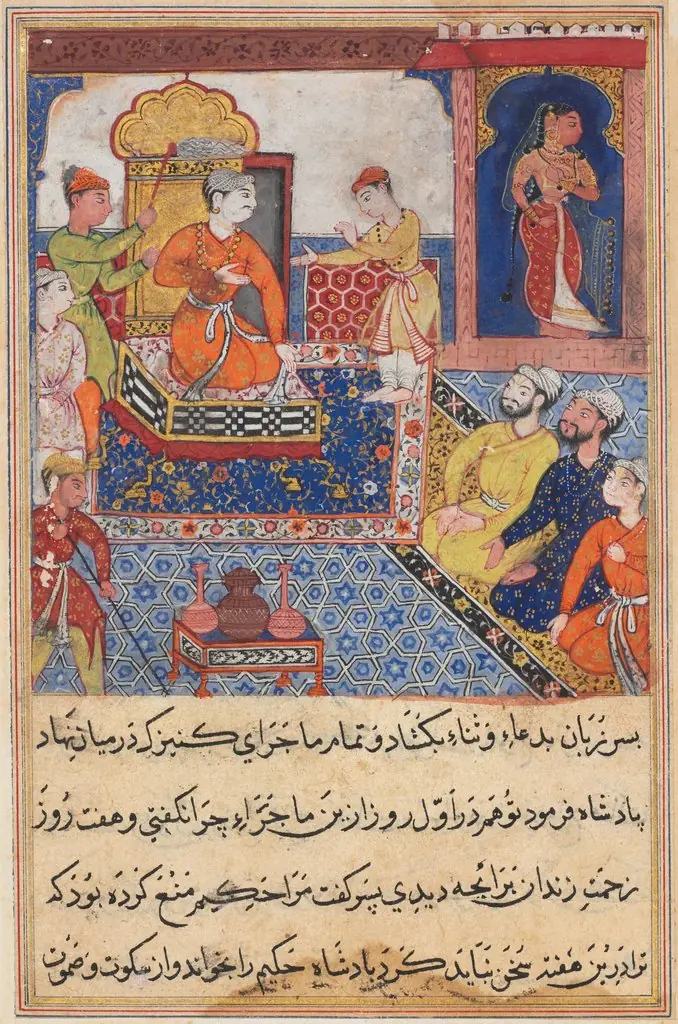 The young prince recounts his experiences to his father, the king, from a Tuti-nama (Tales of a Parrot): Eighth Night
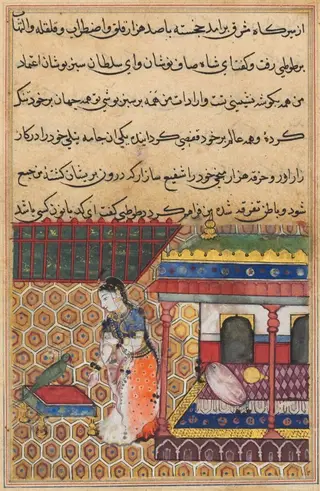 The parrot addresses Khujasta at the beginning of the thirty-eighth night, from a Tuti-nama (Tales of a Parrot)
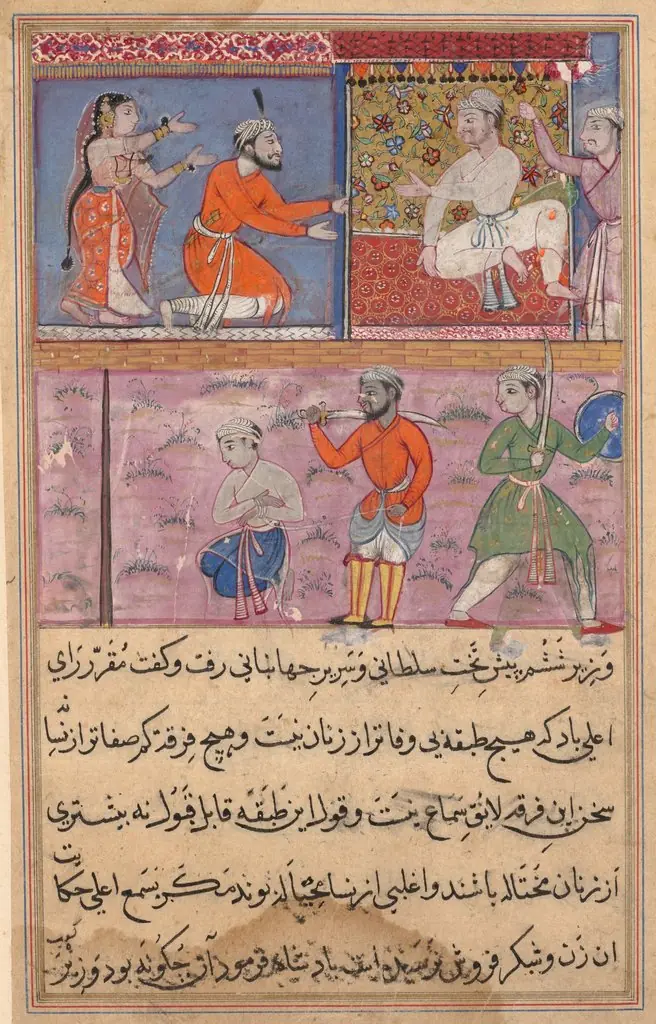 Page from Tales of a Parrot (Tuti-nama): text page
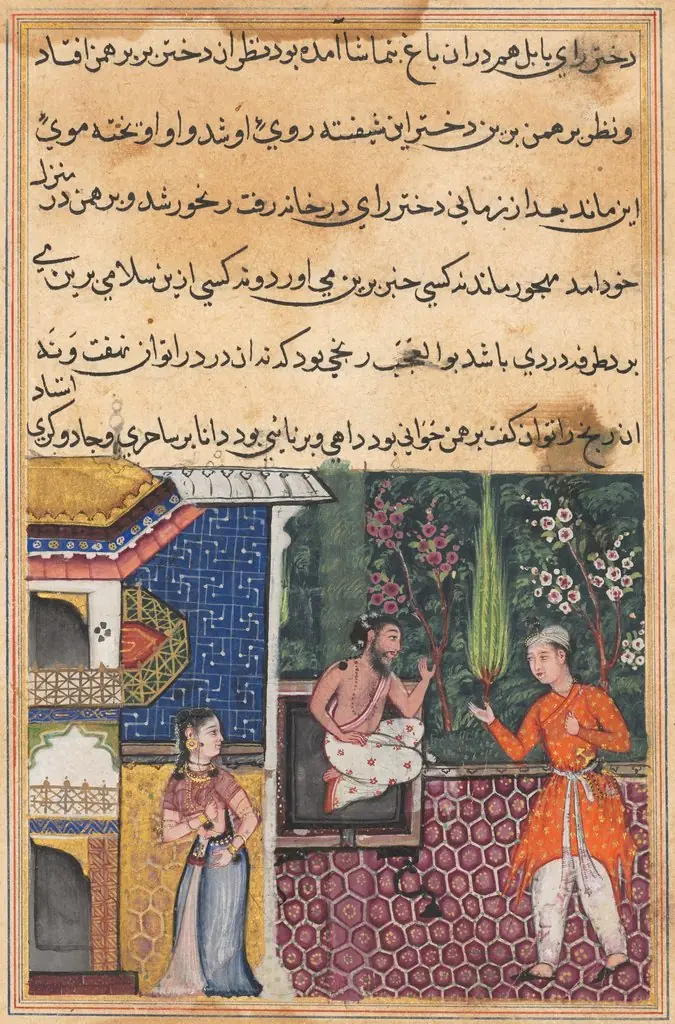 The Brahman gives an account of his falling in love with the king of Babylon’s daughter to his friend, the magician, from a Tuti-nama (Tales of a Parrot): Thirty-fifth Night
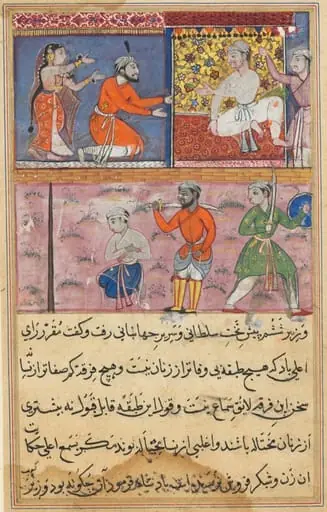 The prince sent back to the place of execution for the sixth time, from a Tuti-nama (Tales of a Parrot): Eighth Night
 The merchant’s daughter gives birth to a son as a result of eating out of the box. The clever child recognizes the false gems from true, from a Tuti-nama (Tales of a Parrot): Twenty-third Night