Artwork
The king of Zabul sees Mahrusa from his palace balcony, from a Tuti-nama (Tales of a Parrot): Thirty-sixth Night
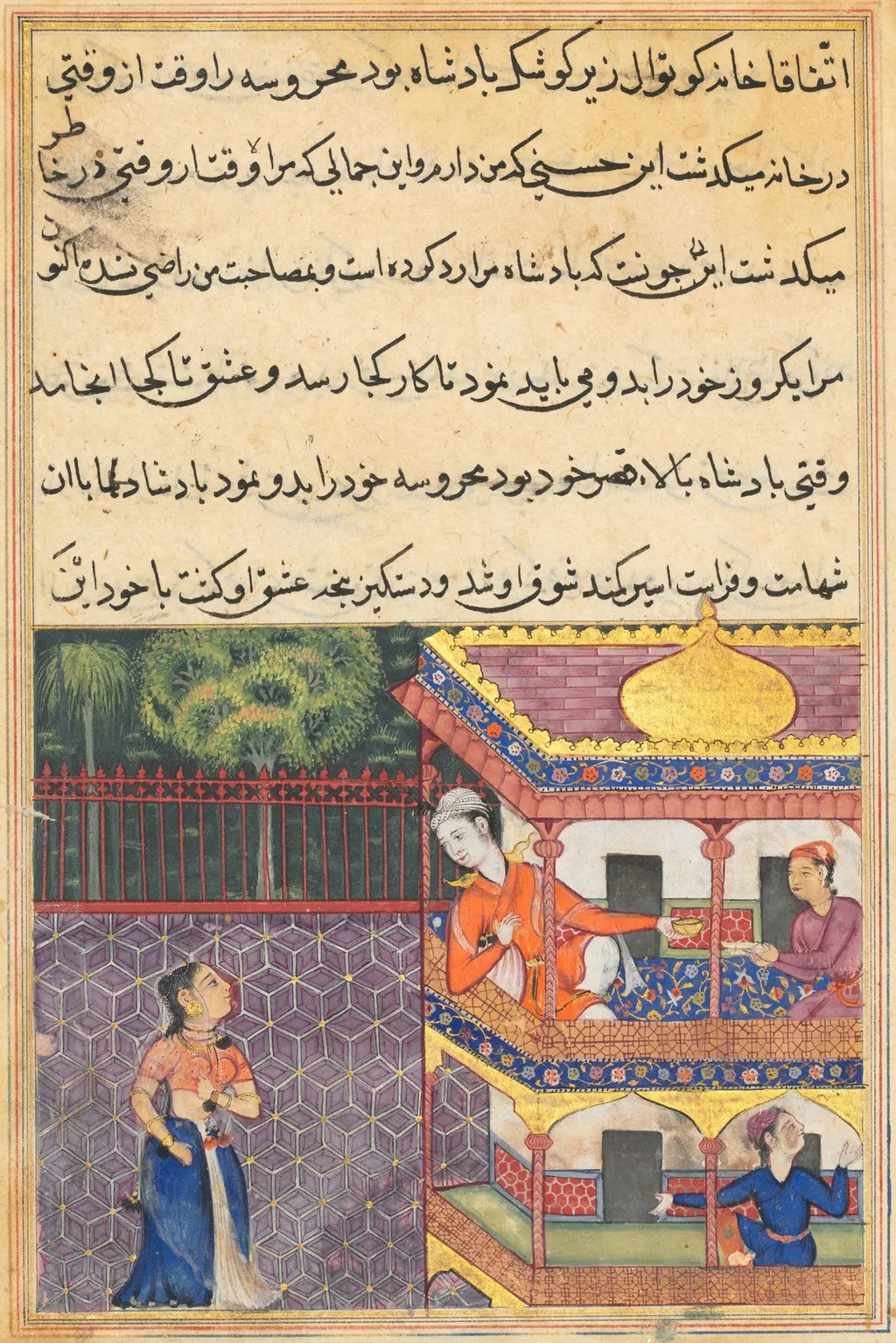
The king of Zabul sees Mahrusa from his palace balcony, from a Tuti-nama (Tales of a Parrot): Thirty-sixth Night is an unspecified painting. It dates from 1560 and is held in the collection of the Cleveland Museum of Art. The work illustrates a narrative episode from the Persian collection of stories known as the Tuti‑nama, or Tales of a Parrot.
About this work
Technique & Style
The painting was executed in opaque watercolor and ink on paper, depicting a narrative scene from the Tuti-nama with fine line work and a muted palette.
The painting was executed in opaque watercolor and ink on paper, depicting a narrative scene from the Tuti-nama with fine line work and a muted palette. The composition shows the king of Zabul observing Mahrusa from a palace balcony, rendered with the flat perspective and stylized figures characteristic of early Mughal miniature conventions. The delicate handling and fine brushwork are typical of sixteenth-century Indian court painting.
History & Provenance
The painting is held in the collection of the Cleveland Museum of Art in Cleveland, United States. Its specific inventory number is 1962.279.241.a. The work was created within the Mughal Empire around 1560.
The provided sources do not document any specific exhibition history for this artwork, listing only its current institutional location and accession details.
Context
The painting depicting the king of Zabul observing Mahrusa from his palace balcony, originating from the thirty-sixth night of the Tuti-nama, was created in 1560 within the Mughal artistic milieu. It belongs to the tradition of illustrated Persian-language narrative cycles produced in Mughal India, reflecting the period's synthesis of courtly storytelling and miniature painting. The work is housed in the Cleveland Museum of Art, where its provenance and historical context have been documented since its acquisition.
Legacy
The painting depicting the king of Zabul observing Mahrusa from his palace balcony, illustrated in the thirty-sixth night of the Tuti-nama, has shaped later Persian miniature traditions through its narrative framing and courtly composition. Its stylized spatial depth and emphasis on regal perspective influenced subsequent manuscript cycles in Mughal and Deccan ateliers, where similar balcony scenes became a recurrent motif. The work’s presence in the Cleveland Museum of Art’s collection has enabled scholarly comparisons of Safavid narrative techniques with later regional interpretations, reinforcing its reputation as a benchmark for storytelling in miniature art.
Exhibitions at major institutions have highlighted its role in tracing the evolution of courtly imagery across South Asian artistic networks.
Overview
The work illustrates a narrative episode from the Persian collection of stories known as the Tuti‑nama, or Tales of a Parrot. Set on a palace balcony, the composition shows a woman in a blue skirt and orange blouse crossing her arms, while three men occupy the balcony and its base. Architectural elements such as a decorative railing, canopy, and patterned wall frame the scene, with a tree visible beyond.
Subject & Meaning
The painting captures the moment when the king of Zabul observes Mahrusa from his elevated perch, a scene drawn from the thirty‑sixth night of the Tuti‑nama. The interaction between the seated figures and the standing woman suggests a narrative of courtly intrigue or romantic encounter, reflecting the moral and didactic themes typical of the tale’s storytelling tradition.
Artist & collection

- The king of Zabul sees Mahrusa from his palace balcony, from a Tuti-nama (Tales of a Parrot): Thirty-sixth Night
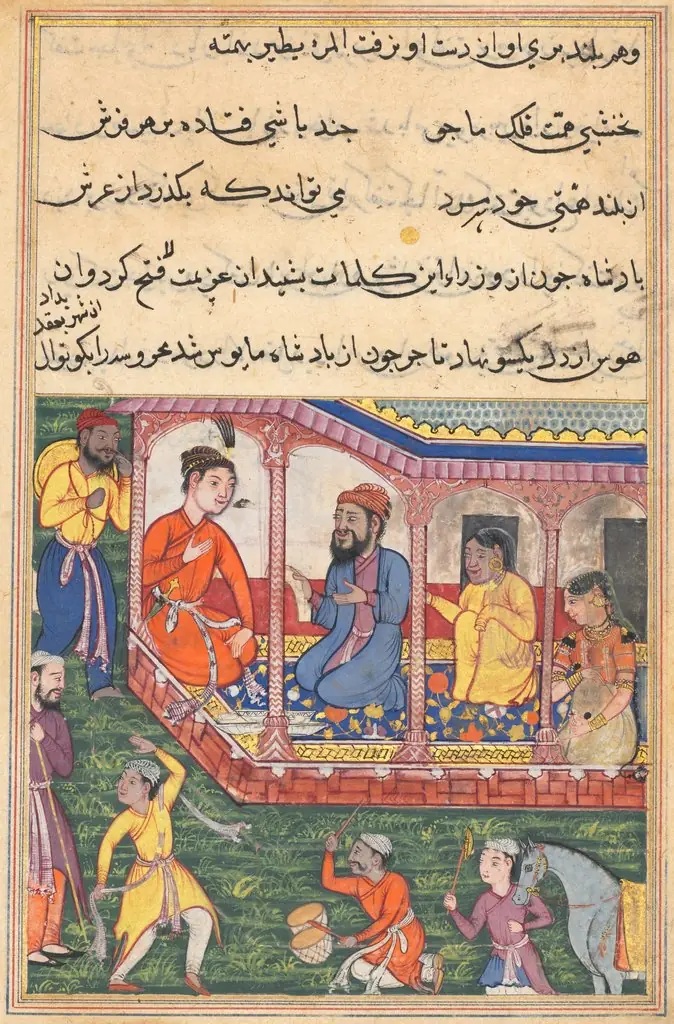 Mahrusa’s marriage to the prefect of the city, from a Tuti-nama (Tales of a Parrot): Thirty-sixth Night
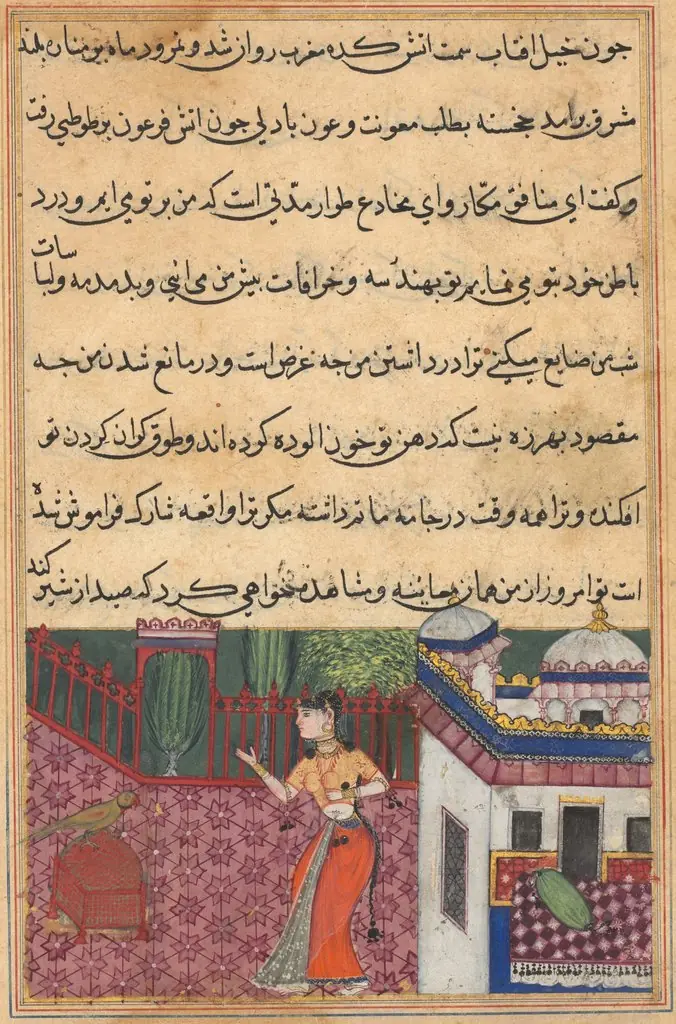 The parrot addresses Khujasta at the beginning of the thirty-third night, from a Tuti-nama (Tales of a Parrot)
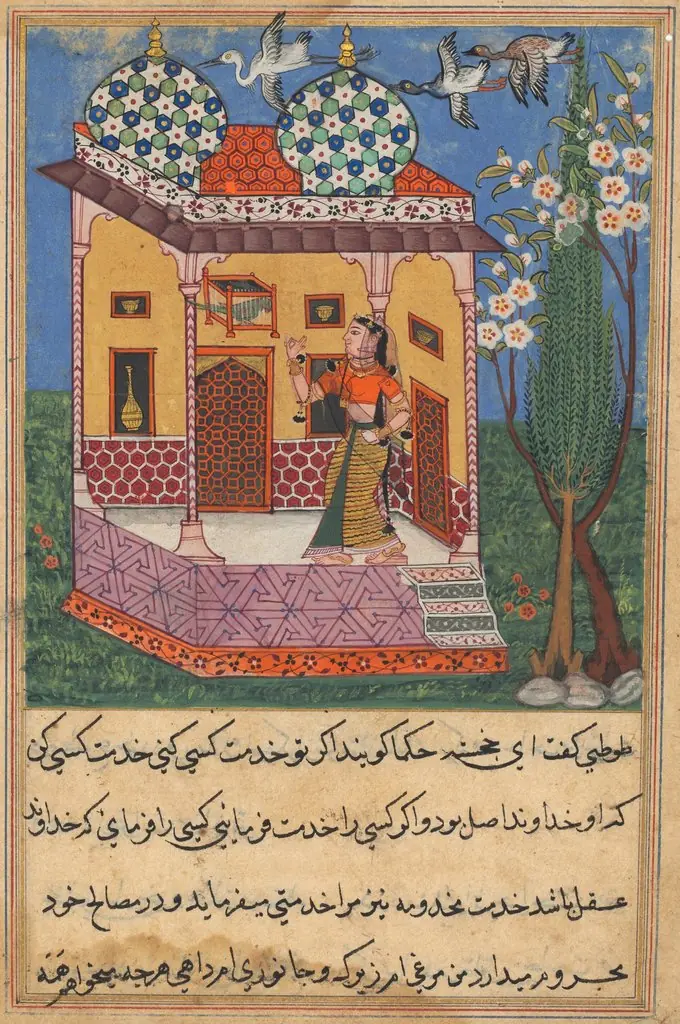 The Parrot Addresses Khujasta at the Beginning of the Twenty-sixth Night, from a Tuti-nama (Tales of a Parrot)
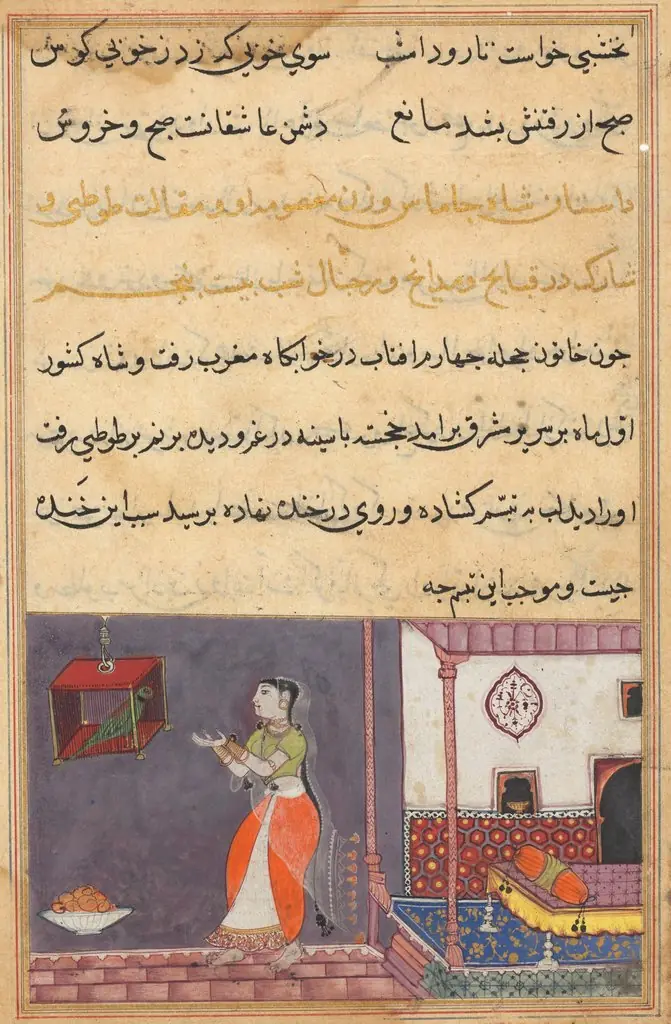 The Parrot Addresses Khujasta at the Beginning of the Twenty-fifth Night, from a Tuti-nama (Tales of a Parrot)
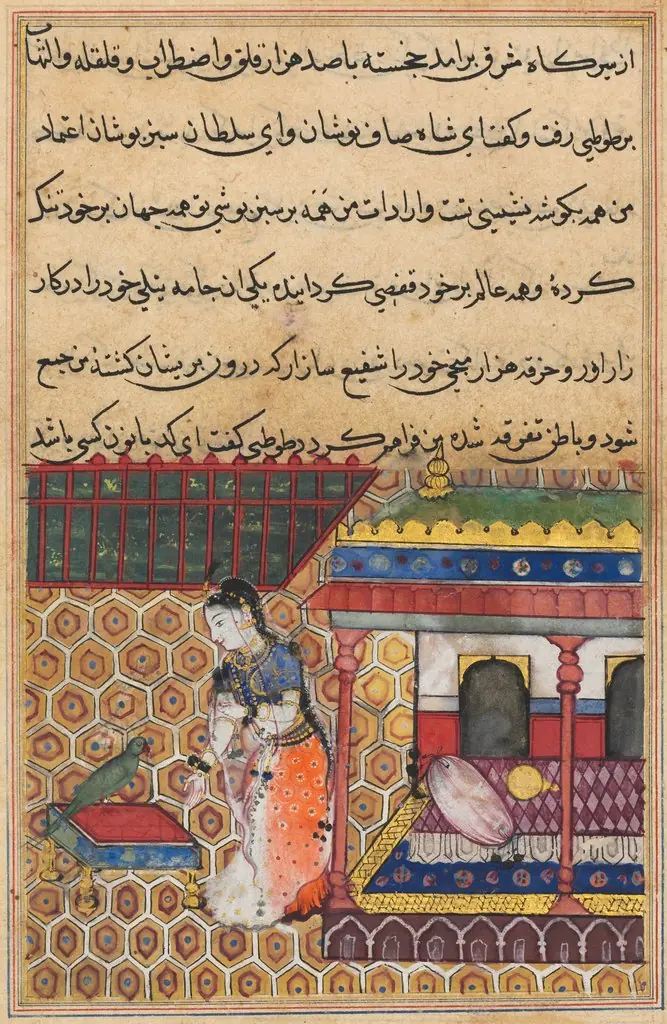 The parrot addresses Khujasta at the beginning of the thirty-eighth night, from a Tuti-nama (Tales of a Parrot)
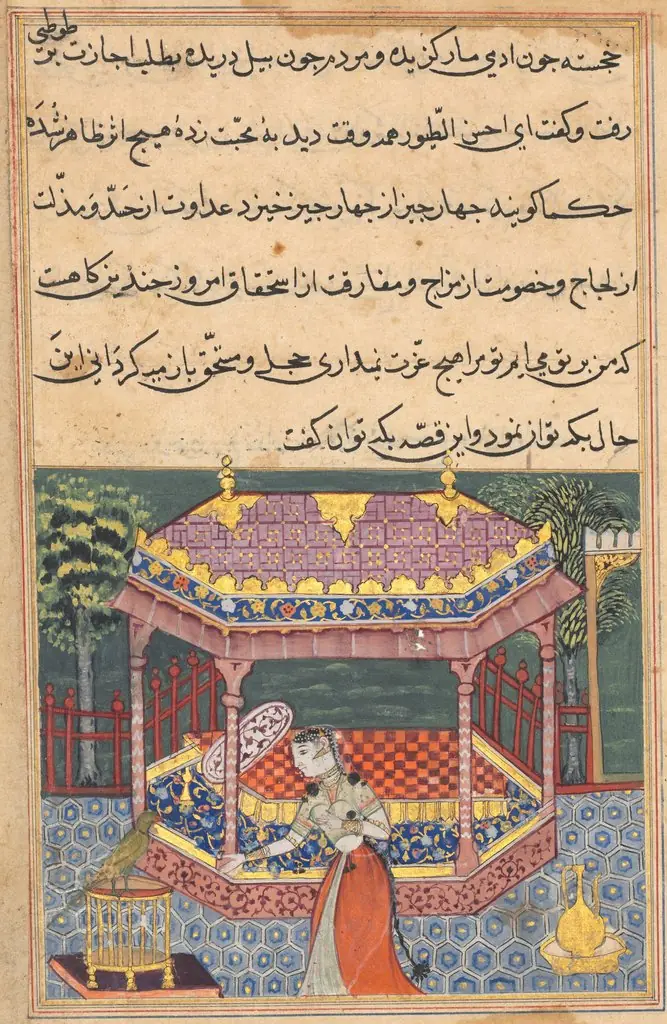 The parrot addresses Khujasta at the beginning of the thirty-seventh night, from a Tuti-nama (Tales of a Parrot)
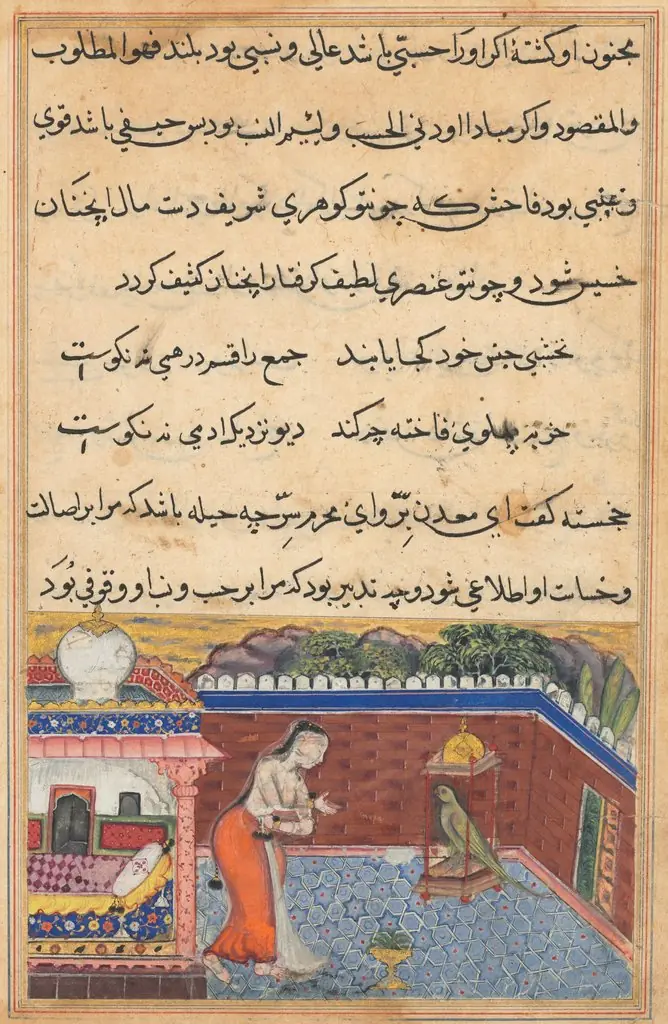 The parrot addresses Khujasta at the beginning of the thirty-first night, from a Tuti-nama (Tales of a Parrot)
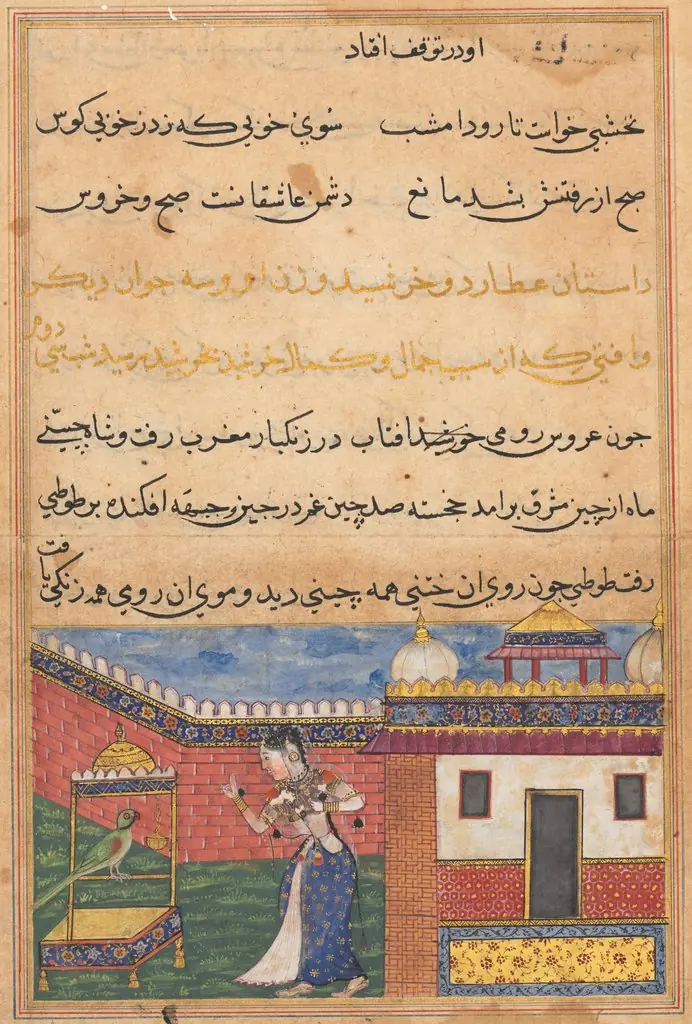 The parrot addresses Khujasta at the beginning of the thirty-second night, from a Tuti-nama (Tales of a Parrot)
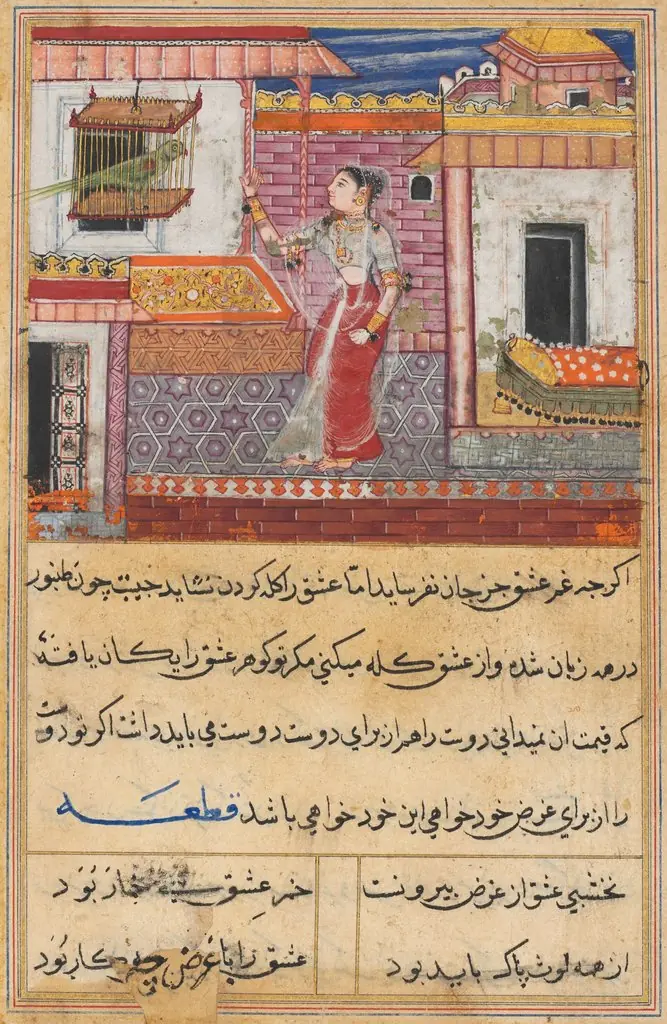 The Parrot Addresses Khujasta at the Beginning of the Thirteenth Night, from a Tuti-nama (Tales of a Parrot)
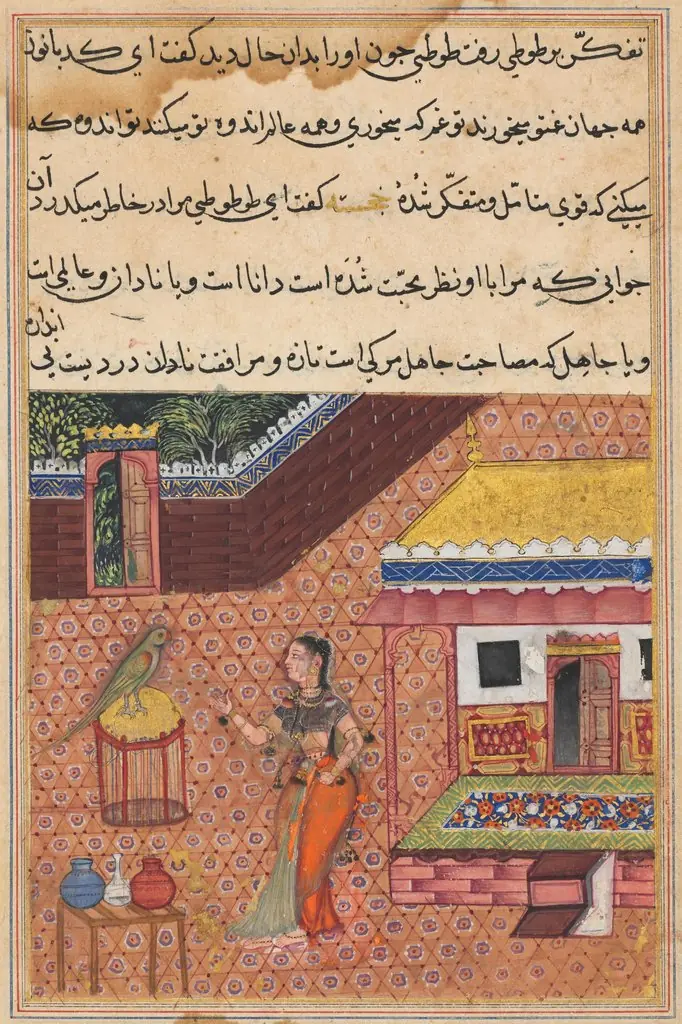 The parrot addresses Khujasta at the beginning of the thirty-fourth night, from a Tuti-nama (Tales of a Parrot)
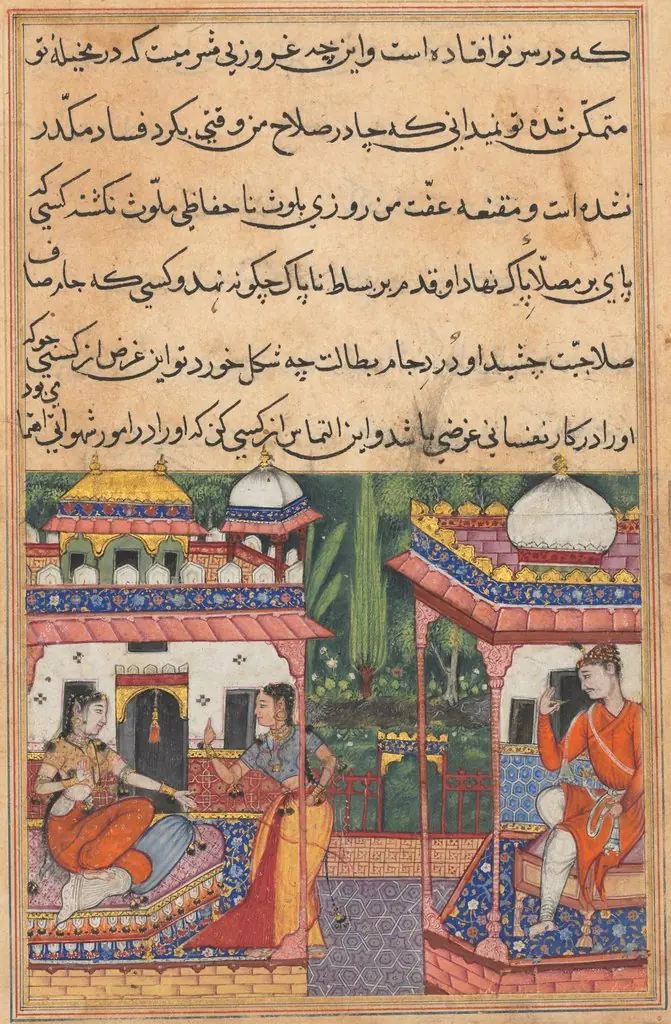 Kaiwan sends a message of love to Khurshid, wife of his brother Utarid who is away on a journey, from a Tuti-nama (Tales of a Parrot): Thirty-second Night
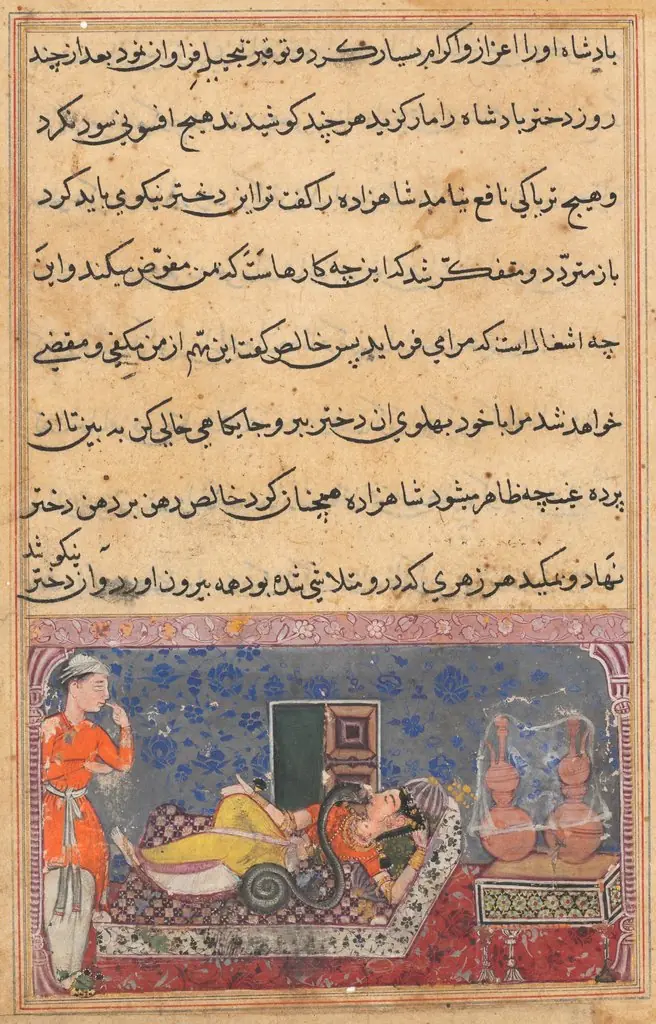 Khalis repays the prince for his kindness by changing into a snake and sucking the poison from the king’s daughter, from a Tuti-nama (Tales of a Parrot): Eighteenth Night
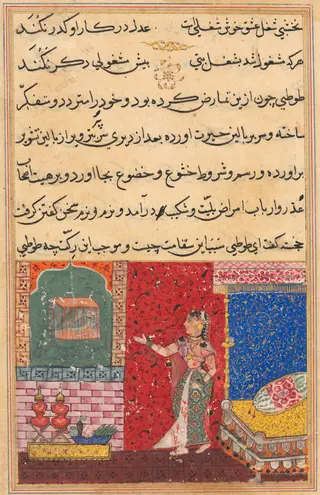 The Parrot Addresses Khujasta at the Beginning of the Fifteenth Night, from a Tuti-nama (Tales of a Parrot)
 Kaiwan sends a message of love to Khurshid, wife of his brother Utarid who is away on a journey, from a Tuti-nama (Tales of a Parrot): Thirty-second Night
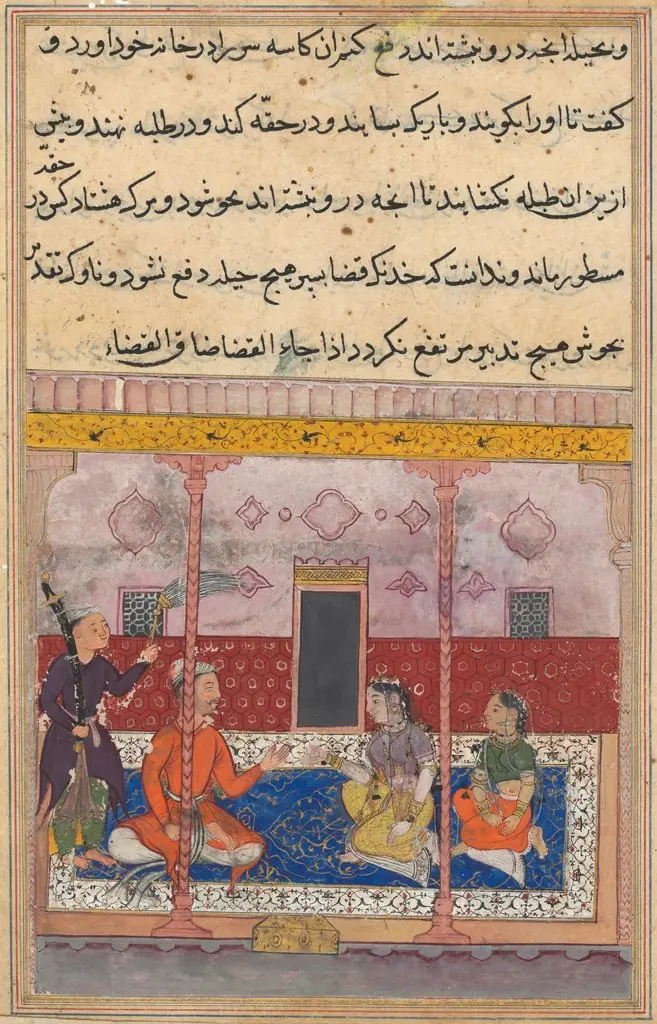 The merchant has the hateful skull ground and put into a box, from a Tuti-nama (Tales of a Parrot): Twenty-third Night
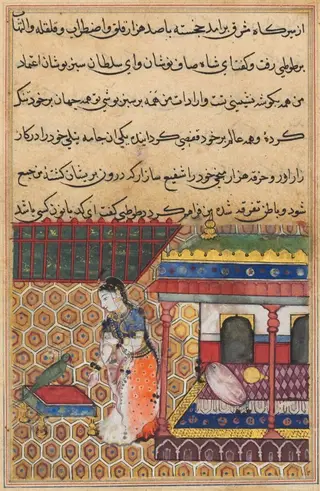 The parrot addresses Khujasta at the beginning of the thirty-eighth night, from a Tuti-nama (Tales of a Parrot)
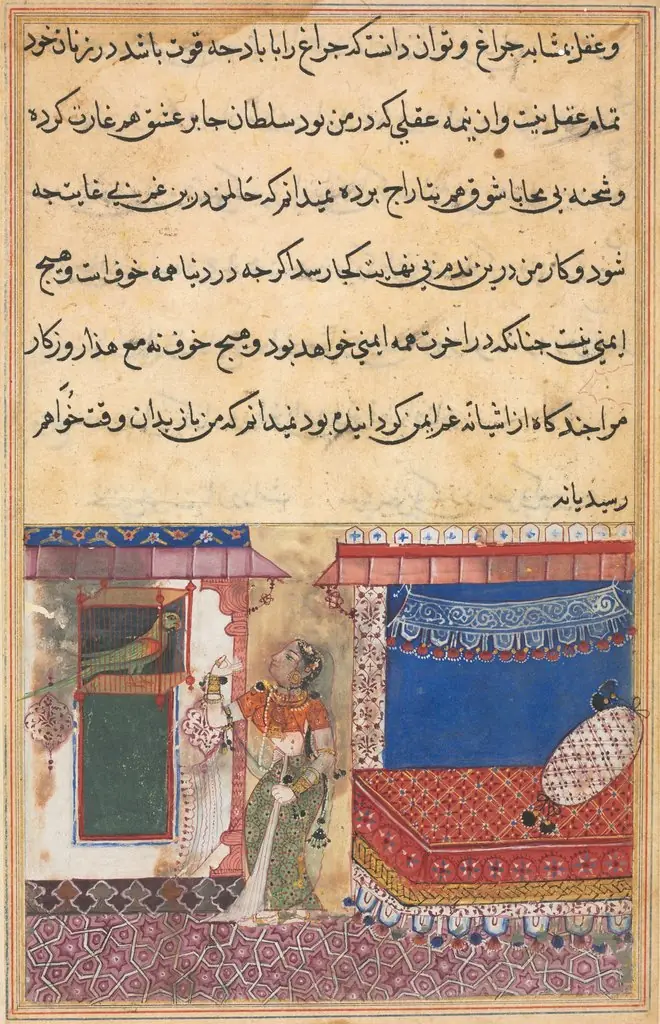 The Parrot Addresses Khujasta at the Beginning of the Eighteenth Night, from a Tuti-nama (Tales of a Parrot)