Artwork
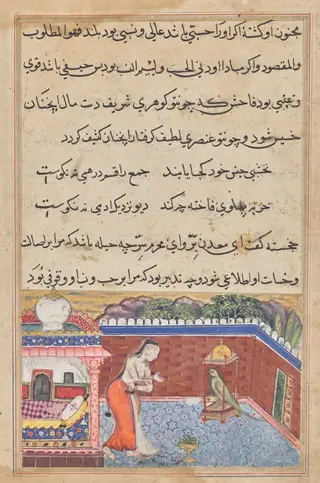
The parrot addresses Khujasta at the beginning of the thirty-first night, from a Tuti-nama (Tales of a Parrot)
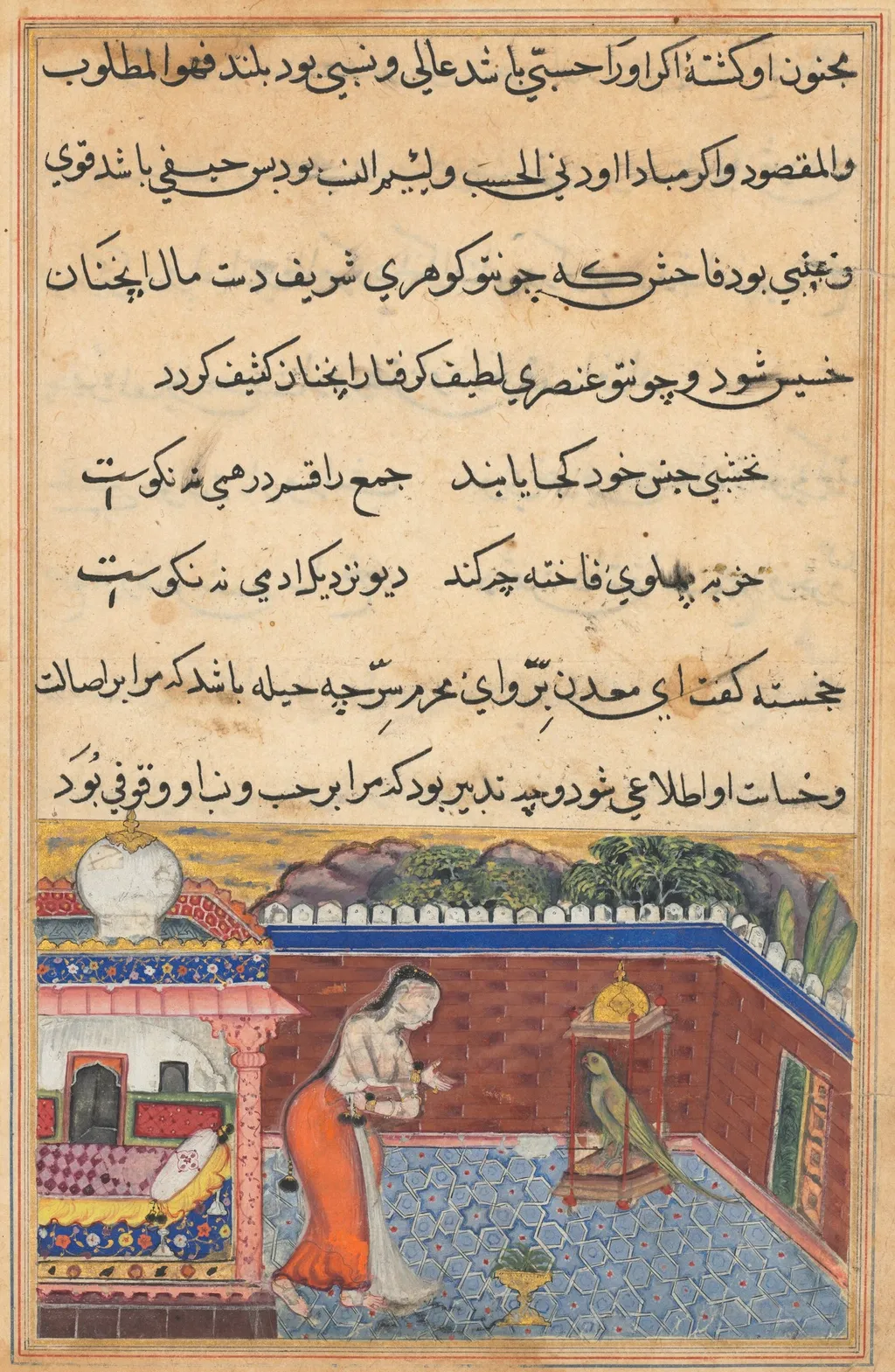
The parrot addresses Khujasta at the beginning of the thirty-first night, from a Tuti-nama (Tales of a Parrot) is an unspecified painting. It dates from 1560 and is held in the collection of the Cleveland Museum of Art. The work depicts a woman dressed in a vivid red garment, kneeling on a patterned floor within an interior space.
About this work
Subject & Meaning
The painting shows a parrot speaking to Khujasta at the start of the thirty-first night, a scene drawn from the Tuti-nama, or Tales of a Parrot.
The painting shows a parrot speaking to Khujasta at the start of the thirty-first night, a scene drawn from the Tuti-nama, or Tales of a Parrot. In this narrative, the parrot recounts moral tales to its owner, using storytelling as a means of instruction and reflection. The work belongs to the Mughal artistic tradition, created in the mid-16th century, and is part of the Cleveland Museum of Art's collection.
History & Provenance
Created in 1560 within the Mughal Empire, this painting illustrates a scene from the Tuti-nama where a parrot addresses Khujasta at the start of the thirty-first night. The work was produced by an unknown artist during the height of Mughal manuscript illumination. It is currently held in the collection of the Cleveland Museum of Art in Cleveland, Ohio, where it is cataloged under the accession number 1962.279.203.b. The piece represents a specific moment in the narrative cycle of the Tales of a Parrot, originating as one leaf of the larger illustrated manuscript. Specific exhibition records are not detailed in the available sources.
Context
The work belongs to the Mughal painting tradition, executed circa 1560 in the imperial atelier of the Mughal Empire. It illustrates the parrot addressing Khujasta at the beginning of the thirty-first night of the Tuti-nama. The painting is preserved in the Cleveland Museum of Art, where it is catalogued under accession number 1962.279.203.b and attributed to an anonymous artist.
Its composition reflects the Persianate storytelling mode introduced into Indian manuscript illumination through Timurid and Persian artistic exchange, situating it within the broader trajectory of sixteenth-century manuscript production.
Legacy
The work's significance rests on its role within the Tuti-nama manuscript tradition and its presence in a major museum collection. Part of the Cleveland Museum of Art's holdings and catalogued as 1962.279.203.b, it was created in the Mughal Empire around 1560 as one leaf of the larger illustrated manuscript.
Overview
The work depicts a woman dressed in a vivid red garment, kneeling on a patterned floor within an interior space. A tiled wall frames the scene, and a small balcony opens to a ledge where a green parrot perches. Above the figures, Arabic calligraphy intertwines with a decorative border rendered in gold and red.
Technique & Style
Executed with bold chromatic choices, the painting employs saturated reds, deep blues, and luminous golds that enliven the interior. The patterned floor and tiled wall are rendered with precise linear decoration, while the ornamental border combines geometric motifs with flowing Arabic script, reflecting a synthesis of narrative illustration and decorative art.
Artist & collection

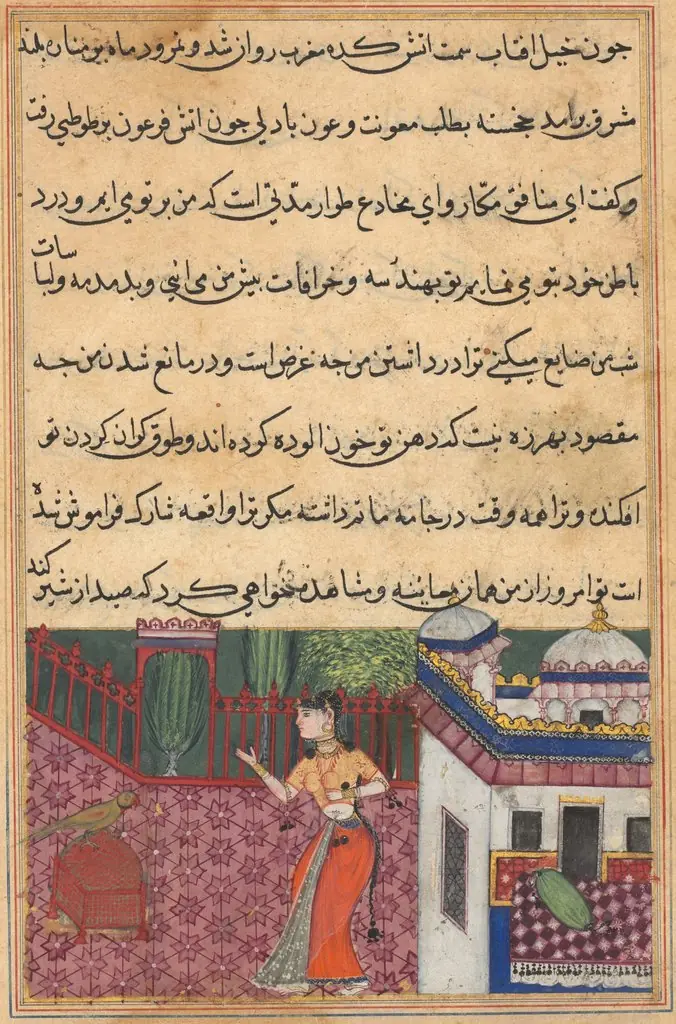
- The parrot addresses Khujasta at the beginning of the thirty-third night, from a Tuti-nama (Tales of a Parrot)
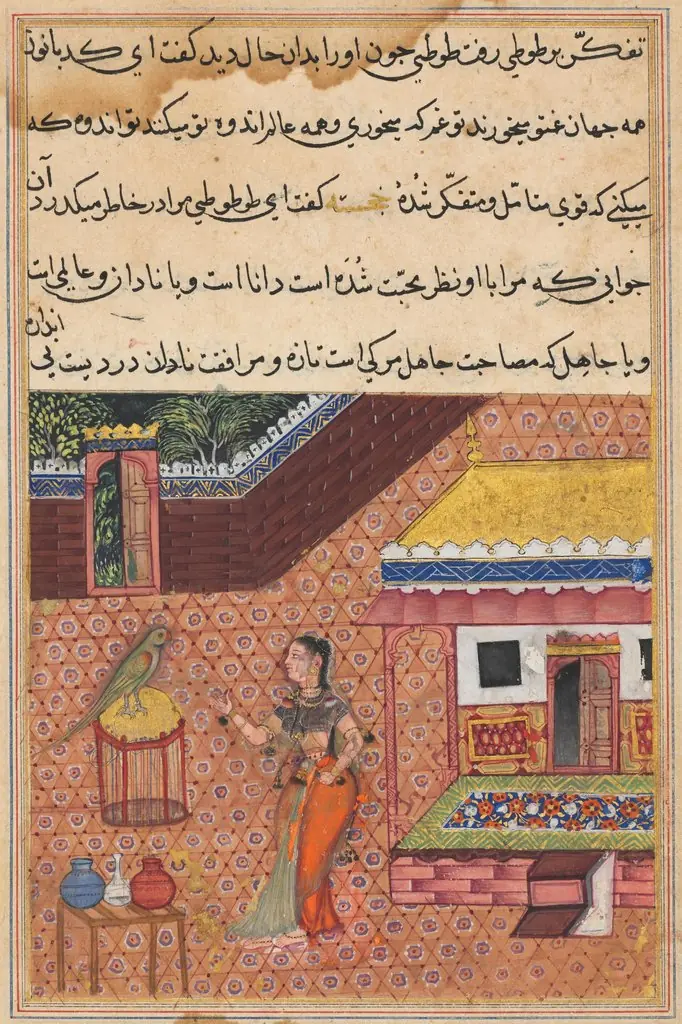 The parrot addresses Khujasta at the beginning of the thirty-fourth night, from a Tuti-nama (Tales of a Parrot)
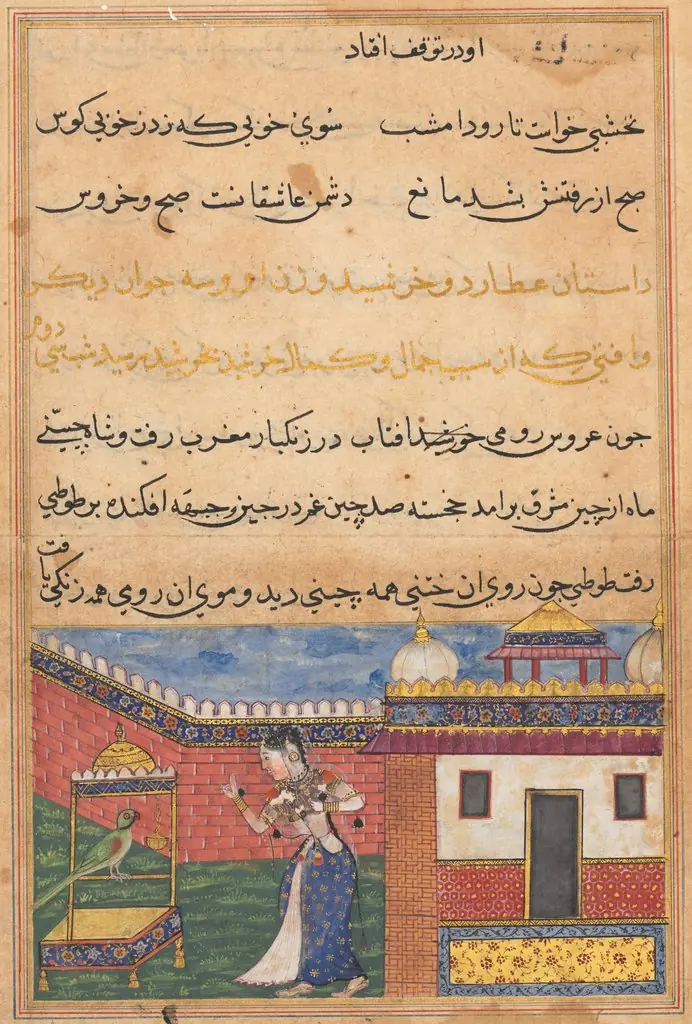 The parrot addresses Khujasta at the beginning of the thirty-second night, from a Tuti-nama (Tales of a Parrot)
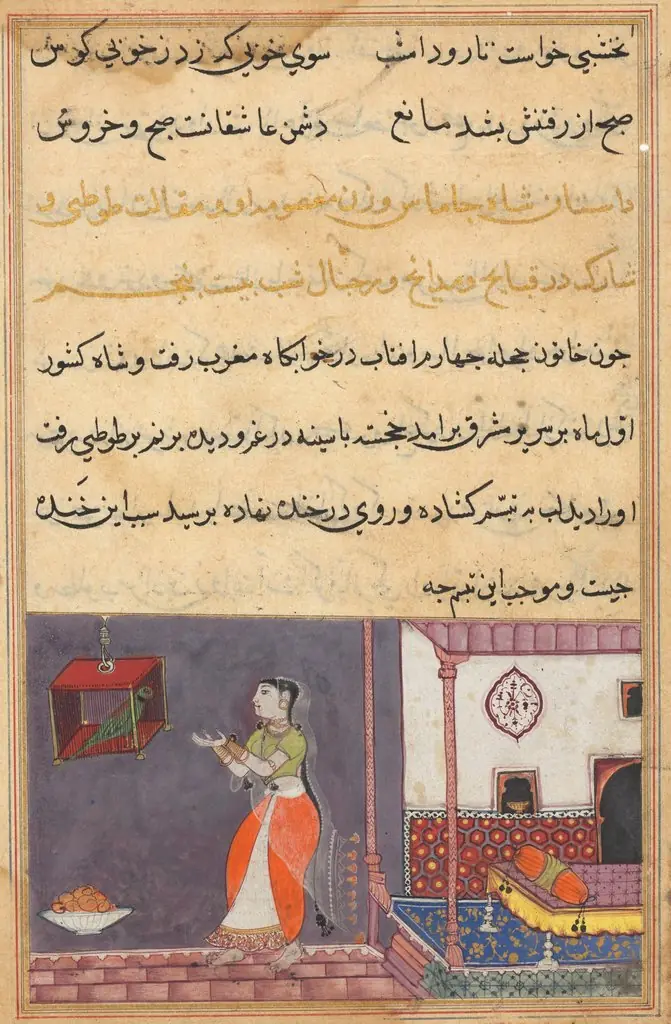 The Parrot Addresses Khujasta at the Beginning of the Twenty-fifth Night, from a Tuti-nama (Tales of a Parrot)
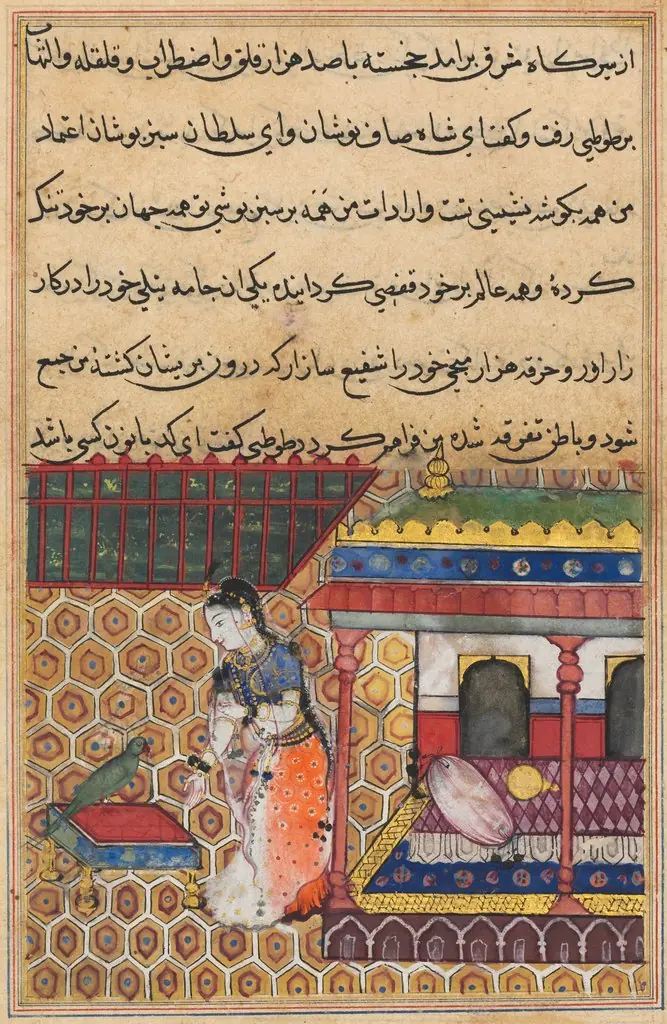 The parrot addresses Khujasta at the beginning of the thirty-eighth night, from a Tuti-nama (Tales of a Parrot)
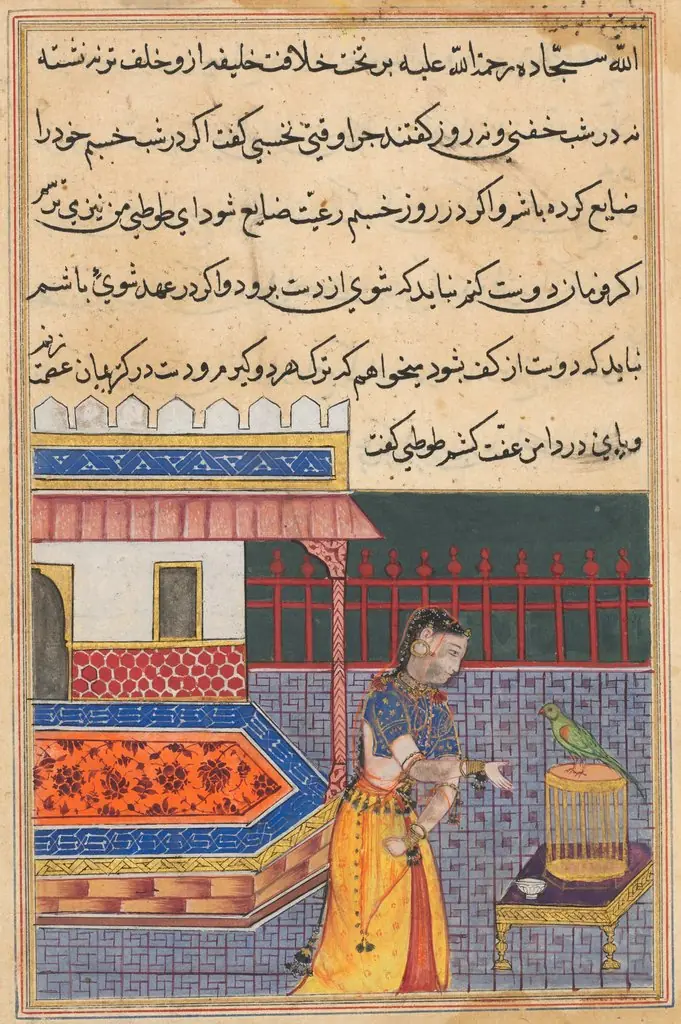 The parrot addresses Khujasta at the beginning of the forty-first night, from a Tuti-nama (Tales of a Parrot): Forty-first Night
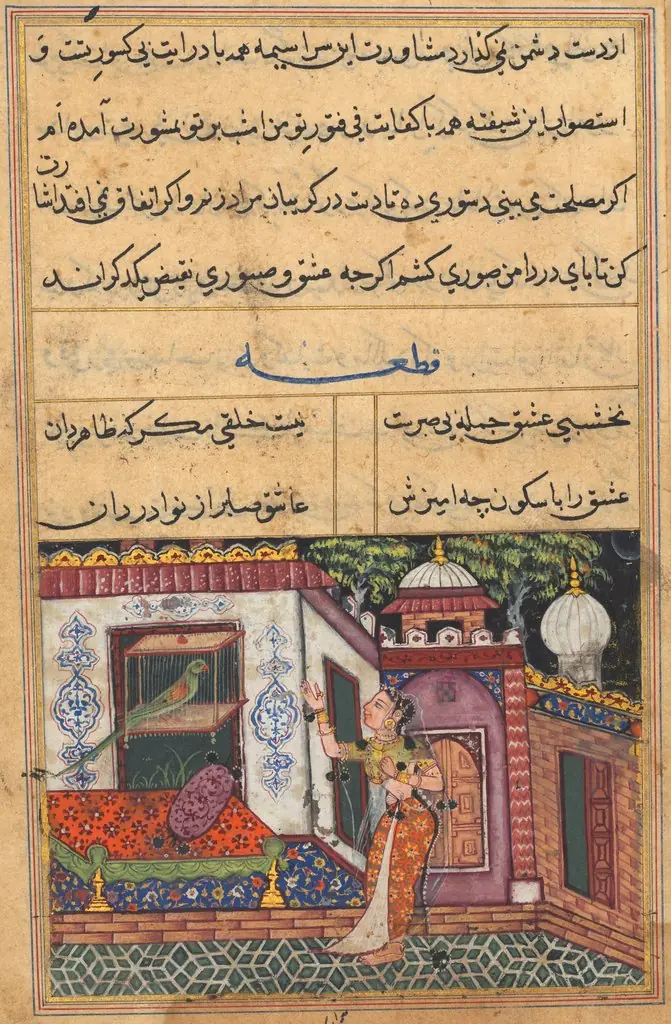 The Parrot Addresses Khujasta at the Beginning of the Eleventh Night, from a Tuti-nama (Tales of a Parrot)
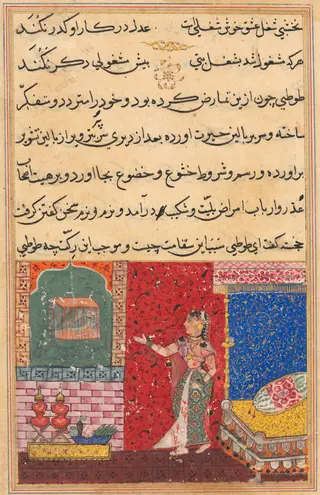 The Parrot Addresses Khujasta at the Beginning of the Fifteenth Night, from a Tuti-nama (Tales of a Parrot)
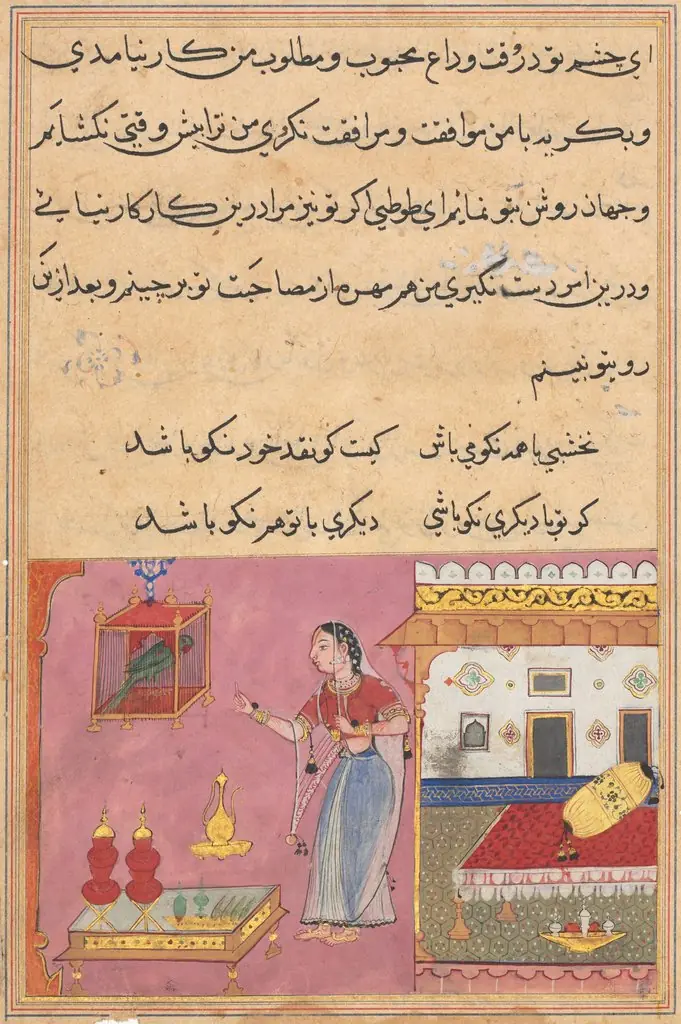 The Parrot Addresses Khujasta at the Beginning of the Twentieth Night, from a Tuti-nama (Tales of a Parrot)
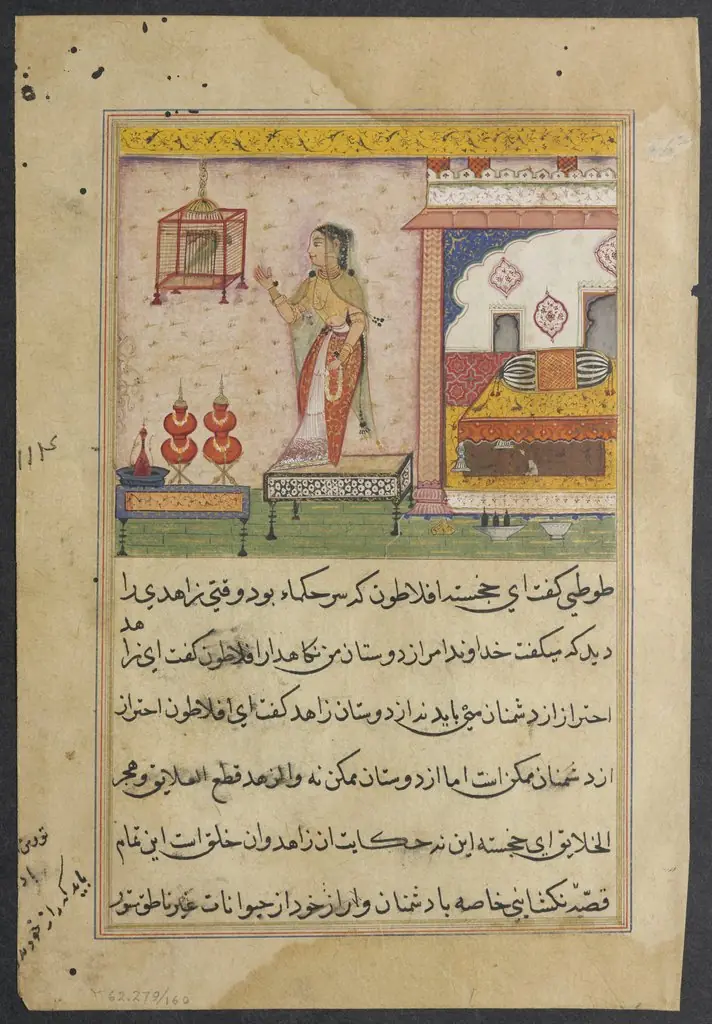 The Parrot Addresses Khujasta at the Beginning of the Twenty-third Night, from a Tuti-nama (Tales of a Parrot)
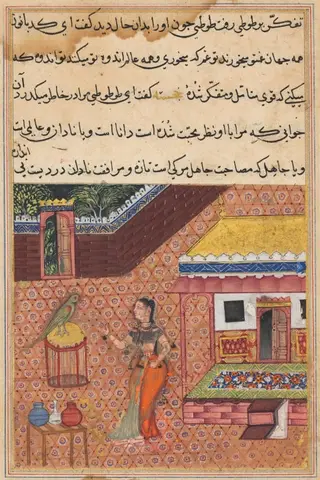 The parrot addresses Khujasta at the beginning of the thirty-fourth night, from a Tuti-nama (Tales of a Parrot)
 The parrot addresses Khujasta at the beginning of the thirty-first night, from a Tuti-nama (Tales of a Parrot)
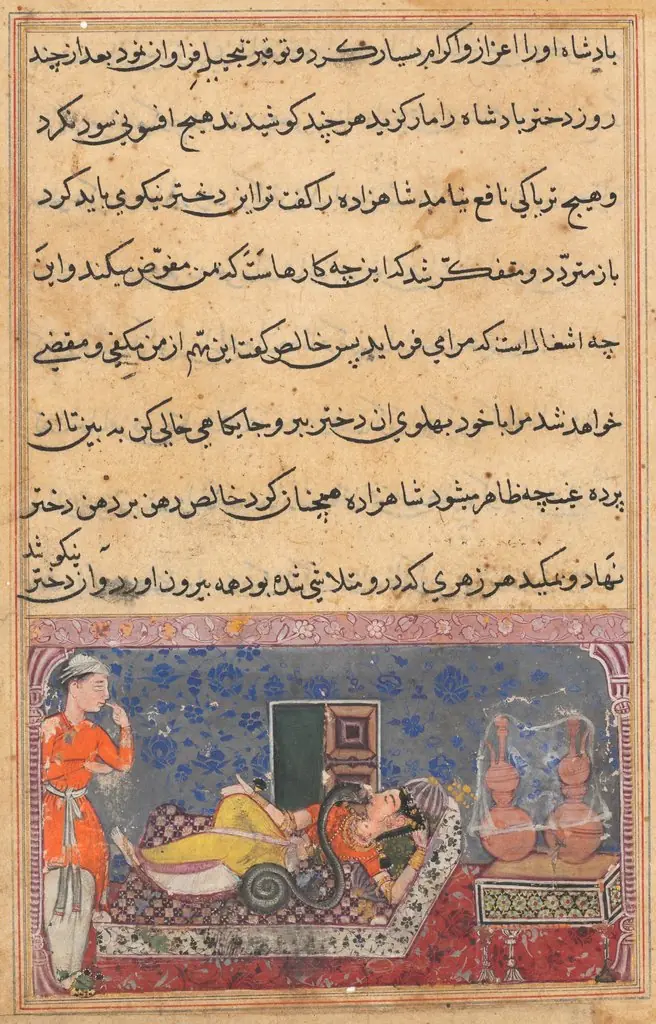 Khalis repays the prince for his kindness by changing into a snake and sucking the poison from the king’s daughter, from a Tuti-nama (Tales of a Parrot): Eighteenth Night
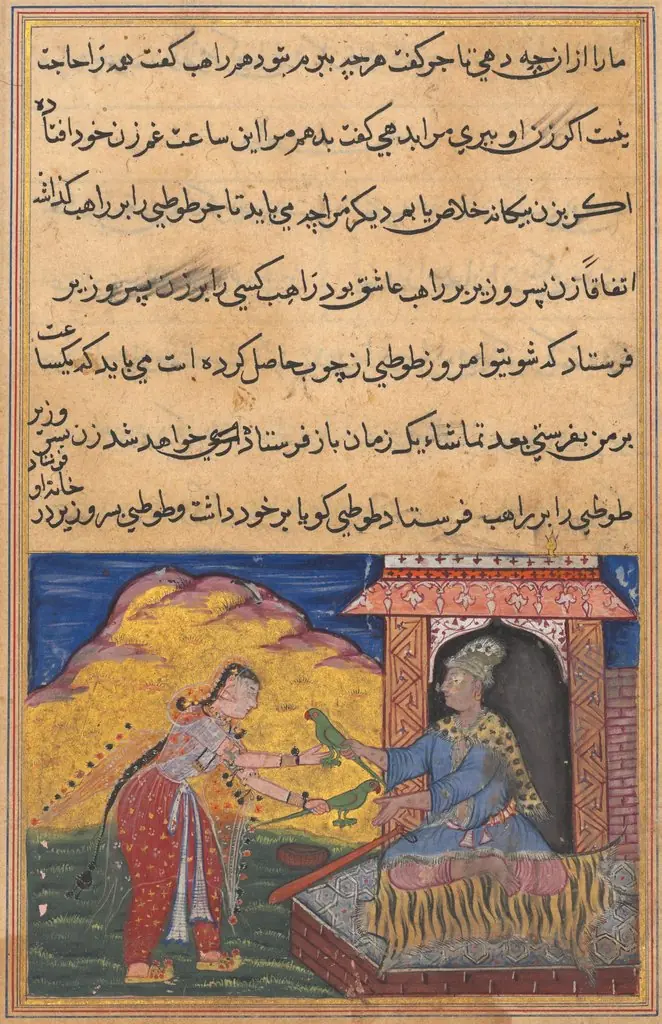 The wife of the son of the vizier brings the magic wooden parrot to her lover, the monk, who exchanges it for the replica, from a Tuti-nama (Tales of a Parrot): Tenth Night