Artwork
The soldier receives a garland of roses from his wife which will remain fresh as long as she is faithful, from a Tuti-nama (Tales of a Parrot): Fourth Night
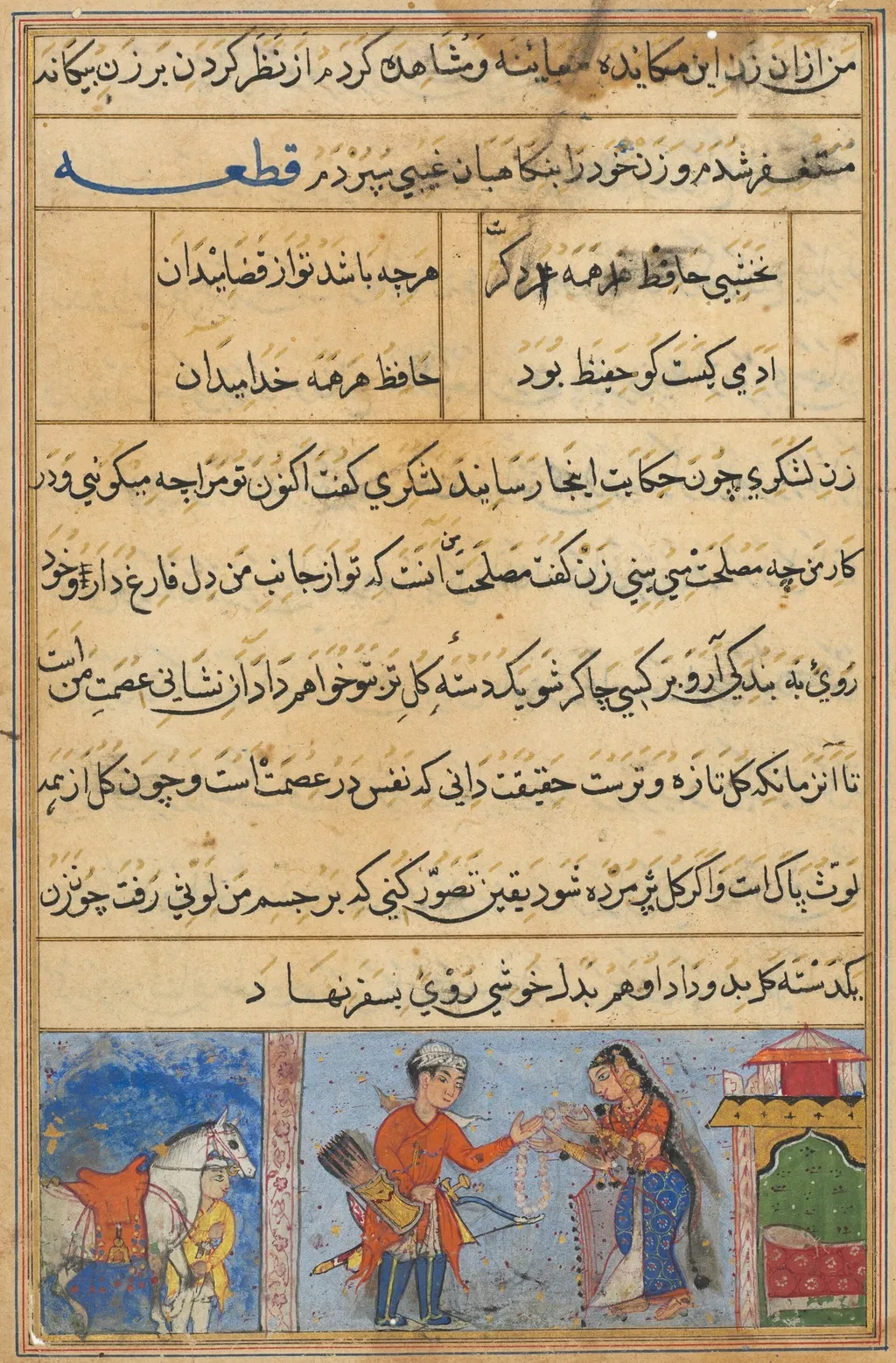
The soldier receives a garland of roses from his wife which will remain fresh as long as she is faithful, from a Tuti-nama (Tales of a Parrot): Fourth Night is an unspecified painting. It dates from 1560 and is held in the collection of the Cleveland Museum of Art.
About this work
Technique & Style
The image depicts a narrative scene where a soldier receives a garland of roses from his wife, illustrating a specific tale from the Fourth Night of the text.
Created in 1560 within the Mughal Empire, this work is an opaque watercolor painting executed on paper. The medium and support are consistent with the manuscript illumination traditions of the Tuti-nama series produced during this period. The image depicts a narrative scene where a soldier receives a garland of roses from his wife, illustrating a specific tale from the Fourth Night of the text.
As a painting from the mid-sixteenth century, the object represents the early phase of Mughal court art under imperial patronage.
History & Provenance
The painting is a folio from the Tuti-nama (Tales of a Parrot) manuscript dated to 1560 and produced in the Mughal Empire by an unknown artist. It is classified as a painting and is held by the Cleveland Museum of Art under accession number 1962.279.27.a. The museum acquired the work in 1962, and it has remained in the collection since. Earlier ownership, commission, or intermediate provenance are not recorded in the available sources.
The painting is housed in the Cleveland Museum of Art, where it is catalogued under the accession number 1962.279.27.a. It has been part of the museum's collection since its acquisition and was featured in the exhibition "India: Art and Culture, 1500–1900" held at the museum in 2005.
Context
The miniature depicting the soldier receiving a garland of roses from his wife, drawn from the fourth night of the Tuti-nama, is attributed to an anonymous painter active in the Mughal Empire around 1560. Executed in opaque watercolor and gold on paper, the work measures 37.6 cm × 21.6 cm and is housed in the Cleveland Museum of Art (accession 1962.279.27.a). Its creation reflects the stylistic conventions of Mughal book illustration, where narrative moments such as marital fidelity are rendered with symbolic detail, as seen in contemporary manuscript traditions.
Scholarship emphasizes the painting’s role within the broader corpus of early Mughal manuscript illumination, noting its contribution to the visual language of Persianate storytelling in South Asian court culture. The work’s enduring condition, preserved as long as the wife remains faithful, serves as both a narrative device and a thematic anchor in studies of moral allegory in 16th-century Indian painting.
Overview
The painting illustrates a moment from the medieval Persian manuscript known as the Tuti‑nama, or Tales of a Parrot, specifically the fourth night of its narrative. In the composition a soldier in a red tunic and blue trousers receives a garland of roses from his wife, who is dressed in a blue dress with an orange bodice. The scene conveys a symbolic promise of fidelity linked to the freshness of the roses.
Subject & Meaning
The exchange of the rose garland functions as a visual metaphor: the flowers will remain fresh so long as the wife stays faithful to her husband. This allegorical gesture underscores themes of marital loyalty and the intertwining of love with martial duty, central to the tale’s moral instruction.
Legacy
Miniatures from the Tuti‑nama have informed modern understandings of Persian narrative art and its didactic functions. The depiction of domestic devotion alongside military imagery offers insight into contemporary conceptions of gender roles and the symbolic language of fidelity in medieval Persian culture.
Artist & collection

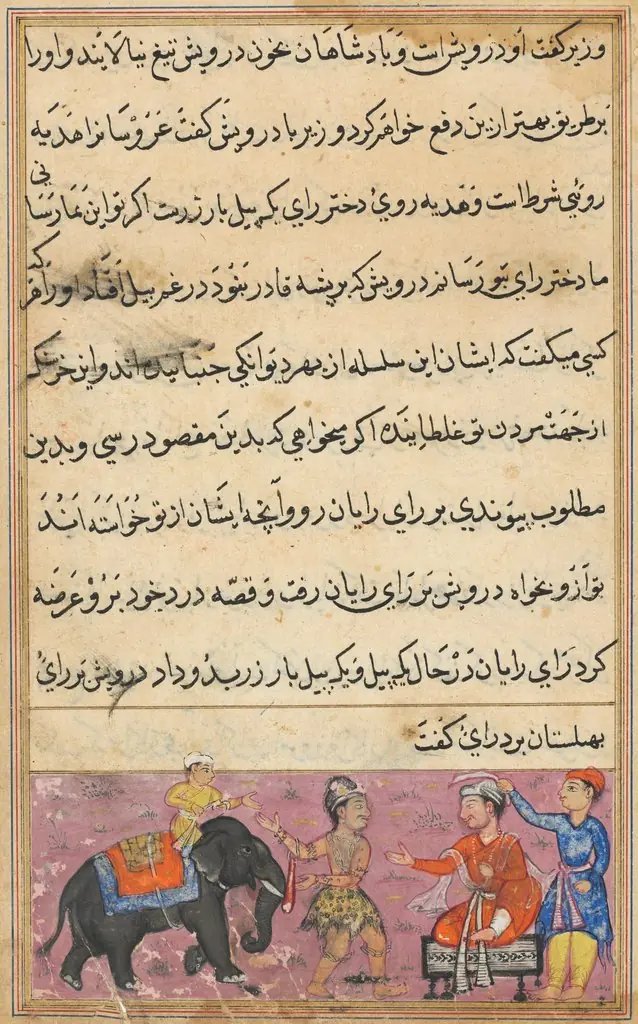 The dervish brings in as dowry an elephant laden with gold, from a Tuti-nama (Tales of a Parrot): Seventh Night
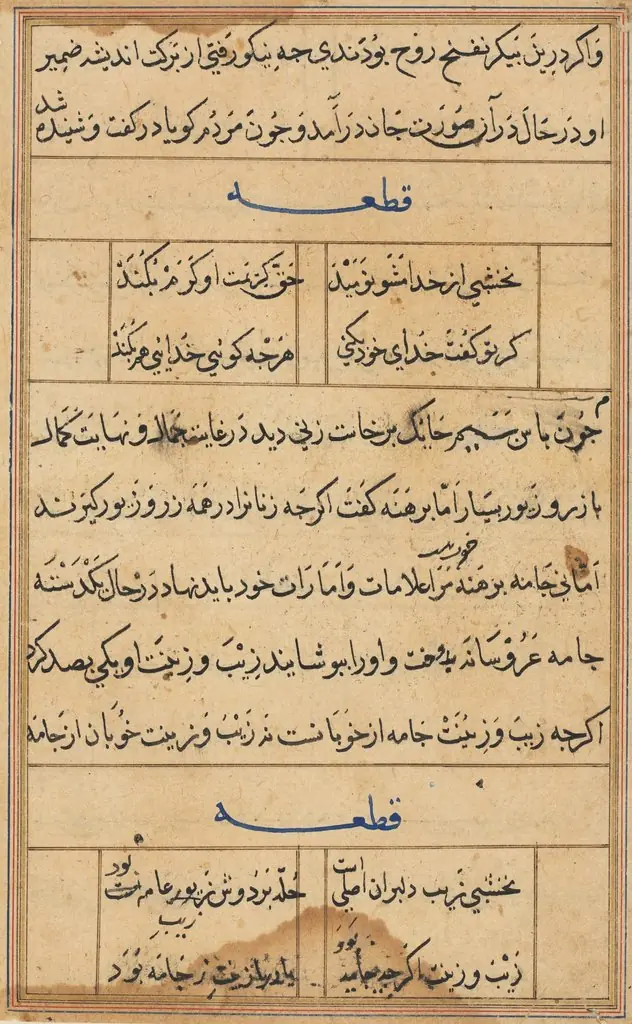 Page from Tales of a Parrot (Tuti-nama): text page
 Page from Tales of a Parrot (Tuti-nama): text page
 Page from Tales of a Parrot (Tuti-nama): text page
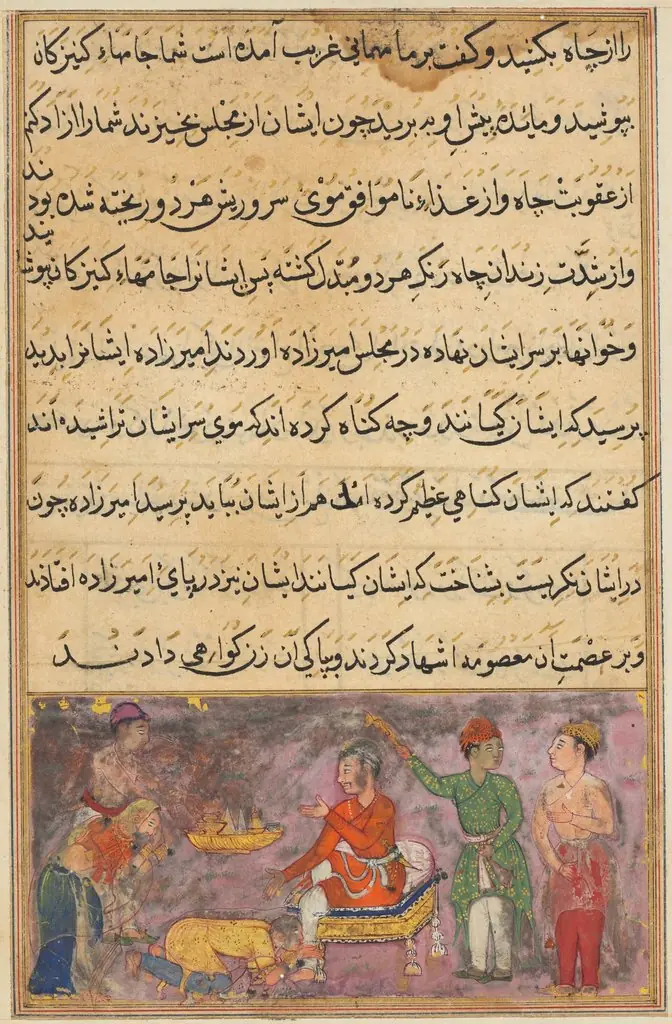 The two erring cooks, dressed as maidservants, fall at the prince’s feet and beg forgiveness, from a Tuti-nama (Tales of the Parrot): Fourth Night
 Page from Tales of a Parrot (Tuti-nama): text page
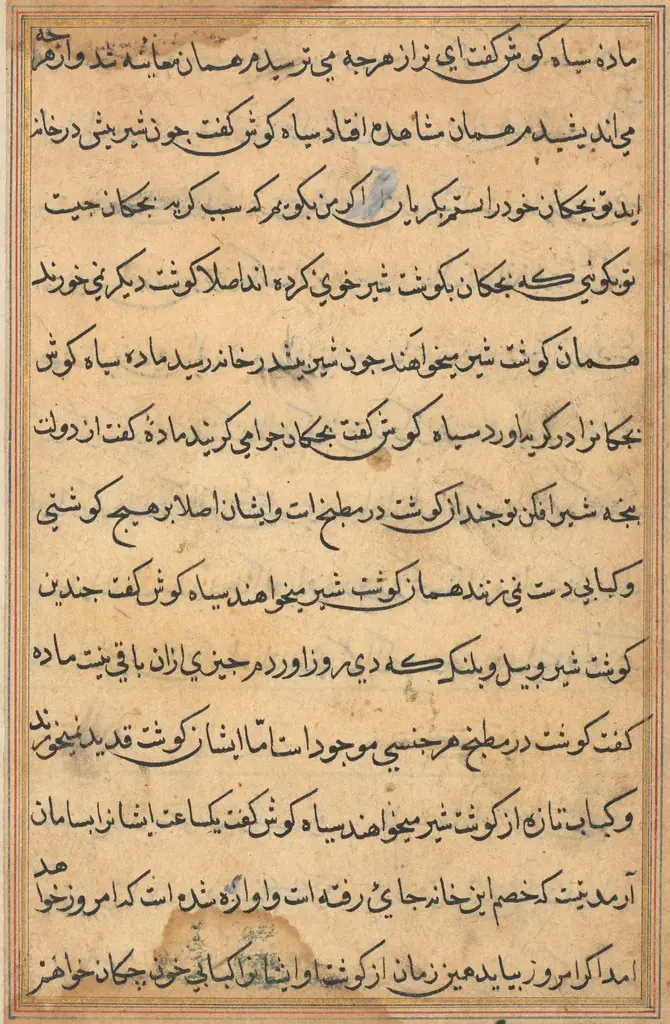 Page from Tales of a Parrot (Tuti-nama): text page
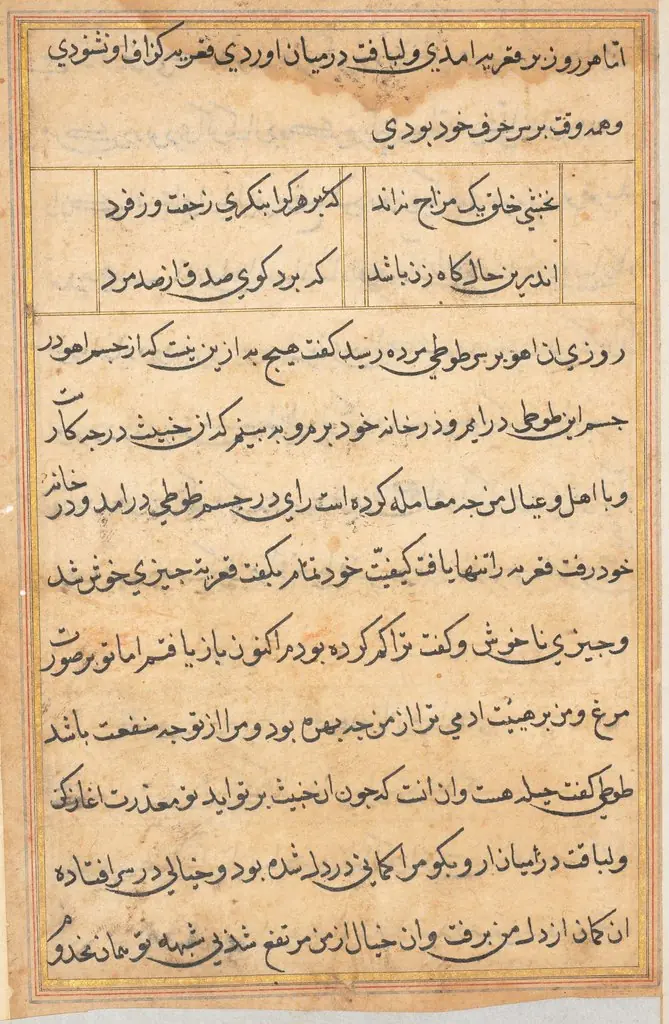 Page from Tales of a Parrot (Tuti-nama): text page
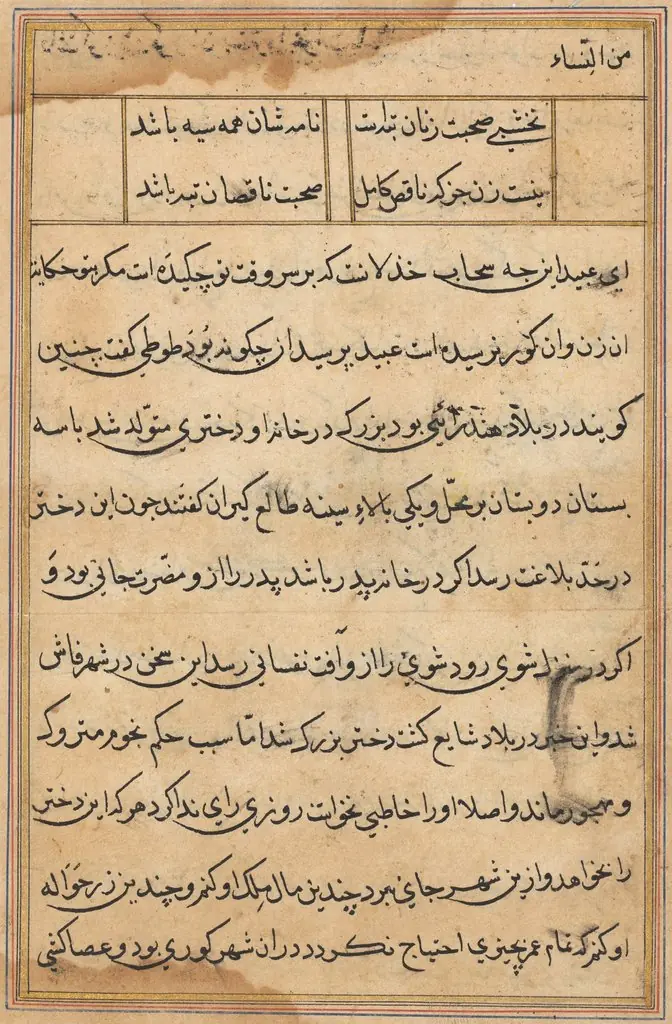 Page from Tales of a Parrot (Tuti-nama): text page
- The soldier receives a garland of roses from his wife which will remain fresh as long as she is faithful, from a Tuti-nama (Tales of a Parrot): Fourth Night
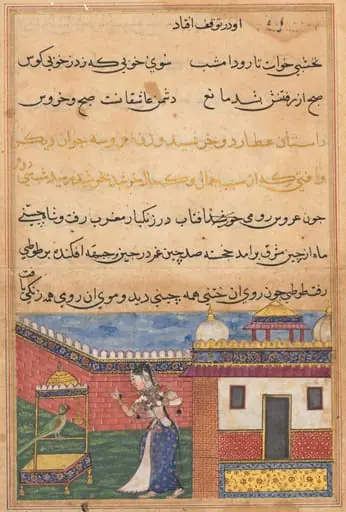 The parrot addresses Khujasta at the beginning of the thirty-second night, from a Tuti-nama (Tales of a Parrot)
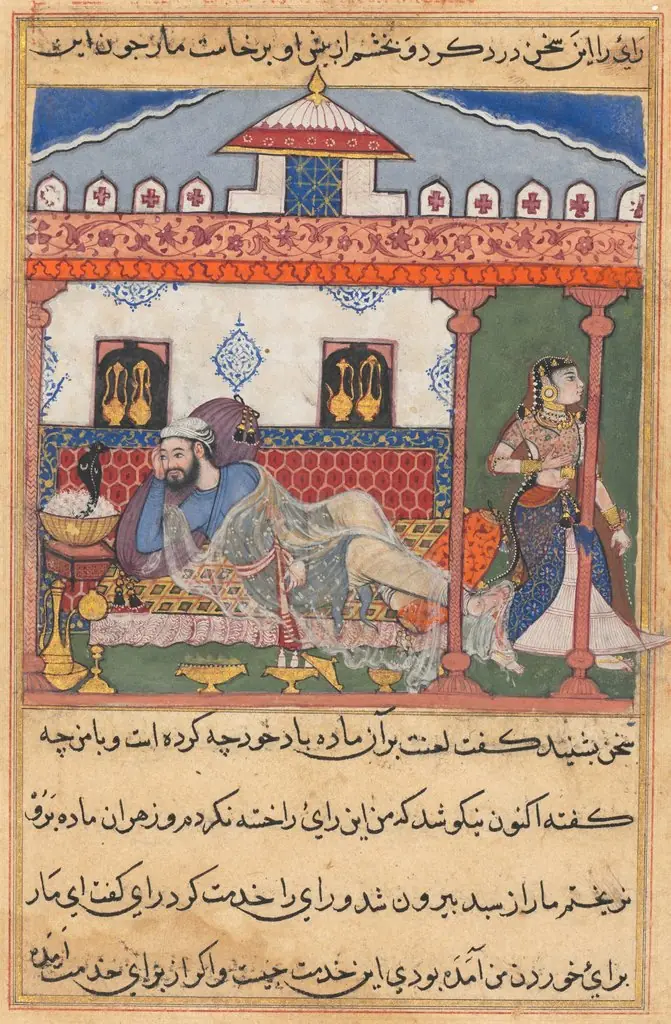 The snake, hidden in a basket of flowers, reveals himself to the Raja who has just sent away his wife, from a Tuti-nama (Tales of a Parrot): Forty-third Night