Artwork
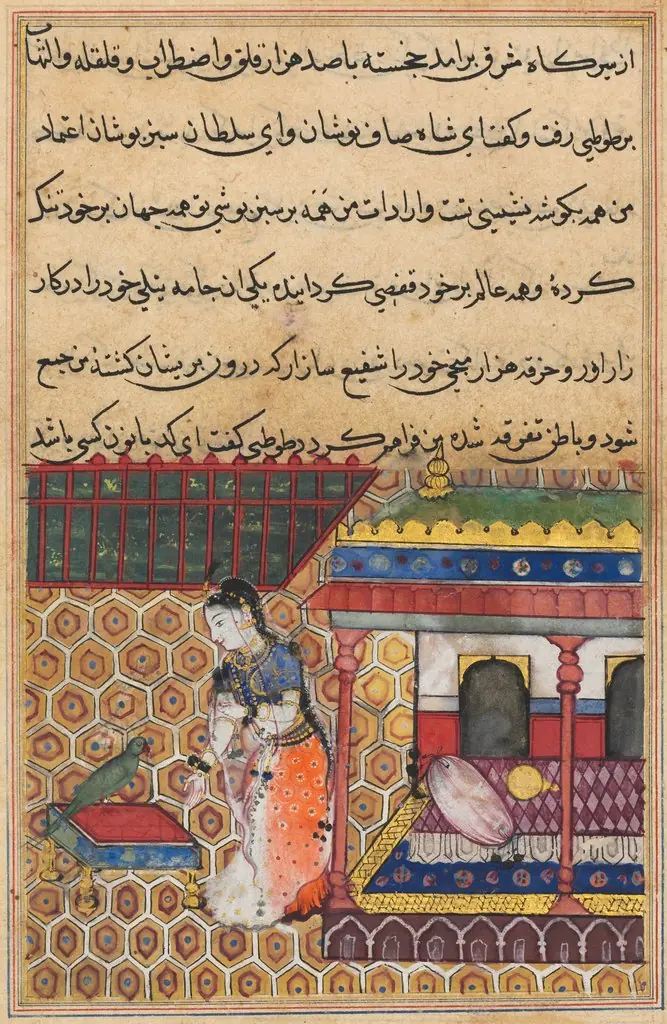
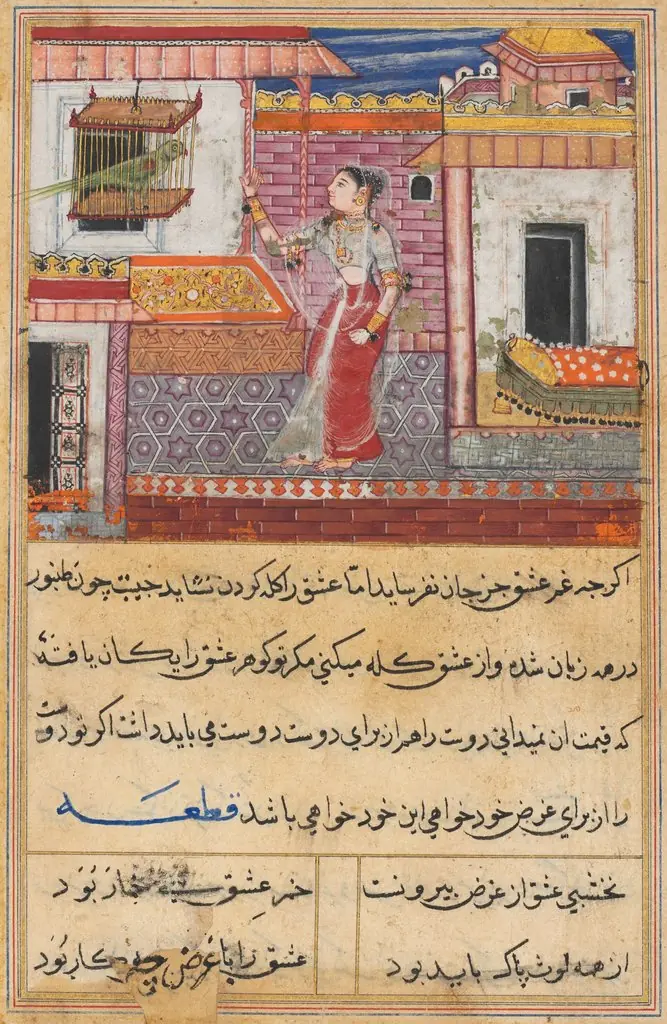
The parrot addresses Khujasta at the beginning of the thirty-third night, from a Tuti-nama (Tales of a Parrot)
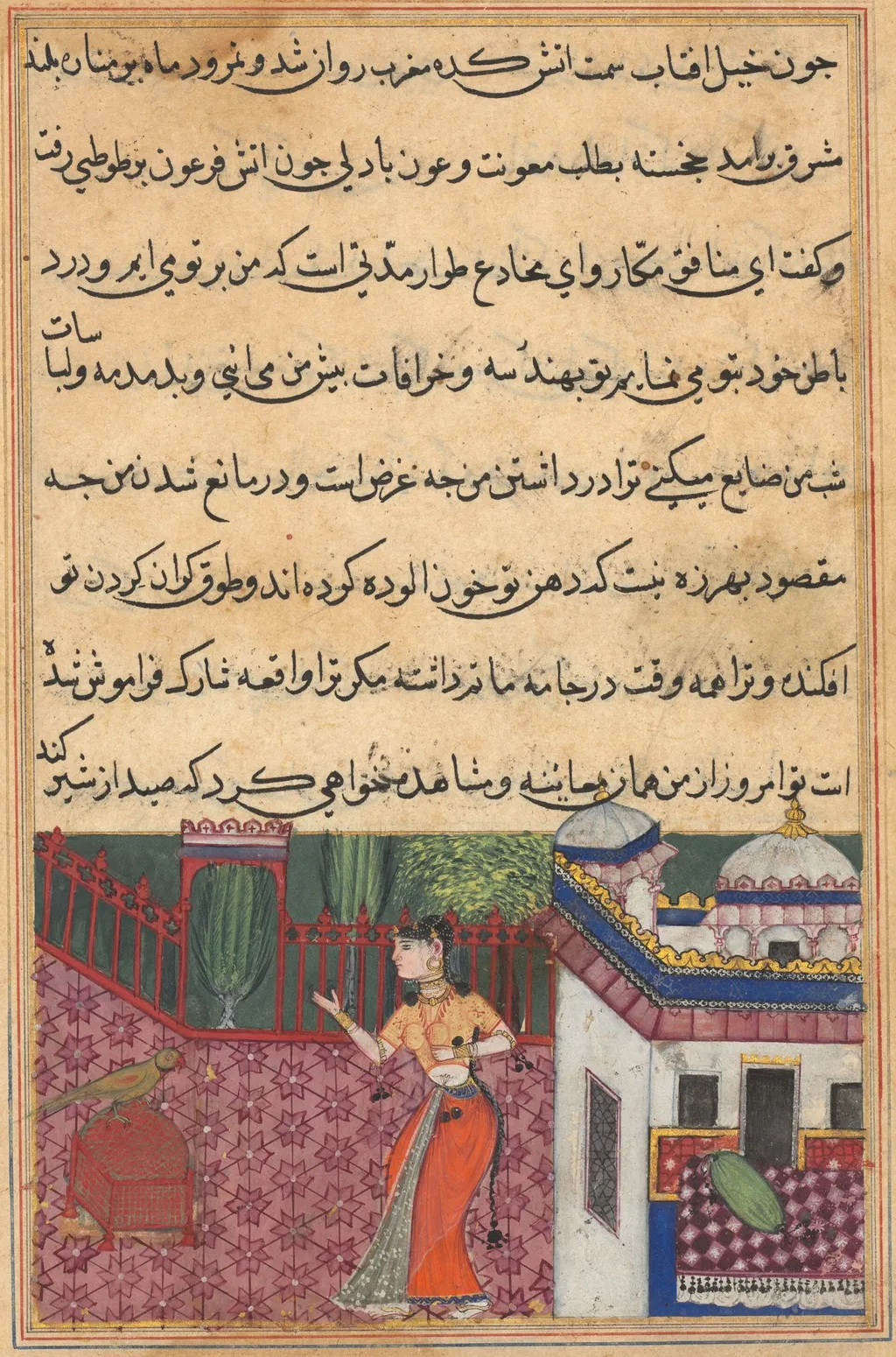
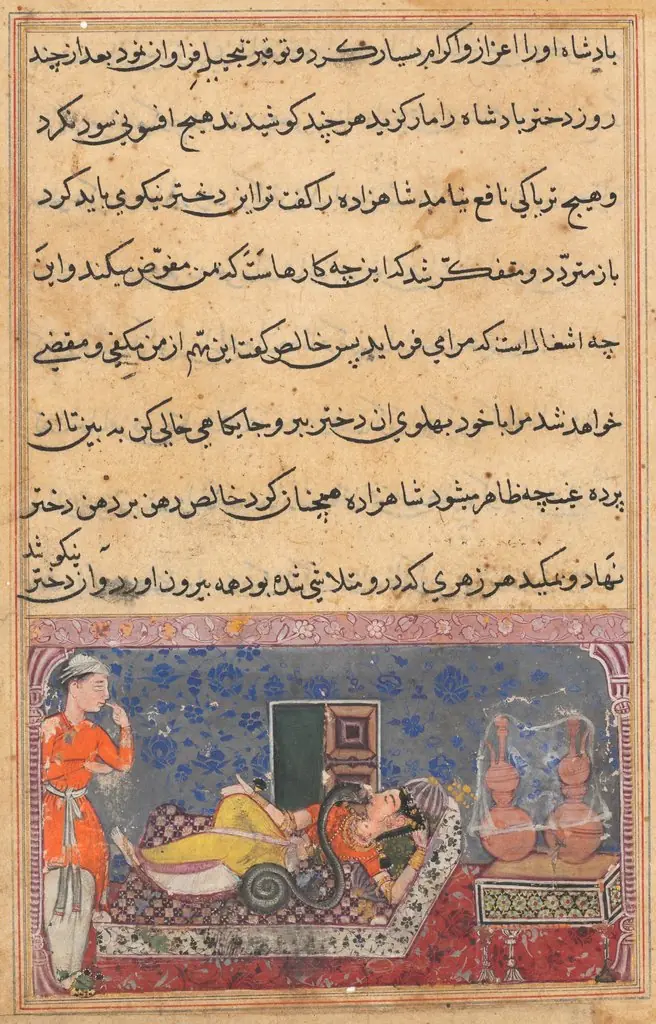
The parrot addresses Khujasta at the beginning of the thirty-third night, from a Tuti-nama (Tales of a Parrot) is an unspecified painting. It dates from 1560 and is held in the collection of the Cleveland Museum of Art. The painting illustrates a scene from the Persian narrative collection Tuti‑nama (Tales of a Parrot).
About this work
History & Provenance
Provenance records indicate the painting was commissioned as part of a Tuti-nama manuscript and has been held by the museum since its acquisition.
The work was created in 1560 in the Mughal Empire and later entered the collection of the Cleveland Museum of Art, where it remains on view.
Provenance records indicate the painting was commissioned as part of a Tuti-nama manuscript and has been held by the museum since its acquisition.
The painting is held in the collection of the Cleveland Museum of Art, where it is catalogued under accession number 1962.279.217.b. It was created in 1560 in the Mughal Empire and has been part of the museum’s collection since at least the mid‑20th century. The work has been included in exhibitions of Indian miniature painting at the Cleveland Museum of Art, though specific exhibition titles are not detailed in the available records.
Overview
The painting illustrates a scene from the Persian narrative collection Tuti‑nama (Tales of a Parrot). A woman in a vivid red gown and feathered headdress stands on a patterned floor, gesturing toward a small cage that holds a brightly colored parrot. Behind her, an architectural backdrop features a domed roof, ornate walls and a balcony draped with green curtains, creating a storybook atmosphere.
Subject & Meaning
The composition captures a moment from the thirty‑third night of the Tuti‑nama, where the parrot addresses Khujasta. The woman's pointing gesture and the prominent placement of the cage emphasize the dialogue between human and bird, a recurring motif in Persian literature that explores themes of communication, wisdom, and the interplay of the natural and the supernatural.
Technique & Style
Rendered in a detailed, flat decorative style, the work employs bold colors, particularly reds and greens, to delineate figures and architecture. The fine line work outlines the patterned floor and intricate interior, while the elegant script above the scene integrates text and image, reflecting the manuscript tradition of illustrated storytelling.
Artist & collection

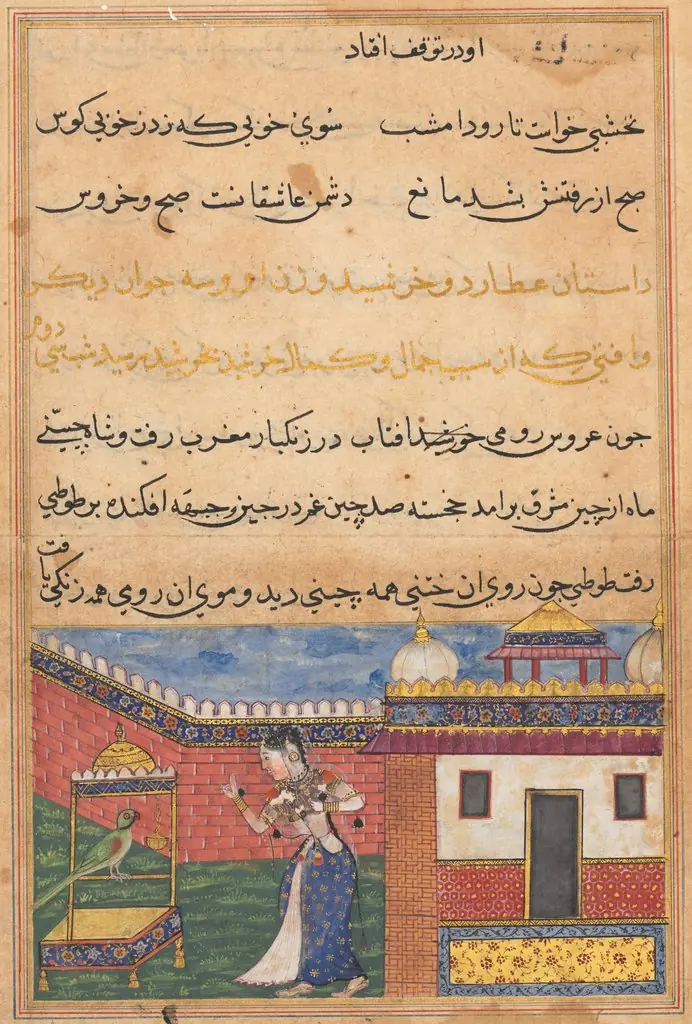
- The parrot addresses Khujasta at the beginning of the thirty-second night, from a Tuti-nama (Tales of a Parrot)
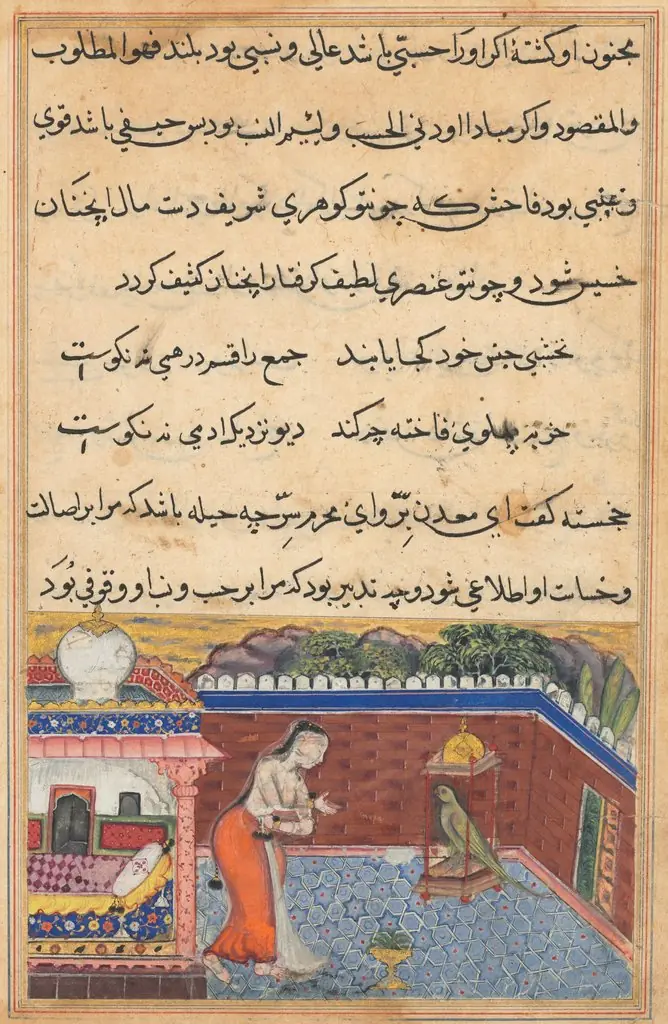 The parrot addresses Khujasta at the beginning of the thirty-first night, from a Tuti-nama (Tales of a Parrot)
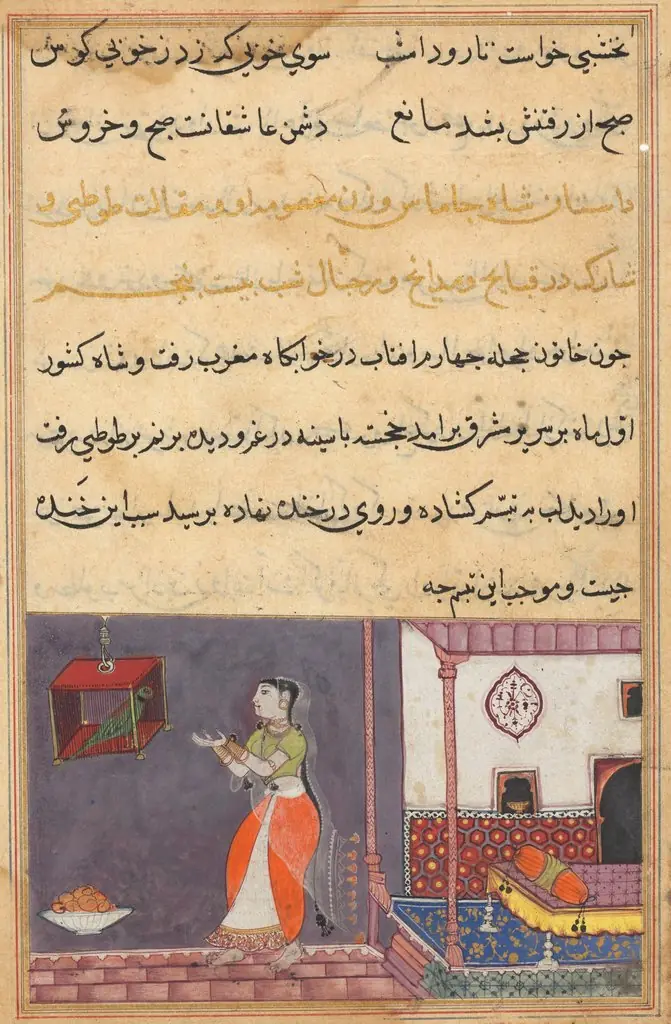 The Parrot Addresses Khujasta at the Beginning of the Twenty-fifth Night, from a Tuti-nama (Tales of a Parrot)
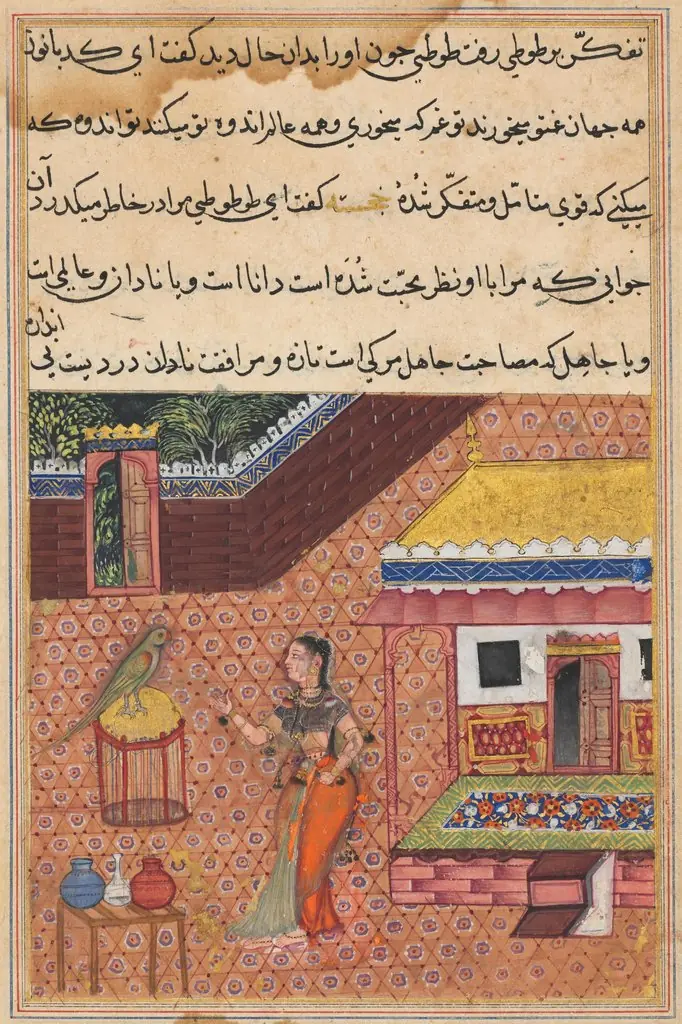 The parrot addresses Khujasta at the beginning of the thirty-fourth night, from a Tuti-nama (Tales of a Parrot)
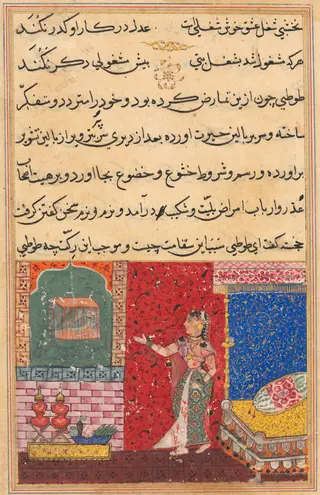 The Parrot Addresses Khujasta at the Beginning of the Fifteenth Night, from a Tuti-nama (Tales of a Parrot)
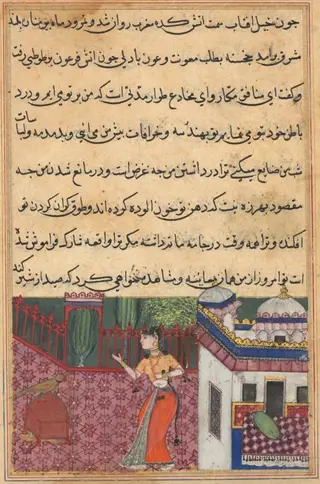 The parrot addresses Khujasta at the beginning of the thirty-third night, from a Tuti-nama (Tales of a Parrot)
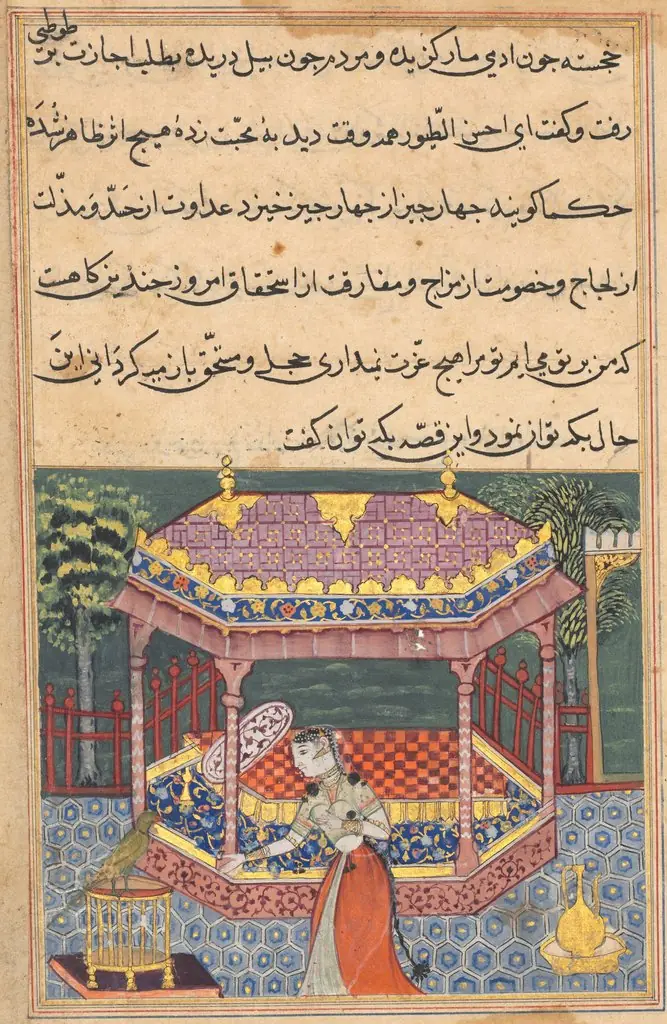 The parrot addresses Khujasta at the beginning of the thirty-seventh night, from a Tuti-nama (Tales of a Parrot)
 The parrot addresses Khujasta at the beginning of the thirty-eighth night, from a Tuti-nama (Tales of a Parrot)
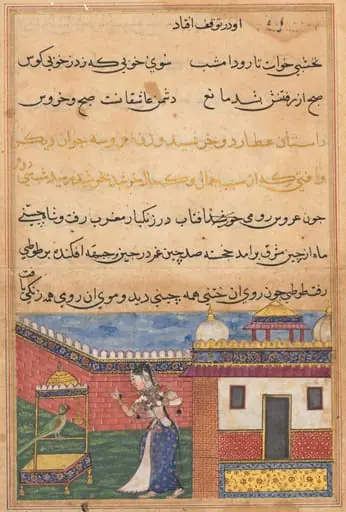 The parrot addresses Khujasta at the beginning of the thirty-second night, from a Tuti-nama (Tales of a Parrot)
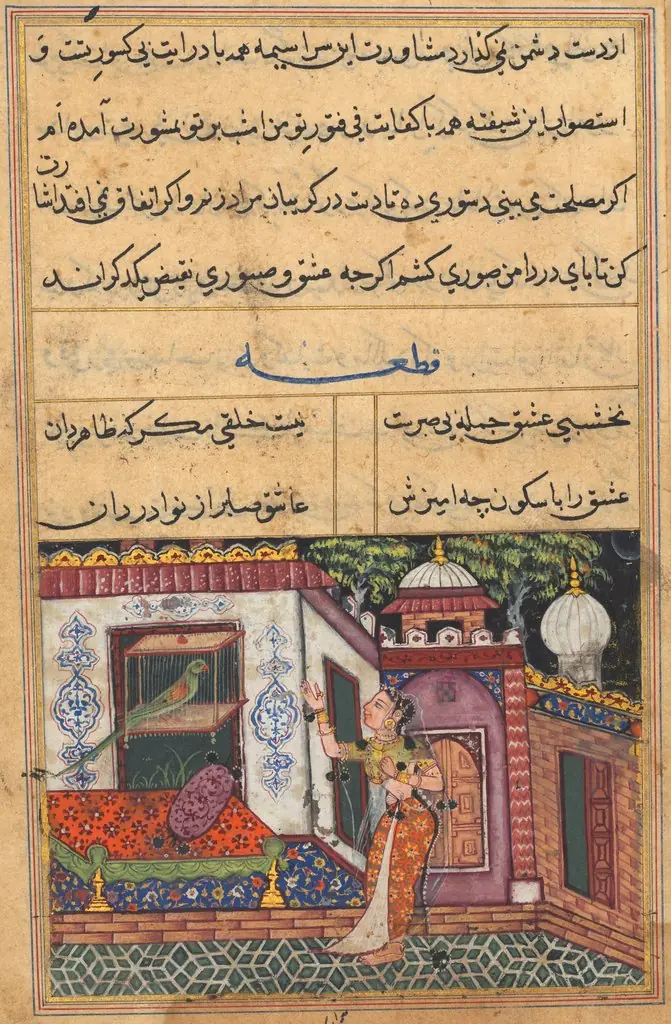 The Parrot Addresses Khujasta at the Beginning of the Eleventh Night, from a Tuti-nama (Tales of a Parrot)
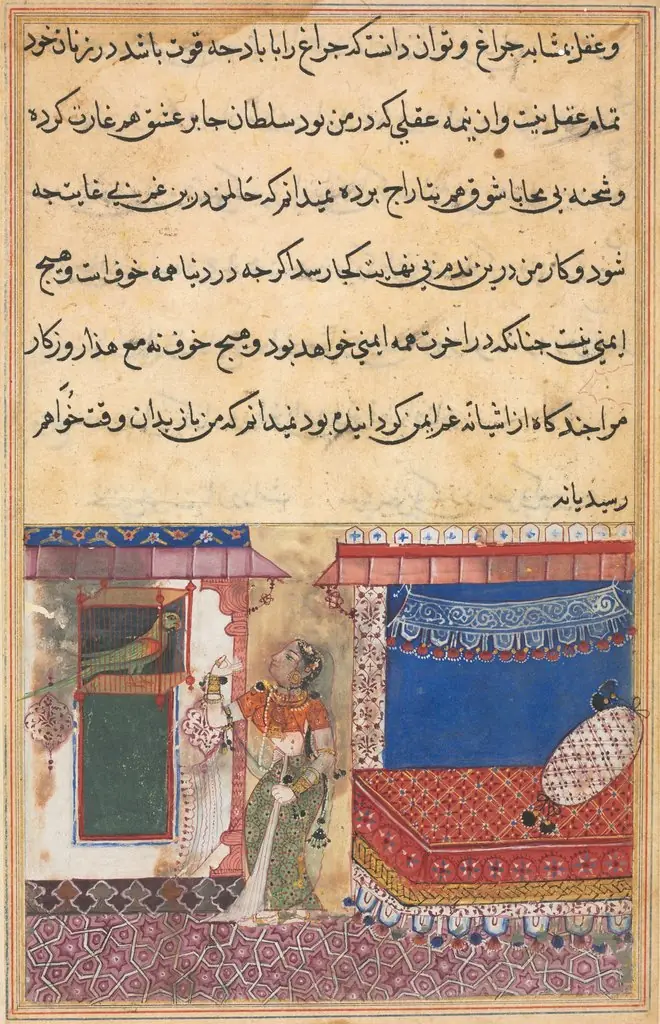 The Parrot Addresses Khujasta at the Beginning of the Eighteenth Night, from a Tuti-nama (Tales of a Parrot)
 The Parrot Addresses Khujasta at the Beginning of the Thirteenth Night, from a Tuti-nama (Tales of a Parrot)
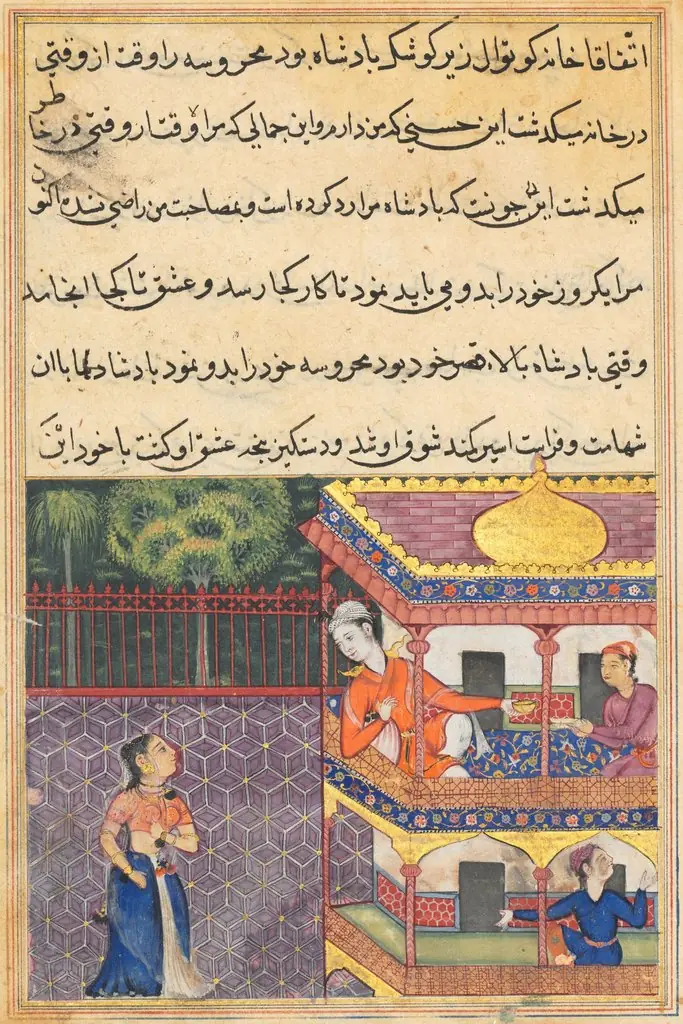 The king of Zabul sees Mahrusa from his palace balcony, from a Tuti-nama (Tales of a Parrot): Thirty-sixth Night
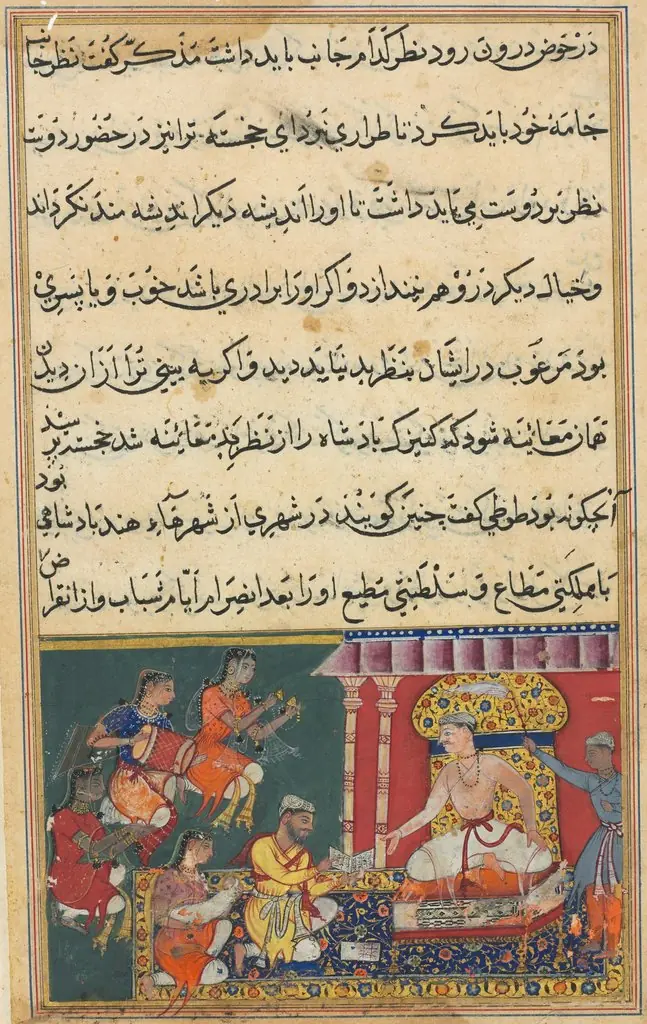 The astrologer predicts a calamity for the newly born prince in his thirteenth year, but one which he would be able to overcome, from a Tuti-nama (Tales of a Parrot): Eighth Night
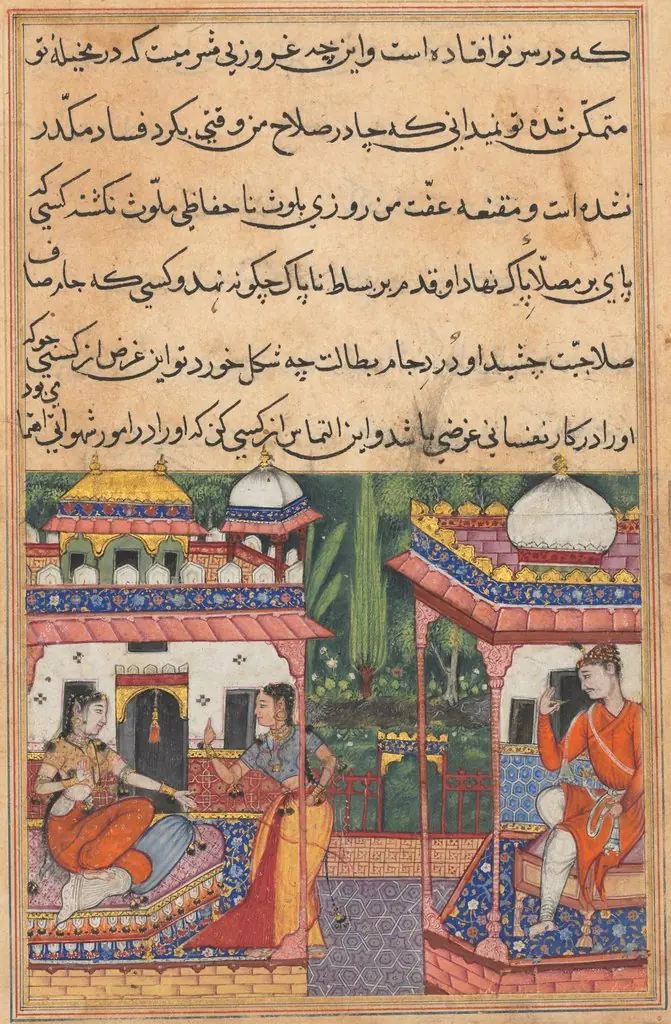 Kaiwan sends a message of love to Khurshid, wife of his brother Utarid who is away on a journey, from a Tuti-nama (Tales of a Parrot): Thirty-second Night
 Khalis repays the prince for his kindness by changing into a snake and sucking the poison from the king’s daughter, from a Tuti-nama (Tales of a Parrot): Eighteenth Night