Artwork
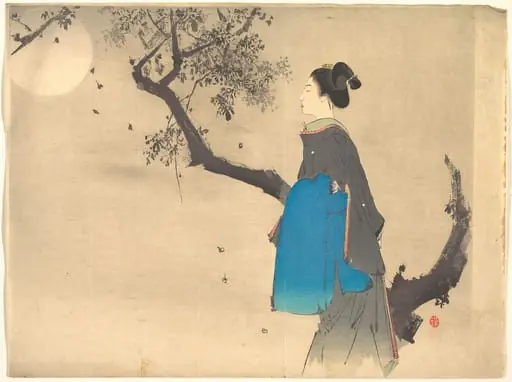
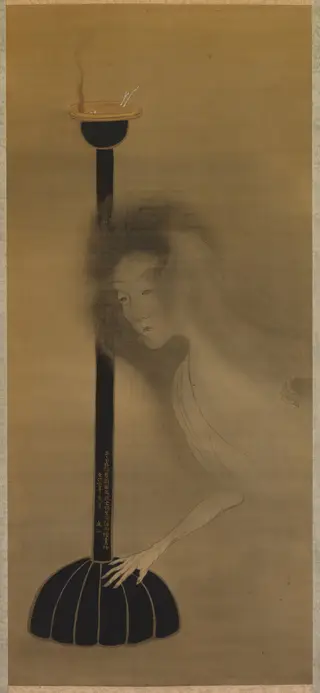
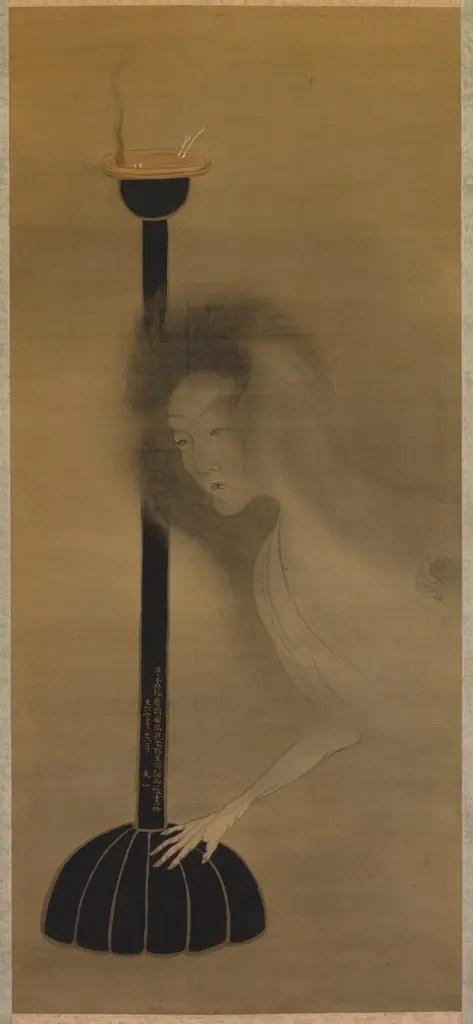
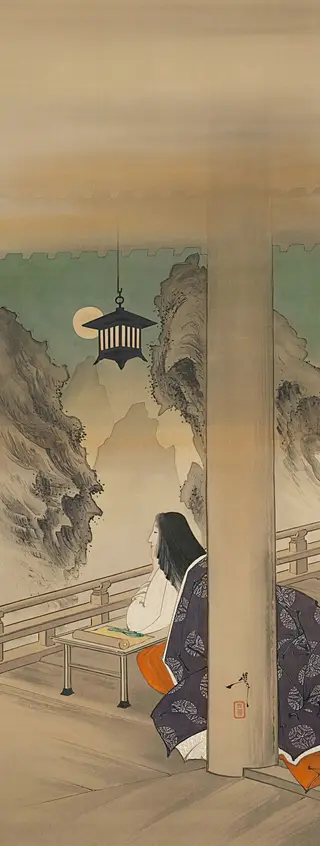
The Spirit of the Deceased Yūgao Entwined in Moonflower Vines, based on the print “The Lady of the Evening Faces,” from the series One Hundred Aspects of the Moon (Tsuki hyakushi: Genji Yūgao no maki)
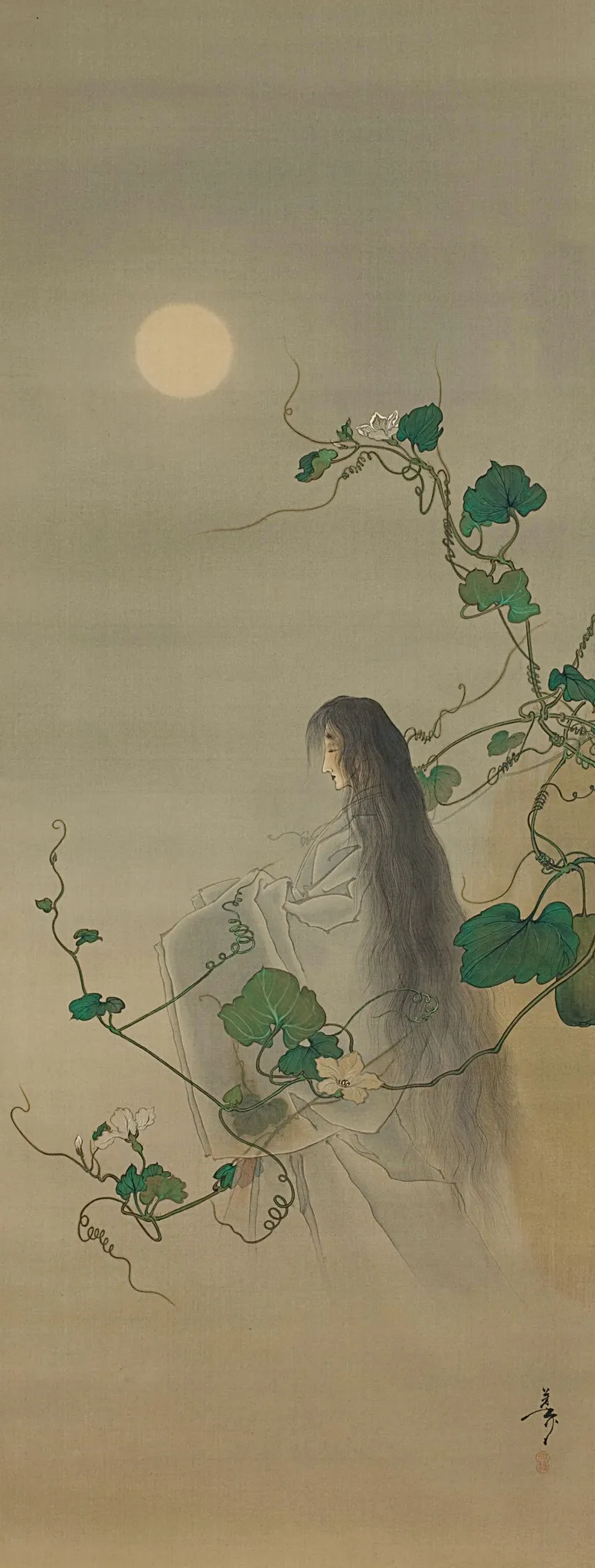
The Spirit of the Deceased Yūgao Entwined in Moonflower Vines, based on the print “The Lady of the Evening Faces,” from the series One Hundred Aspects of the Moon (Tsuki hyakushi: Genji Yūgao no maki) is an unspecified painting by the Japonisme artist Tsukioka Yoshitoshi. It is held in the collection of the Metropolitan Museum of Art. Created in 1896, this painting belongs to Tsukoka Yoshitoshi’s series One Hundred Aspects of the Moon.
About this work
Overview
Created in 1896, this painting belongs to Tsukoka Yoshitoshi’s series One Hundred Aspects of the Moon. It portrays the spectral figure of Yūgao, a character from The Tale of Genji, surrounded by moonflower vines under a luminous moon disc. The work exemplifies Yoshitoshi’s late‑Edo/early‑Meiji ukiyo‑e style, merging literary reference with a nocturnal atmosphere.
Subject & Meaning
Yūgao, the tragic lover from Genji’s narrative, appears as a calm, ethereal woman clutching a scroll, perhaps a poem or farewell letter. The intertwining vines suggest her lingering attachment to the world, while the moonlight underscores the fleeting nature of life and love in classical Japanese literature.
Technique & Style
Yoshitoshi employs delicate line work and a restrained colour palette of pale yellows, soft greens and white blossoms. The figure’s flowing robe and the subtle gradations of light create a sense of translucence, characteristic of his later prints that blend realistic detail with a dreamlike, almost supernatural ambience.
History & Provenance
The painting was produced during the final years of Yoshitoshi’s career, a period when he revisited literary themes with heightened emotional intensity. It was issued as part of the One Hundred Aspects of the Moon series, which was widely circulated in Japan and later attracted the attention of Western collectors interested in Japonisme.
Context
The late 19th‑century fascination with Japanese aesthetics in Europe, known as Japonisme, helped disseminate Yoshitoshi’s work abroad. His ghostly, moonlit scenes resonated with Western tastes for the exotic and the mysterious, positioning this piece within a broader cross‑cultural exchange of artistic ideas.
Artist & collection