Artwork
Composition XVIII in Three Parts
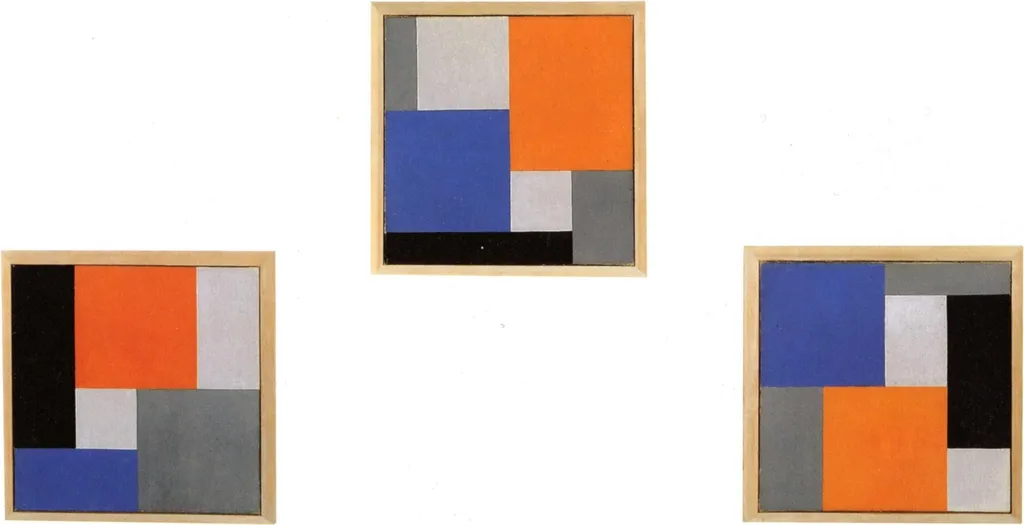
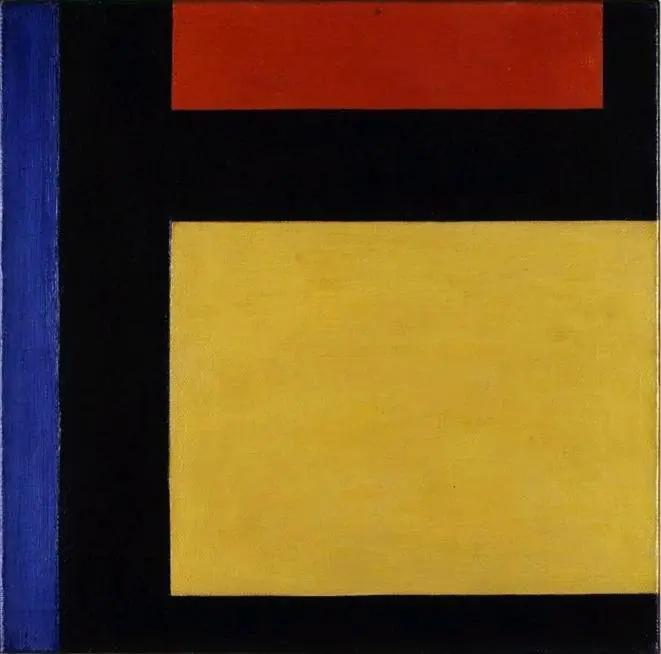
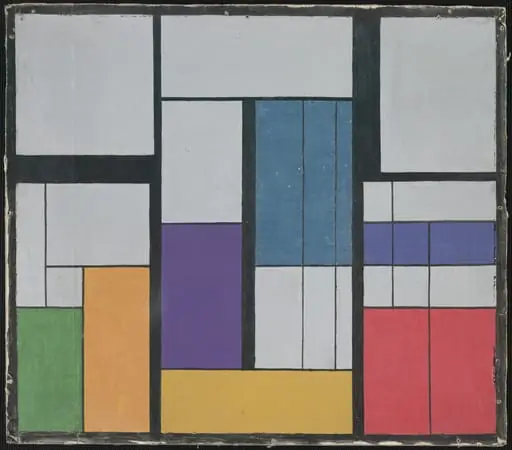
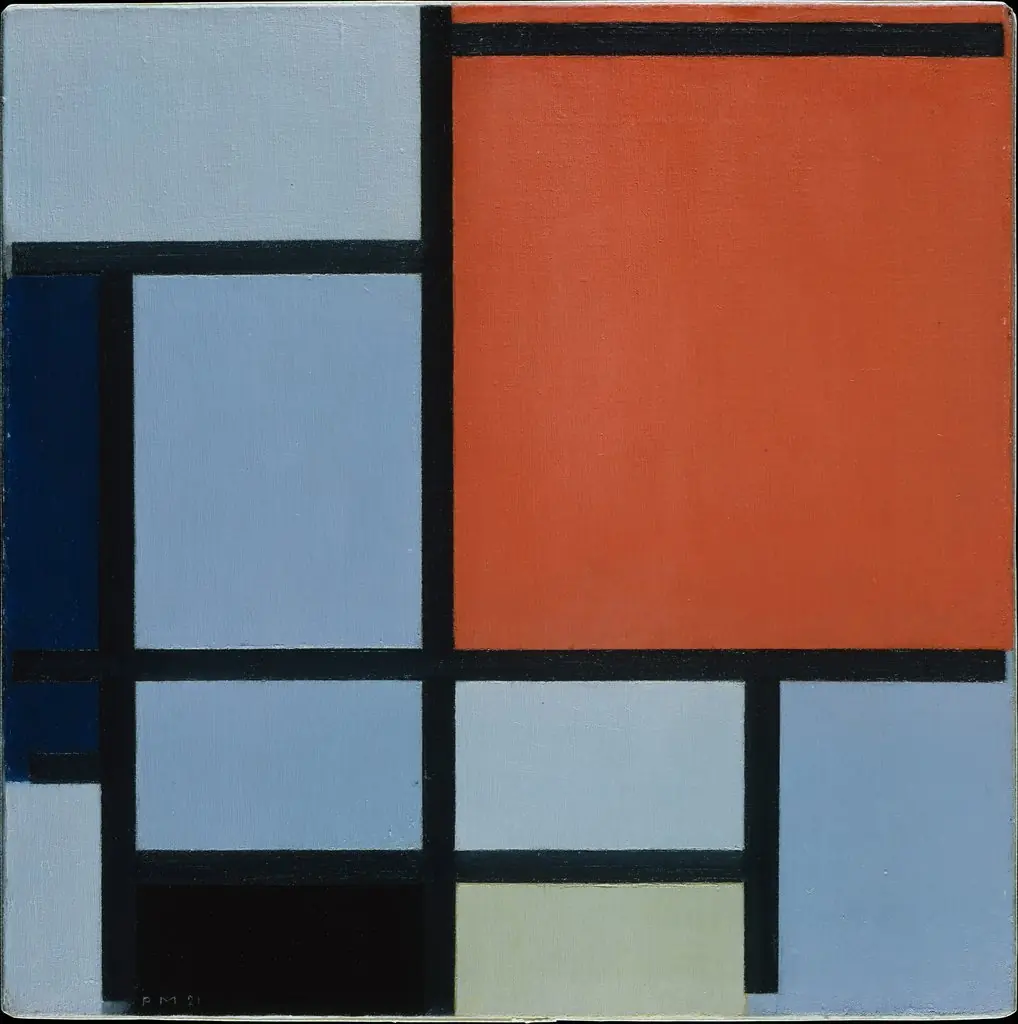
Composition XVIII in Three Parts is an oil painting by the De Stijl artist Theo van Doesburg. It dates from 1920 and is held in the collection of the Kröller-Müller Museum.
About this work
Overview
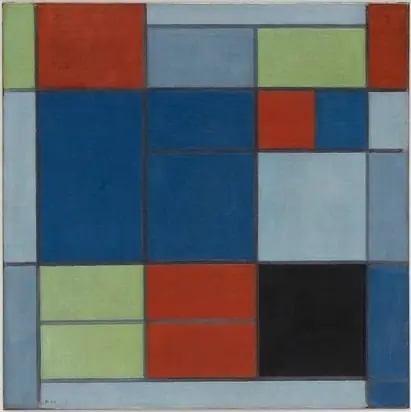
Created in 1920, Composition XVIII in Three Parts is an abstract oil painting by Dutch artist Theo van Doesburg. The work is structured as a triptych, with each panel containing geometric forms arranged to explore visual equilibrium. It resides in the Kröller-Müller Museum, where it represents a key moment in the development of non-representational art during the early twentieth century.
Subject & Meaning
Van Doesburg sought to express universal harmony through pure abstraction, using geometric shapes as visual equivalents to musical composition.
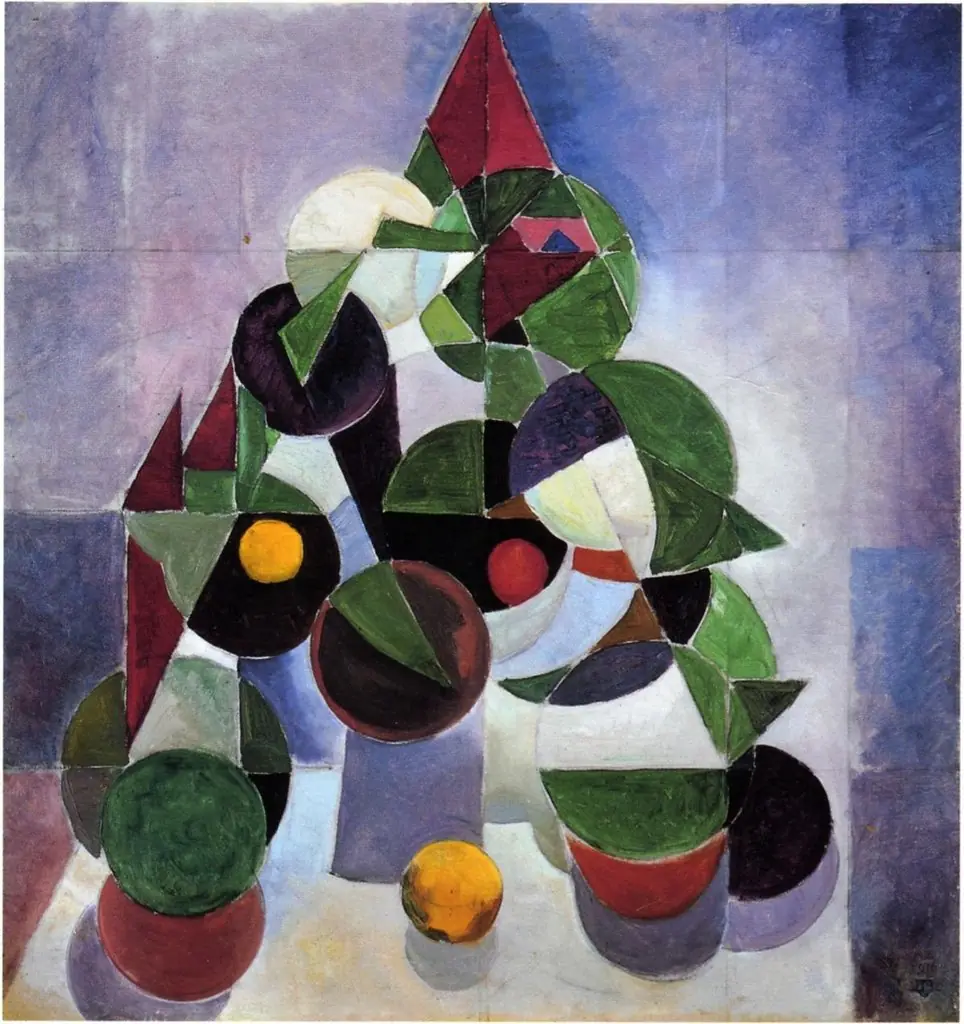
The painting rejects figurative representation entirely, focusing instead on the relationships between form and color. Van Doesburg sought to express universal harmony through pure abstraction, using geometric shapes as visual equivalents to musical composition. The absence of recognizable subjects directs attention to structural balance and chromatic interaction as the painting’s primary content.
Technique & Style
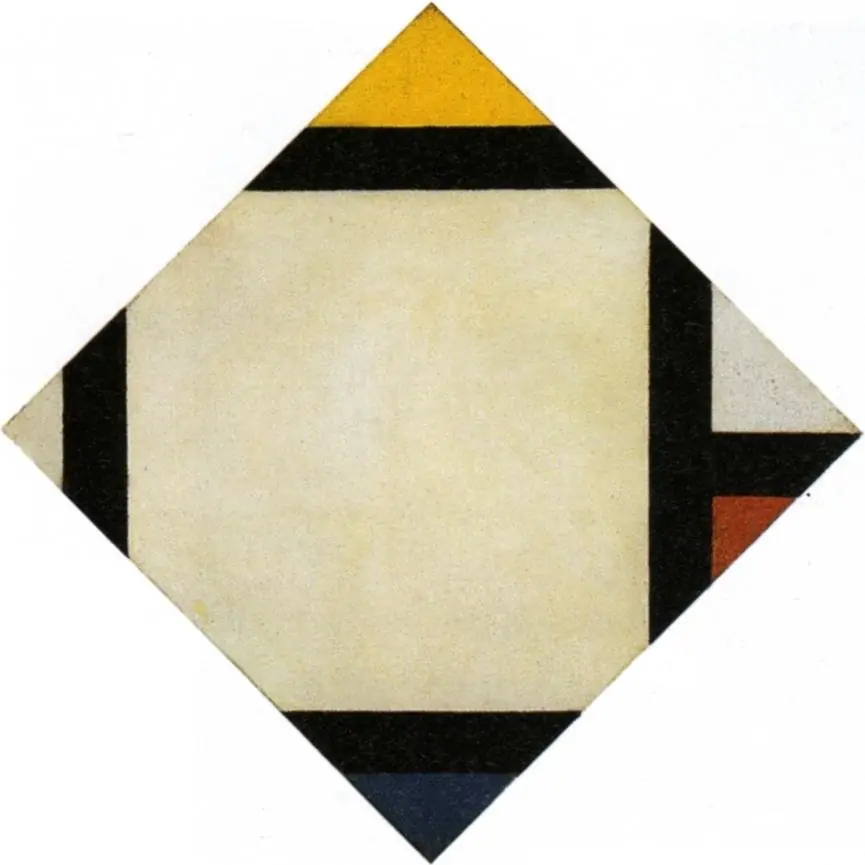
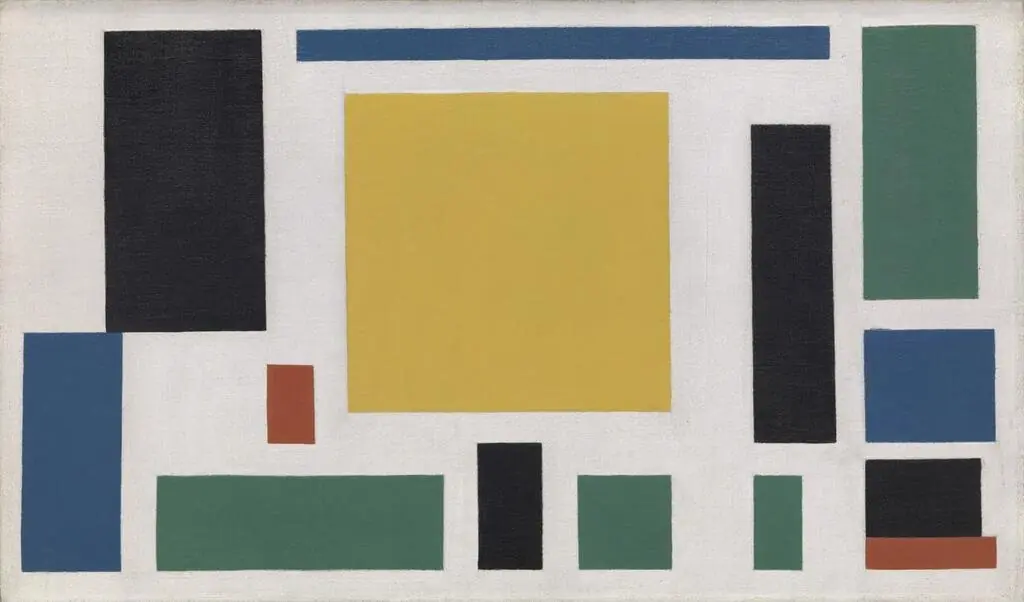
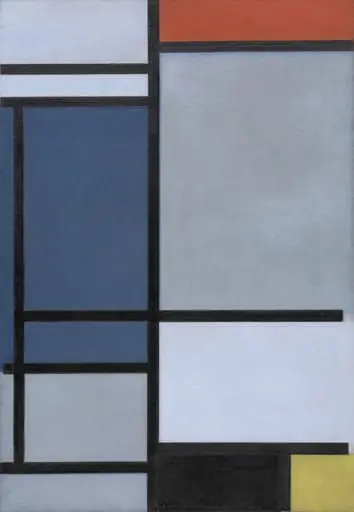
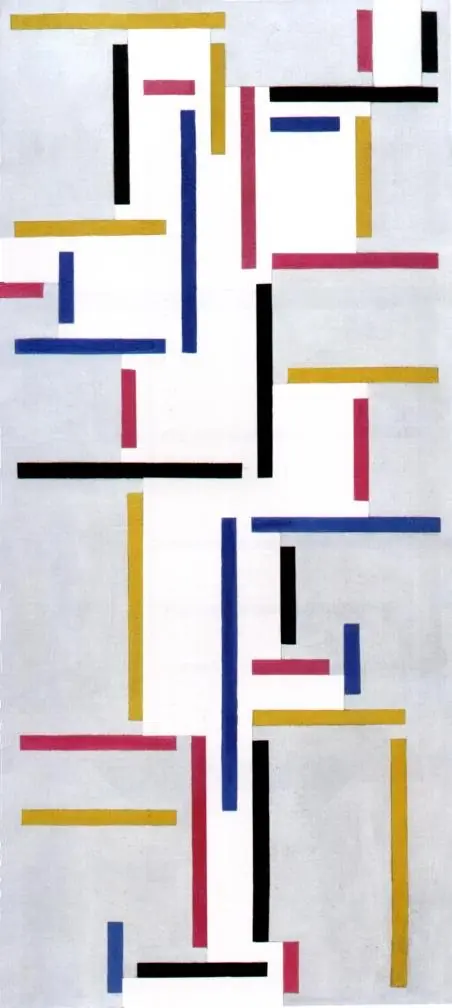
Van Doesburg applied oil paint with precision to create sharp-edged rectangles and squares in muted tones of orange, blue, gray, black, and white. The brushwork is deliberate and flat, avoiding texture or shading. This method aligns with De Stijl principles, emphasizing clarity, reduction, and the autonomy of basic visual elements over emotional expression or illusionistic depth.
History & Provenance
Painted in 1920, the work was produced during van Doesburg’s active involvement with the De Stijl movement, which he co-founded. It entered the Kröller-Müller Museum’s collection through the museum’s early acquisitions of modernist works, supported by Helena Kröller-Müller’s commitment to avant-garde art. The painting has remained in the museum’s custody since its acquisition.
Context
This piece emerged alongside other De Stijl experiments that sought to unify art, architecture, and design through abstraction. Van Doesburg’s approach contrasted with contemporaries like Mondrian by introducing diagonal elements and asymmetry, challenging the movement’s stricter orthodoxy. The work reflects broader post-war interests in order, rationality, and new visual languages.
Legacy
Composition XVIII in Three Parts contributed to the legitimization of geometric abstraction as a serious artistic language. Its structural rigor influenced later movements such as Concrete Art and Minimalism. Though less widely known than Mondrian’s works, van Doesburg’s experiments here remain significant for their bold rethinking of pictorial space and compositional dynamics.
Artist & collection

Artist
Theo van Doesburg was a Dutch painter, writer, poet, and architect. He is best known as the founder and leader of De Stijl.