Artwork
Composition C
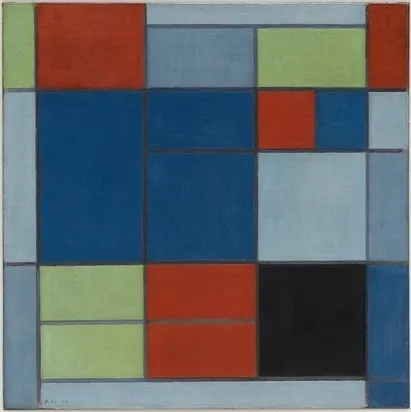
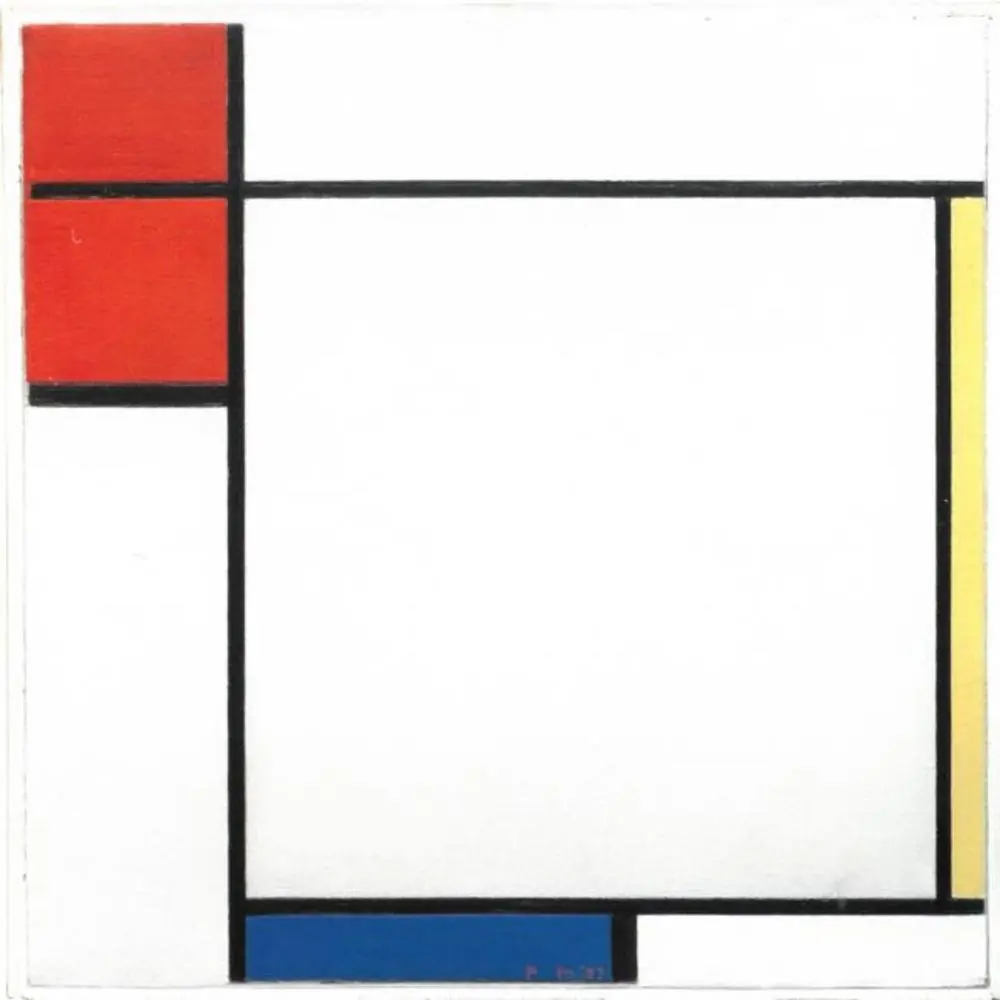
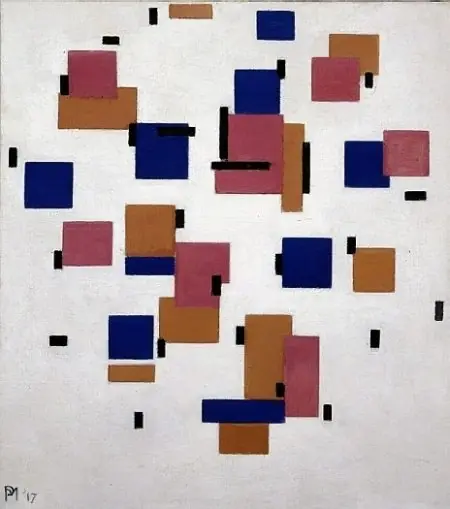
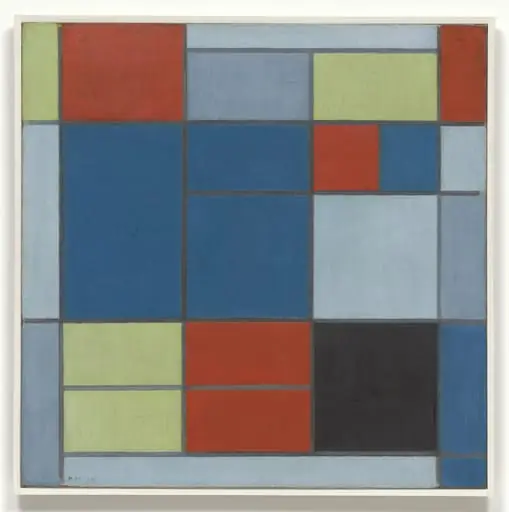
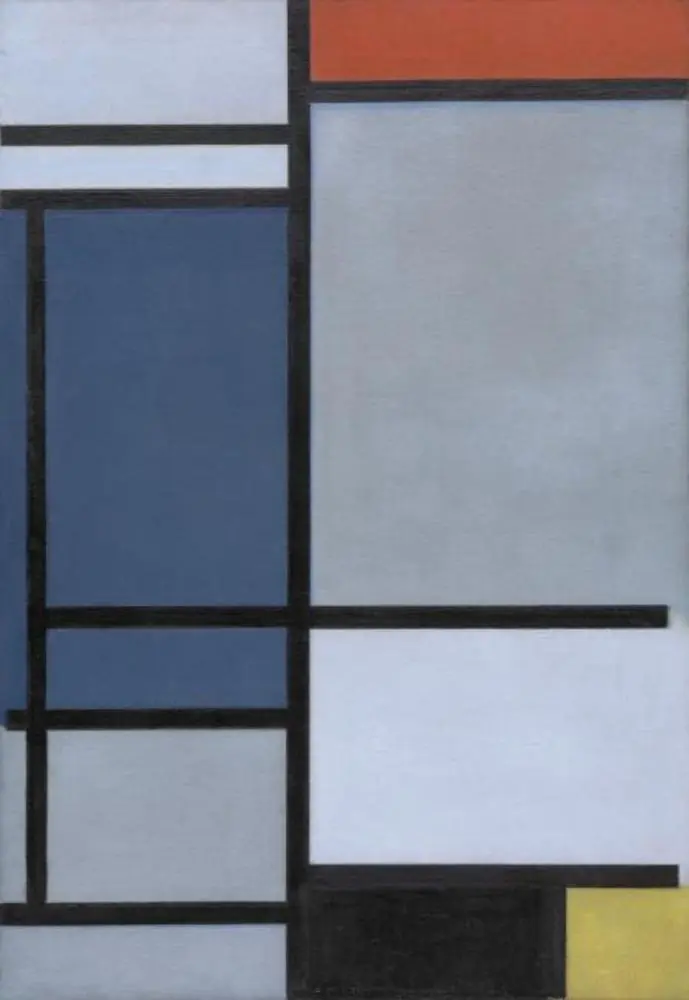
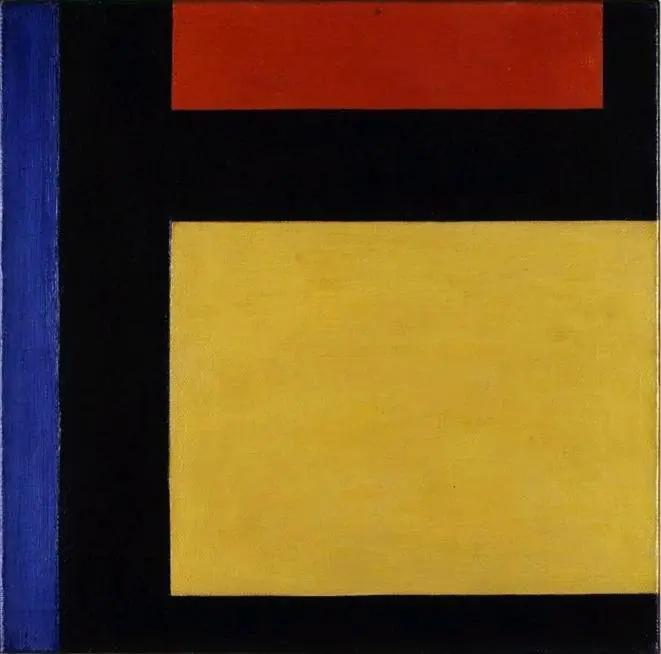
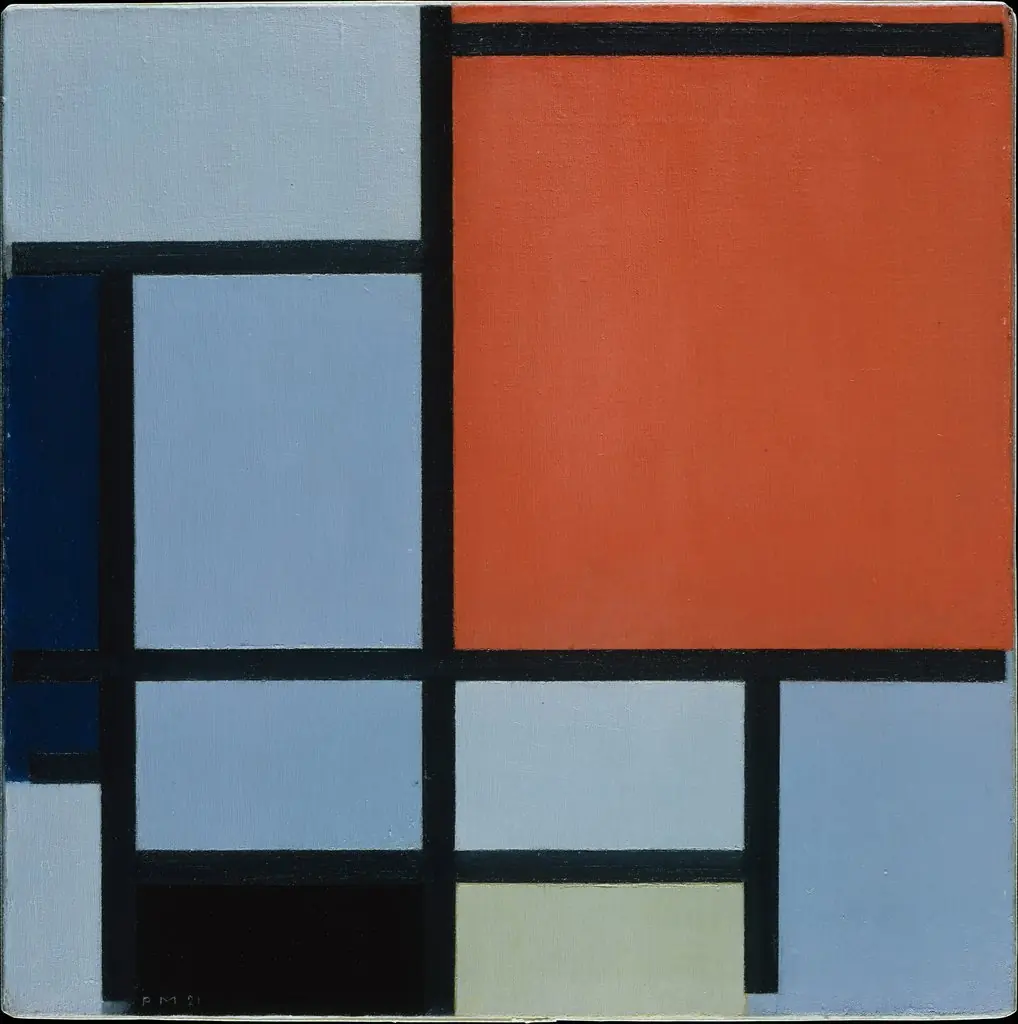
Composition C is an oil painting by the De Stijl artist Piet Mondrian. It dates from 1920 and is held in the collection of the Museum of Modern Art.
About this work
Overview
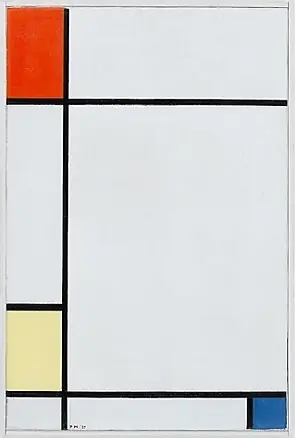
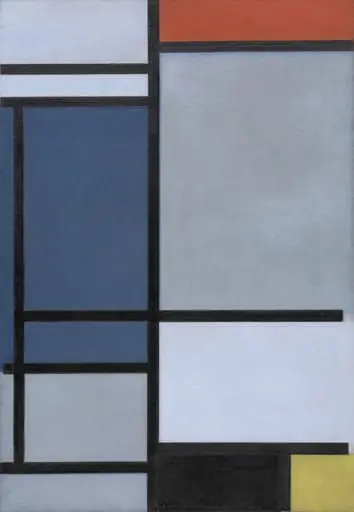
Piet Mondrian completed Composition C in 1920 using oil paint on canvas. The work is part of his series exploring pure abstraction, reducing visual elements to horizontal and vertical lines and primary colors. It reflects his commitment to a visual language grounded in balance and order, moving beyond representation toward a universal aesthetic.
Subject & Meaning
The painting contains no figurative elements; its subject is structure itself. Rectangles of red, blue, green, and black are arranged without symmetry, yet with deliberate equilibrium. Mondrian intended these forms to express harmony derived from opposing forces, static and dynamic, individual and universal, reflecting his philosophical belief in spiritual order beneath chaos.
Technique & Style
Mondrian applied oil paint in thin, even layers to achieve a smooth, matte surface. The edges of colored planes are sharply defined by black lines, creating a sense of precision. Colors are muted, avoiding vibrancy to emphasize tonal relationships. The composition avoids repetition or rhythm, instead relying on asymmetrical placement to generate visual tension and calm.
History & Provenance
Created during Mondrian’s time in Paris, Composition C emerged from his engagement with the De Stijl movement, which he co-founded. The work entered the Museum of Modern Art’s collection in the mid-20th century, where it remains as a key example of early abstract modernism. Its provenance traces directly to Mondrian’s studio and early exhibitions in Europe.
Context
In the aftermath of World War I, Mondrian sought to create art that transcended national and personal expression. Composition C aligns with De Stijl’s ideals: reduction to basic forms, rejection of ornament, and a belief in art’s capacity to reveal universal truths. It responds to contemporary shifts in architecture, design, and philosophy toward abstraction and functional purity.
Legacy
Composition C influenced postwar design, architecture, and minimalism through its disciplined use of geometry and color. While not widely exhibited as a singular icon, its principles became foundational to 20th-century abstract practice. The work exemplifies how artistic simplification could carry profound conceptual weight, shaping generations of non-representational art.
Artist & collection

Artist
Pieter Cornelis Mondriaan (Dutch:; 7 March 1872 – 1 February 1944), known after 1911 as Piet Mondrian (, US also; Dutch: ), was a Dutch painter and art theoretician, who is regarded as one of the greatest artists of the 20th century.