Artwork
Camels in a Street in Tunisia
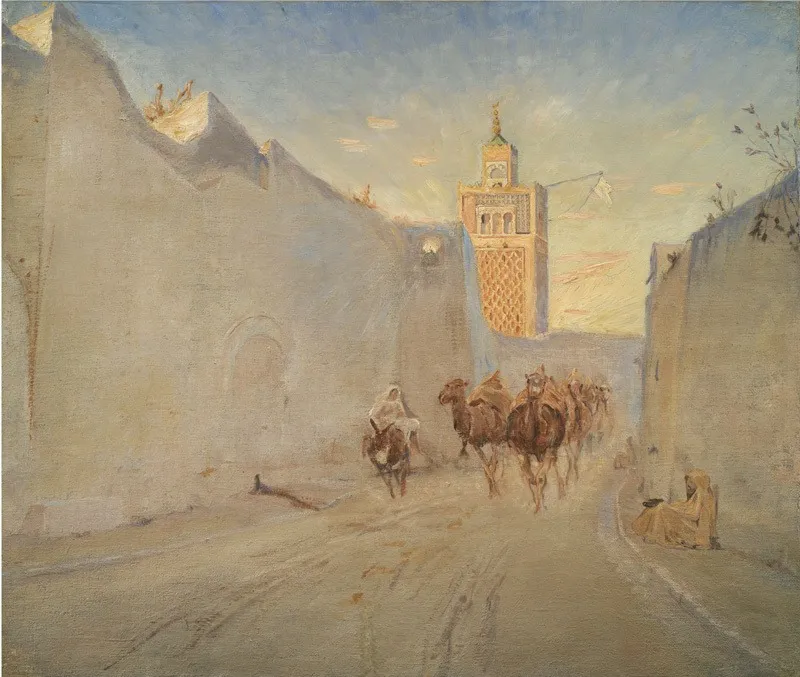
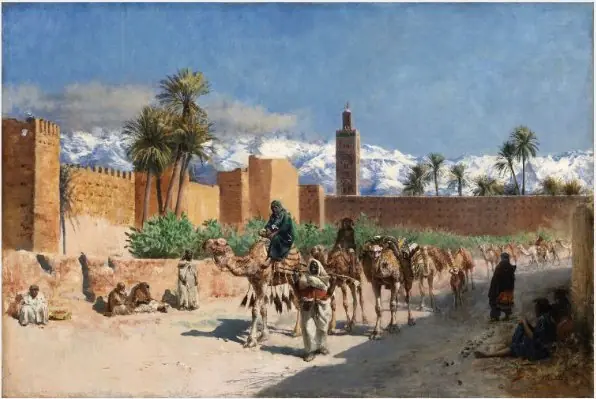
Camels in a Street in Tunisia is an unspecified painting by the Impressionist artist Theodor Philipsen. It dates from 1892 and is held in the collection of the Statens Museum for Kunst.
About this work
Subject & Meaning
The painting is housed in the collection of the Statens Museum for Kunst.
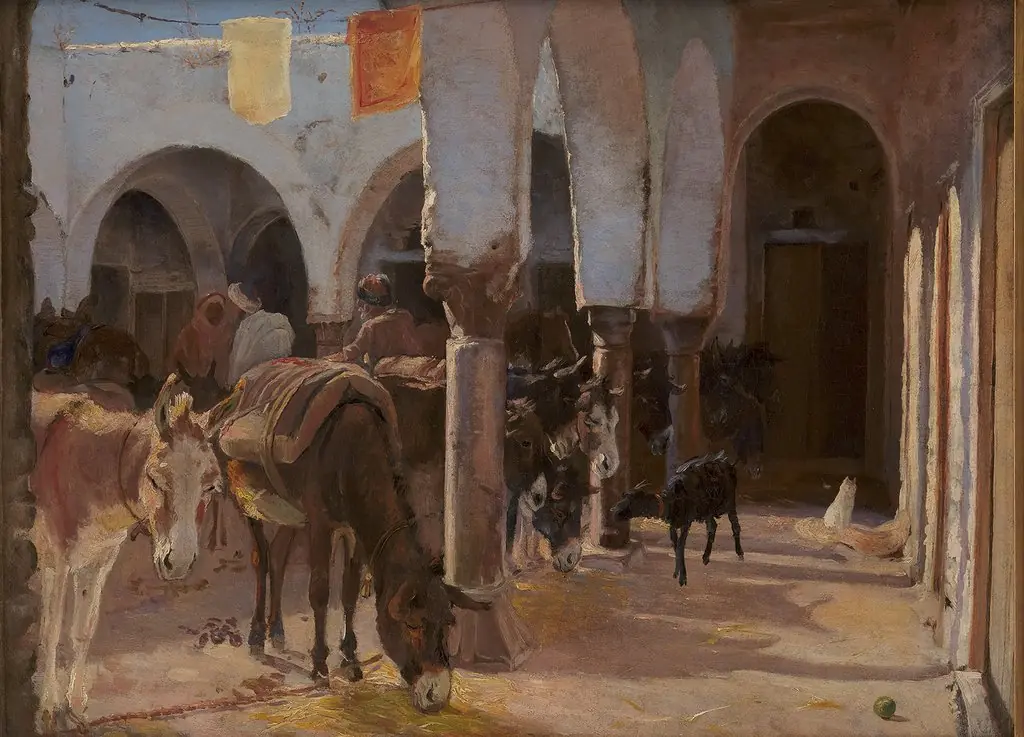
The painting portrays a caravan of camels moving through a narrow Tunisian street, a scene that captures everyday local life and the exotic atmosphere of North Africa. Camels, long associated with travel and trade across deserts, symbolize endurance and the journey motif, resonating with the Romantic fascination with Orientalist subjects. The work reflects the artist's interest in documenting regional customs and landscapes encountered during his travels, presenting an emblematic view of Tunisian urban settings.
The composition emphasizes the rhythmic movement of the animals within an architectural context, underscoring themes of cultural encounter and colonial observation.
The painting is housed in the collection of the Statens Museum for Kunst.
Technique & Style
Executed in 1882, the work is an oil on canvas whose handling emphasizes open brushwork and a light, luminous palette to capture the North African setting. Philipsen’s technique privileges quick, descriptive strokes to render camel forms and architectural facades, avoiding finely blended modelling in favor of atmospheric immediacy. The composition arranges diagonals that guide the eye through the street scene, while the subdued yet varied hues underscore the play of sunlight on sand and shadow. No detailed structural underdrawing is evident, suggesting a direct, alla prima approach.
The canvas measures 40 cm in height by 47 cm in width, and the painting’s condition has been described as stable with intact color layers in modern records.
History & Provenance
Painted in 1882, Camels in a Street in Tunisia was created by Theodor Philipsen during his journey to North Africa that year.
By 1882 it had entered public view in Denmark, later forming part of the holdings of Statens Museum for Kunst, Copenhagen, where it remains today.
Camels in a Street in Tunisia has been held in the collection of the Statens Museum for Kunst in Denmark. Its documented exhibition history includes the show "1880-erne i nordisk maleri," a presentation devoted to Nordic painting of the 1880s.
Overview
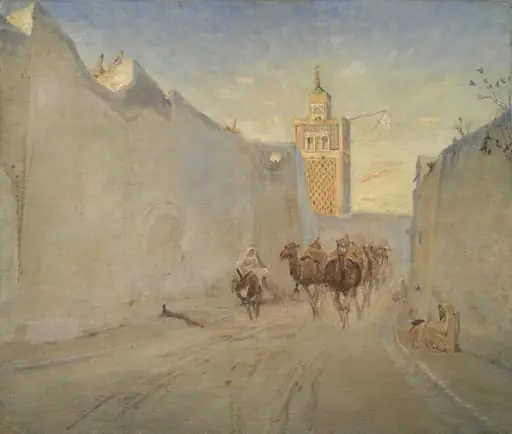
The Danish painter Theodor Philipsen completed Camels in a Street in Tunisia in 1892. Executed during the height of Impressionism, the canvas portrays a sun‑lit Tunisian street where three dromedary camels move in procession under the guidance of a pedestrian. Light‑colored stone façades, a distant tower, and a pale sky frame the scene, while a few locals in loose robes linger along the walls.
Context
Philipsen’s Tunisian scenes belong to a period when European artists traveled to North Africa seeking new light and exotic subjects. The painting reflects this trend, integrating Impressionist techniques with a direct observation of a non‑European environment, thereby expanding the geographic scope of the movement.
Artist & collection
Artist
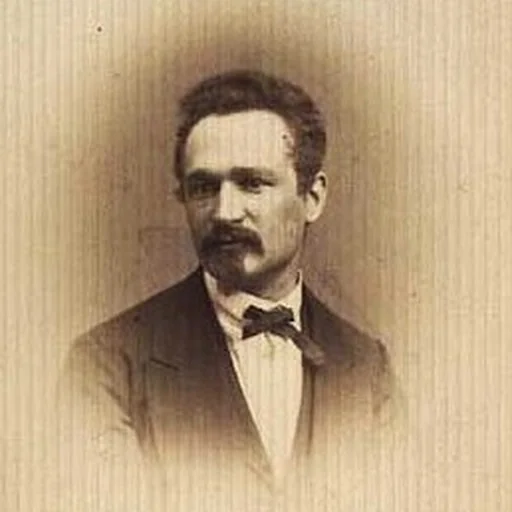
Theodor Esbern Philipsen (10 June 1840 – 3 March 1920) was a Danish painter of Jewish ancestry, known for landscapes and animal portraits. He also did small figures in wax and clay.

![Arabs and camels beside a Tomb, Algeria[?], by Victor-Pierre Huguet](https://artifactworldgallery.com/img/victor-pierre-huguet--arabs-and-camels-beside-a-tomb-algeria--d8831a130920c80b-w320.webp)