Artwork
Study for "William Rush Carving His Allegorical Figure of the Schuylkill River"
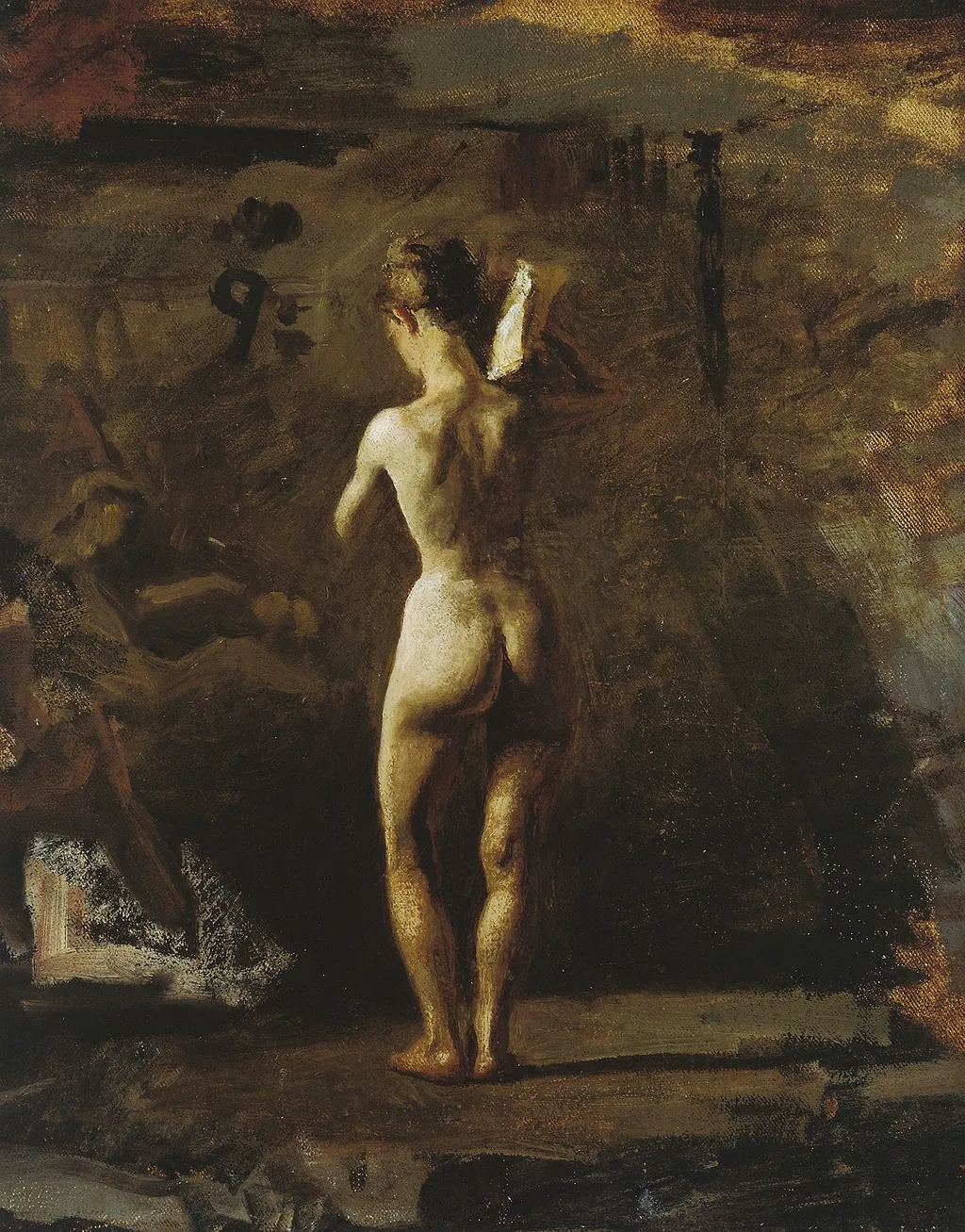
Study for "William Rush Carving His Allegorical Figure of the Schuylkill River" is an oil painting by the American Impressionist artist Thomas Eakins. It dates from 1888 and is held in the collection of the Art Institute of Chicago.
About this work
Subject & Meaning
The subject of the study is an unclothed female model posed in a studio setting, directly referencing the allegorical figure of the Schuylkill River that William Rush carved in the early nineteenth century. Eakins depicts the model standing with her body angled and her right arm raised, a pose that aligns with Rush’s river figure and underscores the preparatory purpose of the work. By rendering the model in the nude, Eakins emphasizes the classical idealization underpinning Rush’s allegory while foregrounding the act of artistic creation itself.
The painting thus functions as a meditation on the relationship between the living model and the sculptural tradition, capturing the moment of conception before the allegorical figure is clothed in symbolic form.
In this context, the work represents the intersection of realism and allegory, where the immediate study of the body serves the larger narrative of artistic tradition and river personification.
Technique & Style
The handling of the medium serves to explore the human form in preparation for a larger narrative scene involving the sculptor William Rush.
Executed in 1876, this work is an oil painting on canvas. The composition measures 35.9 cm in height and 28.6 cm in width. Stylistically, the piece functions as a study within the allegorical genre, specifically focusing on the depiction of a nude female figure.
The handling of the medium serves to explore the human form in preparation for a larger narrative scene involving the sculptor William Rush.
History & Provenance
The work is held by the Art Institute of Chicago, where it is catalogued under inventory number 1906.1015. It was first exhibited at the National Academy of Design in 1876 and later included in the 1933 retrospective "Thomas Eakins: Paintings and Drawings" at the Philadelphia Museum of Art.
Legacy
The study informed public reception of Eakins' allegorical river figure, which was celebrated for its anatomical rigor and symbolic depth. Contemporary reviews highlighted its role in establishing the artist's reputation for merging academic precision with distinctly American subject matter. The work's later influence is noted in its adoption by regional art institutions as a reference point for figurative studies, reinforcing Eakins' standing in the development of realist painting in the United States.
Overview
Thomas Eakins’ 1888 oil on canvas, Study for “William Rush Carving His Allegorical Figure of the Schuylkill River,” serves as a preparatory sketch for a larger allegorical composition. The work presents a solitary nude woman turned away, her back illuminated against a dim, indistinct backdrop. Though unfinished in narrative detail, the study captures the artist’s focus on anatomical accuracy and the play of light across the figure.
Own this work as a print
Artist & collection
Artist
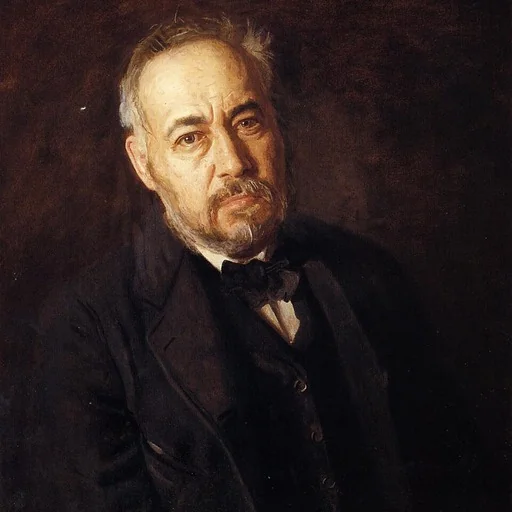
Thomas Cowperthwait Eakins (; July 25, 1844 – June 25, 1916) was an American realist painter, photographer, sculptor, and fine arts educator.

- The Model
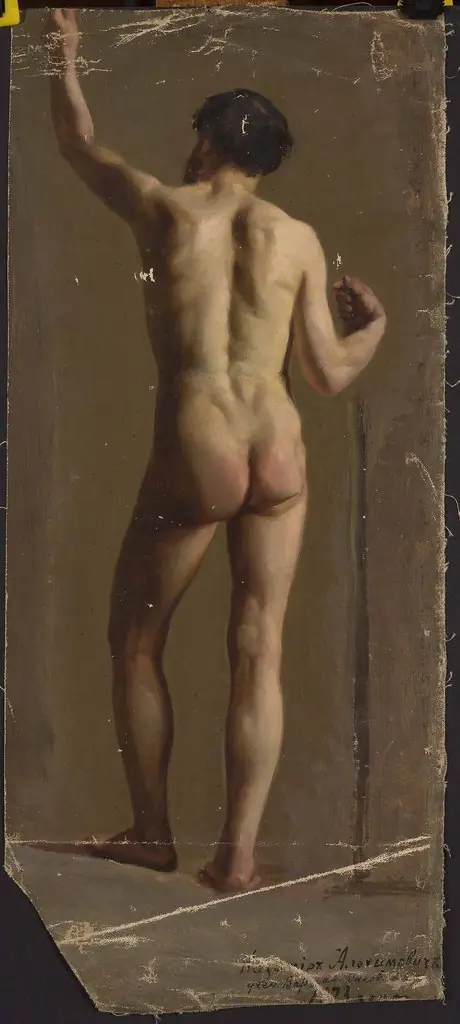 Nude of a standing man, back view
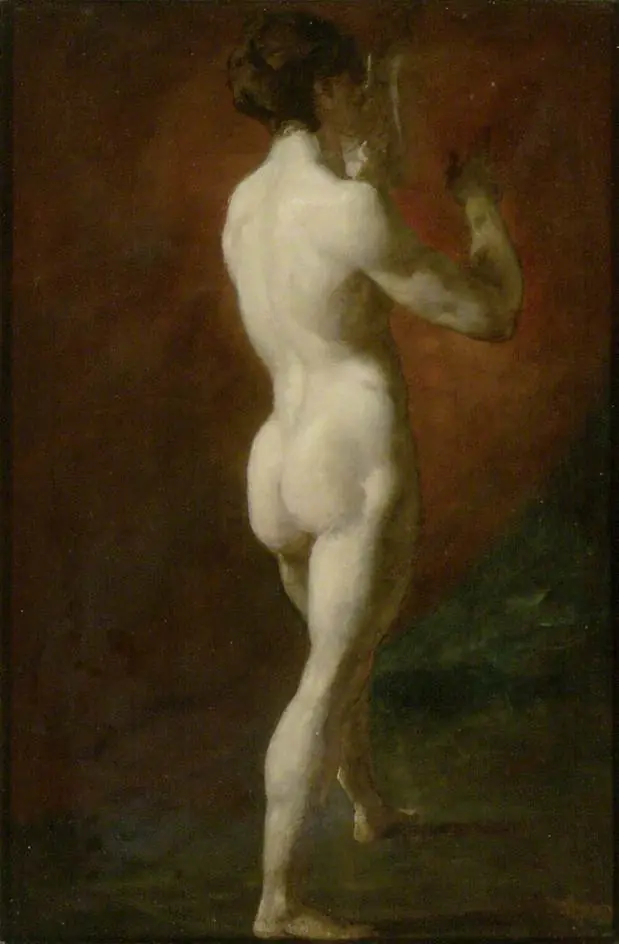 Standing female Nude seen from behind
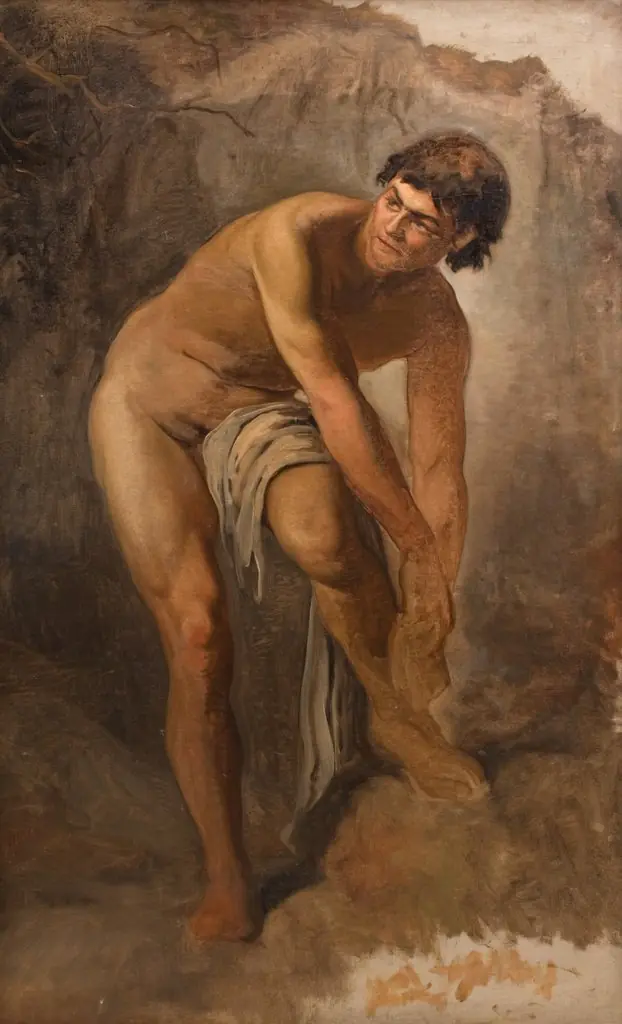 Ung italiensk mandsfigur i klippelandskab
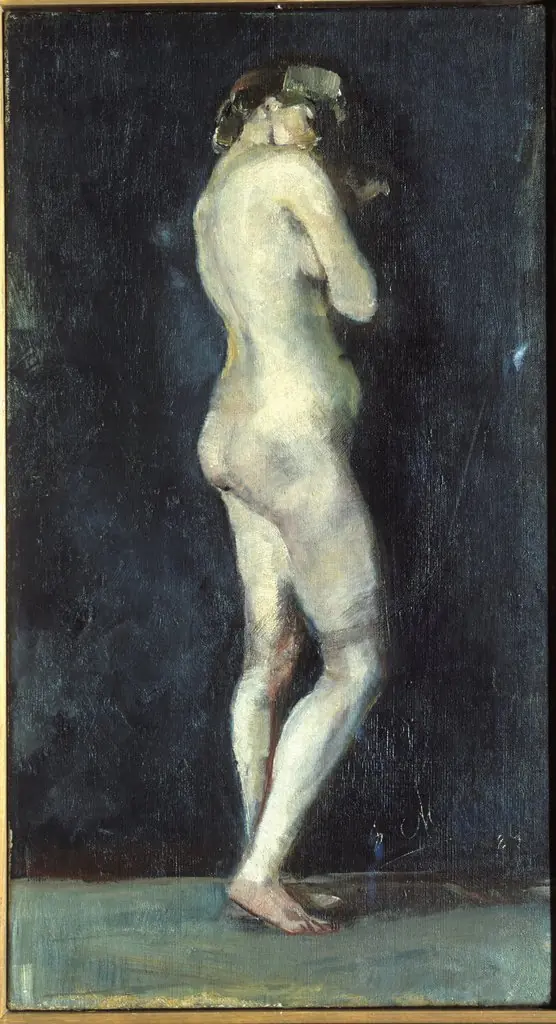 Standing Female Nude
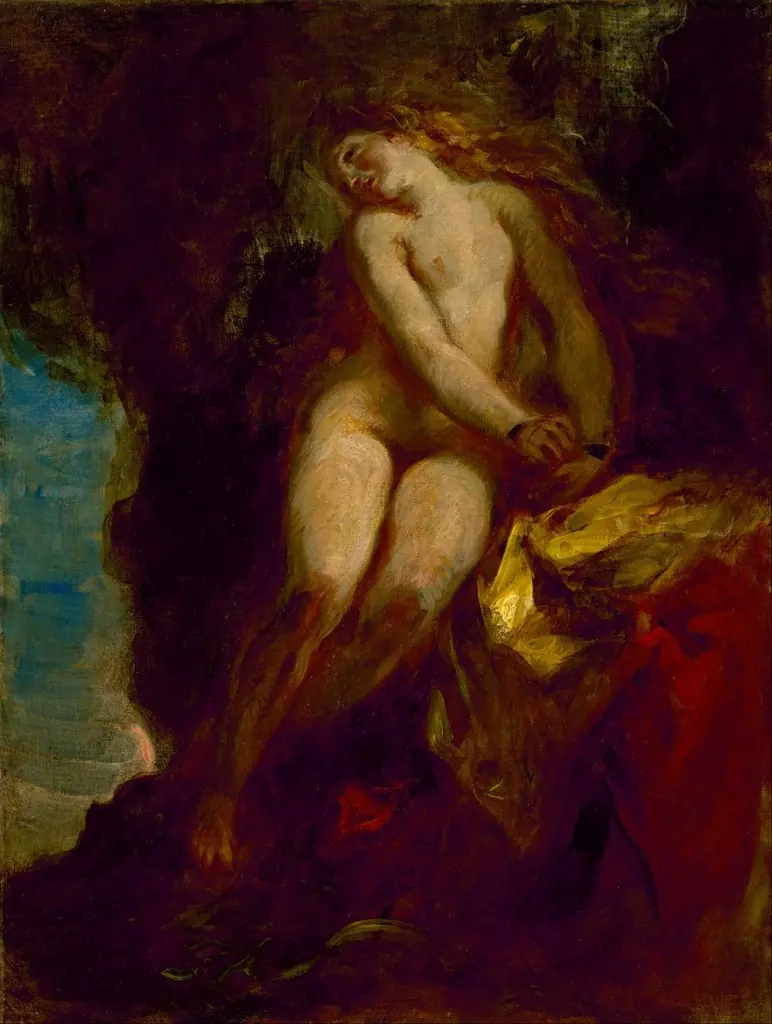 Andromeda
 Study of a Male Nude and Other Studies
 Sketch for “Crucifixion”
 Figurstudie av sittande man
 Study of a nude man
 Bacchanalia
 Ung italiensk mandsfigur i klippelandskab