Artwork
The Thinker: Portrait of Louis N. Kenton
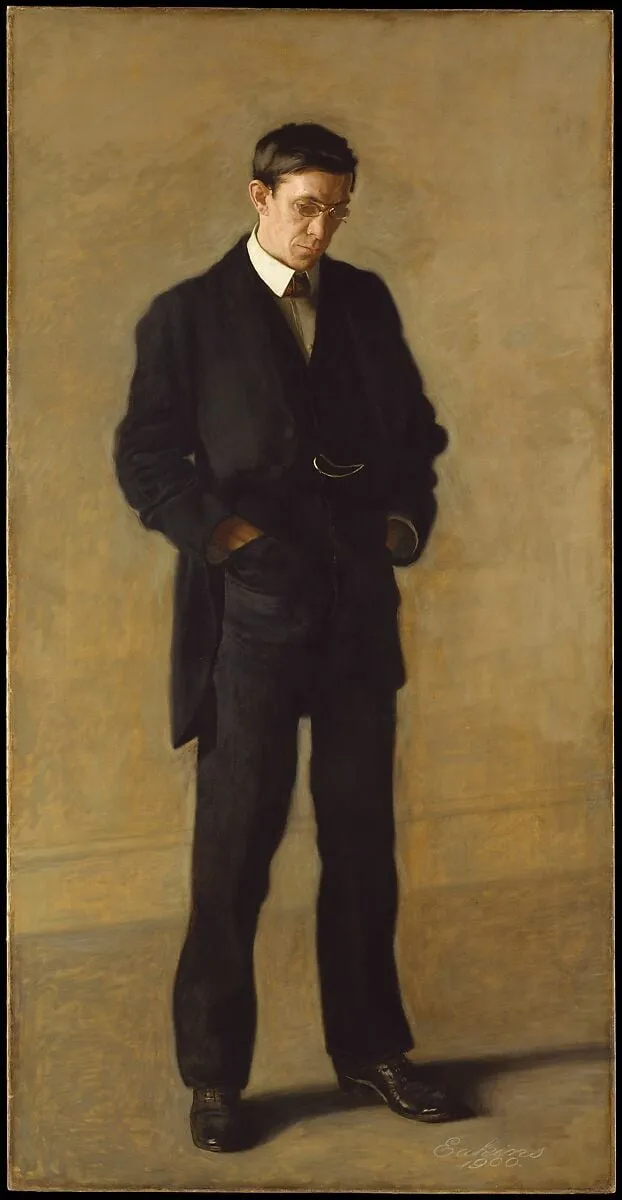
The Thinker: Portrait of Louis N. Kenton is an oil painting by the Academic Art artist Thomas Eakins. It dates from 1900 and is held in the collection of the Metropolitan Museum of Art.
About this work
Subject & Meaning
Kenton, Eakins's brother‑in‑law and a modest Philadelphia clerk, captured in a contemplative stance with his hands in his pockets against an unadorned backdrop.
The portrait shows Louis N. Kenton, Eakins's brother‑in‑law and a modest Philadelphia clerk, captured in a contemplative stance with his hands in his pockets against an unadorned backdrop. This pose, described as introspective and psychologically probing, marks a departure from aristocratic portrait conventions and aligns the work with Eakins's interest in the modern middle‑class individual. The figure's dark silhouette, precise rendering of facial features and accessories, and the stark lighting echo Velázquez's influence while emphasizing a sculptural presence.
Scholars note that the painting subtly conveys intellectual solitude and a 'modern, middle‑class American life' layered over European tradition, a theme reinforced by its later title 'The Thinker' inscribed on the stretcher. The work was first exhibited widely and later acquired by the Metropolitan Museum of Art.
Technique & Style
The portrait employs oil on canvas, executed in 1900 with a restrained, academic approach that emphasizes naturalistic detail and volumetric form. Kenton's figure is rendered with careful attention to three-dimensionality in the head, watch chain, and shoes, contrasting with broader, atmospheric handling of the dark suit and background. The subdued palette and sharp contrast between the figure's silhouette and the nondescript setting reflect Eakins's admiration for Velázquez, particularly in the restrained use of light and emphasis on psychological presence.
The composition is austerely composed, devoid of narrative or dramatic setting, with Kenton's introspective pose, hands in pockets, downward gaze, rejecting aristocratic portrait conventions. The formal qualities prioritize sculptural solidity and quiet introspection, aligning with Eakins's late-career focus on middle-class individuality within a European academic tradition.
History & Provenance
Thomas Eakins created The Thinker: Portrait of Louis N. Kenton in 1900 as an oil on canvas work. The painting depicts Louis N. Kenton, the artist's brother-in-law, who had married Eakins's sister-in-law, Elizabeth Macdowell, in May 1899. Eakins presented the finished portrait to Elizabeth by 1901, suggesting it may have served as a marriage gift.
Originally titled simply with the subject's name to emphasize individuality, the designation "The Thinker" was added posthumously, likely by Eakins's wife, based on an inscription on the stretcher. The work was exhibited extensively between 1900 and 1916, including at the Metropolitan Museum of Art's 1917 memorial exhibition for the artist. Following this memorial show, the Metropolitan Museum of Art purchased the painting later in 1917, where it remains part of the collection today.
The painting is held in the collection of the Metropolitan Museum of Art, New York, where it remains. It was acquired by the museum in 1917 following its presentation at the memorial exhibition for Thomas Eakins. The work is inventoried as accession number 17.126.
Its exhibition history includes multiple public presentations between 1900 and 1916, notably at the Carnegie Institute's Annual Exhibition (1900–1901), the Pennsylvania Academy of the Fine Arts Annual, and the Pan-American Exposition in Buffalo (1901). The painting was also shown at the Metropolitan Museum's 1917 memorial exhibition, after which it entered the museum's permanent holdings.
Context
The Thinker: Portrait of Louis N. Kenton has been described as "one of Eakins's most memorable portraits" and is part of a series of life-size standing male portraits painted late in his career. Biographer Lloyd Goodrich drew comparisons between Eakins's approach and that of Velázquez, citing shared naturalistic verisimilitude and stylistic austerity, while noting that Eakins's admiration for Velázquez's restrained palette, shared by contemporaries such as Manet, John Singer Sargent, and William Merritt Chase, was tempered by his adherence to academic training. The painting's dark silhouette against a light background has been read as a realization of Eakins's desire to construct a "modern, middle-class American life layered over the grand European tradition," and its emphasis on intellectual solitude has been interpreted as subliminally autobiographical.
Eakins originally titled the work solely after the sitter; the appended title The Thinker was added after his death, following a stretcher inscription likely written by Susan Macdowell Eakins, paralleling the generic naming of other late portraits such as The Archaeologist and The Cello Player.
Legacy
Recognized as one of Thomas Eakins's most memorable portraits, the work garnered significant critical attention shortly after its creation, a rarity for the artist's portraiture. Early reception was mixed; while some critics dismissed the subject's informal demeanor and baggy suit as ugly, others like Charles Henry Caffin praised its psychological depth and impressive realism. By 1917, critic Henry McBride hailed it as the most classical and restrained of Eakins's canvases during a memorial exhibition at the Metropolitan Museum of Art, which subsequently acquired the painting.
The work's legacy extends into modern popular culture, serving as the cover art for the New York Review Books edition of John Williams's novel Stoner and appearing as a favored object in Emily St. John Mandel's 2020 novel The Glass Hotel. Its title was posthumously expanded from the sitter's name to include 'The Thinker,' shifting its characterization toward a more generic abstraction.
Overview
Thomas Eakins's 1900 oil on canvas, The Thinker: Portrait of Louis N. Kenton, depicts his brother-in-law and friend. This work is recognized as a notable example within Eakins's extensive portraiture. It captures Kenton in a moment of quiet introspection, a characteristic theme in the artist's later career. The painting is housed in the American Wing, reflecting its place in American art history.
Artist & collection
Artist
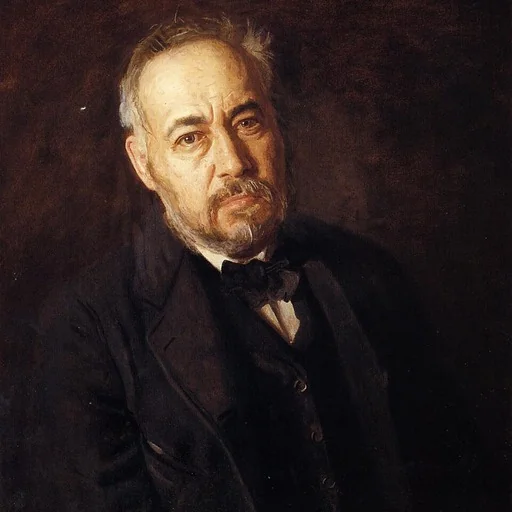
Thomas Cowperthwait Eakins (; July 25, 1844 – June 25, 1916) was an American realist painter, photographer, sculptor, and fine arts educator.

- James Abbott McNeill Whistler
 Albert Edelfelt
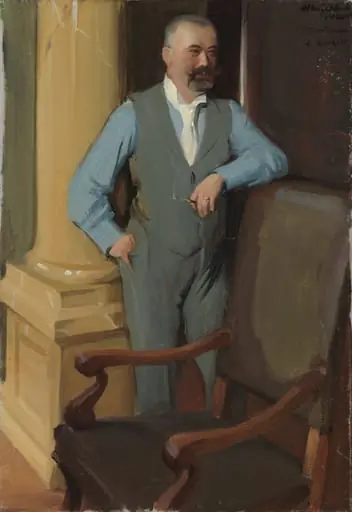 Ruukinpatruuna A.N:son Keirkner, muotokuvaharjoitelma
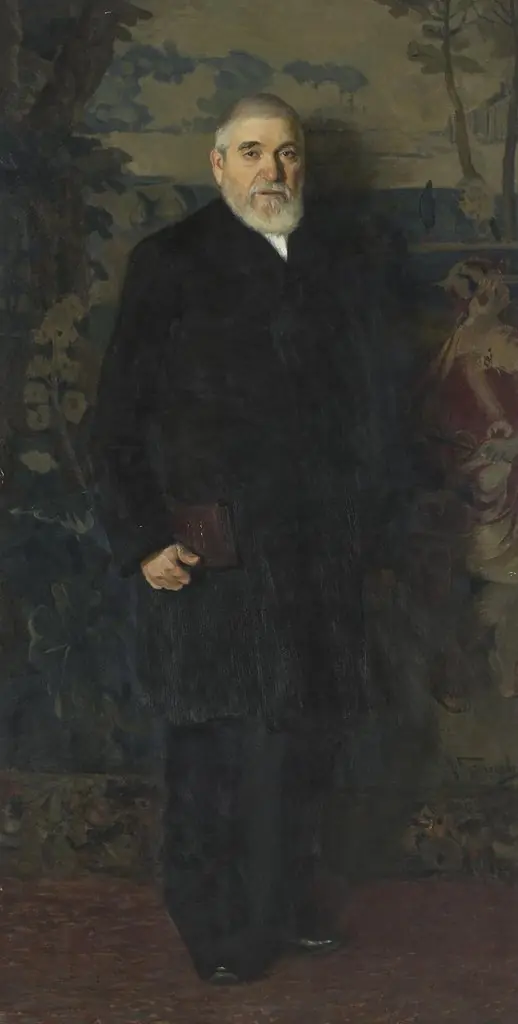 Kalman Ze'ev Wissotzky
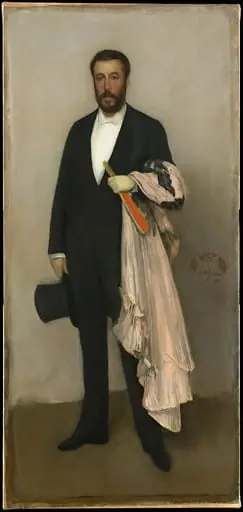 Arrangement in Flesh Colour and Black: Portrait of Theodore Duret
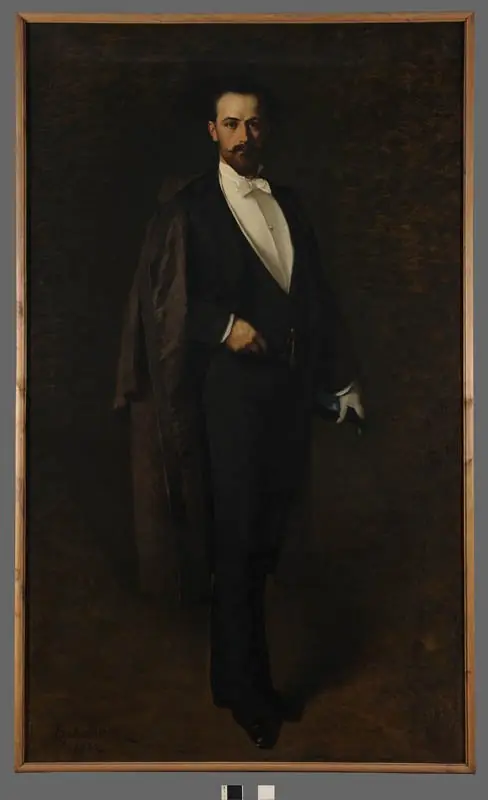 Portrait of Bronisław Amszyński
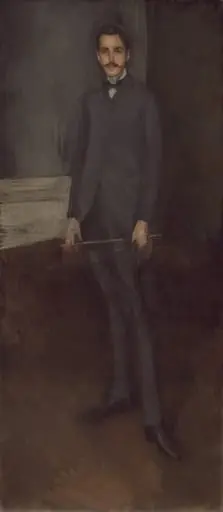 George W. Vanderbilt
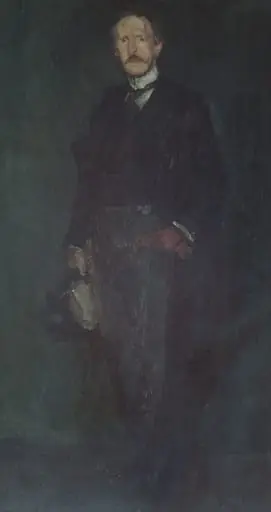 Edward Guthrie Kennedy
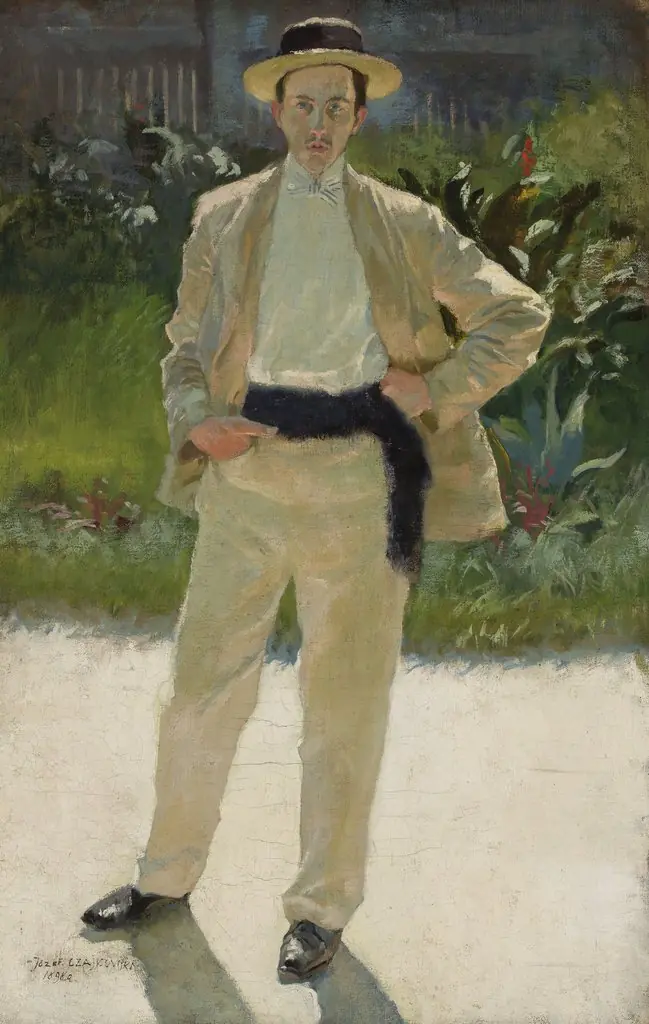 Portrait of Stanisław Czajkowski, painter, artist’s brother
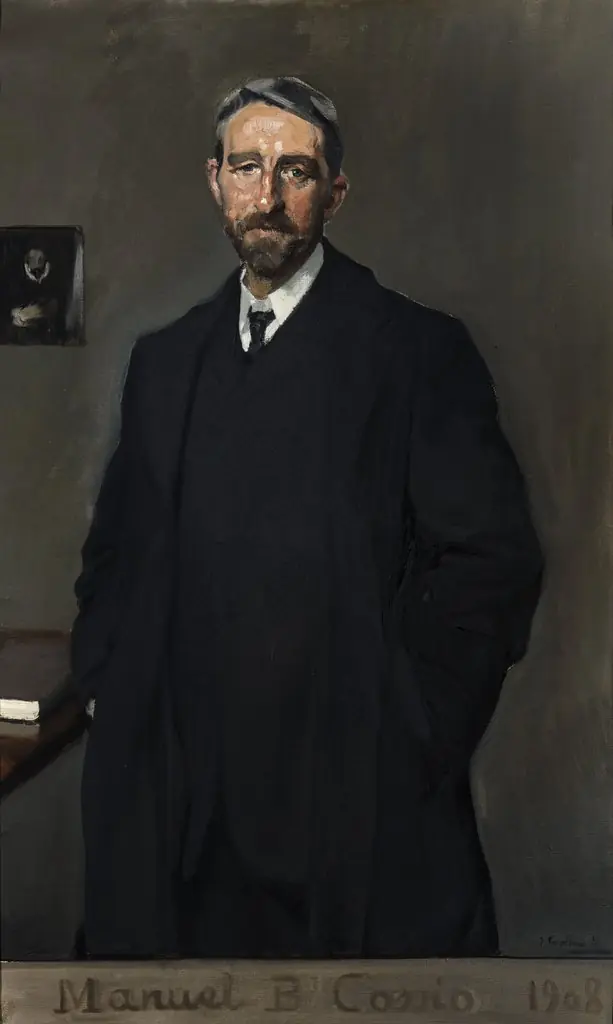 Manuel Bartolomé Cossío
 Retrato de homem com cartola: o poeta Hanvin, o homem do fígaro
 Aureliano de Beruete y Moret, Jr.