Artwork
The Artist's Wife and His Setter Dog
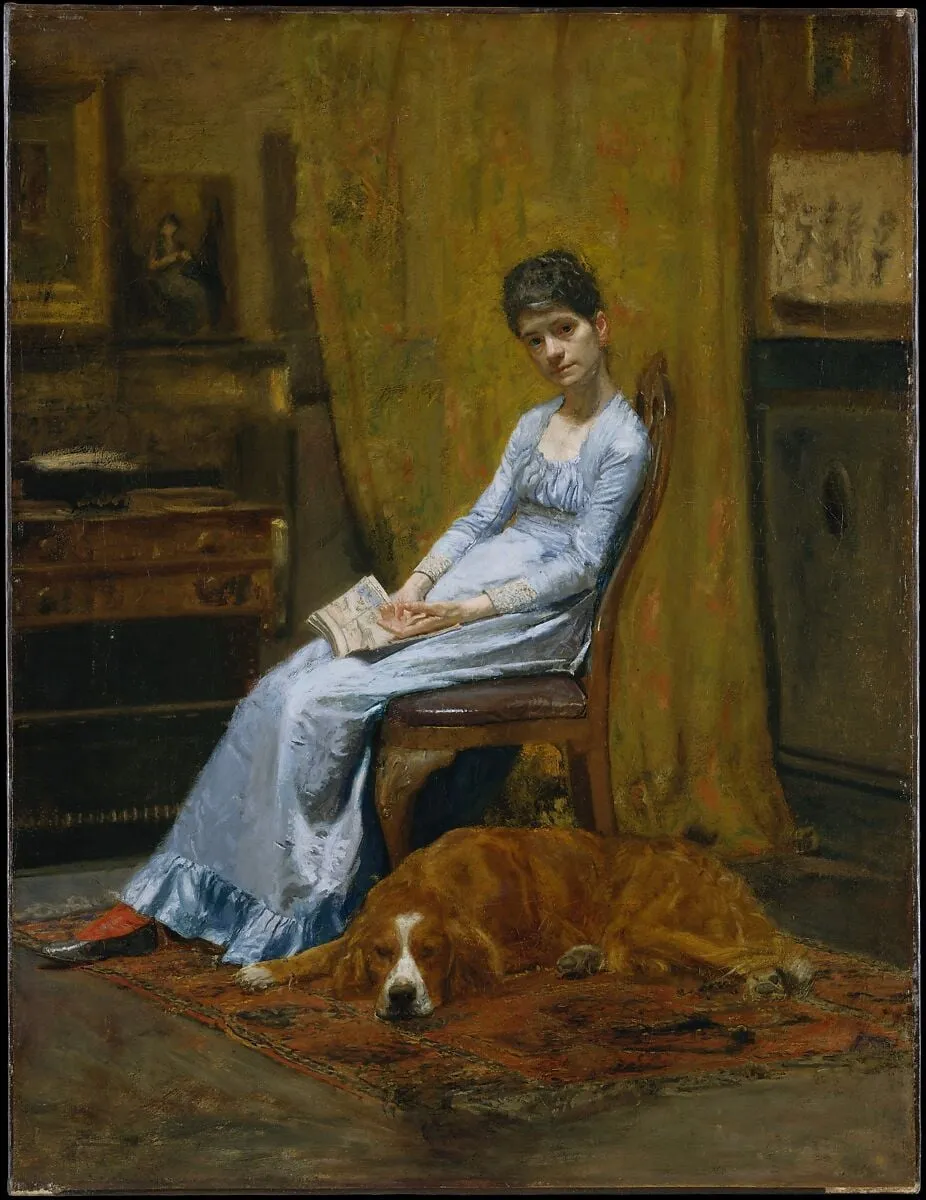
The Artist's Wife and His Setter Dog is an oil painting by the American Impressionist artist Thomas Eakins. It dates from 1886 and is held in the collection of the Metropolitan Museum of Art.
About this work
Soon after marrying his former student Susan Hannah Macdowell in 1884, Thomas Eakins began this studio portrait. Susan sits in a Queen Anne chair in a blue silk dress, an open Japanese book in her lap, while their setter Harry dozes at her feet. Eakins reworked the canvas over several years, around the time of his dismissal from the Pennsylvania Academy of the Fine Arts.
Subject & Meaning
The painting portrays Susan Macdowell Eakins, the artist's wife and former pupil, seated in a chair within the couple's Philadelphia studio at 1330 Chestnut Street, where they lived with their dog from 1884 to 1886. Dressed in a blue dress, she is shown pausing from reading a book and looking directly toward the viewer, while at her side the setter dog rests peacefully on the floor. The inclusion of a painting visible in the studio setting situates Susan within the artistic milieu the couple shared, while the presence of the dog lends the domestic portrait an air of quiet companionship.
Together, the seated wife, the interrupted reading, and the resting animal convey the intimacy of the Eakins household in the years immediately following their January 1884 marriage.
Technique & Style
The Artist's Wife and His Setter Dog is executed in oil on canvas, a medium consistent with Thomas Eakins's established practice.
The Artist's Wife and His Setter Dog is executed in oil on canvas, a medium consistent with Thomas Eakins's established practice. The canvas measures 76.2 by 58.4 centimeters, yielding a modestly scaled, upright portrait format. The composition is set within Eakins's studio at 1330 Chestnut Street in Philadelphia, the domestic interior serving as the painting's spatial environment rather than a neutral backdrop.
Susan Macdowell Eakins is rendered seated in a chair, wearing a blue dress and pausing from reading a book to meet the viewer's gaze, while the setter dog rests on the floor at her side. The handling of the figures and the dog reflects Eakins's realist approach, with the sitter, the animal, and the studio furnishings integrated into a single, naturalistic scene. No information regarding current condition or conservation history is provided in the available sources.
History & Provenance
Thomas Eakins began The Artist's Wife and His Setter Dog shortly after marrying his former student, the painter and photographer Susan Macdowell Eakins, in January 1884. The work is dated c. 1884–1889 and was produced in his studio at 1330 Chestnut Street in Philadelphia, where the couple and their setter dog Harry lived from 1884 to 1886. The painting is an oil on canvas portrait depicting Susan Macdowell Eakins at her desk in a blue dress, reading a book, with the dog resting at her side.
The work entered the collection of the Metropolitan Museum of Art in New York, where it is classified under The American Wing and catalogued as accession 23.139.
The Artist's Wife and His Setter Dog is held by the Metropolitan Museum of Art in New York, where it is catalogued under accession number 23.139. The painting belongs to the museum's American Wing classification. No exhibition history is documented in the available sources beyond its placement within the Metropolitan Museum of Art's permanent collection.
Overview
The Artist's Wife and His Setter Dog (1886) is an oil-on-canvas portrait by Thomas Eakins depicting his wife, Susan Hannah Macdowell, seated in his Philadelphia studio. Executed shortly after their 1884 marriage, the work captures Macdowell in a Philadelphia Queen Anne chair, dressed in a blue silk empire-style gown. She holds an open book written in Japanese, a detail reflecting Eakins's interest in global cultures and the intellectual pursuits of his subjects.
Beside her sits his black and white setter dog, adding a domestic yet formal element to the composition. Eakins employs his characteristic rigorous realism, utilizing a restrained palette and precise anatomical observation to render the textures of the silk, the wood of the chair, and the fur of the animal. The painting exemplifies Eakins's commitment to truthfulness in portraiture, avoiding idealization in favor of psychological depth and factual accuracy.
Created during a pivotal period in his career when he was establishing his reputation as a leading American realist, the work stands as a significant example of his domestic portraiture, blending personal intimacy with the artist's broader philosophical engagement with the modern world.
Artist & collection
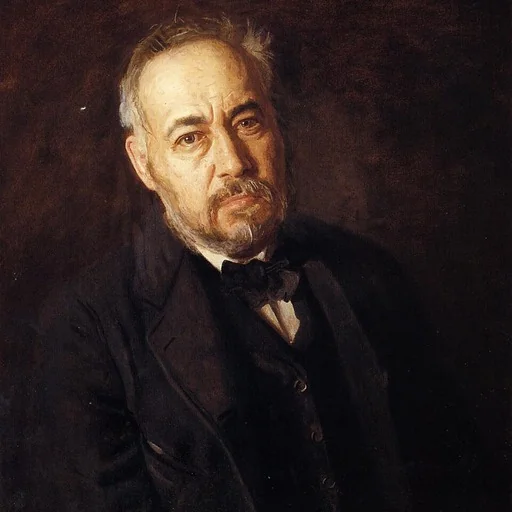
Artist
Thomas Cowperthwait Eakins (; July 25, 1844 – June 25, 1916) was an American realist painter, photographer, sculptor, and fine arts educator.

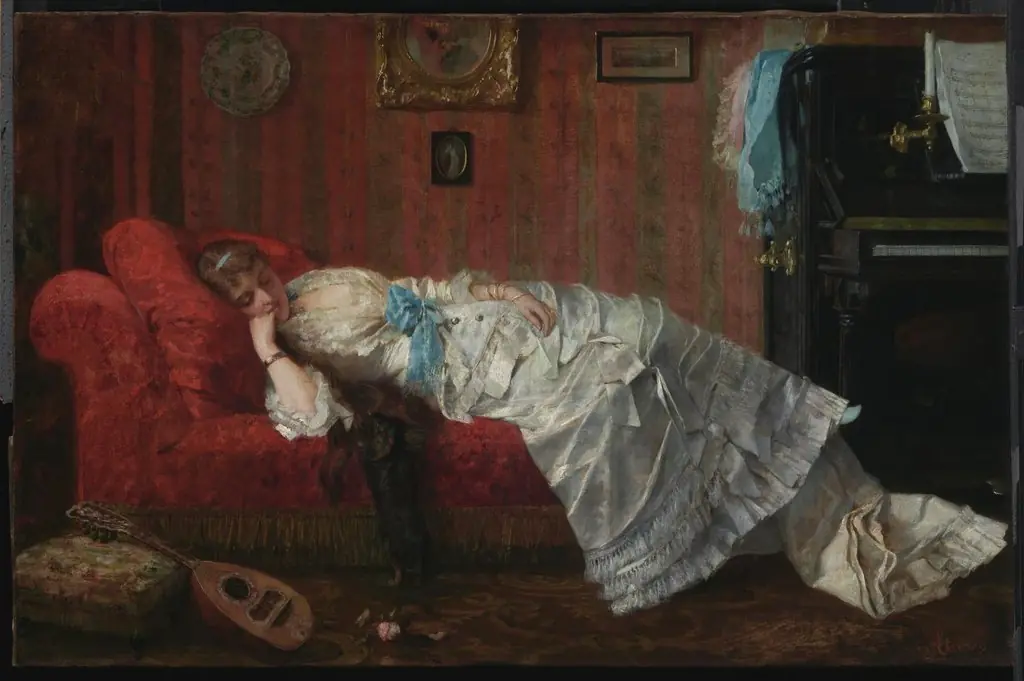
- Young Woman Resting in a Music Room
 Woman in a Black Dress
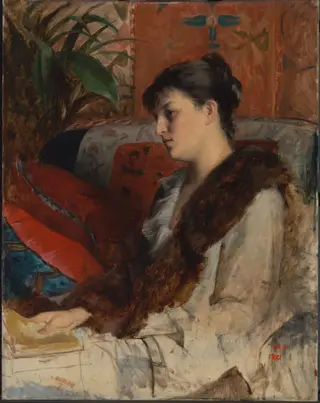 Portrait of Alexandrine Patchenko, the Painter’s Sister-in-Law
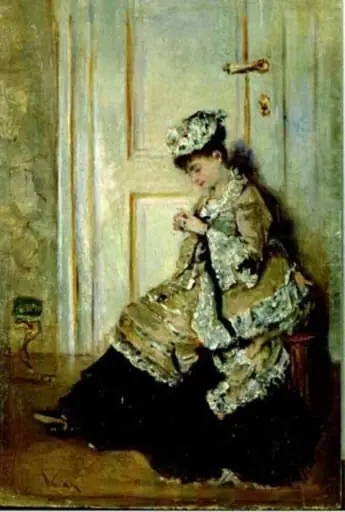 Femeie în interior
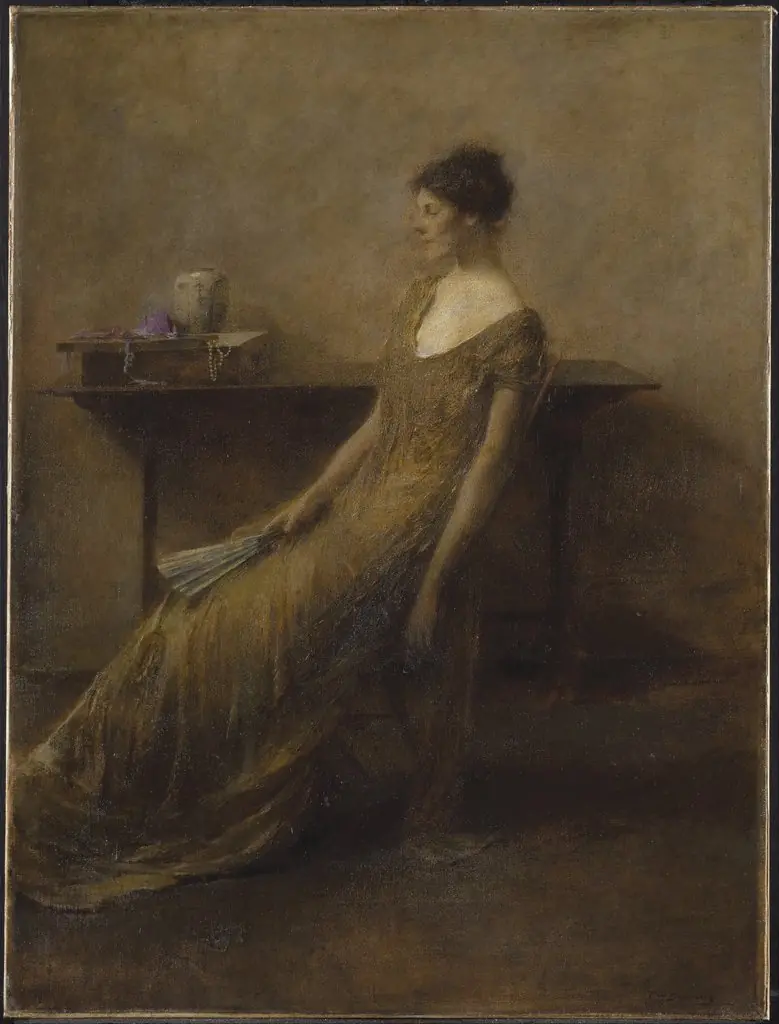 Lady in Gold
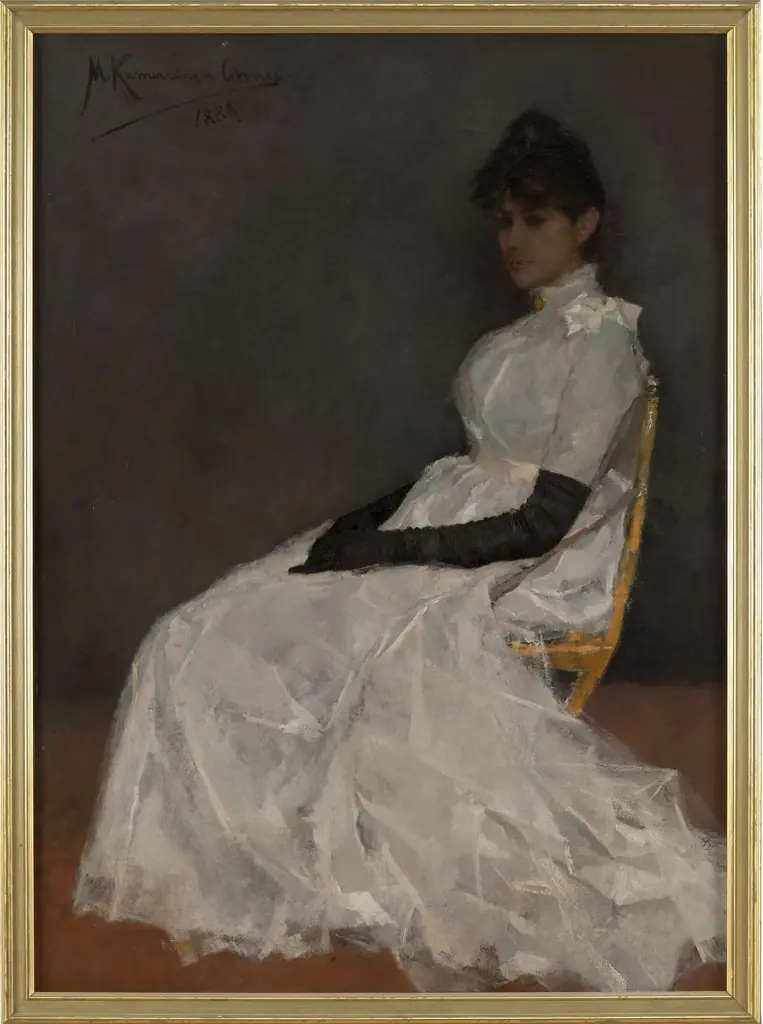 Portrait of Jenny Kamerlingh Onnes
 After a Walk
 Young Italian woman with the dog Puck
 Portrait of pianist and comtesse Louise de Mercy-Argenteau
 Reverie (Katharine Finn)
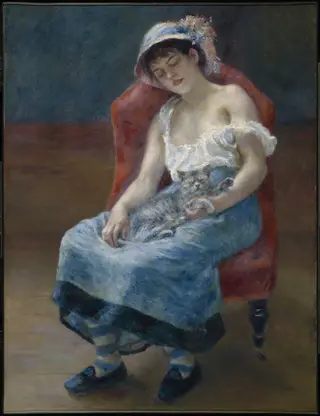 Sleeping Girl
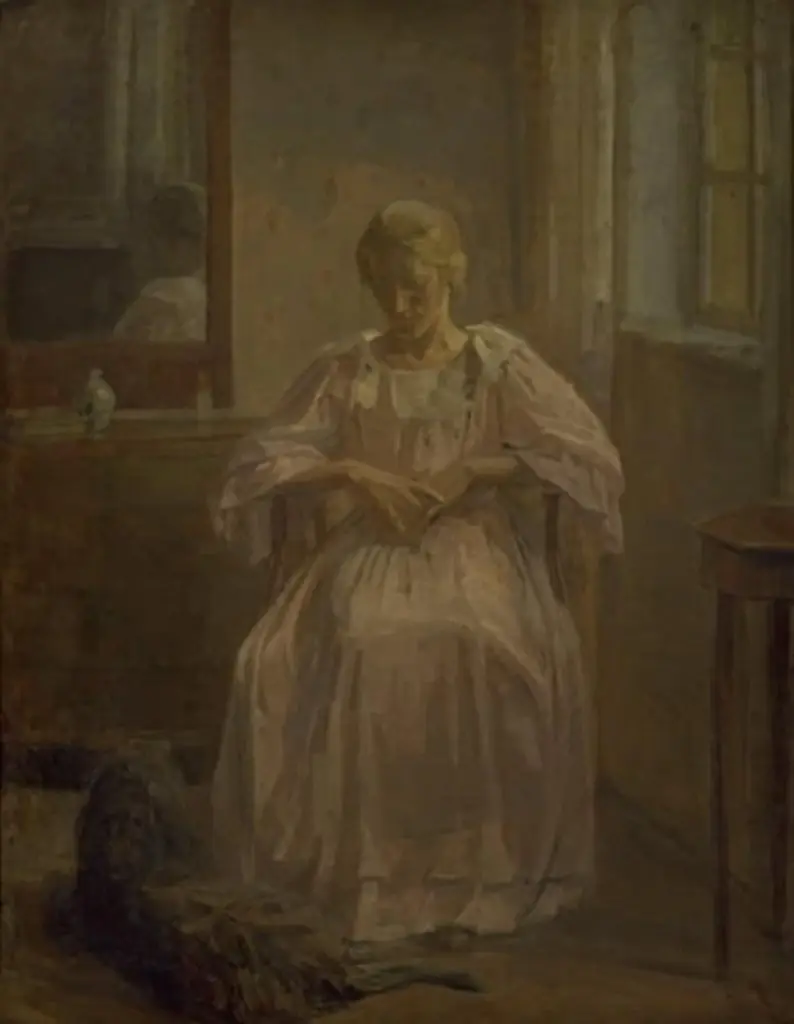 En ung pige, Sophie Lofthus, med en hund