Artwork
The Poor Being Fed at a Monastery
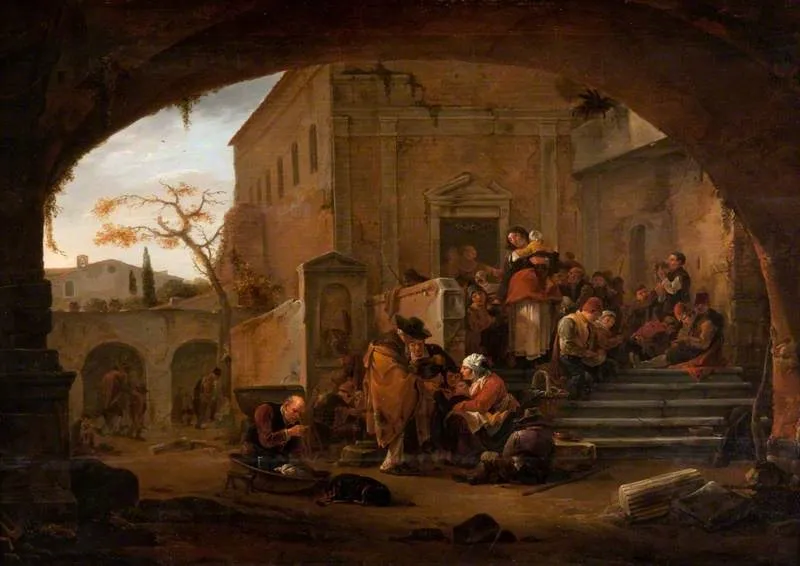
The Poor Being Fed at a Monastery is an oil painting by the Dutch Golden Age artist Thomas Wijck. It dates from 1656 and is held in the collection of the Kelvingrove Art Gallery and Museum.
About this work
Overview
This work exemplifies Wijck's specialization in interior and exterior scenes of daily life, often focusing on the intersection of the sacred and the mundane.
Painted in 1656, The Poor Being Fed at a Monastery by Thomas Wijck depicts a charitable distribution taking place before the entrance of a religious house. The composition centers on a large, arched doorway set within a stone facade, approached by a flight of steps that organizes the spatial depth. A diverse group of figures, including the elderly, children, and the infirm, congregates in the foreground and mid-ground, creating a dynamic yet orderly scene of social interaction.
Wijck renders the textures of rough clothing, wooden staffs, and stone masonry with meticulous attention, characteristic of his genre scenes. Monks or lay brothers emerge from the shadows of the portal to dispense bread and other provisions, highlighting the act of almsgiving. The artist employs a subdued palette dominated by earth tones, punctuated by the muted colors of the figures' garments, to evoke a somber, realistic atmosphere typical of Dutch Golden Age genre painting.
This work exemplifies Wijck's specialization in interior and exterior scenes of daily life, often focusing on the intersection of the sacred and the mundane. Executed during the height of his career, the painting reflects the period's interest in moral narratives and the depiction of social welfare within a Protestant context, where such scenes often carried didactic weight regarding charity and piety.
Subject & Meaning
The work illustrates the practice of monastic hospitality, emphasizing the exchange between the religious community and the needy. By focusing on the act of feeding the poor, the painting reflects contemporary concerns with charity and the moral responsibilities of religious institutions, inviting viewers to contemplate the social role of monasteries in the 17th‑century Netherlands.
Technique & Style
Wijck employs chiaroscuro to model forms, creating a pronounced contrast between illuminated figures and shadowed architecture. The handling of light gives depth to the steps and doorway, while the muted palette and soft rendering of clouds and foliage lend a tranquil atmosphere. The brushwork balances detail in the foreground objects with broader strokes in the background.
History & Provenance
Created circa 1656, the painting entered the collection of Glasgow’s Kelvingrove Art Gallery and Museum, where it remains on display. Its acquisition history reflects the museum’s focus on Dutch Golden Age works, though earlier ownership records are limited.
Artist & collection

- Near the barrel under the enclosure
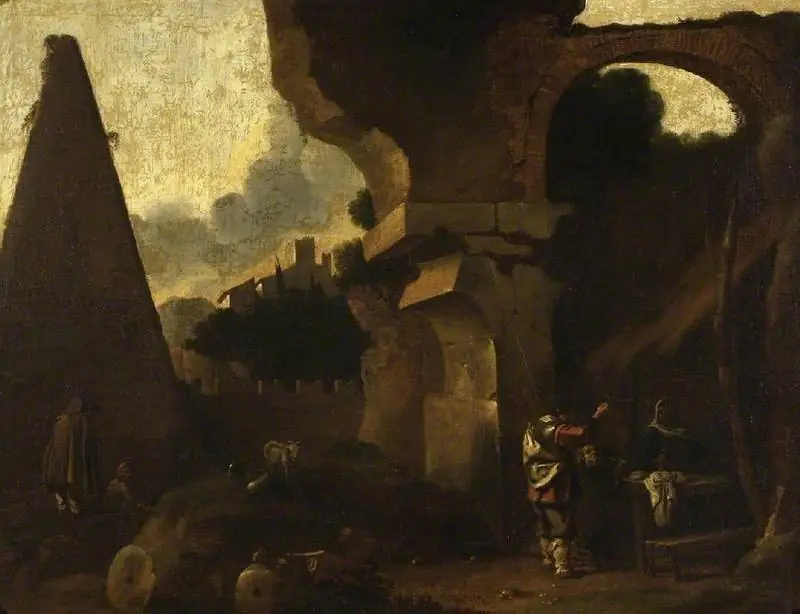 Classical ruins with figures
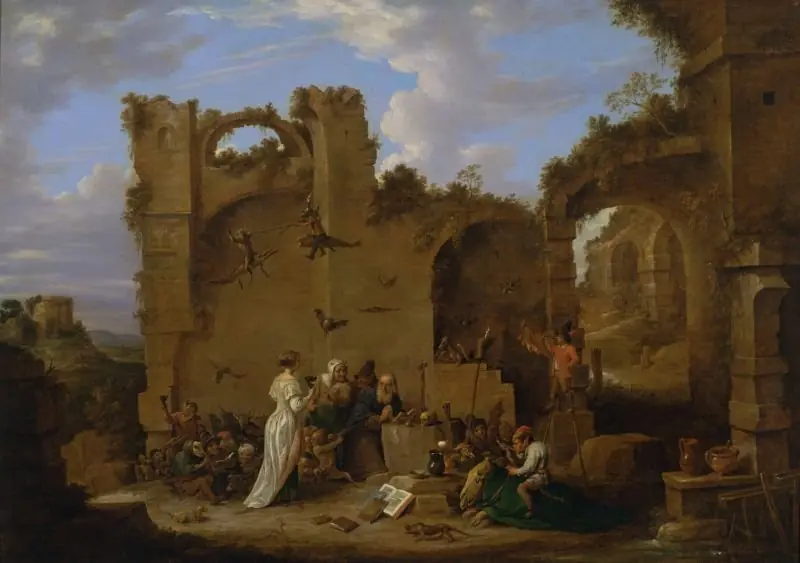 The Temptation of Saint Anthony (NMWA)
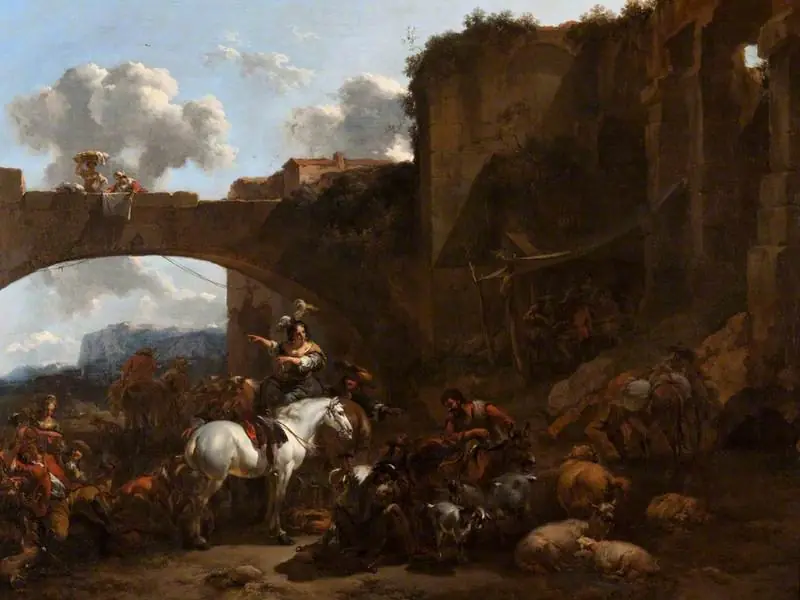 A Country Gathering by a Bridge
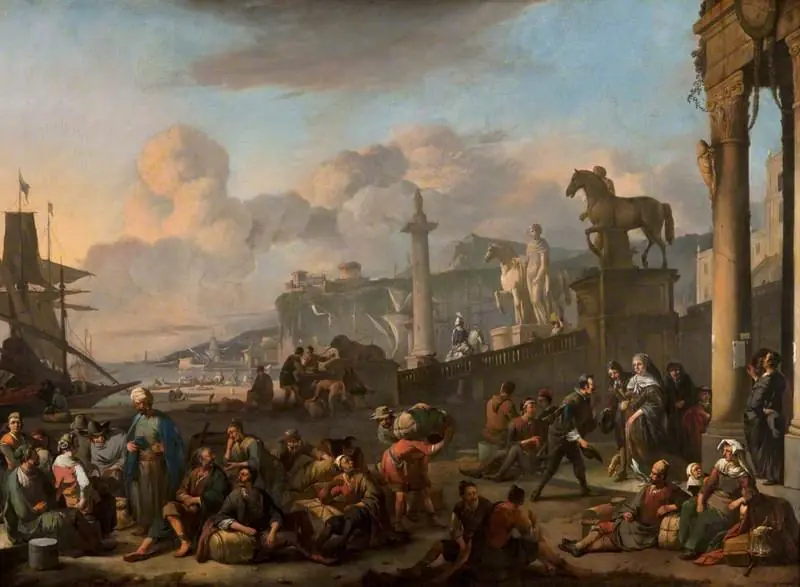 An Imaginary Mediterranean Seaport
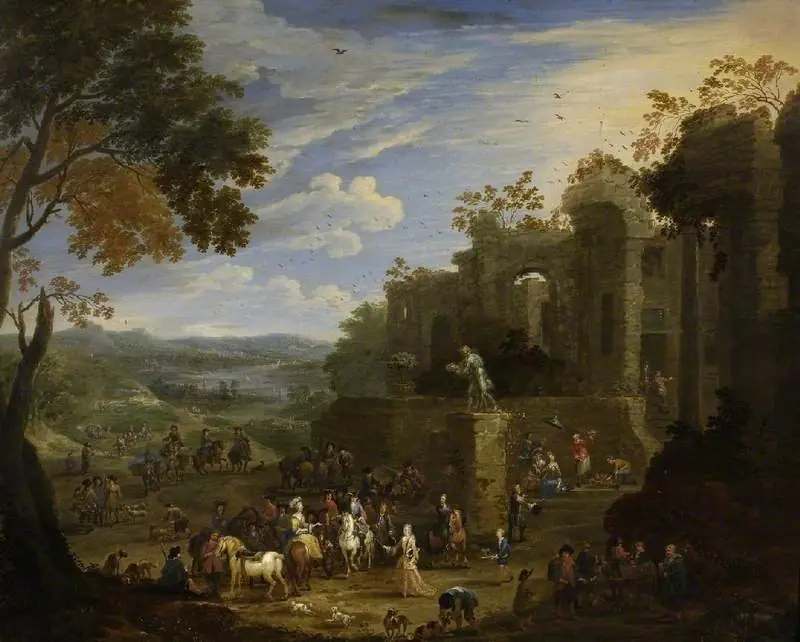 Landscape with a hunting party
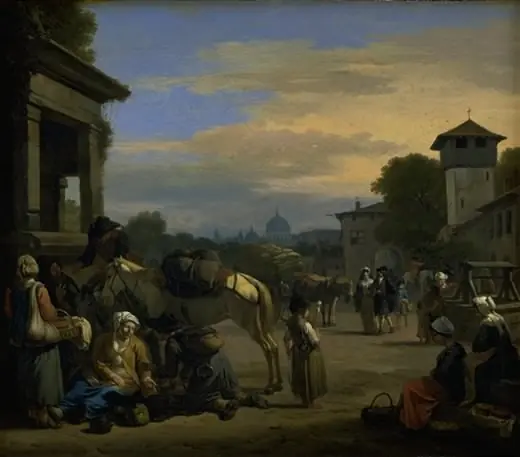 Street Scene in Rome
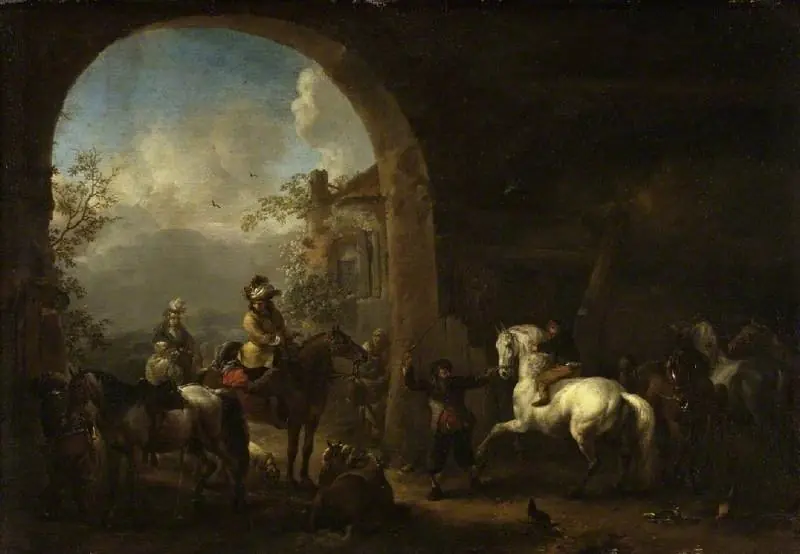 The stable
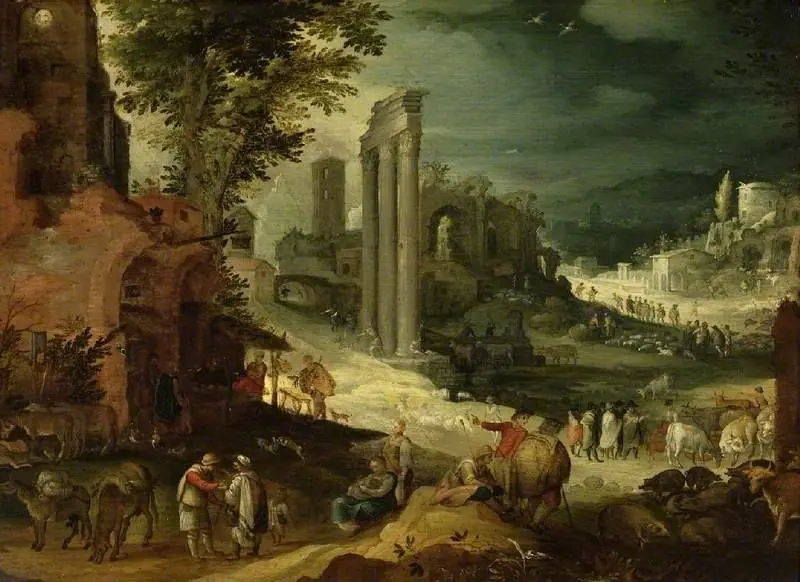 Landscape with Roman ruins
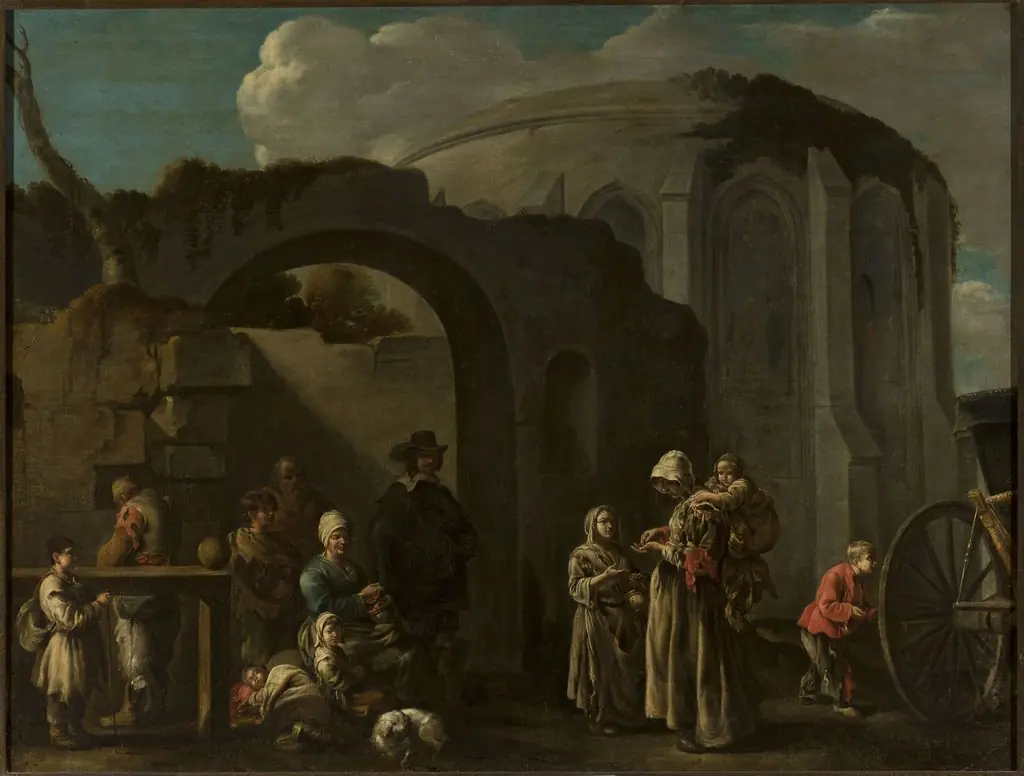 Family of beggars among ruins
 Rustic Scene
 Landscape with Herdsmen and Animals in front of the Baths of Diocletian, Rome