Artwork
Phoenixes and Paulownia
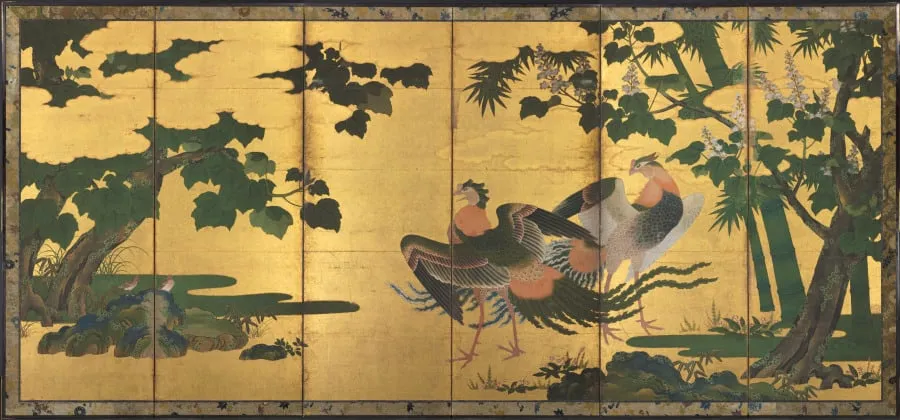
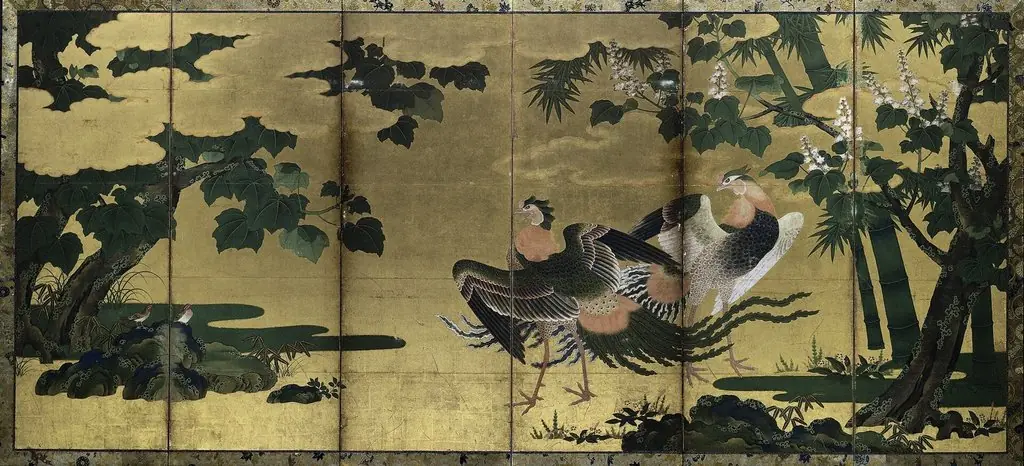
Phoenixes and Paulownia is an unspecified painting by the Renaissance artist Tosa Mitsuyoshi. It dates from 1504 and is held in the collection of the Cleveland Museum of Art. The work depicts two large, vividly colored phoenixes perched amid stylized paulownia trees against a shimmering gold‑foil background.
- Accession no.
- 1986.2.1
- Credit line
- Leonard C. Hanna Jr. Fund
About this work
Overview
The work depicts two large, vividly colored phoenixes perched amid stylized paulownia trees against a shimmering gold‑foil background. The composition replaces realistic scenery with abstracted green lozenges, mineral‑toned rocks and flat golden planes, creating a deliberately artificial landscape that emphasizes the birds’ mythic presence.
Subject & Meaning
In this Japanese painting the phoenix functions less as a symbol of eternal life and more as an emblem of the era’s renewed self‑assurance. The birds gaze across a fantastical setting that includes peacocks, bamboo and flowering plants, suggesting a harmonious yet otherworldly realm that celebrates the flourishing of artistic expression during the Momoyama period.
Technique & Style
The artist employs extensive gold foil to cover the background, a departure from the restrained ink palettes of earlier Muromachi screens. Mineral greens, blue‑green rocks with lichen, and flattened forms of vegetation are rendered in opaque pigments, producing a highly decorative surface that reflects the period’s taste for opulent, visually striking compositions.
Context
Created in the late 16th‑early 17th century, the painting exemplifies the Momoyama era’s shift toward grand, expressive visual statements across media, from architecture to ceramics. This period, often likened to the cultural flowering of Heian’s twelfth century, saw patrons collaborate closely with artists and craftsmen to develop a bold aesthetic that celebrated newfound confidence in Japanese culture.
Artist & collection

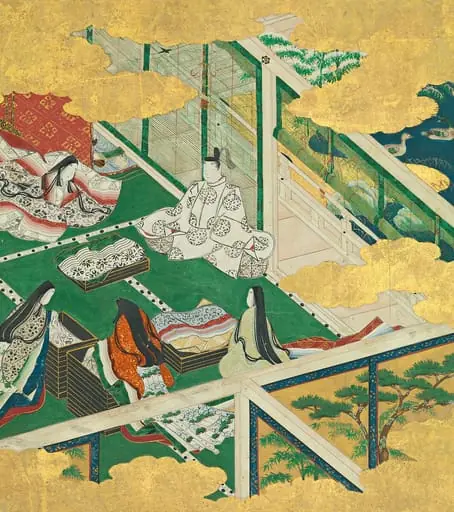 源氏物語画帖「玉鬘」|“A Lovely Garland” (Tamakazura), from The Tale of Genji
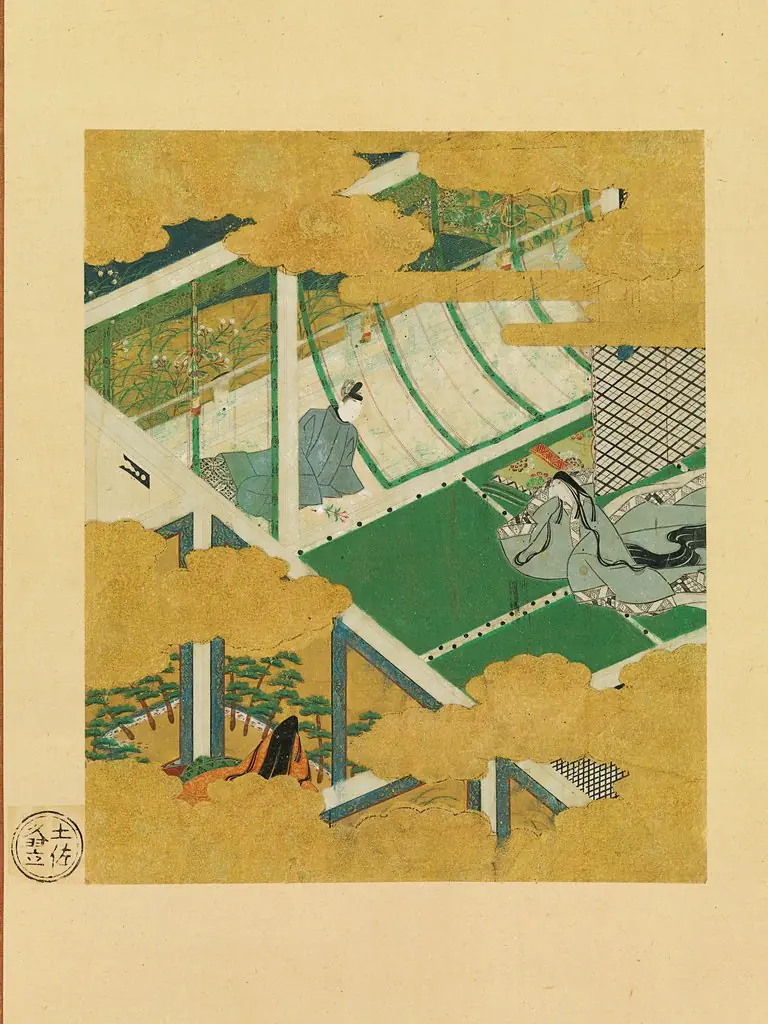 “Mistflowers” (Fujibakama)
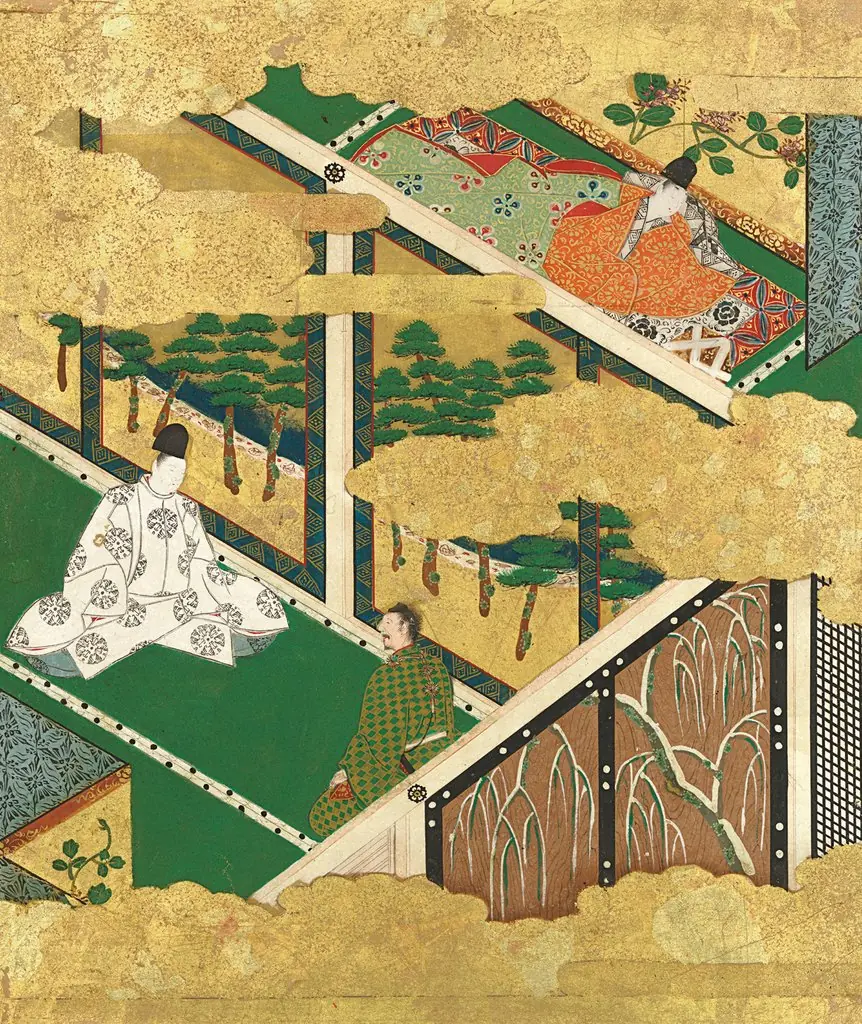 “The Oak Tree” (Kashiwagi)
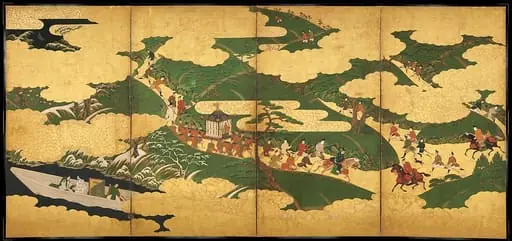 源氏物語図屏風「御幸」・「浮船」・「関谷」|“An Imperial Excursion” (Miyuki), “A Boat Cast Adrift” (Ukifune), and “The Barrier Gate” (Sekiya)
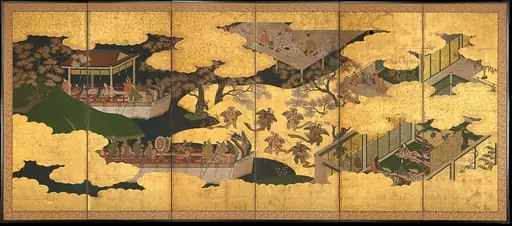 源氏物語図屏風 (胡蝶)|“Butterflies”
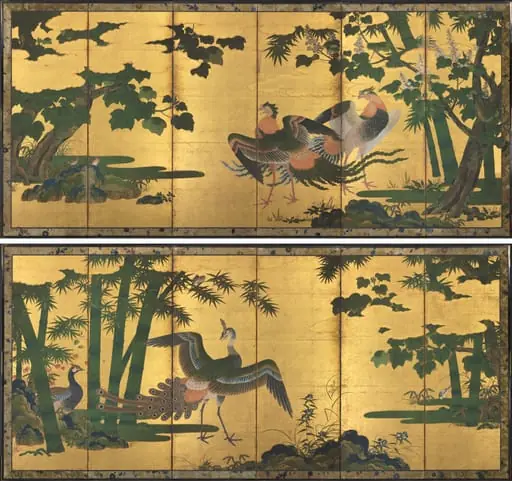 Peafowl and Phoenixes
- Peacocks and Bamboo