Artwork
源氏物語画帖「玉鬘」|“A Lovely Garland” (Tamakazura), from The Tale of Genji
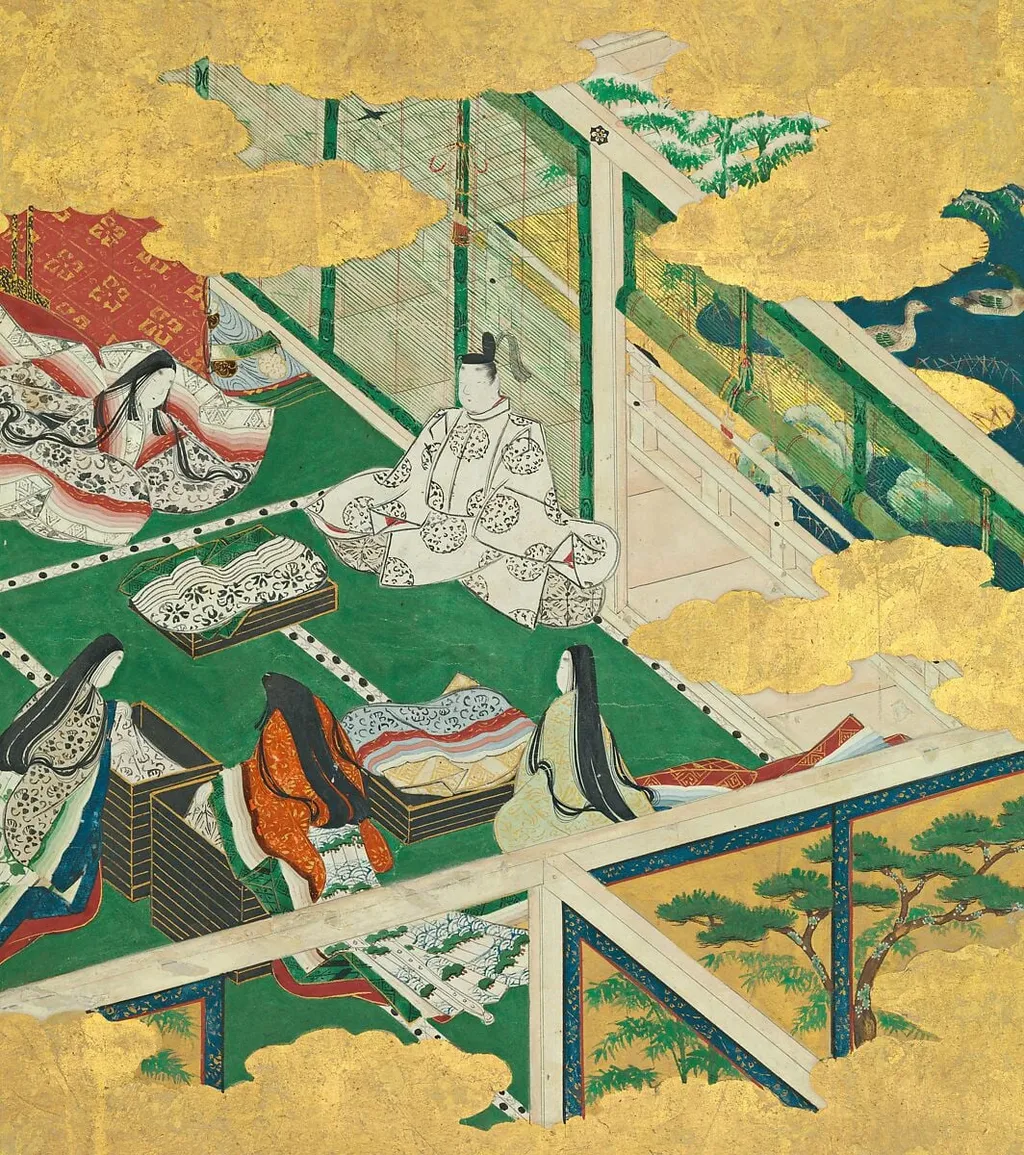
源氏物語画帖「玉鬘」|“A Lovely Garland” (Tamakazura), from The Tale of Genji is an ink painting by the Baroque artist Tosa Mitsuyoshi. It dates from 1607 and is held in the collection of the Metropolitan Museum of Art.
About this work
Technique & Style
The surviving condition reflects the durability of the paper and the stability of the metallic and color applications used in its creation.
Created in 1607 by Tosa Mitsuyoshi, this work consists of album leaves that have been remounted as a pair of hanging scrolls. The artist employed ink, gold, silver, and mineral colors applied directly onto a paper support. This combination of precious metals and vibrant pigments on paper is characteristic of the refined aesthetic associated with the Tosa school during the early Edo period.
The physical handling of the medium involves mounting individual painted leaves into a scroll format, a common practice for preserving and displaying such narrative illustrations. The surviving condition reflects the durability of the paper and the stability of the metallic and color applications used in its creation.
History & Provenance
The artwork known as "A Lovely Garland" (Tamakazura), an album leaf from The Tale of Genji, was created by the Japanese artist Tosa Mitsuyoshi in 1607. Executed in Japan, the piece utilizes ink, gold, silver, and color on paper, a medium typical of the period's screen and scroll painting traditions. While the specific patron or commissioning details for this 1607 work are not recorded in the available documentation, the work is firmly dated to the early 17th century.
The piece is currently held within the collection of the Metropolitan Museum of Art, where it serves as a significant example of Tosa school painting from the Edo period. The work depicts scenes involving figures in robes, consistent with the narrative illustrations of the Genji tale.
Legacy
The painting, produced in 1607 by Tosa Mitsuyoshi, is part of the Metropolitan Museum of Art’s collection, underscoring its enduring scholarly relevance as a Heian narrative artwork. Executed as a pair of hanging scrolls on album leaves, it combines ink, gold, silver and color on paper, illustrating the Genji story through depictions of a man in robe and a woman. Its inclusion in a major museum has sustained interest in the visual culture of The Tale of Genji.
Overview
Tosa Mitsuyoshi created this painting, titled “A Lovely Garland” (Tamakazura), in 1607 as part of a larger series illustrating The Tale of Genji. Rendered with ink, gold, silver, and color on paper, this work depicts a scene featuring a woman in an elaborate, layered robe alongside a man. Originally an album leaf, it has since been mounted as a hanging scroll, showcasing a narrative moment from the celebrated Japanese literary classic.
Subject & Meaning
This painting illustrates an episode from The Tale of Genji, a foundational Japanese narrative composed over a millennium ago. The scene features two figures: a woman adorned in a multi-layered robe and a man dressed in dark attire. The shimmering gold leaf background not only evokes a luminous atmosphere, perhaps suggesting sunlight on water, but also visually conveys the characters' high social standing and affluence within the story's aristocratic world.
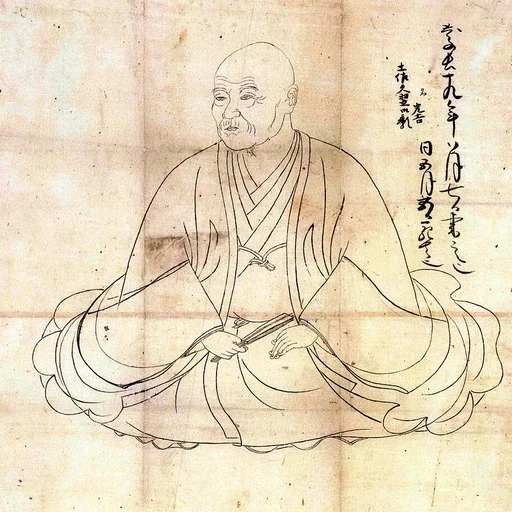
Artist & collection

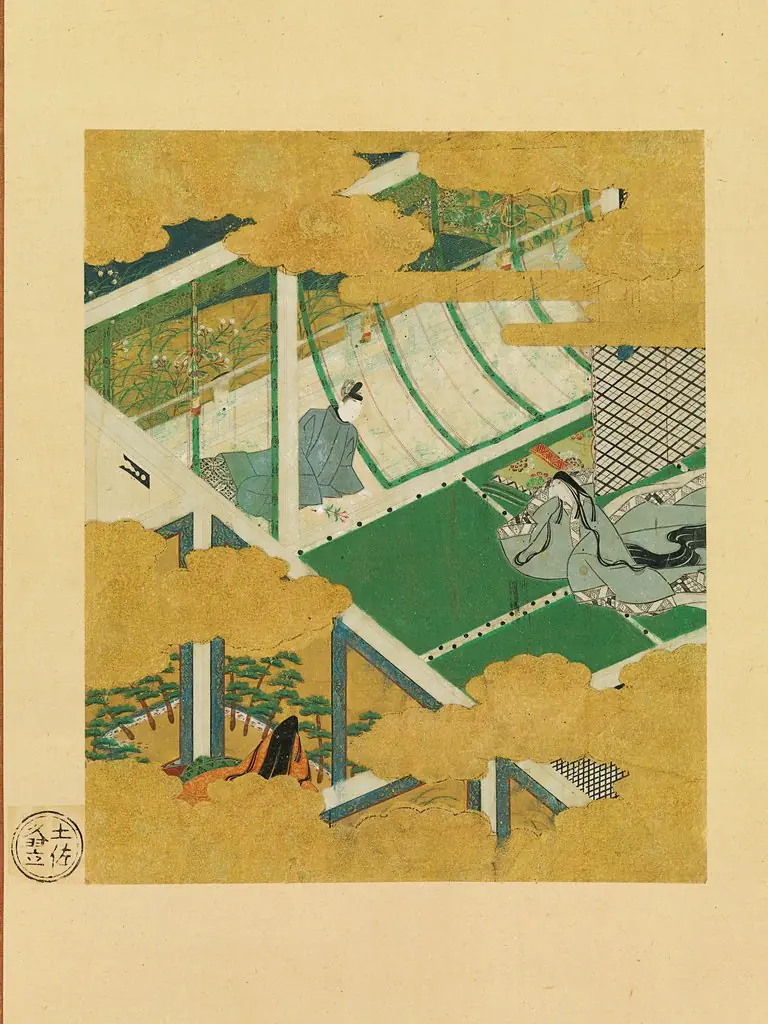
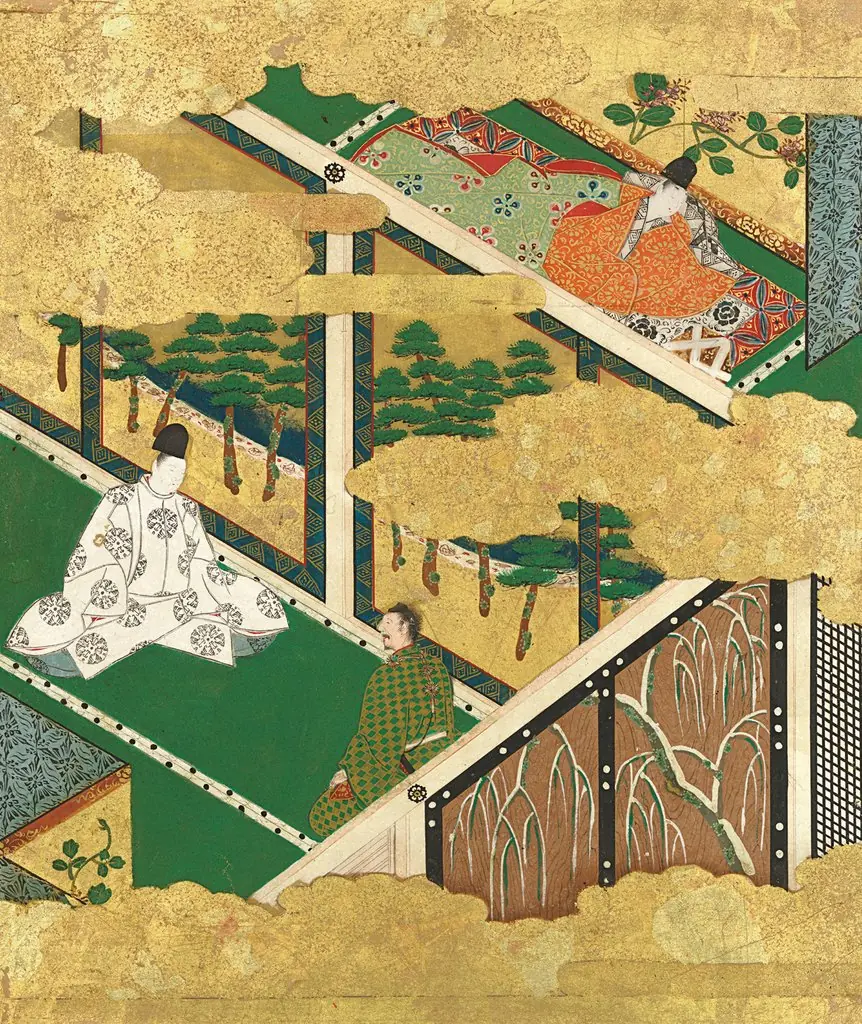
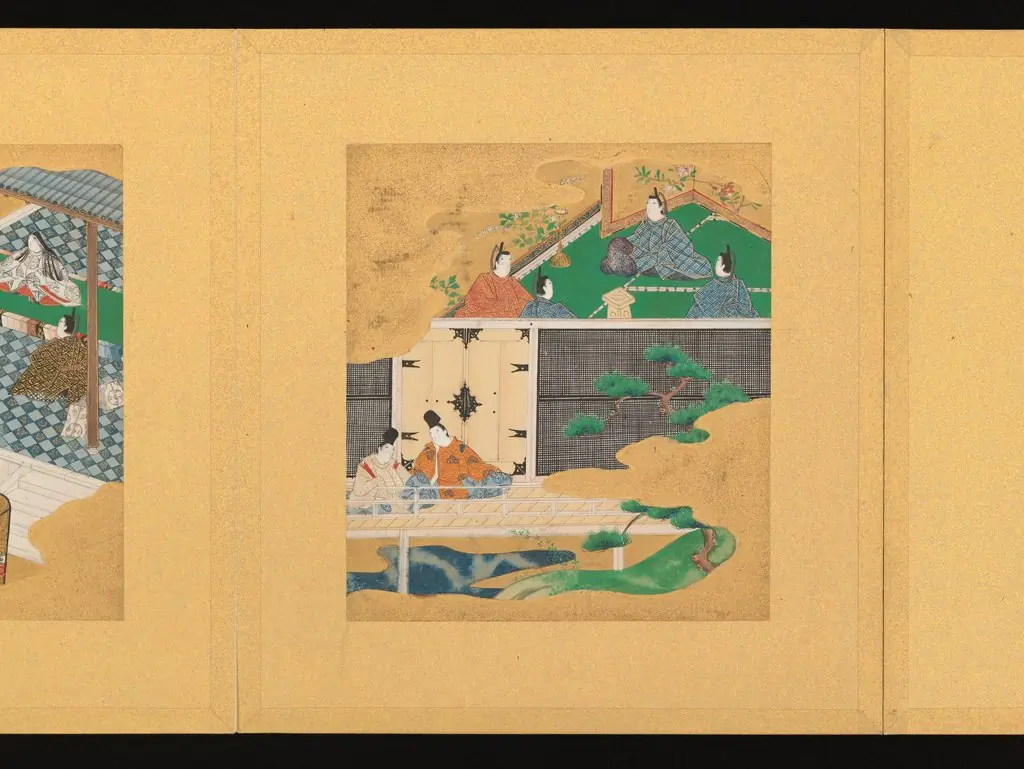
- Scenes from The Tale of Genji (Genji monogatari)
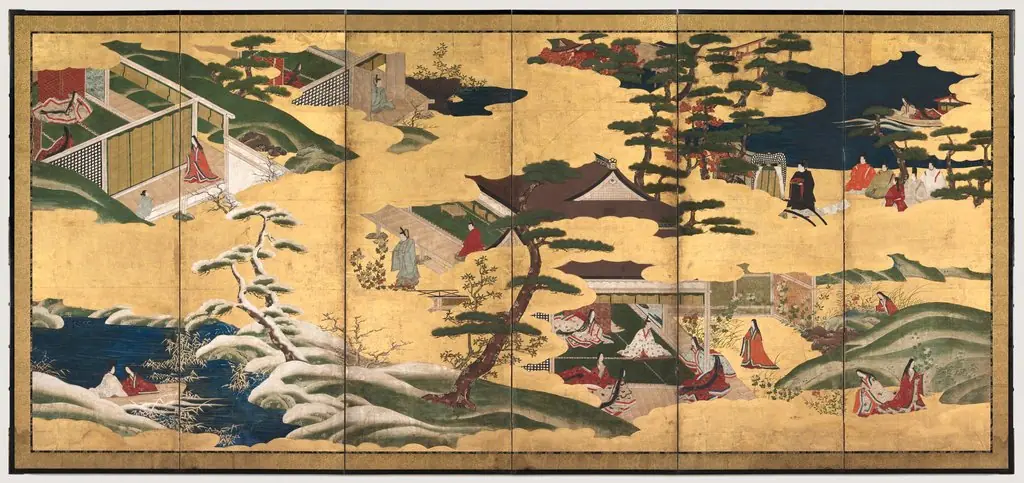 Scenes from the Tale of Genji
 Scenes from the Tale of Genji
 Scene from "The Tale of Genji": from the chapter "The Maiden"
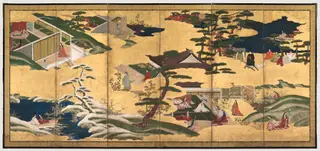 Scenes from the Tale of Genji
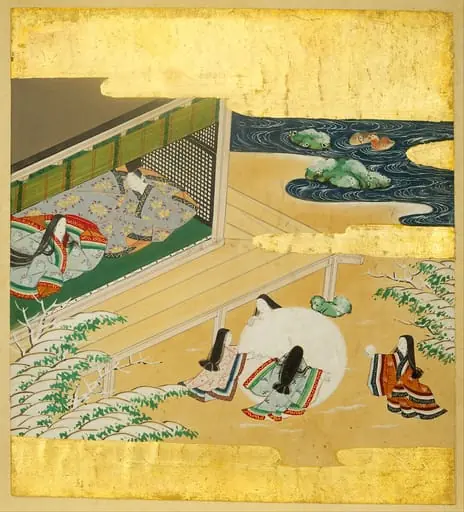 源氏物語画帖|The Tale of Genji (Genji Monogatari)
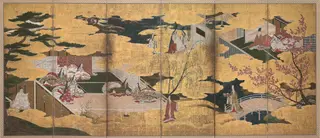 The Tale of Genji
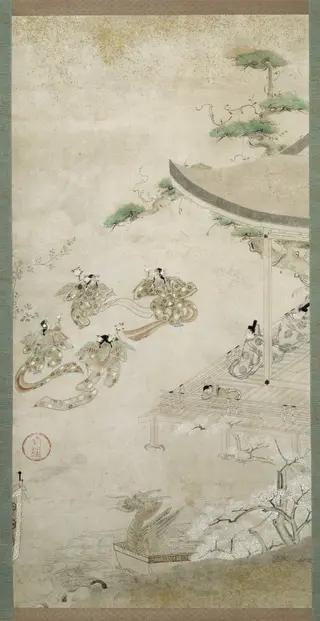 Scene from the Tale of Genji: from the chapter "Butterflies"
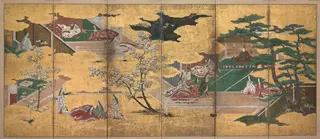 The Tale of Genji
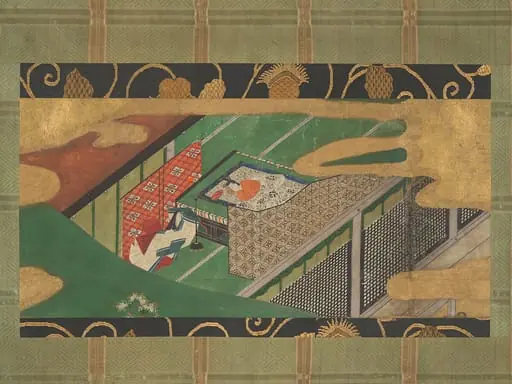 伝俵屋宗達筆 源氏物語図「宿木」 |“Trees Encoiled in Vines of Ivy” (Yadorigi)