Artwork
Peafowl and Phoenixes
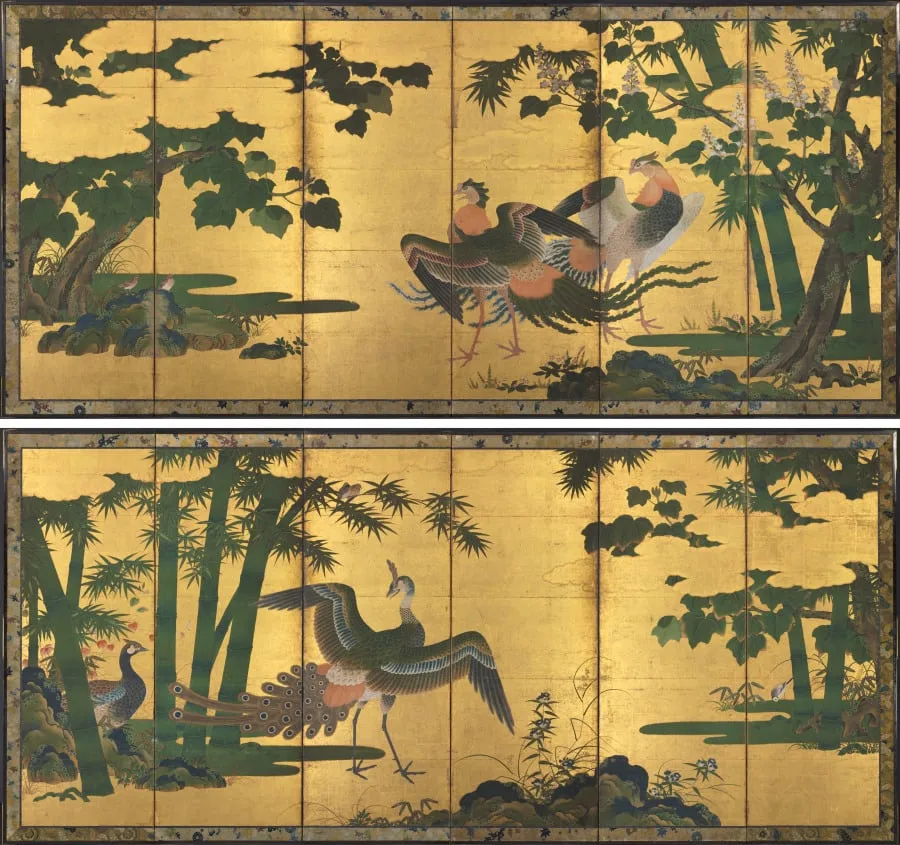
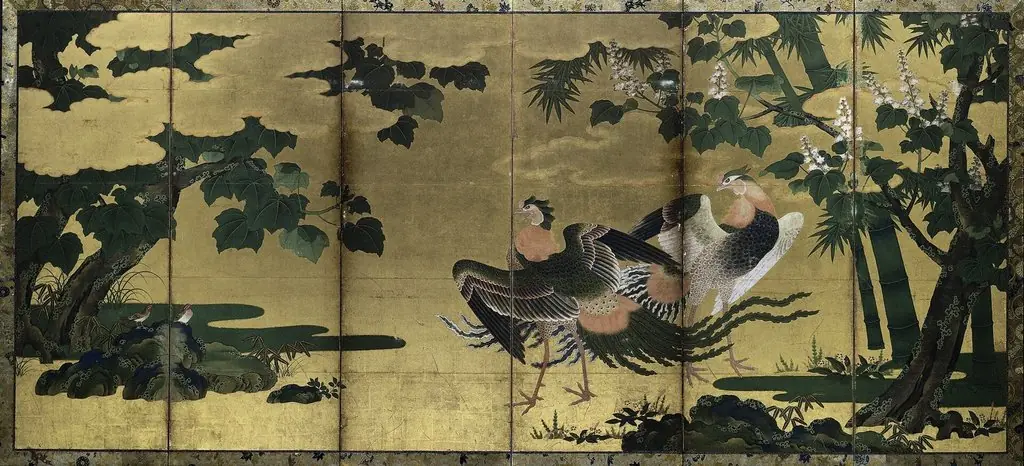
Peafowl and Phoenixes is an unspecified painting by the Renaissance artist Tosa Mitsuyoshi. It dates from 1504 and is held in the collection of the Cleveland Museum of Art.
- Accession no.
- 1986.2
- Credit line
- Leonard C. Hanna Jr. Fund
About this work
You see two birds on a gold-leaf background: a peacock with shimmering blue-green feathers and a mythical phoenix with long, flowing tail plumes.
You see two birds on a gold-leaf background: a peacock with shimmering blue-green feathers and a mythical phoenix with long, flowing tail plumes.
These birds weren’t just pretty, they were symbols. The phoenix stood for good rulers, while the peacock linked to a Buddhist paradise. Artists in the 1500s and 1600s often painted them for ceremonies tied to emperors.
To see more art like this, look up japan, momoyama period (1573–1615).
Overview
The painting presents two birds rendered against a gold‑leaf ground: a peacock displaying iridescent blue‑green plumage and a phoenix with an elongated, flowing tail. Both figures are stylized in a manner typical of Japanese court art of the late 16th to early 17th centuries, emphasizing symbolic rather than naturalistic representation.
Subject & Meaning
In Japanese visual culture the phoenix is associated with virtuous rulership and is imagined to dwell among paulownia trees, while the peacock evokes the lake of Amida’s Pure Land, a Buddhist vision of paradise. Their juxtaposition in the work conveys a dual allegory of political legitimacy and spiritual aspiration.
Technique & Style
The composition relies on a luminous gold leaf substrate that heightens the decorative quality of the birds’ feathers. Brushwork delineates the plumage with fine, linear strokes, and the use of vibrant mineral pigments creates a contrast between the peacock’s cool tones and the phoenix’s warmer hues, reflecting Momoyama aesthetics of opulence and bold coloration.
History & Provenance
Depictions of peacocks and phoenixes became fashionable on textiles and paintings during the 1500s and 1600s, especially in works commissioned for imperial ceremonies. The piece likely originated in a workshop serving the court, though its exact ownership trail remains undocumented.
Context
The image belongs to the Momoyama period (1573–1615), a time when Japanese elites employed elaborate visual motifs to affirm authority and religious devotion. Birds such as the phoenix and peacock functioned as emblematic devices in state rituals, reinforcing the ruler’s moral standing and the promise of a Buddhist afterlife.
Artist & collection
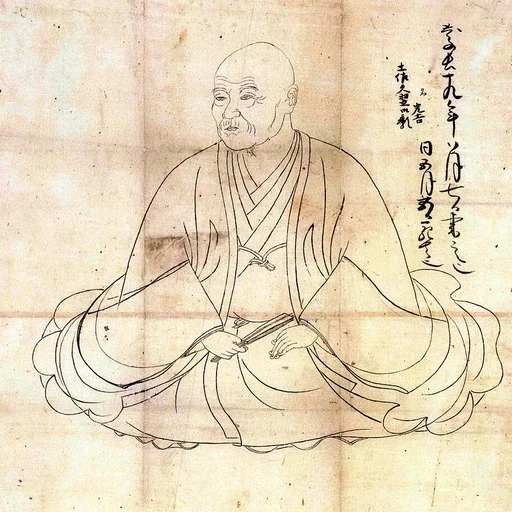

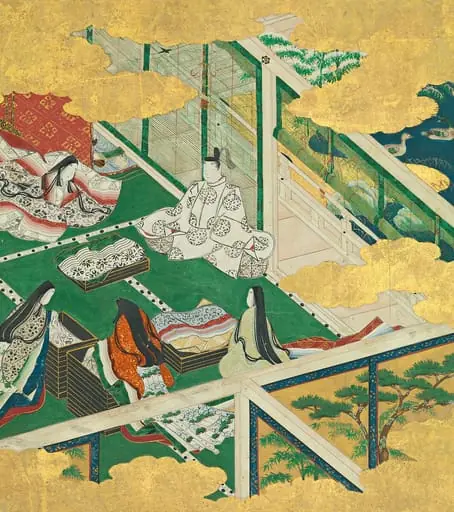 源氏物語画帖「玉鬘」|“A Lovely Garland” (Tamakazura), from The Tale of Genji
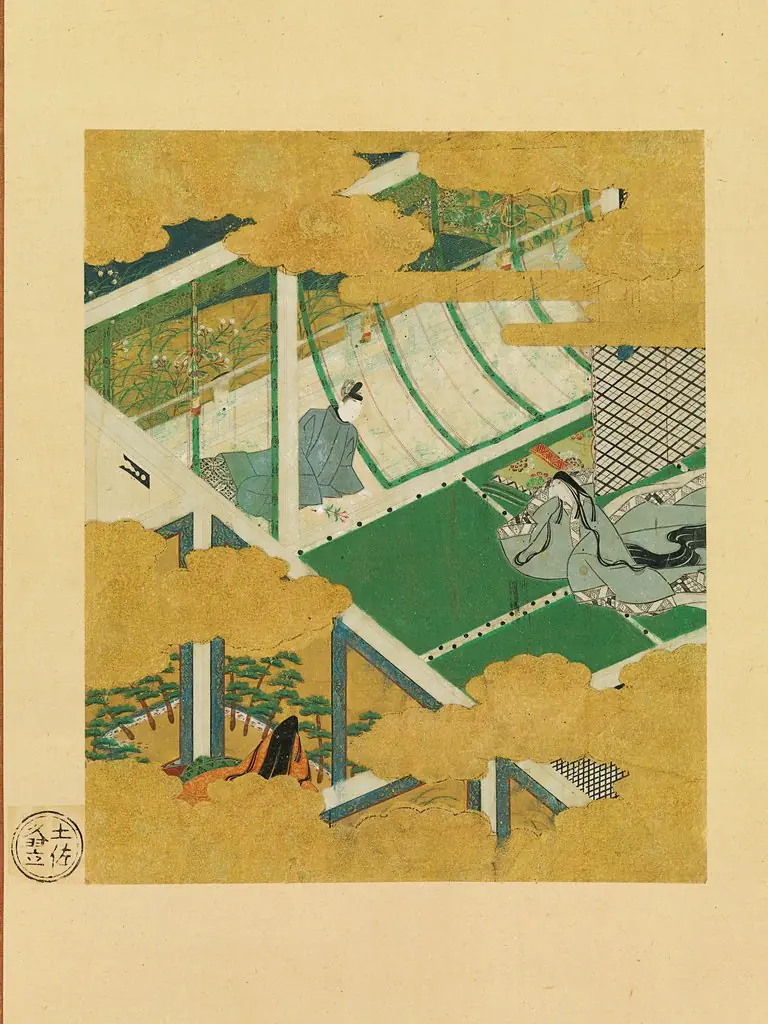 “Mistflowers” (Fujibakama)
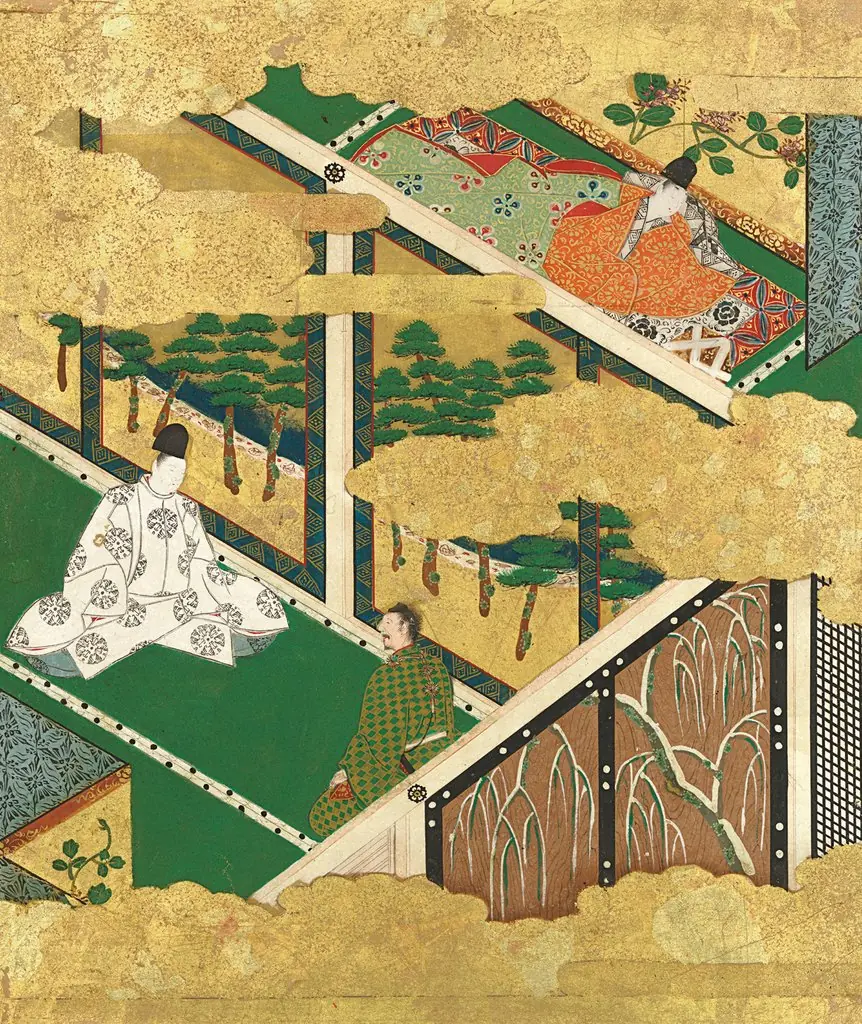 “The Oak Tree” (Kashiwagi)
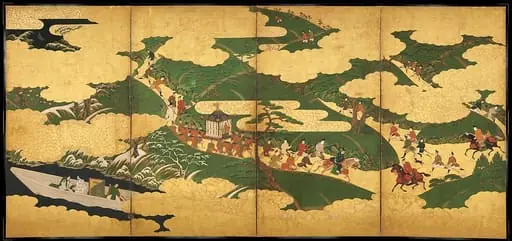 源氏物語図屏風「御幸」・「浮船」・「関谷」|“An Imperial Excursion” (Miyuki), “A Boat Cast Adrift” (Ukifune), and “The Barrier Gate” (Sekiya)
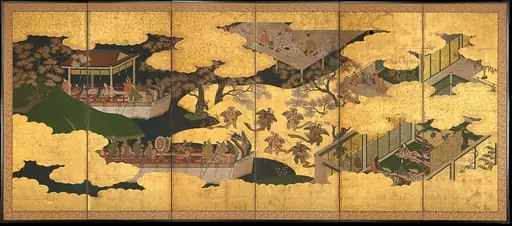 源氏物語図屏風 (胡蝶)|“Butterflies”
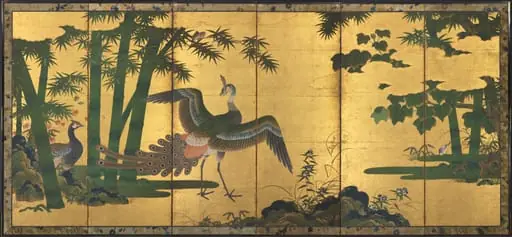 Peacocks and Bamboo
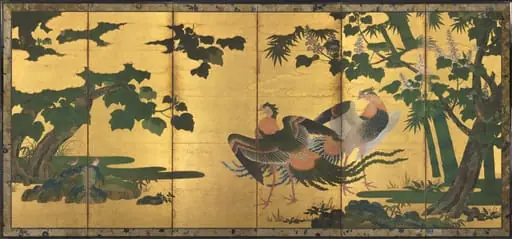 Phoenixes and Paulownia