Artwork
Scenes from The Tale of Genji (Genji monogatari)
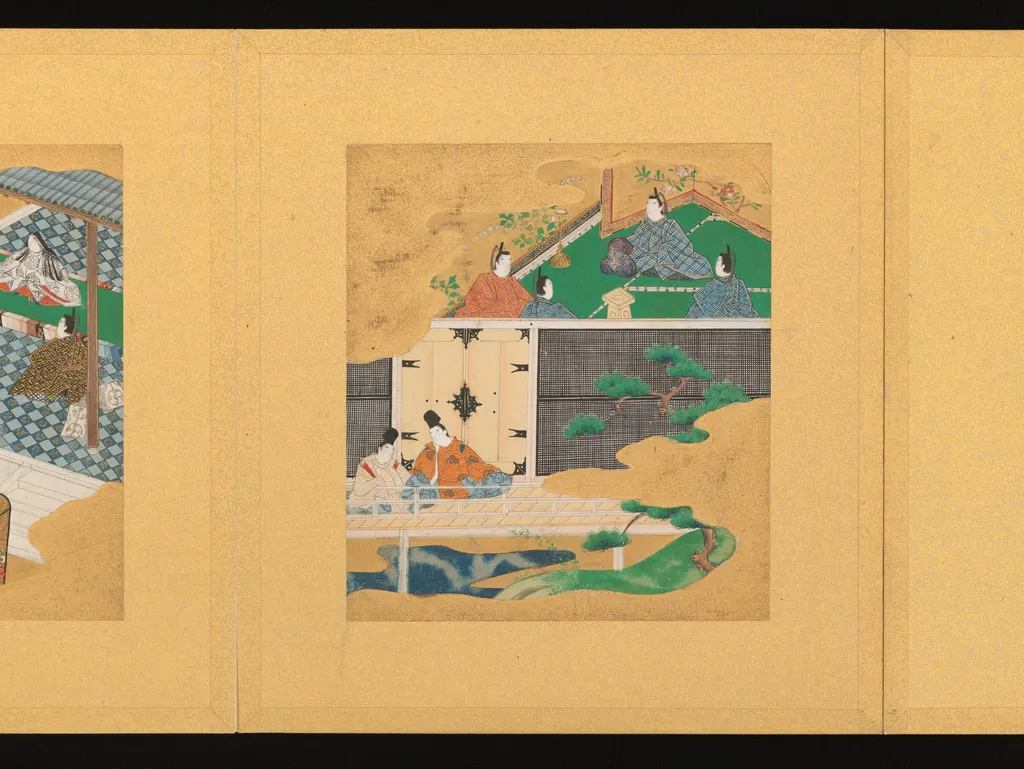
Scenes from The Tale of Genji (Genji monogatari) is an unspecified painting. It dates from 1607 and is held in the collection of the Metropolitan Museum of Art. This painting, titled Scenes from The Tale of Genji, was created by the Tosa School in 1607.
About this work
History & Provenance
The work is classified as a painting and entered the collection of the Metropolitan Museum of Art, where it is currently held.
Scenes from The Tale of Genji (Genji monogatari) was produced in 1607 by the Tosa School in Japan. The work is classified as a painting and entered the collection of the Metropolitan Museum of Art, where it is currently held.
Scenes from The Tale of Genji (Genji monogatari), a 1607 painting by the Tosa School, is held in the collection of the Metropolitan Museum of Art, where it is located and housed. The work was produced in Japan and entered the museum's holdings, where it remains accessible to the public.
No specific exhibition history is documented in the available sources.
Overview
This painting, titled Scenes from The Tale of Genji, was created by the Tosa School in 1607. It illustrates episodes from the classic Japanese literary work, The Tale of Genji. The artwork is currently part of the collection at The Metropolitan Museum of Art, offering a visual interpretation of the celebrated narrative through its distinct artistic style.
Subject & Meaning
The composition presents two distinct yet connected narrative moments. On the left, a woman, elegantly dressed in a blue-and-white patterned robe, is seated on a balcony, holding a fan, while attendants serve tea below. The right panel depicts a man in vibrant orange and red attire, positioned outdoors on a grassy incline, accompanied by another figure. These vignettes offer glimpses into the aristocratic world described in Murasaki Shikibu's epic.
Technique & Style
The painting employs a vivid palette, with striking reds, blues, and greens prominently featured against a more subdued, neutral background. This color contrast draws attention to the figures and their surroundings. Despite the dynamic use of color, the overall impression is one of serene activity, characterized by meticulous attention to small elements such as the tea implements and the garden's pathways, enriching the visual narrative.
Artist & collection

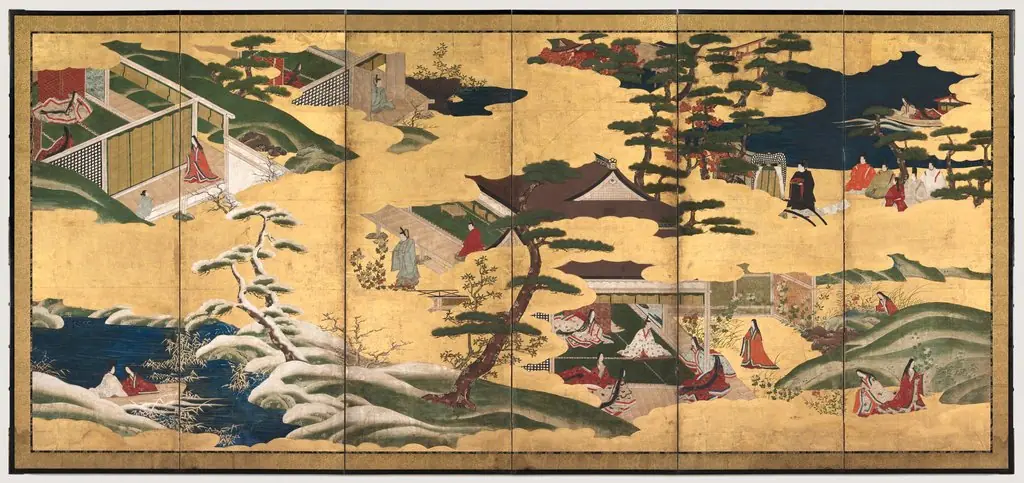
- Scenes from the Tale of Genji
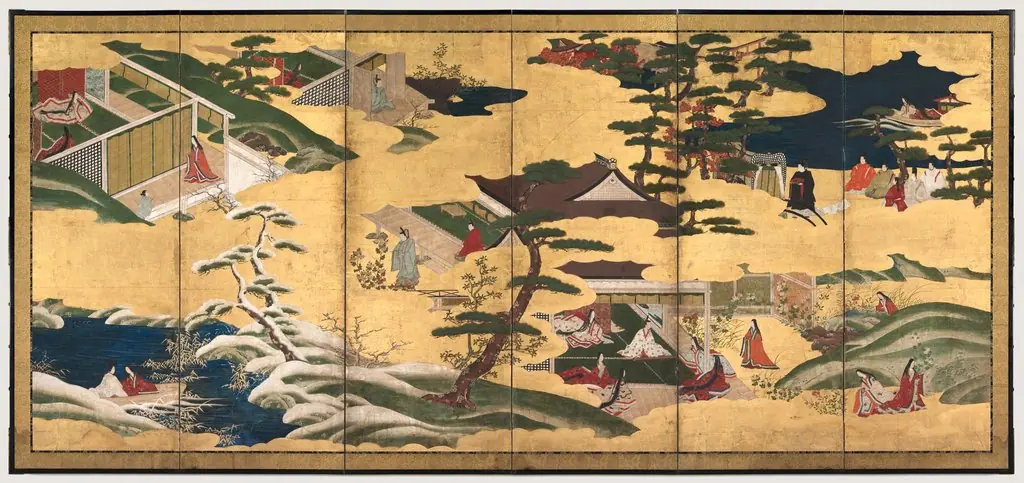 Scenes from the Tale of Genji
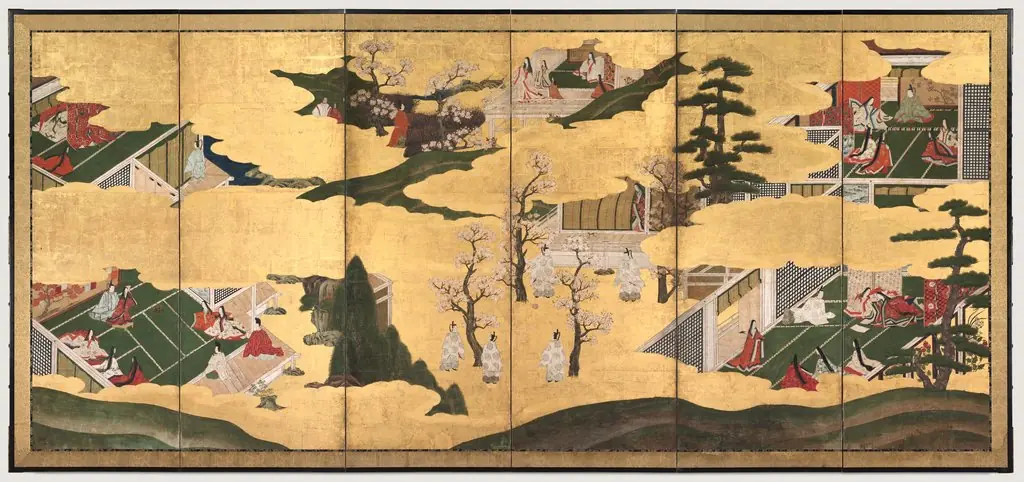 Scenes from the Tale of Genji
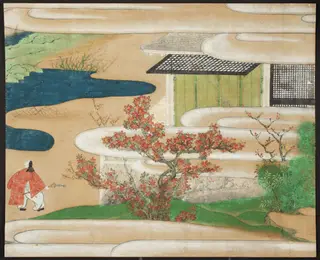 Genji Monogatari
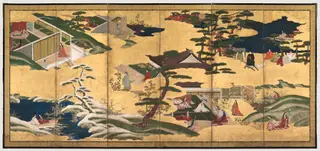 Scenes from the Tale of Genji
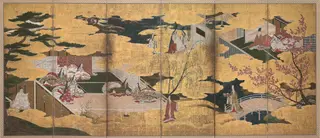 The Tale of Genji
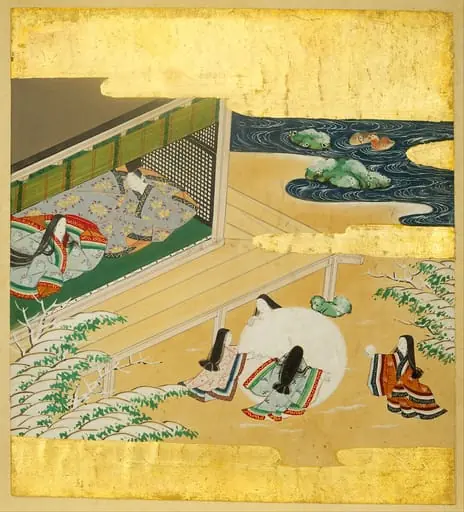 源氏物語画帖|The Tale of Genji (Genji Monogatari)
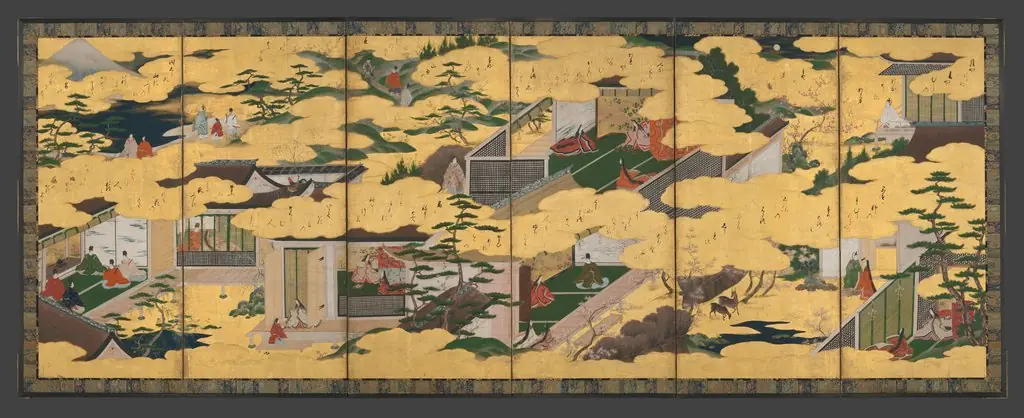 Scenes from the Tales of Ise
 Scenes from the Tale of Genji
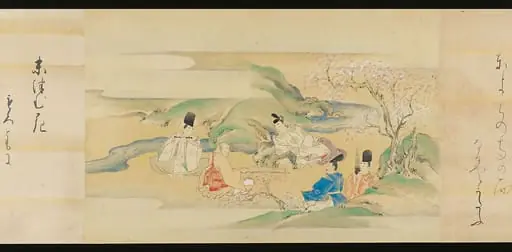 伝海北友雪筆 『源氏物語』 絵巻|The Tale of Genji
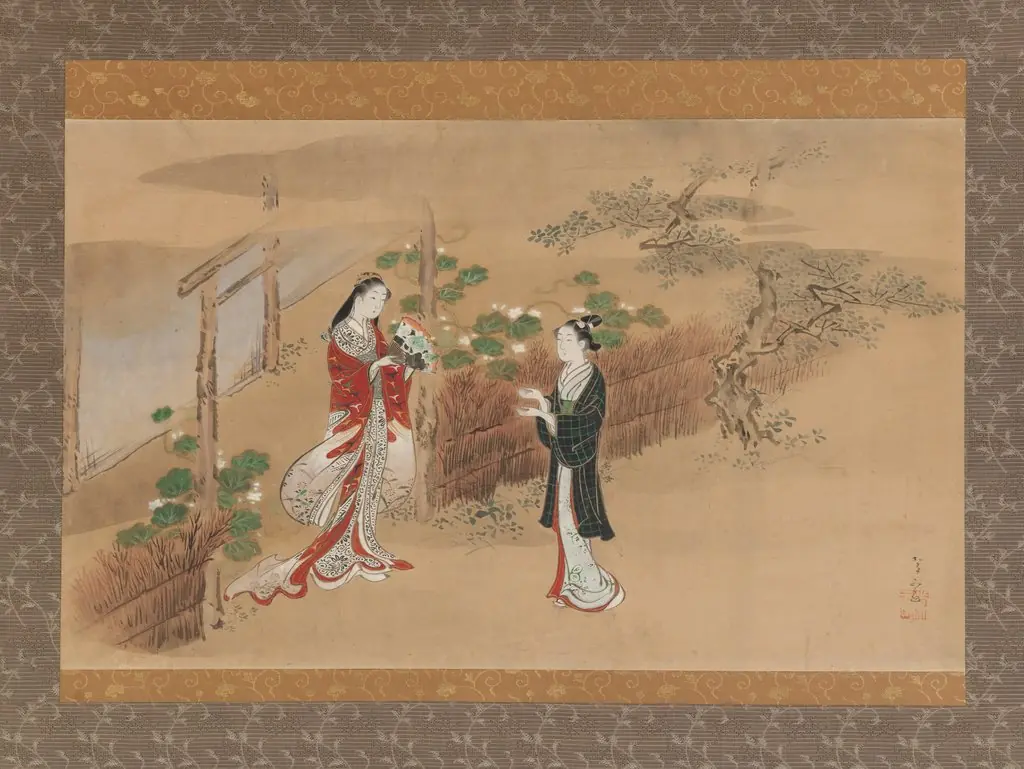 "Evening Faces" (Yūgao) chapter from The Tale of Genji (Genji monogatari)
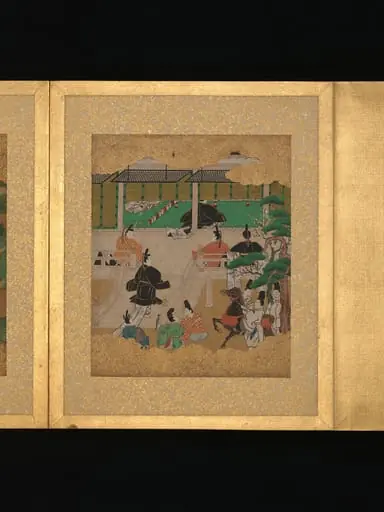 Untitled
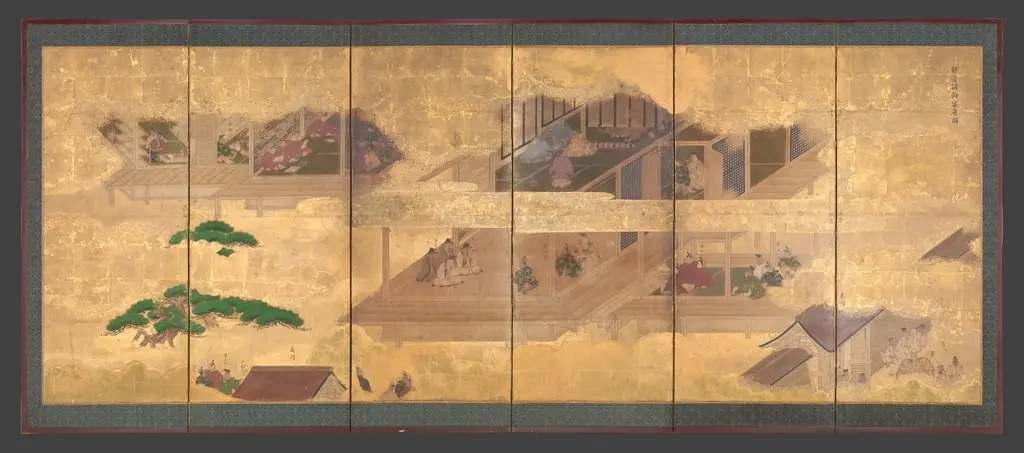 Scenes at the University with Images of the Ancient Sages; Debate and Banquet at the Administration Offices
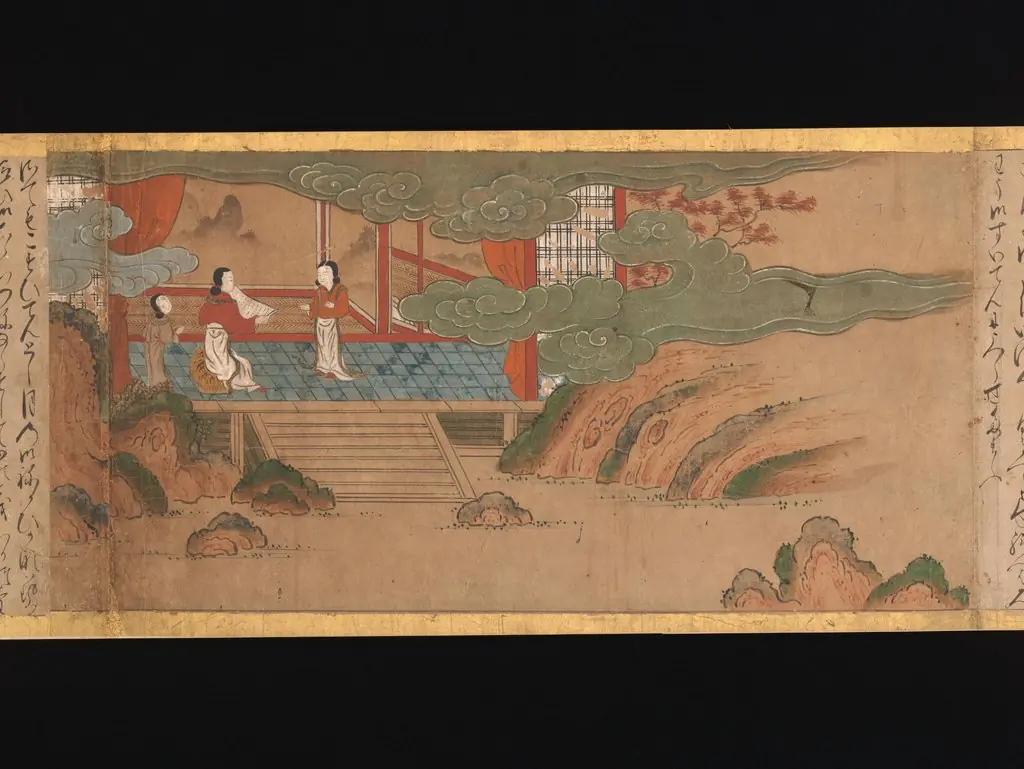 Illustrated Legends of the Origins of the Kumano Shrines (Kumano engi emaki)
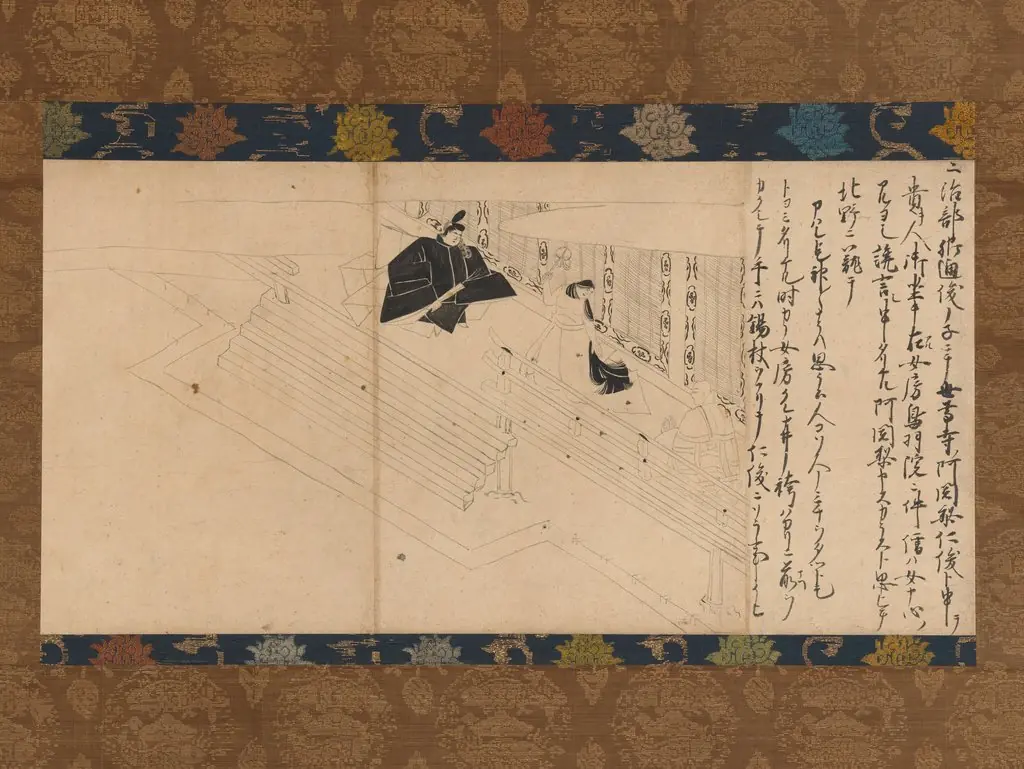 Shrine Maiden-Shamaness Possessed by a Spirit, from Illustrated Legends of the Kitano Tenjin Shrine (Kitano Tenjin engi emaki)
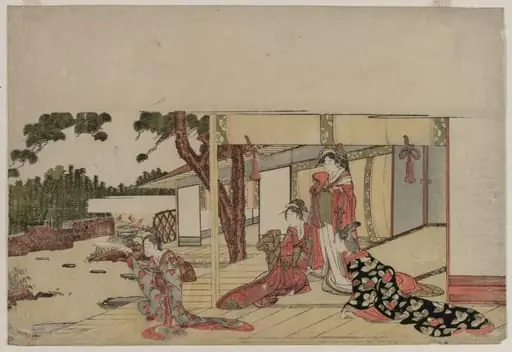 Women on a Veranda
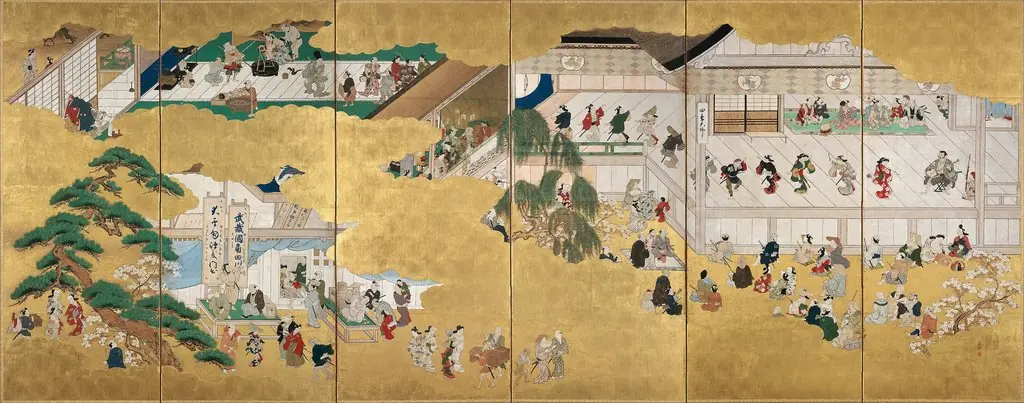 Scenes from the Nakamura Kabuki Theater
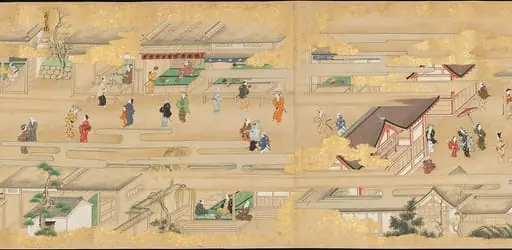 Untitled