Artwork
真柴秀吉公名護屋陣先手諸将繰出之図|Hideyoshi and His Troops Leaving Nagoya Camp (Mashiba Hideyoshi kō nagoya jin saki te no shoshō kuridashi no zu)
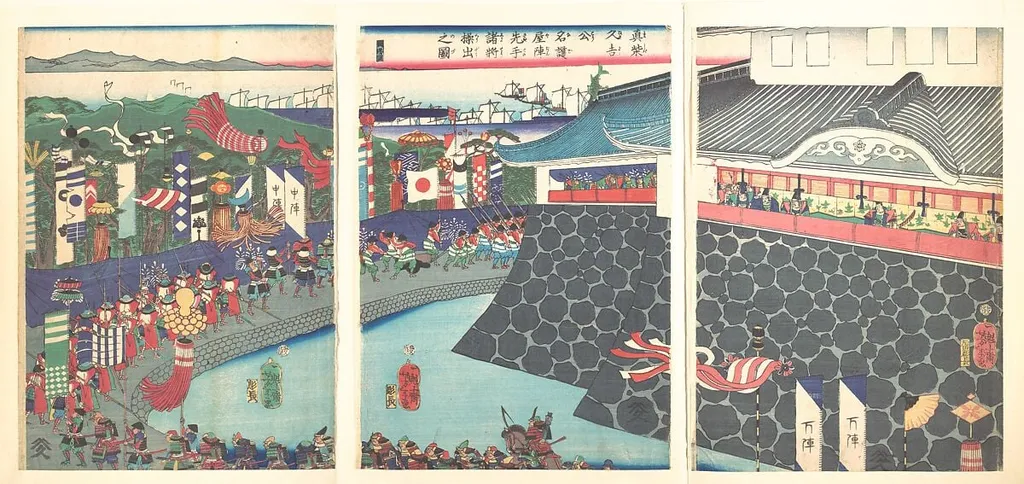
真柴秀吉公名護屋陣先手諸将繰出之図|Hideyoshi and His Troops Leaving Nagoya Camp (Mashiba Hideyoshi kō nagoya jin saki te no shoshō kuridashi no zu) is an ink print by the Romanticist artist Tsukioka Yoshitoshi. It dates from 1850 and is held in the collection of the Metropolitan Museum of Art.
About this work
Overview
Hideyoshi and His Troops Leaving Nagoya Camp is a triptych woodblock print created by Tsukioka Yoshitoshi in 1850. Composed of ink and color on paper, the work is part of The Metropolitan Museum of Art's collection.
Subject & Meaning
The print depicts a dynamic scene of Hideyoshi's troops departing Nagoya Camp, set beside a river. The composition highlights the movement of armored soldiers towards a bridge, accompanied by boats on the water and vibrant, curved-roofed buildings in the background.
Technique & Style
Yoshitoshi employed intricate techniques to achieve depth and texture. Notably, tiny lines were used to create dark, three-dimensional shadows on the ground and armor, while cross-hatching contributed to the overall visual depth of the scene.
History & Provenance
Created in 1850 by Tsukioka Yoshitoshi, the triptych is currently held in the collection of The Metropolitan Museum of Art.
Context
This work reflects the ukiyo-e tradition of depicting scenes from Japanese history and daily life, with a focus on the renowned military leader Hideyoshi, emphasizing the artistic blend of realism and stylization characteristic of late Edo-period woodblock prints.
Legacy
As a late work in the ukiyo-e tradition, Hideyoshi and His Troops Leaving Nagoya Camp contributes to the preservation of historical themes in Japanese art, showcasing Yoshitoshi's contribution to the evolution of woodblock printing techniques in the 19th century.
Artist & collection

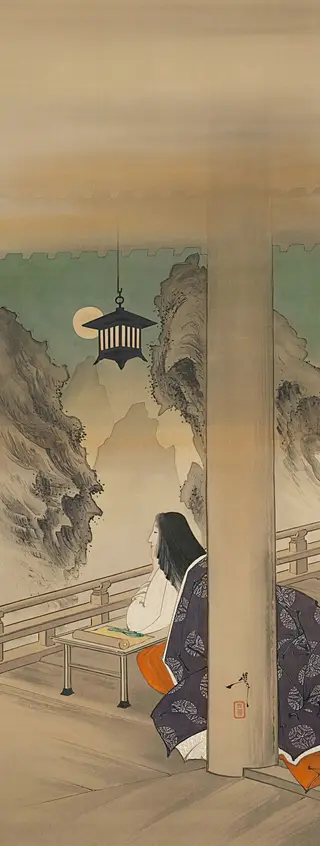 Murasaki Shikibu at Ishiyamadera Temple, based on the print “The Moon at Ishiyama,” from the series One Hundred Aspects of the Moon (Tsuki hyakushi: Ishiyama no tsuki)
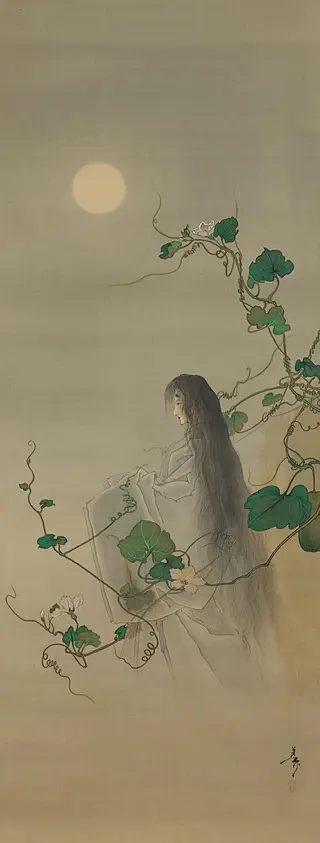 The Spirit of the Deceased Yūgao Entwined in Moonflower Vines, based on the print “The Lady of the Evening Faces,” from the series One Hundred Aspects of the Moon (Tsuki hyakushi: Genji Yūgao no maki)
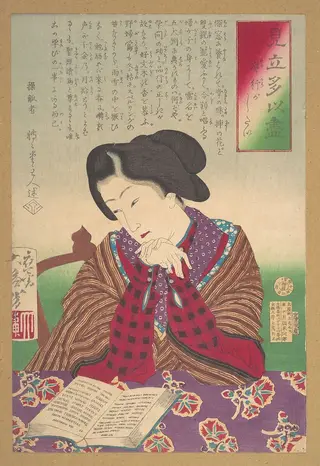 見立多以尽 - 洋行がしたい|Collection of Desires, Wish for Foreign Travel (Mitate Tai zukushi-yōkō ga shitai)
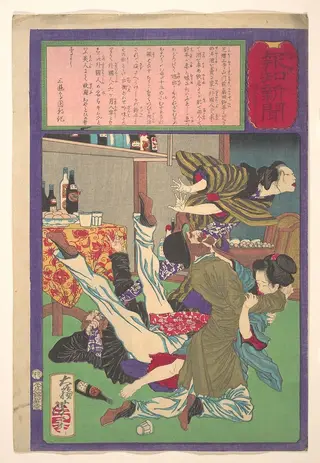 郵便報知新聞 645号|Postal Hōchi Newspaper no. 645, Englishman raping a wine shopkeeper's daughter (Yūbin Hōchi shinbun, roppyaku yonjū gogō)
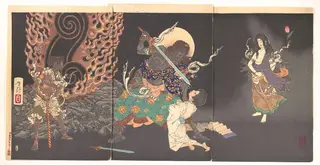 月岡芳年筆 不動明王∙祐天上人図|Fudō Myōō Threatening a Novice
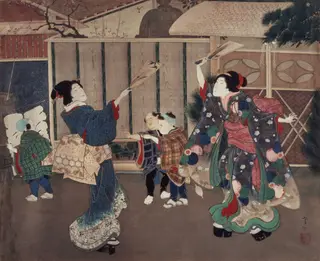 January: Celebrating the New Year
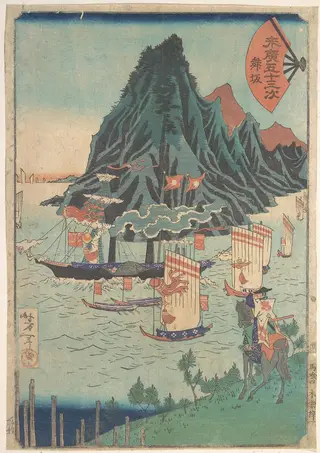 Untitled
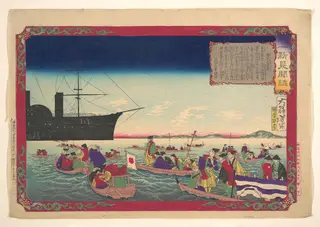 皇国一新見聞誌|Chronicle of the Imperial Restoration (Kōkoku isshin kenbunshi)
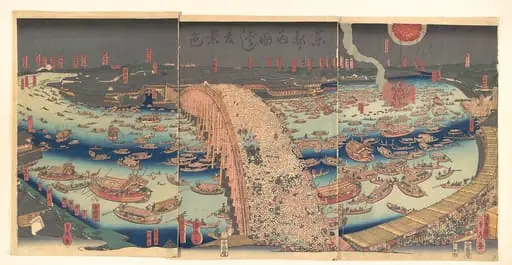
- Tōtō Ryōgokubashi natsu keshiki|Panoramic View of Ryōgoku Bridge in the Summer
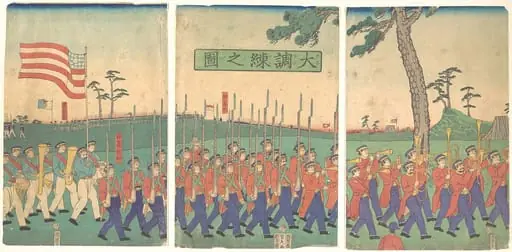 Uchoren no zu|Great Military Drill
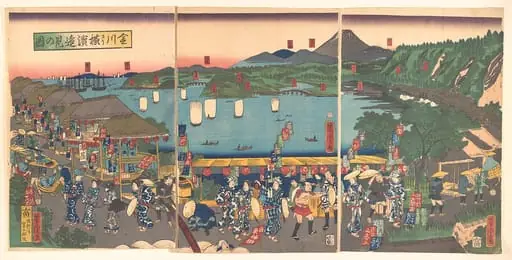 Kanagawa yōri Yokohama...ken no zu|A Distant View of Yokohama from Kanagawa
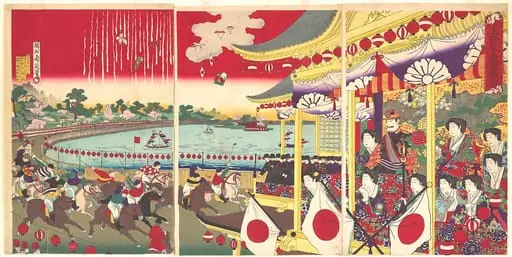 『上野不忍競馬図』|View of the Horse Track at Shinobazu in Ueno Park (Ueno shinobazu keiba zu)
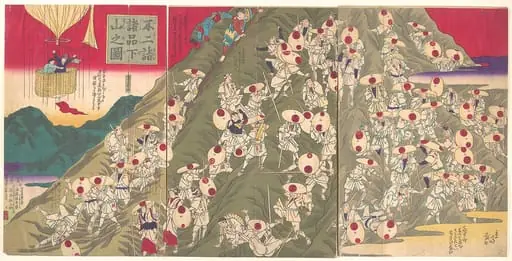 不二詣諸品下山之図|View of the Descent from a Mountain by Many from Pilgrimage to Mt. Fuji (Fuji mōde shoshina gesan no zu)
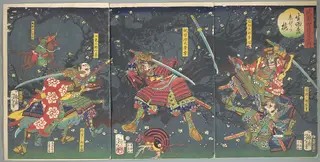 武勇雪月花之内 ゑびらの梅|Plum Blossoms in the Forrest of Ikuta, from the series Bravery-Beauty of the four seasons (Buyū setsugekka no uchi-Ikuta no mori, Ebira no ume)
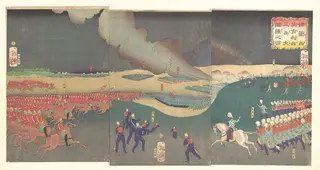 仏蘭西英吉利三兵大調錬之図|Maneuvers by Three Categories of French and English Soldiers (Furansu Igirisu sanhei ōchōren no zu)
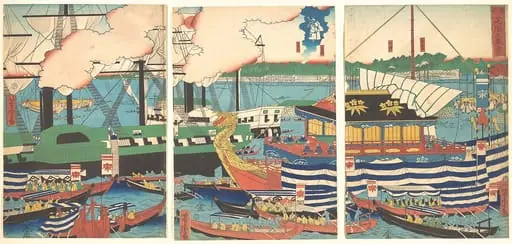 東都芝浦之風景|View of Shibaura, from the series Eastern Capital (Tōto, Shibaura no fūkei)
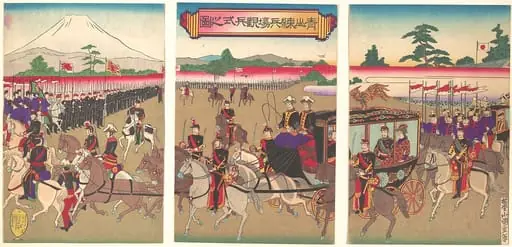 Untitled
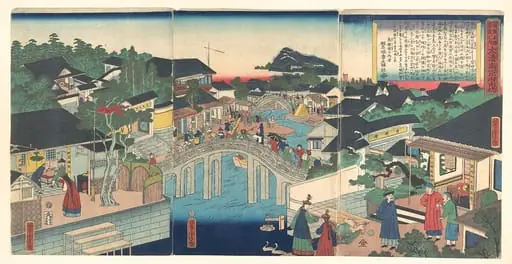 Daishin Nankin fu no shiō|Nankin in China
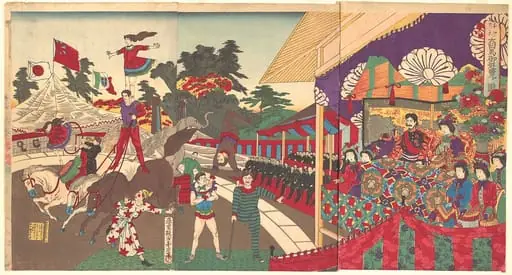 チャリネ大曲馬御遊覧ノ図|Illustration of the Imperial Excursion to see the Charini's Circus (Charine daikyokuba goyūran no zu)
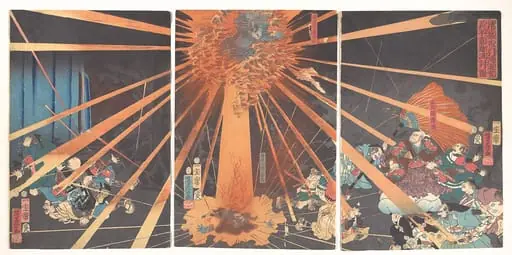 歌川芳房画 「清盛布引滝遊覧 義平霊難波討圖」|Kiyomori’s Visit to Nunobiki Waterfall: The Ghost of Yoshihira Taking Revenge on Nanba