Artwork
見立多以尽 - 洋行がしたい|Collection of Desires, Wish for Foreign Travel (Mitate Tai zukushi-yōkō ga shitai)
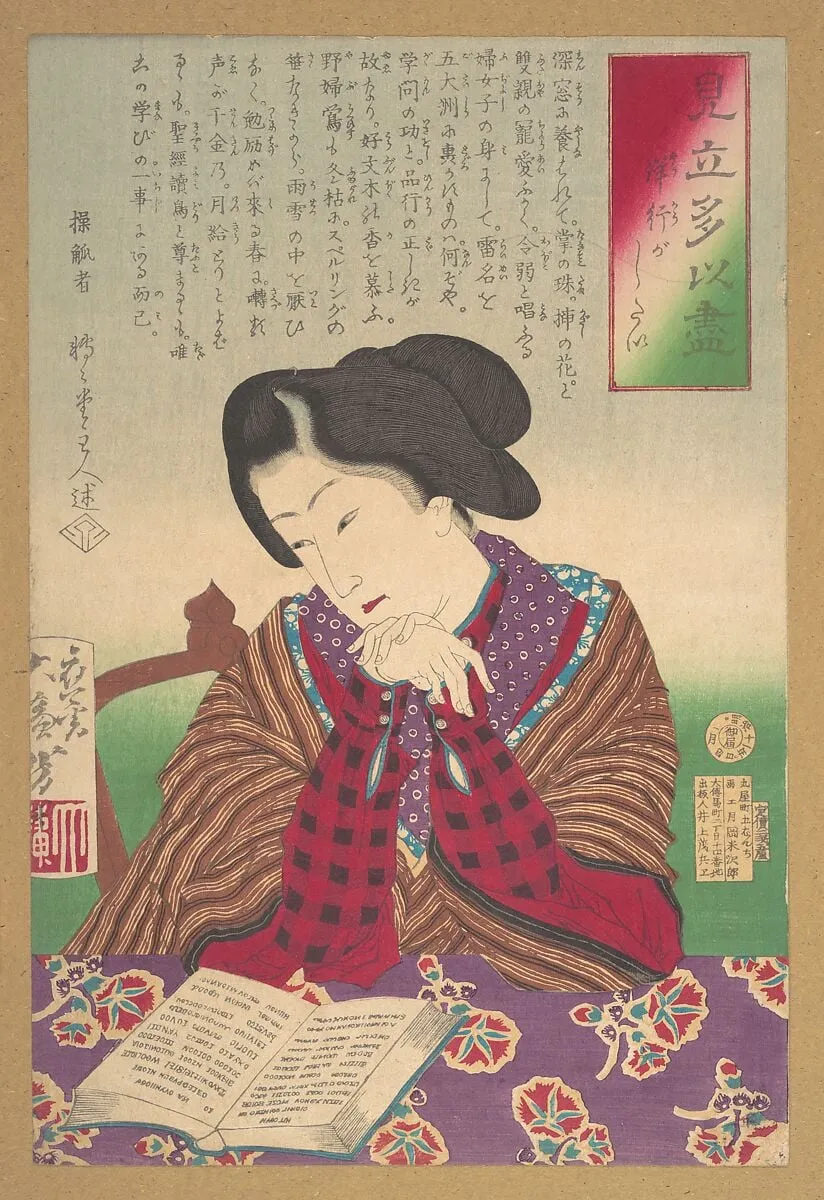
見立多以尽 - 洋行がしたい|Collection of Desires, Wish for Foreign Travel (Mitate Tai zukushi-yōkō ga shitai) is an ink print by the Impressionist artist Tsukioka Yoshitoshi. It dates from 1878 and is held in the collection of the Metropolitan Museum of Art.
About this work
Overview
1 centimeters and is held in the Asian Art curatorial department of the Metropolitan Museum of Art under accession number 2007.
Collection of Desires, Wish for Foreign Travel (Mitate Tai zukushi-yōkō ga shitai) is a woodblock print with ink and color on paper created by Tsukioka Yoshitoshi in January 1878. As a bijin-ga and nishiki-e work from the Meiji period, the print depicts a woman reading a book and embodies the historical tension between traditional Japanese floating world culture and Western modernization during the early Meiji era. The image measures 36.8 by 25.1 centimeters and is held in the Asian Art curatorial department of the Metropolitan Museum of Art under accession number 2007.49.315.
Subject & Meaning
The print portrays a woman seated at a low table, her head bowed in concentration over an open book. Her hair is arranged in a large, rounded style at the back of her head, and she wears a brown striped outer garment layered over a purple collar with white circles and a red and black checkered underlayer. The table is covered with a purple cloth decorated with red, blue, and white floral and geometric patterns. The open book on the table contains text in a Western alphabet, a detail that gives visual form to the title's wish for foreign travel. The upper portion of the composition contains dense columns of Japanese text, alongside a vertical red-to-green gradient panel with Japanese characters in the upper right, with additional text blocks and seals along the left edge and lower right.
Technique & Style
Executed as a nishiki-e woodblock print, the work employs ink and color on paper. The technique relies on flat color areas with fine linear patterns, defining forms through outline and color blocks rather than modeling or shadow. The palette is composed of muted greens, purples, browns, and reds. The background transitions from a pale tone at the top to green at the bottom. A wooden chair back is partially visible behind the woman, introducing a Western domestic element into the traditional ukiyo-e aesthetic. This blending of classical Japanese subject matter with Western elements aligns with Yoshitoshi's broader incorporation of Western shading techniques and psychological depth into his later works.
History & Provenance
Created in January 1878, the print dates to the period following Yoshitoshi's recovery from a severe depression and breakdown in 1872, during a phase of renewed ambition that also produced his series Mirror of Famous Generals of Great Japan. The print later entered the collection of the Metropolitan Museum of Art through the bequest of William S. Lieberman in 2005, receiving the accession number 2007.49.315. It resides in the museum's Asian Art department.
Context
Tsukioka Yoshitoshi was born in the Shimbashi district of Edo in 1839 and apprenticed at age eleven to Utagawa Kuniyoshi, who gave him the artist name Yoshitoshi. From Kuniyoshi, he absorbed the full ukiyo-e tradition even as the art form faced pressure from Western imports and photography following the Meiji Restoration of 1868. His career spanned the turbulent end of the Edo period into the modernizing Meiji era. After early notoriety for graphic depictions of violence in the Twenty-Eight Famous Murders with Verse from 1866 to 1869, his later works, such as One Hundred Aspects of the Moon and New Forms of Thirty-Six Ghosts, blended classical Japanese subjects with Western techniques. He is widely recognized as the last great master of ukiyo-e, continuing to produce prints as Western illustration and photography eclipsed traditional methods until his death in Tokyo in 1892 at age 53.
Legacy
Largely overlooked for decades after his death in 1892, Yoshitoshi's reputation underwent a significant revival beginning in the 1970s. He is now celebrated internationally as the artist who gave the ukiyo-e tradition one final generation of creative life. Works like Collection of Desires, Wish for Foreign Travel document the cultural absorption of Western influences during the Meiji period, a theme that resonated deeply as Japan navigated modernization. Today, the print is part of the Metropolitan Museum of Art's Open Access program, allowing unrestricted commercial and noncommercial use of its data and public domain images by researchers and creators worldwide.
Artist & collection

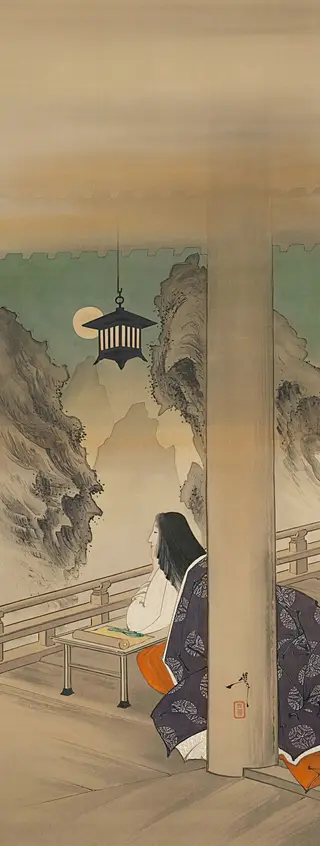 Murasaki Shikibu at Ishiyamadera Temple, based on the print “The Moon at Ishiyama,” from the series One Hundred Aspects of the Moon (Tsuki hyakushi: Ishiyama no tsuki)
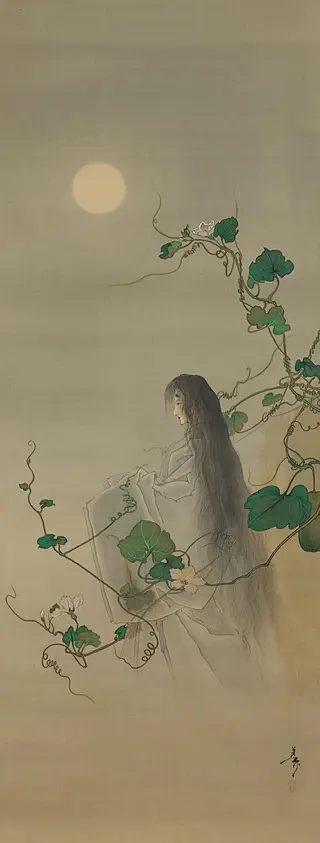 The Spirit of the Deceased Yūgao Entwined in Moonflower Vines, based on the print “The Lady of the Evening Faces,” from the series One Hundred Aspects of the Moon (Tsuki hyakushi: Genji Yūgao no maki)
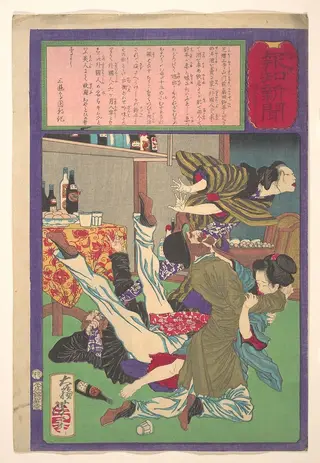 郵便報知新聞 645号|Postal Hōchi Newspaper no. 645, Englishman raping a wine shopkeeper's daughter (Yūbin Hōchi shinbun, roppyaku yonjū gogō)
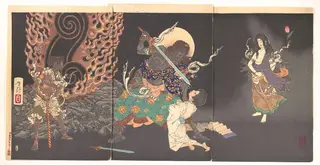 月岡芳年筆 不動明王∙祐天上人図|Fudō Myōō Threatening a Novice
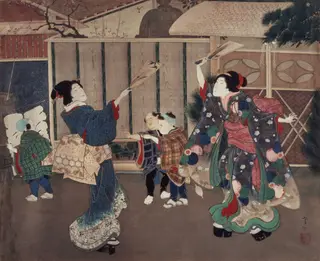 January: Celebrating the New Year
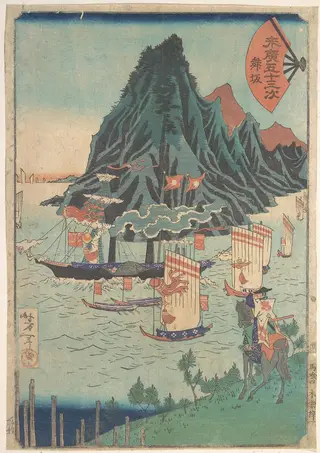 Untitled
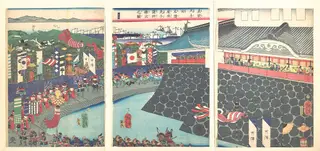 真柴秀吉公名護屋陣先手諸将繰出之図|Hideyoshi and His Troops Leaving Nagoya Camp (Mashiba Hideyoshi kō nagoya jin saki te no shoshō kuridashi no zu)
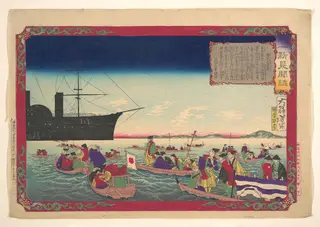 皇国一新見聞誌|Chronicle of the Imperial Restoration (Kōkoku isshin kenbunshi)
- Untitled
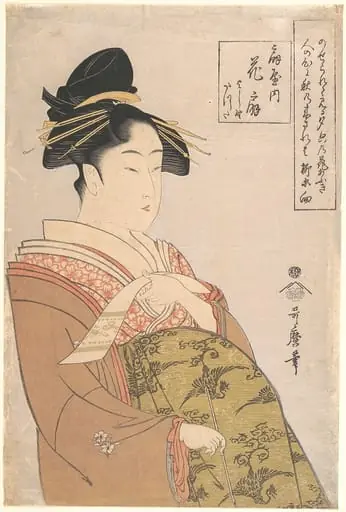 「扇屋内花扇図」|The Courtesan Hanaōgi of the Ōgiya Brothel in Yoshiwara (Ōgiya uchi Hanaōgi, Yoshino, Tatsuta)
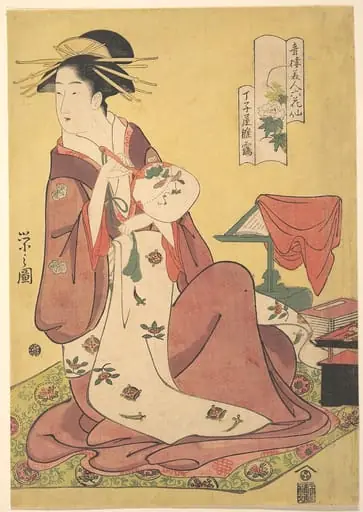 鳥文斎栄之画 「青楼美人六花仙 丁子屋雛鶴鸖」|The Courtesan Hinazuru of the Chōjiya Brothel (Chōjiya Hinazuru), from the series Beauties of the Pleasure Quarters as Six Floral Immortals (Seirō bijin rokkasen)
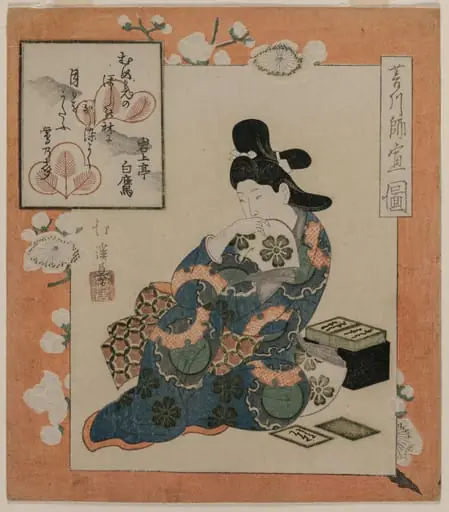 A Picture by Hishikawa Moronobu: Woman with a Set of Poem Cards
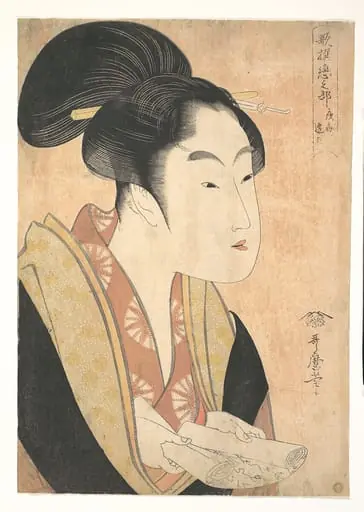 歌撰恋之部 夜毎に逢恋|A Young Woman Reading A Letter
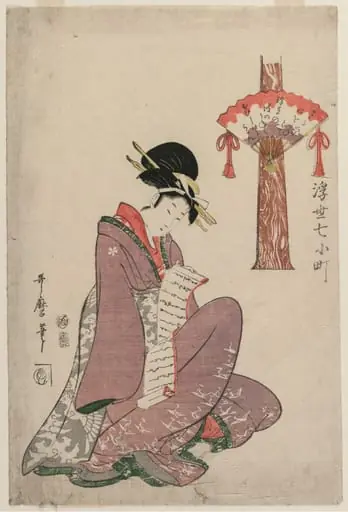 Woman Reading a Letter (from the series Seven Episodes in the Life of Komachi in the Floating World)
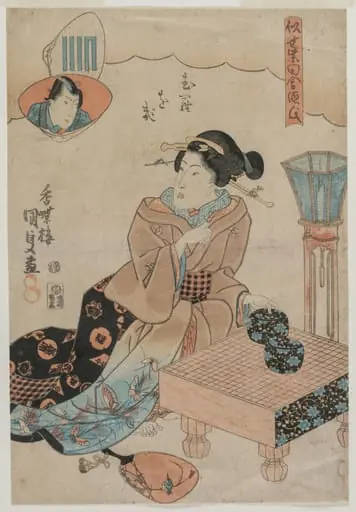 Muraogi, from the series The False Murasaki's Rustic Genji (Nise Murasaki Inaka Genji)
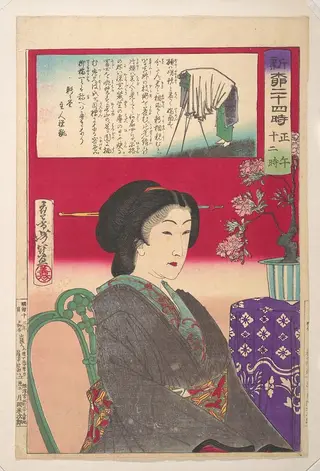 新柳二十四時 午前十二時|Twenty-Four Hours at Shinbashi/Yanagibashi: 12 Noon. (Shinyanagi nijūyo-ji, gozen jūni-ji)
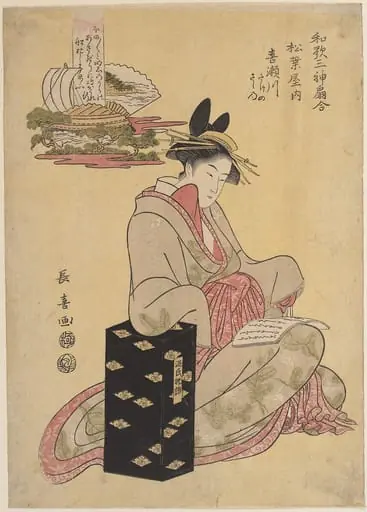 Untitled
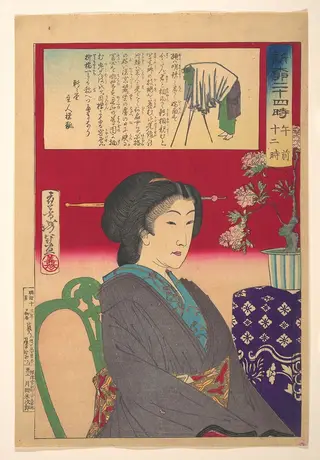 新柳二十四時 午前十二時|Twenty-Four Hours at Shinbashi/Yanagibashi: 12 Noon. (Shinyanagi nijūyo-ji, gozen jūni-ji)
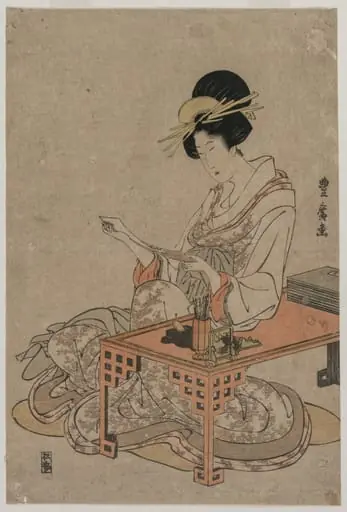 Courtesan Seated at a Writing Table
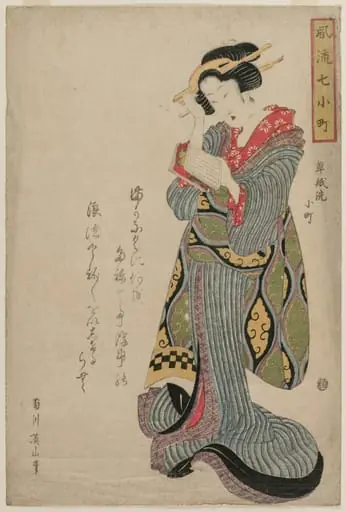 Komachi Washes the Book (from the series Seven Elegant Episodes from the Life of the Poetess Ono no Komachi)