Artwork
Aesacus and Hesperie
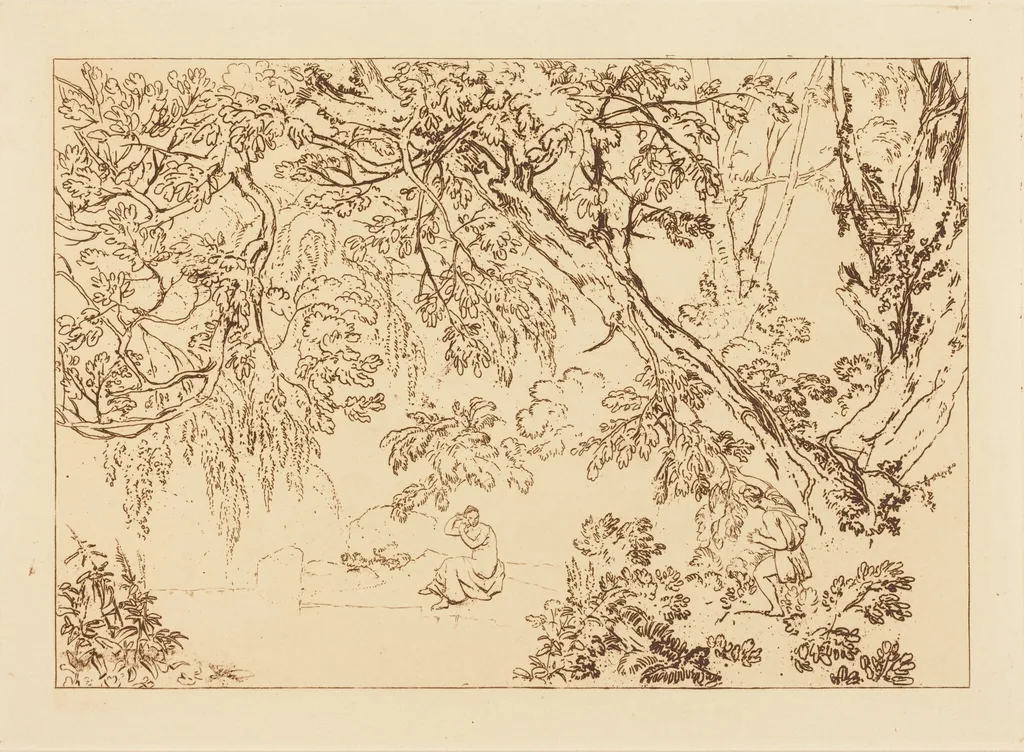
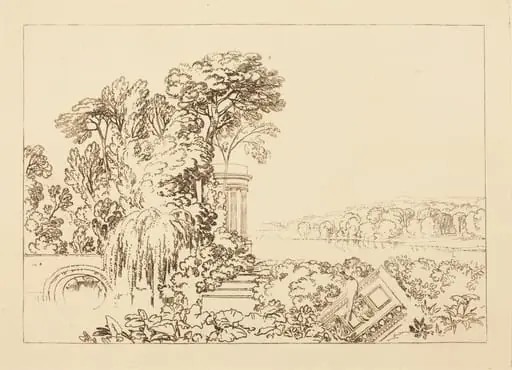
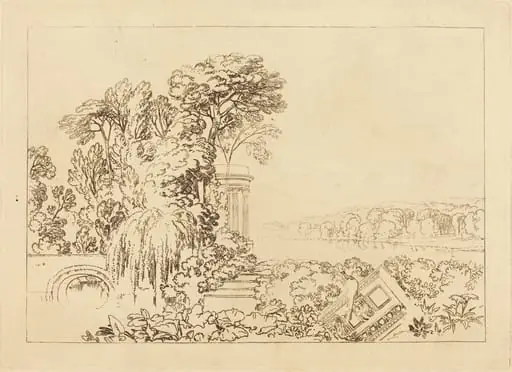
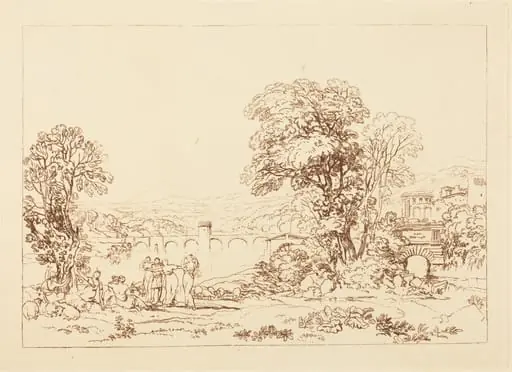
Aesacus and Hesperie is an ink print by the Romanticist artist Joseph Mallord William Turner. It dates from 1816 and is held in the collection of the National Gallery of Art.
About this work
Overview
Joseph Mallord William Turner’s 1816 print titled Aesacus and Hesperie is an etching that portrays a shadowy woodland scene. The composition is dominated by a dense thicket of twisted trunks and sparse foliage, rendered in stark, uneven lines that convey a sense of unease. In the lower right, two diminutive figures sit beneath a solitary tree, their forms almost lost in the darkness.
Subject & Meaning
The work references the mythological lovers Aesacus and Hesperia, placing them within a foreboding forest that suggests isolation and melancholy. The cramped, tangled environment amplifies the emotional weight of the narrative, hinting at themes of loss and longing that are common in Turner’s early explorations of literary subjects.
Technique & Style
Turner employed the traditional etching process, incising the design onto a metal plate before exposing it to acid. This method allowed him to achieve deep, velvety shadows and a textured surface that mimics the rough bark of the trees. The irregular, scratchy line work contributes to a haunting atmosphere, characteristic of Turner’s experimental approach to printmaking.
History & Provenance
Created in 1816, Aesacus and Hesperie belongs to the period when Turner was expanding his repertoire beyond watercolours into print media. The print was likely produced in small editions typical of the era, though specific ownership records are sparse. It remains a documented example of Turner’s early engagement with mythological subjects through the medium of etching.
Own this work as a print
Artist & collection
Artist
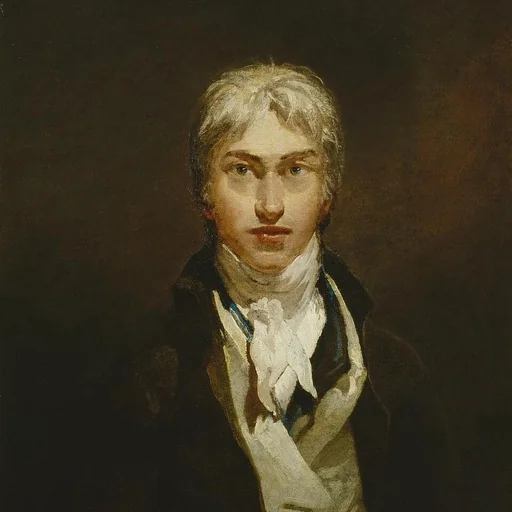
Joseph Mallord William Turner was born in 1775 at Maiden Lane, Covent Garden, where his father kept a barber and wig-making shop.