Artwork
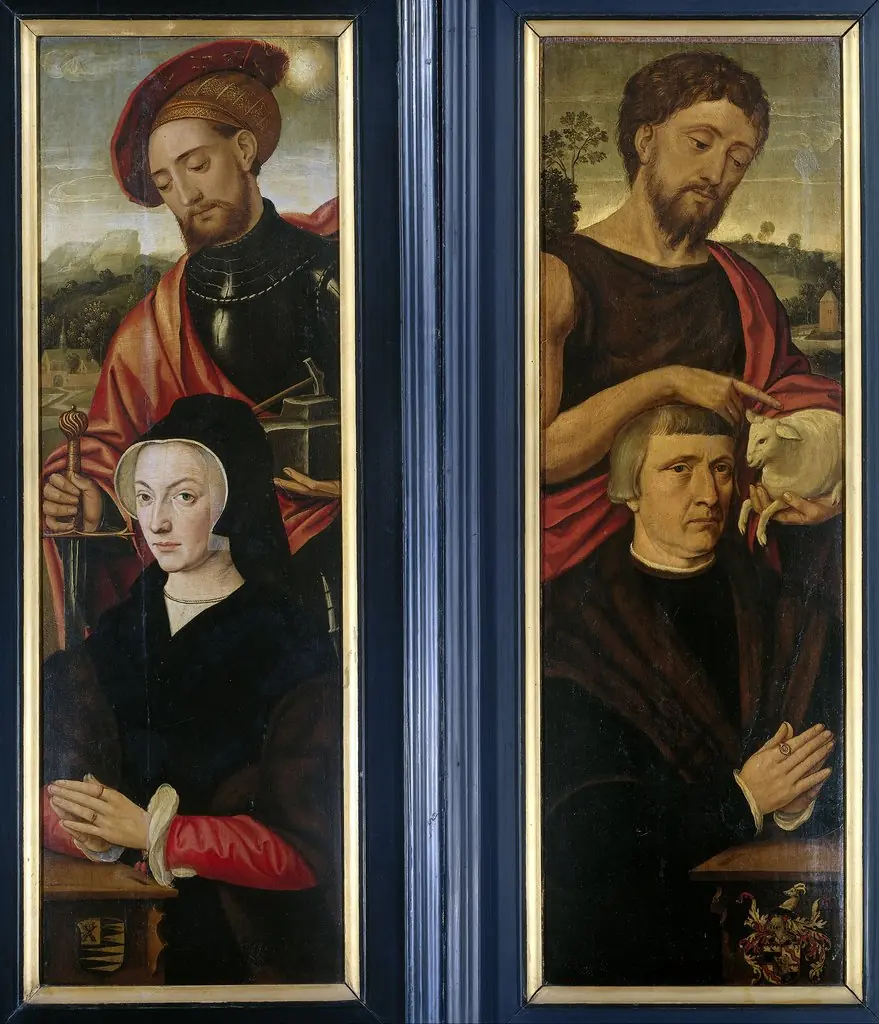
Two Wings of a Triptych with the Donor, Thomas Isaacq, accompanied by Saint Thomas (left, outer wing), and the Donor's Wife accompanied by Saint Margaret (right, outer wing)
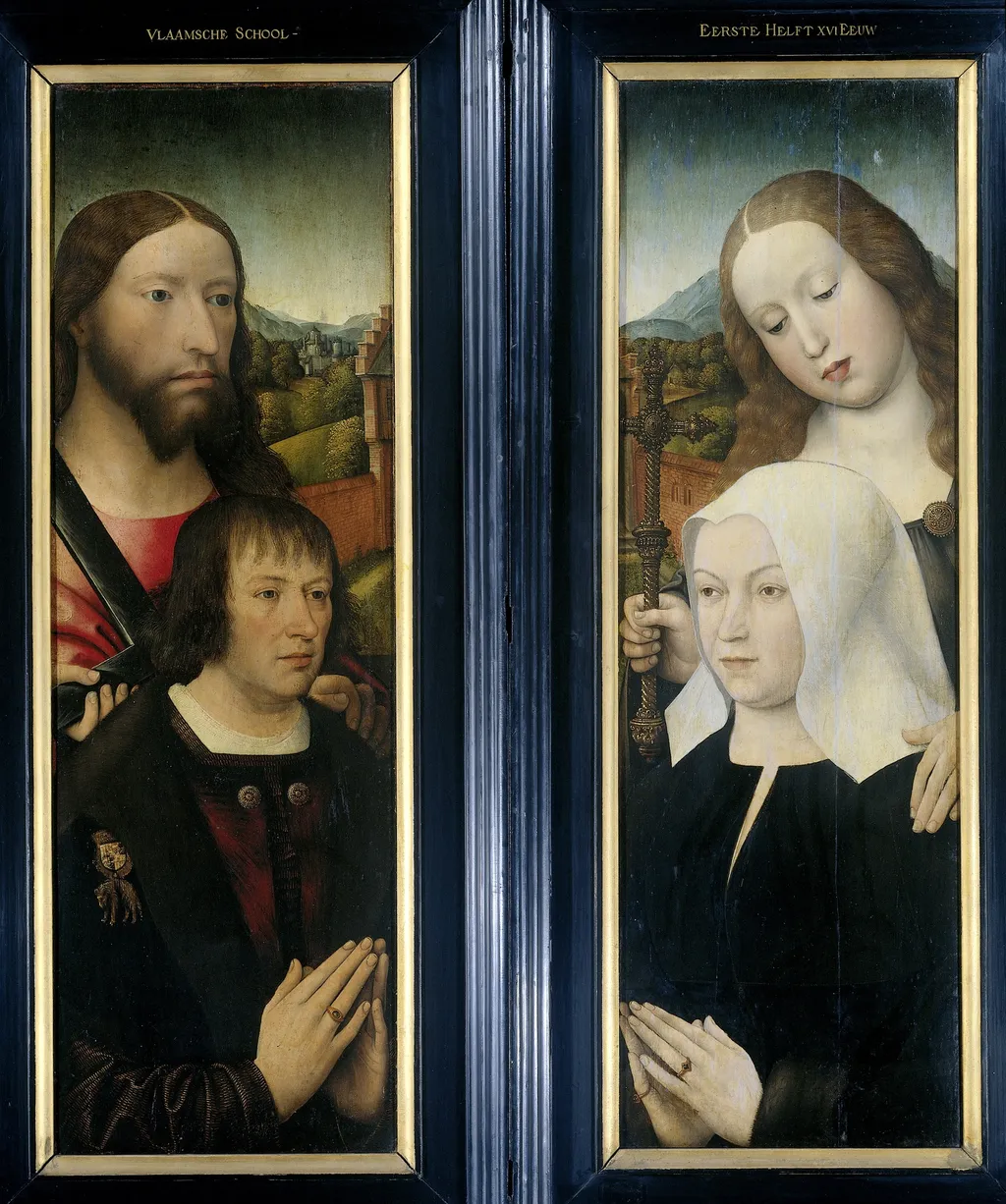
Two Wings of a Triptych with the Donor, Thomas Isaacq, accompanied by Saint Thomas (left, outer wing), and the Donor's Wife accompanied by Saint Margaret (right, outer wing) is an oil painting by the Northern Renaissance artist Master of the Legend of the Magdalene. It dates from 1507 and is held in the collection of the Rijksmuseum. This early sixteenth‑century oil on panel consists of two outer wings from a larger triptych.
About this work
Subject & Meaning
This structure reflects a common Northern Renaissance convention in which the faithful sought proximity to the sacred through personalized, saintly mediation.
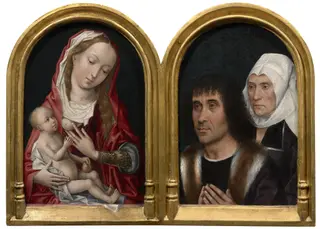
The two panels form the outer wings of a triptych, each pairing a donor with their patron saint. On the left wing, Thomas Isaacq kneels beside Saint Thomas the Apostle; on the right, his wife appears with Saint Margaret. The saints serve as intercessors: Thomas, the doubter turned believer, and Margaret, a virgin martyr associated with childbirth and protection.
The donors are presented in prayerful devotion, their piety affirmed by holy companions who would advocate for them before the divine. This structure reflects a common Northern Renaissance convention in which the faithful sought proximity to the sacred through personalized, saintly mediation.
Technique & Style
The wings are painted in oil on oak panels, with the left wing measuring 89.8 cm in height and 28.7 cm in width, and the right wing matching in dimensions. Handling is precise and refined, characteristic of the Master of the Legend of the Magdalene, with meticulous attention to delicate drapery folds and the rendering of translucent veils. Stylistically, the figures are rendered in a Northern Renaissance idiom, combining delicate linear definition with subtle atmospheric modeling.
The composition employs a shallow, stage-like space, focusing attention on the donors and their attendant saints through closely observed textures and luminous color harmonies.
Overview
This early sixteenth‑century oil on panel consists of two outer wings from a larger triptych. The left wing depicts a bearded donor, Thomas Isaacq, accompanied by a youthful figure identified as Saint Thomas, while the right wing shows his wife standing beside a female saint identified as Saint Margaret. Both pairs are presented in contemporary attire, linking the patrons to the sacred narrative.
History & Provenance
The panels are attributed to the anonymous Master of the Legend of the Magdalene, an artist active in the Low Countries around 1507. They were originally part of a larger devotional triptych, likely commissioned by Thomas Isaacq for private worship, and have since entered a museum collection through acquisition in the twentieth century.
Context
During the early 1500s, donor portraiture became a means for lay patrons to assert their devotion and social status. By placing themselves beside saints, patrons like Isaacq could visually align their earthly identity with the spiritual virtues embodied by the holy figures, a practice common in Northern Renaissance religious art.
Own this work as a print
Artist & collection
Artist
Master of the Legend of the Magdalene
The Master of the Legend of the Magdalen (sometimes called the Master of the Magdalen Legend) was an Early Netherlandish painter active from circa 1483 to 1527.