Artwork
Diptych of Munich
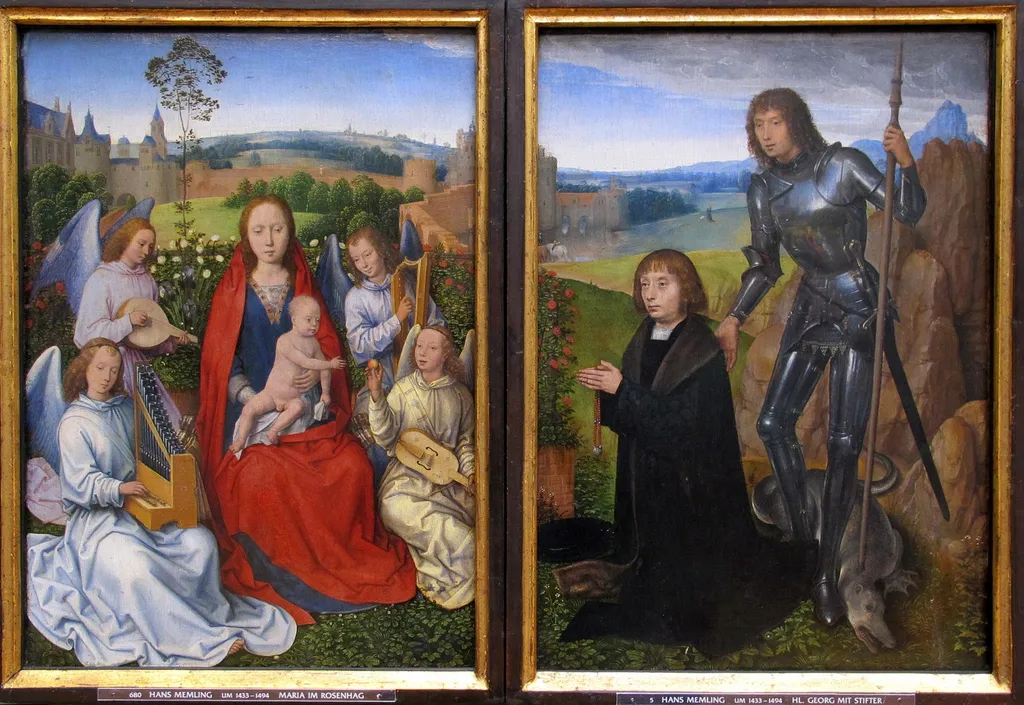
Diptych of Munich is an oil painting by the Northern Renaissance artist Hans Memling. It dates from 1490 and is held in the collection of the Alte Pinakothek.
About this work
Subject & Meaning
The Munich Diptych pairs two devotional scenes that center on Saint George's triumph over the dragon and the Virgin and Child in a humble domestic setting.
The Munich Diptych pairs two devotional scenes that center on Saint George's triumph over the dragon and the Virgin and Child in a humble domestic setting. On the left panel, the armored saint spears the dragon as the princess kneels in prayer, while a rural landscape unfolds behind them; this scene draws on the legend of Saint George and the Dragon, emphasizing Christian victory over evil. The right panel shows the Virgin enthroned on the ground, nursing the Christ Child, flanked by a youthful angel, an image type known as the Madonna of Humility that underscores Christ's incarnation and humanity.
Together, the paired images present a narrative of divine protection and incarnation, inviting contemplation on salvation and the Incarnation within a private devotional format.
Technique & Style
The Munich diptych is executed in oil on oak panels, consistent with Early Netherlandish practice of the late fifteenth century. One panel depicts Saint George and the dragon, while the other shows the Virgin and Child in a low, earthbound landscape. The figures are set within shallow, continuous spatial settings that merge foreground and background through delicate atmospheric recession, with crisp linear definition in the halos and drapery folds softened by subtle transitions in the flesh tones.
History & Provenance
The Diptych of Munich is an Early Netherlandish religious painting created by Hans Memling in 1490. Executed in oil on panel, the work depicts the Virgin Mary with the Christ Child and Saint George slaying a dragon. The piece is currently held in the collection of the Alte Pinakothek, part of the Bavarian State Painting Collections in Munich.
While the specific original patron or commission details are not provided in the available records, the work represents Memling's contribution to the religious art of the late 15th century.
Overview
The Diptych of Munich, a religious oil painting by Hans Memling from 1490, is composed of two distinct panels. This work, representative of the Northern Renaissance, is currently preserved at the Alte Pinakothek. It features key Christian figures, including the Christ Child and the Virgin Mary, alongside Saint George, presenting a detailed narrative across its two interconnected sections.
Context
Created in the late 15th century, this diptych reflects the artistic trends of the Northern Renaissance, an era marked by profound religious devotion and innovative use of oil painting. Such two-paneled works often served as objects for private contemplation, enabling patrons to engage intimately with sacred narratives. Memling's work illustrates the period's synthesis of spiritual themes with a keen observation of the material world.
Own this work as a print
Artist & collection

Artist
Hans Memling was a German-Flemish painter who worked in the tradition of Early Netherlandish painting.

![Saint Veronica [obverse], by Hans Memling](https://artifactworldgallery.com/img/hans-memling--saint-veronica-obverse--5a649fd8b09c96b9-w320.webp)


 Pagagnotti Triptych
 Diptych: Calvary and Virgin with Child, Saint Philip and the donor
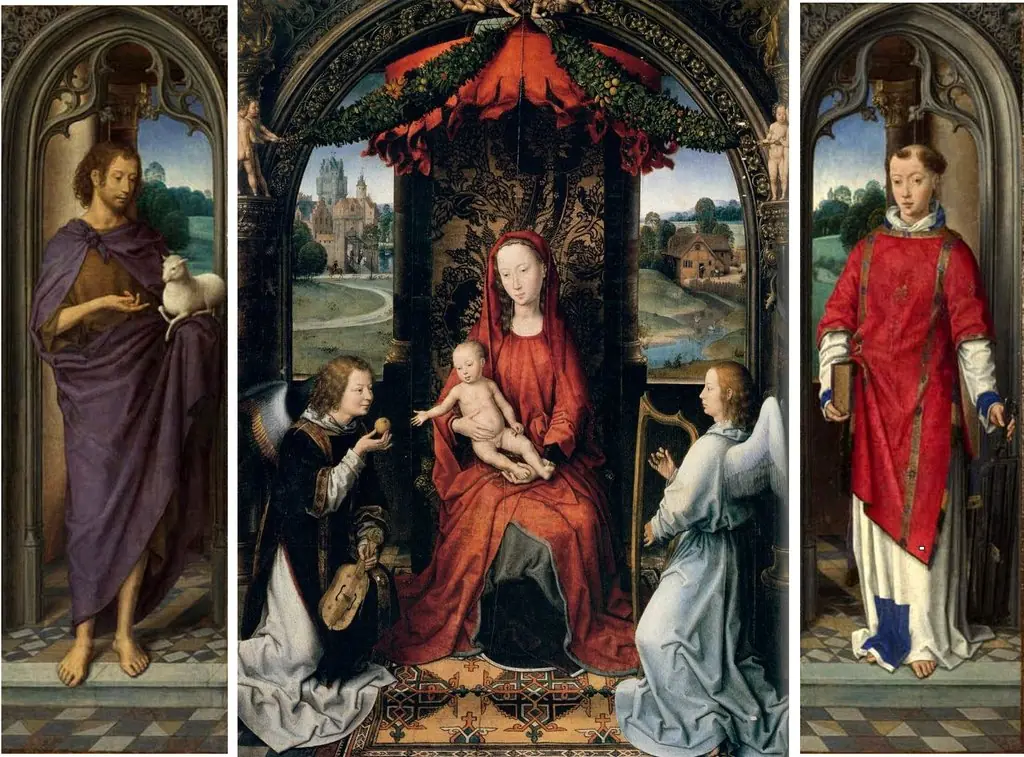
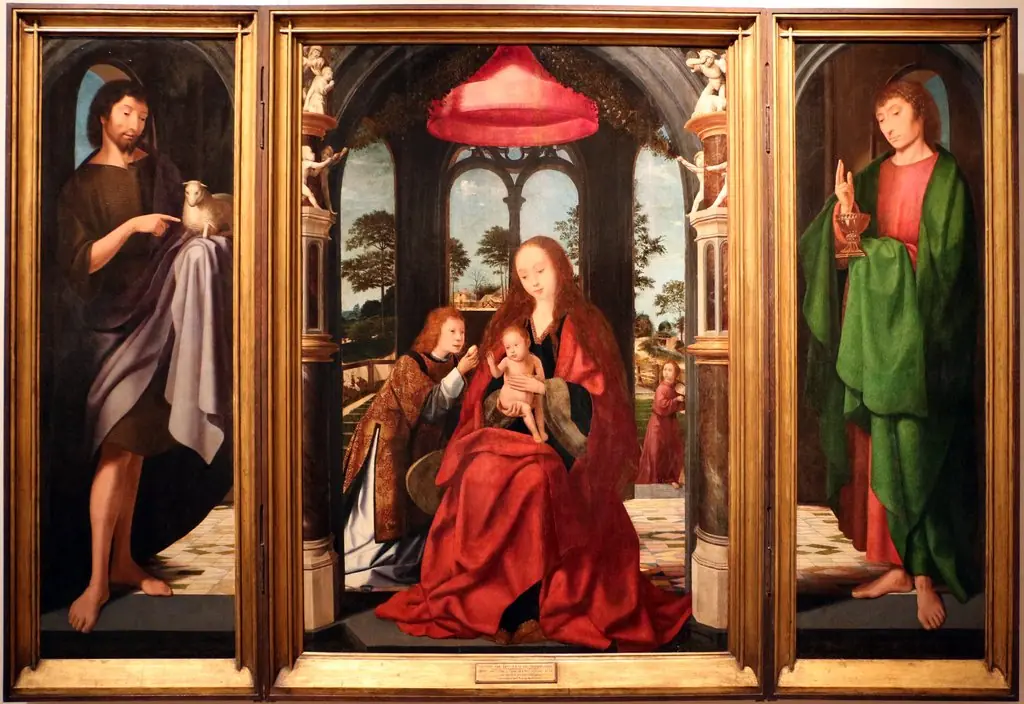 Triptych of the Virgin with the Child and Angels, St. John the Baptist and St. John the Evangelist
 Virgin and Child with Saint Anne, Saint Gereon, and a Donor
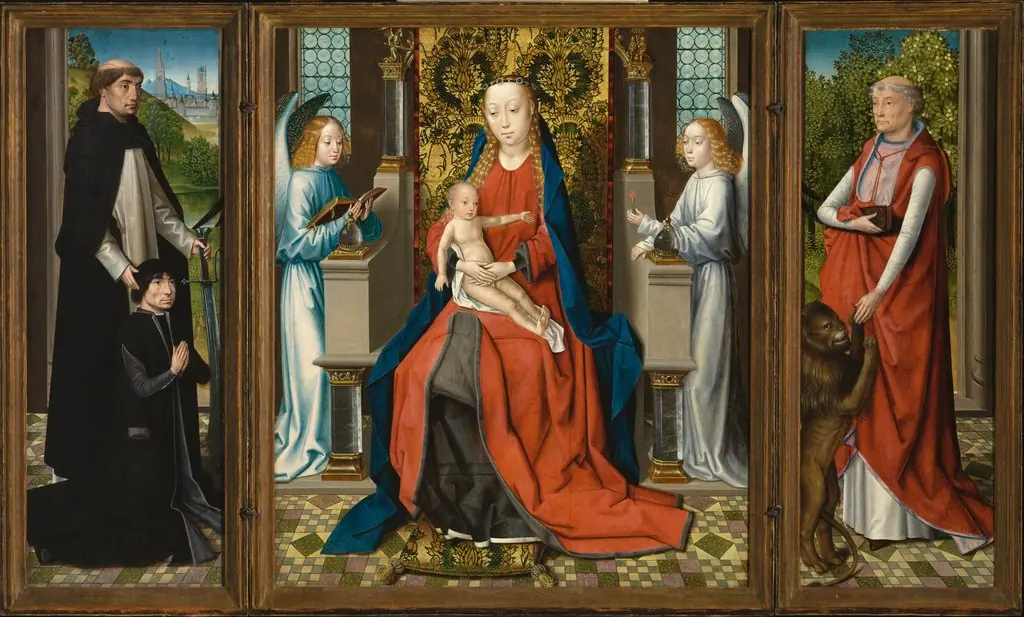 Triptych of Madonna and Child with Angels; Donor and His Patron Saint Peter Martyr; and Saint Jerome and His Lion
 The Holy Family with a Musician Angel Saints Catherine and Barbara
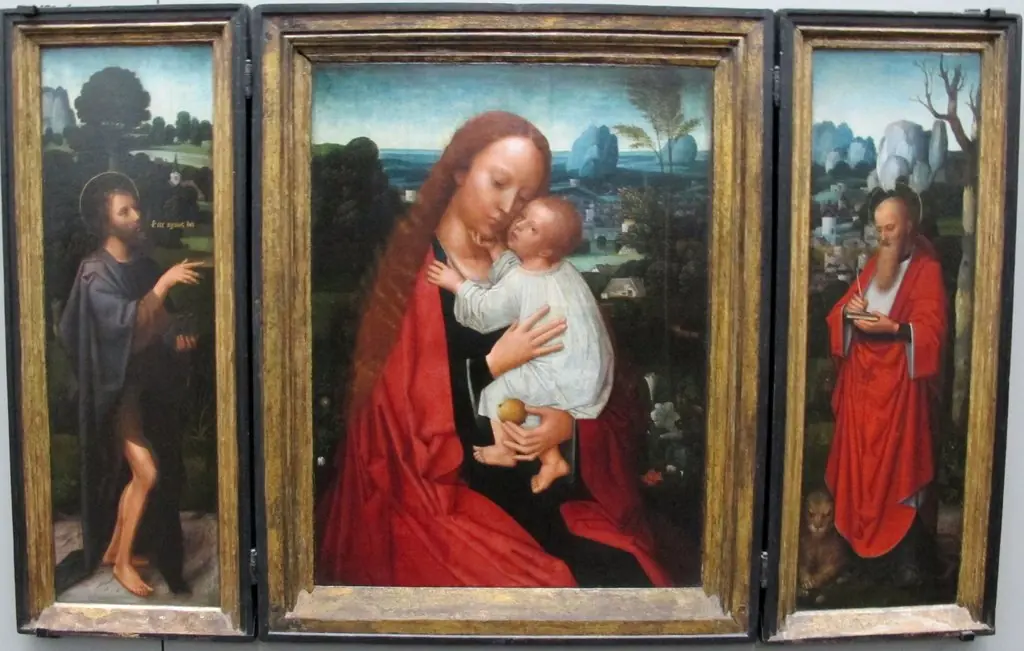 Madonna with John the Baptist and Saint Jerome
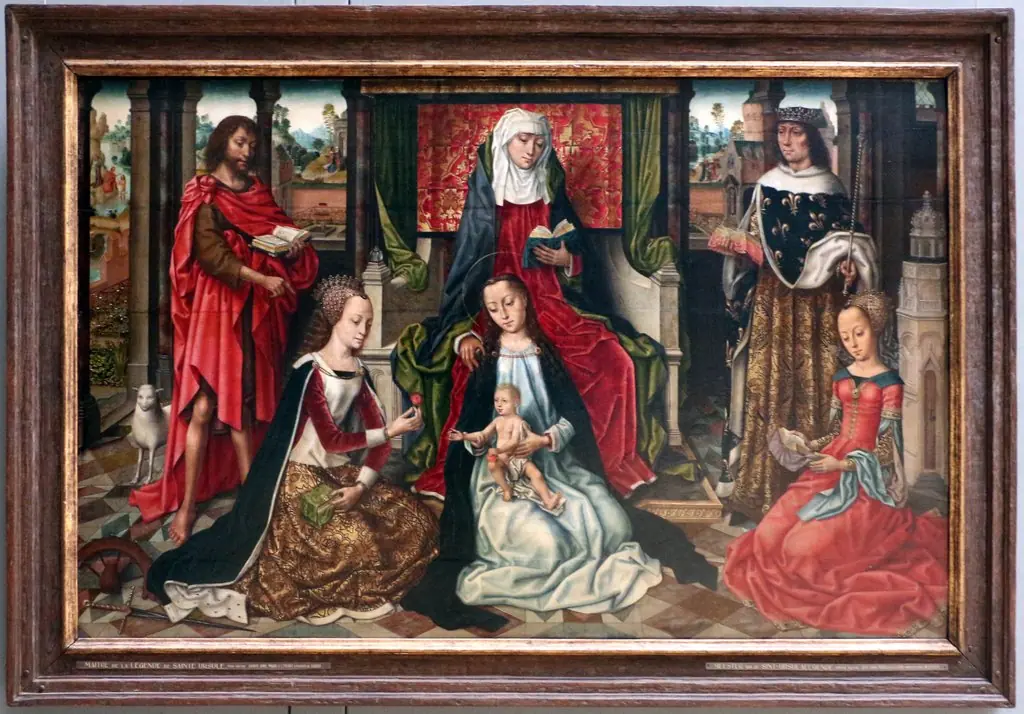 Saint Anne with the Virgin and Child and four saints (John the Baptist, Louis IX, Catherine and Barbara)
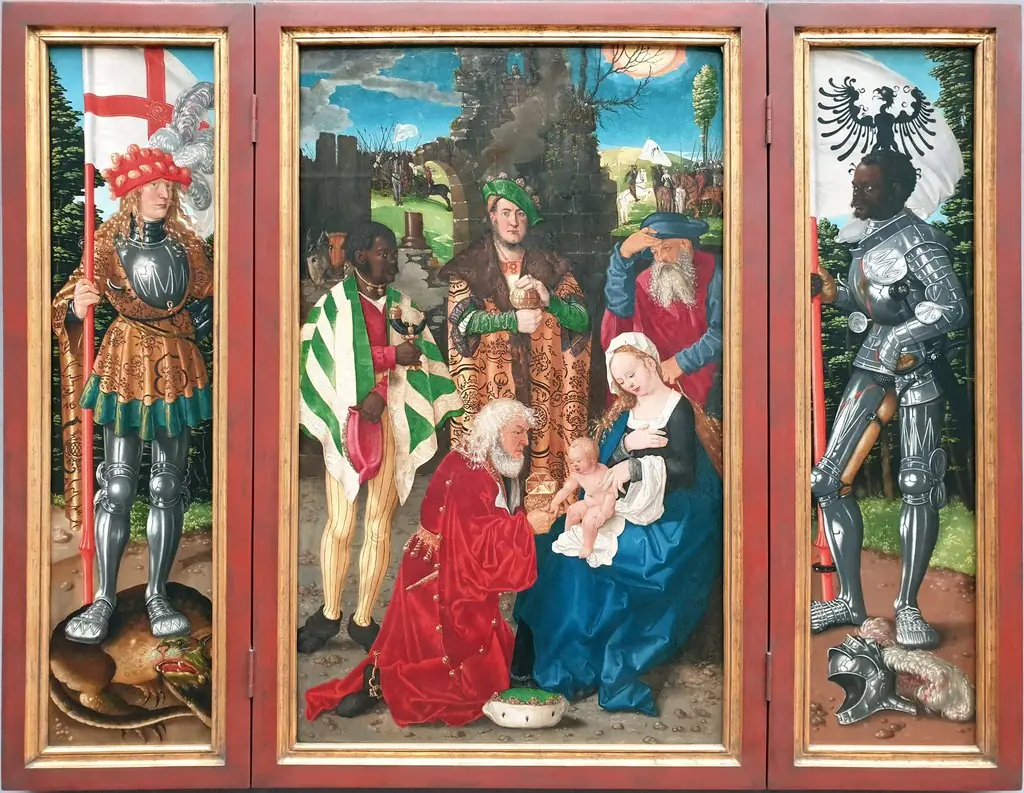 Der Dreikönigsaltar Innentafeln: Anbetung der Könige, der Heilige Georg und der Heilige Mauritius
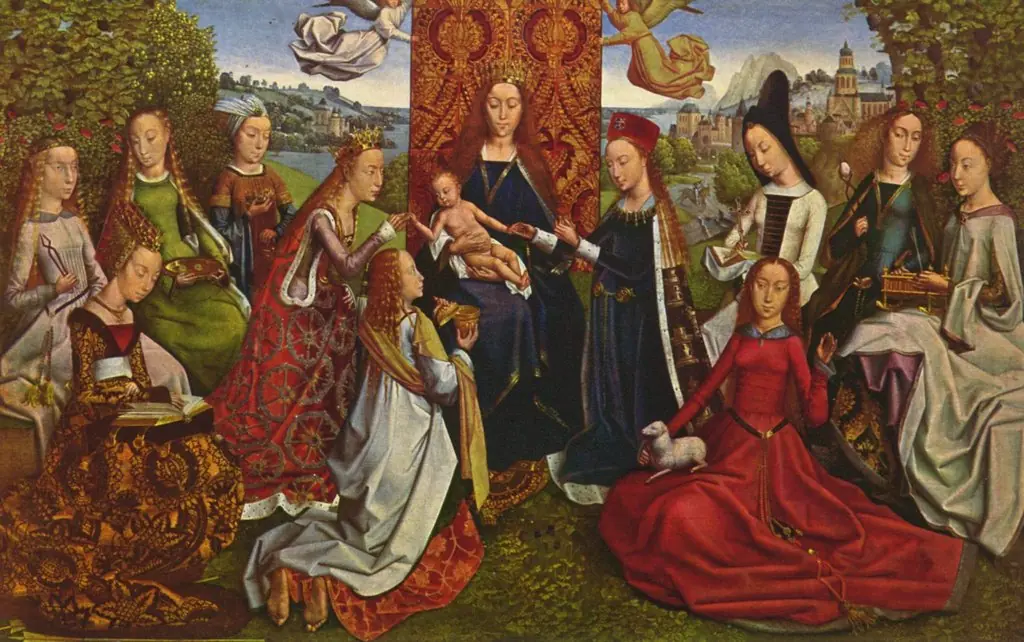 Virgo inter Virgines
- Diptych of Jan du Cellier