Artwork
The Mourning Virgin; The Man of Sorrows
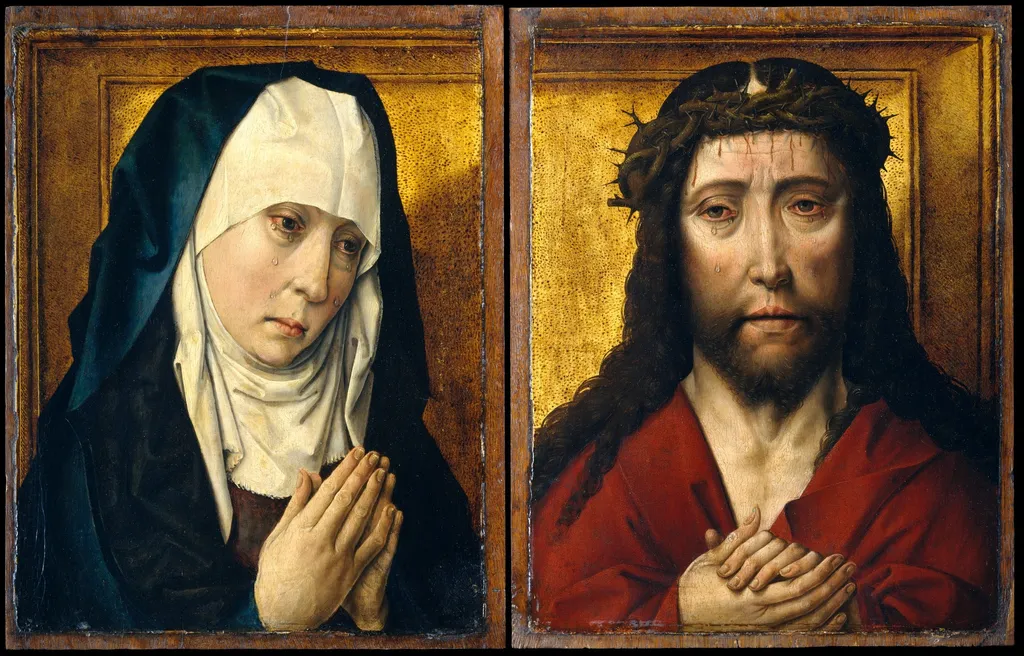
The Mourning Virgin; The Man of Sorrows is an oil painting. It dates from 1600 and is held in the collection of the Metropolitan Museum of Art.
About this work
Subject & Meaning
Together, these paired images function as a devotional tool, inviting the viewer to meditate on the Passion through the specific lens of human grief.
This oil-on-oak diptych, created circa 1525 as a work following Dieric Bouts, visually articulates the theological concept of shared suffering between mother and son. The left panel depicts the Mourning Virgin (Our Lady of Sorrows), characterized by visible weeping and an expression of profound sadness. The corresponding right panel presents the Man of Sorrows, showing Jesus Christ in a state of physical and emotional agony.
Together, these paired images function as a devotional tool, inviting the viewer to meditate on the Passion through the specific lens of human grief. The iconography relies on the juxtaposition of Mary's sorrow with Christ's sacrifice, emphasizing their shared humanity and the emotional weight of the crucifixion narrative within the context of Early Netherlandish religious art.
Technique & Style
The diptych The Mourning Virgin; The Man of Sorrows is executed in oil on a single oak panel, measuring approximately 40.6 × 31.8 cm, and belongs to the early‑16th‑century Netherlandish tradition (c. 1525) as recorded in the Metropolitan Museum’s catalogue. The work functions as a devotional object, presenting the Virgin in mourning and Christ as the Man of Sorrows, a subject tied to the theme of sorrowful imagery. Its formal arrangement combines a sober, vertically stacked composition with meticulous attention to facial expression and drapery, reflecting the influence of Dieric Bouts. The painting is classified as a religious work in oil on panel.
History & Provenance
The diptych, created between 1525 and 1600, is executed in oil paint on oakwood and is attributed as a work after Dieric Bouts. Its early ownership history includes John Taylor Johnston before the piece entered the collection of William T. Blodgett. The work is currently held by the Metropolitan Museum of Art, which acquired it through these previous private holdings.
While the exact commission details remain unspecified in the available records, the painting's creation falls within the early sixteenth to early seventeenth-century timeframe, reflecting the enduring popularity of Dieric Bouts' devotional imagery in later periods.
The diptych titled The Mourning Virgin; The Man of Sorrows, painted circa 1600 in oil on oak, is catalogued in the Metropolitan Museum of Art’s collection (William T. Blodgett bequest, John Taylor Johnston donation). Its accession is recorded under the museum’s inventory of early Netherlandish works, though the specific accession number is not published. The work has been shown in several museum exhibitions, including The Taste of the Seventies, From Van Eyck to Bruegel: Early Netherlandish Painting in The Metropolitan Museum of Art, and Sorrowful Images: Early Netherlandish Devotional Diptychs.
Context
The diptych known as The Mourning Virgin; The Man of Sorrows belongs to the early Netherlandish devotional tradition, combining oil on oak panels in a format typical of 16th‑century diptychs. Its iconography, depicting the Virgin in mourning and Christ as the Man of Sorrows, reflects late medieval piety and follows the compositional model of Dieric Bouts, as noted in scholarship. The work has been part of major museum presentations, including The Taste of the Seventies and From Van Eyck to Bruegel at the Metropolitan Museum of Art, underscoring its relevance to studies of early Netherlandish painting.
Contemporary scholarship situates it within the broader trajectory of religious art that blends naturalistic detail with emotive subjectivity, marking a transitional phase toward the more individualized devotional images of the later Renaissance.
Legacy
The Mourning Virgin; The Man of Sorrows has endured as a notable example of Early Netherlandish devotional imagery, reflected in its continued presence at the Metropolitan Museum of Art and its inclusion in several museum exhibitions. As a diptych inspired by Dieric Bouts, the work has been featured in shows such as “The Taste of the Seventies,” “From Van Eyck to Bruegel: Early Netherlandish Painting in The Metropolitan Museum of Art,” and “Sorrowful Images: Early Netherlandish Devotional Diptychs,” underscoring its ongoing scholarly and public relevance. Its preservation and display affirm its lasting legacy within the canon of religious art.
Overview
This oil painting, titled The Mourning Virgin; The Man of Sorrows, presents a devotional diptych. It features two distinct panels, each depicting a central figure. On the left, the Virgin Mary is shown in sorrow, while the right panel portrays Christ as the Man of Sorrows.
Executed in oil paint, the work emphasizes the profound grief and suffering associated with these key religious figures, inviting contemplation from the viewer.
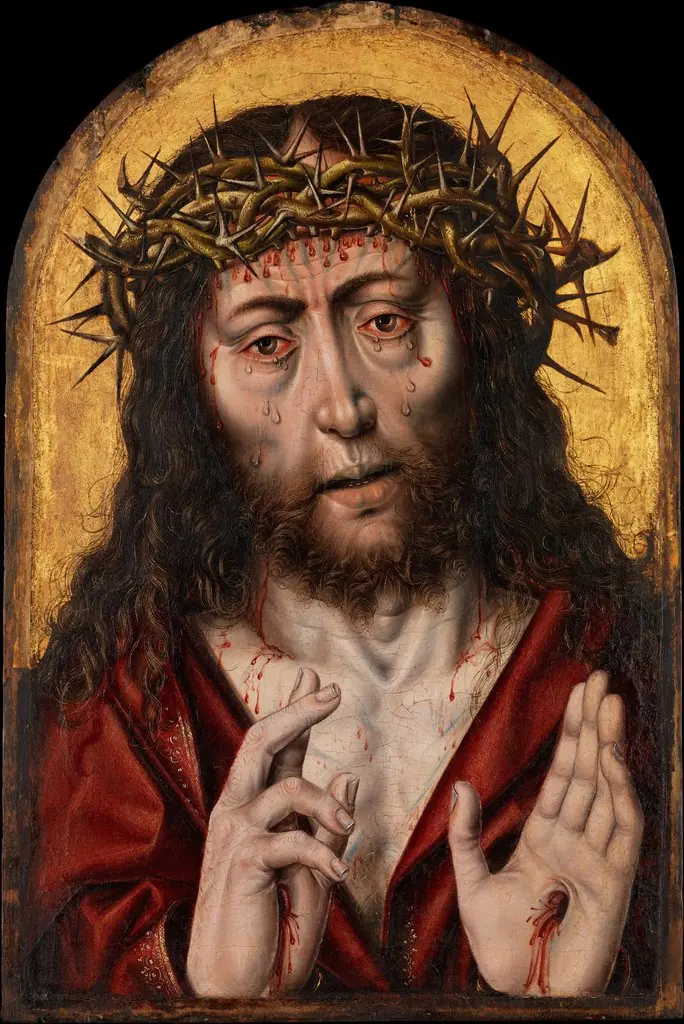
Artist & collection

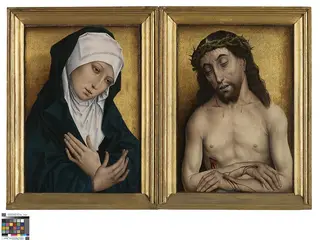 Mater Dolorosa and Man of Sorrows
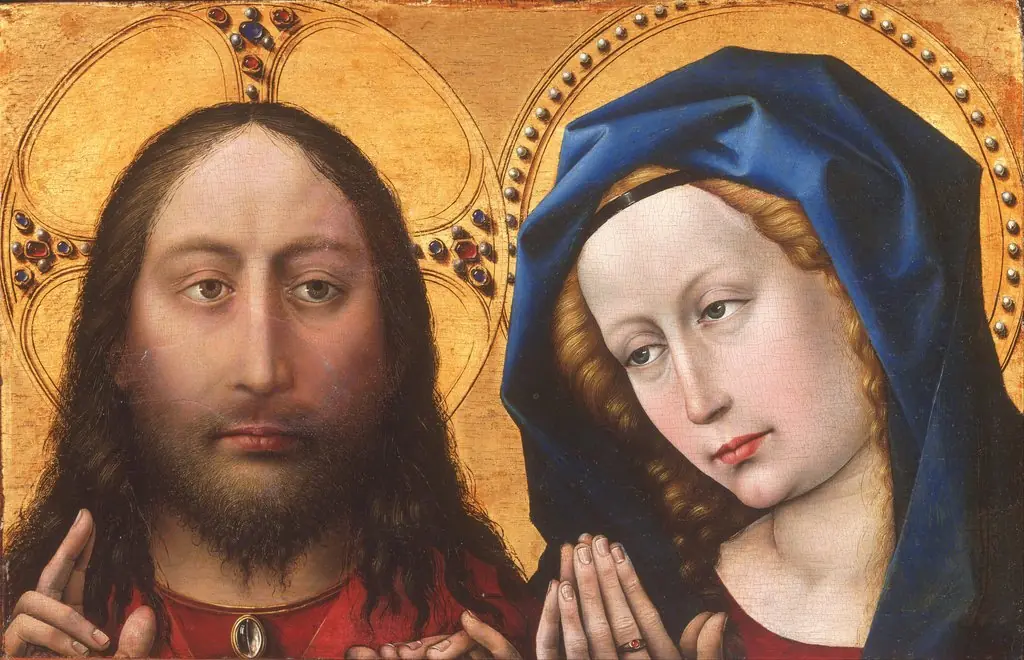 Christ and the Virgin
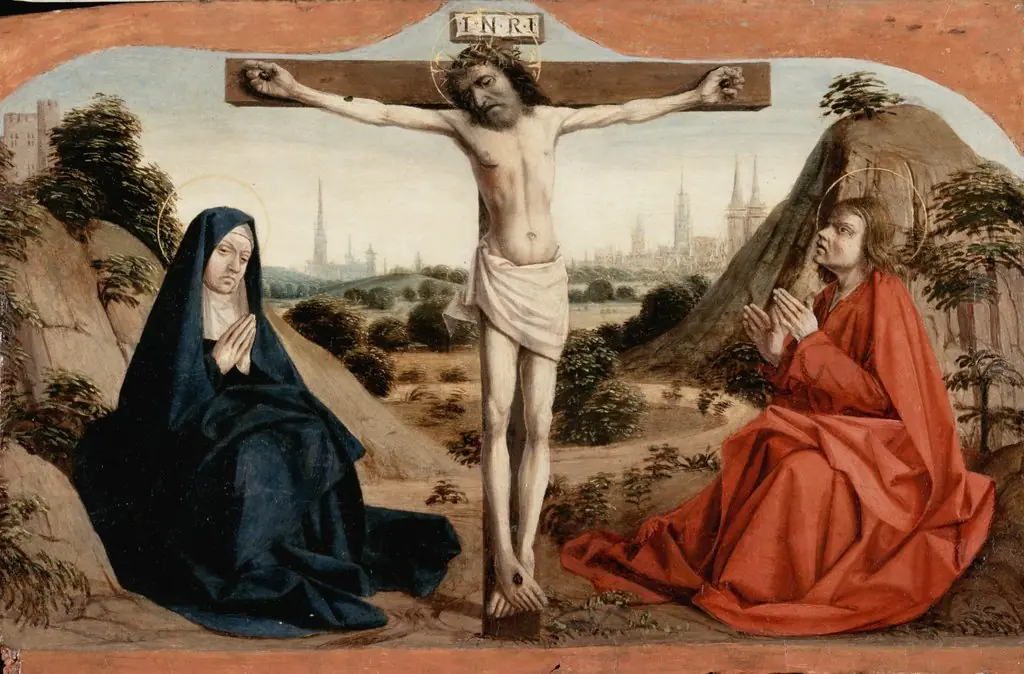 Crucifixion
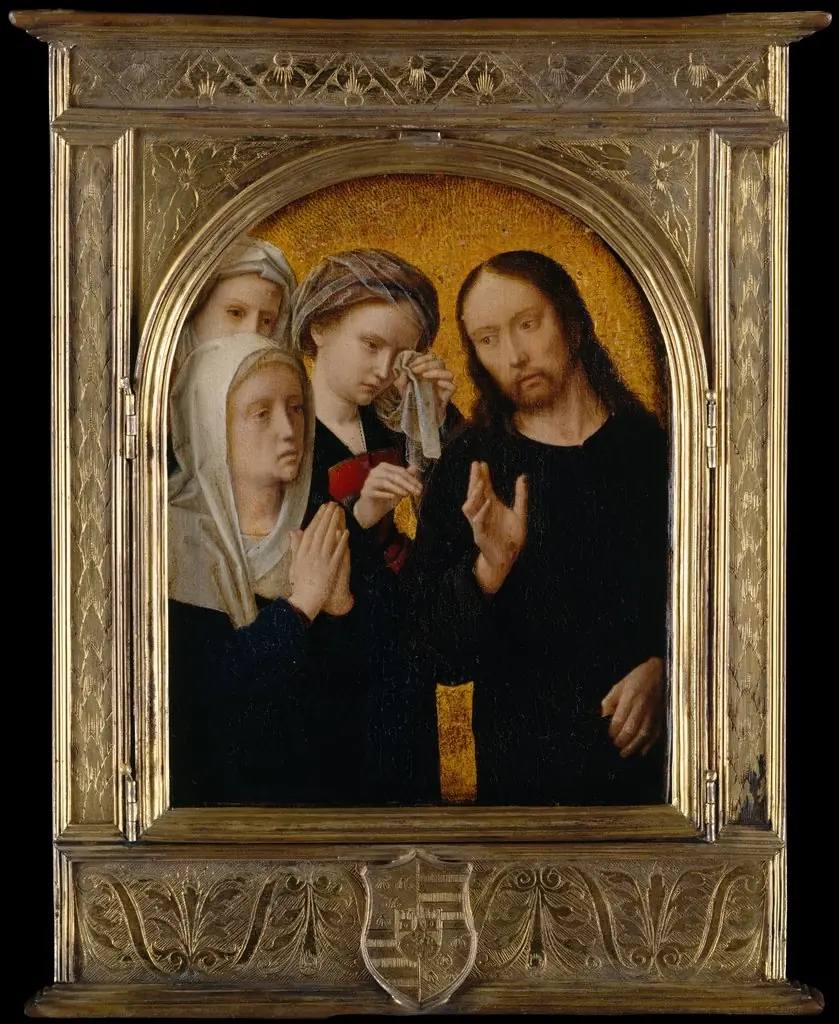 Christ Taking Leave of His Mother
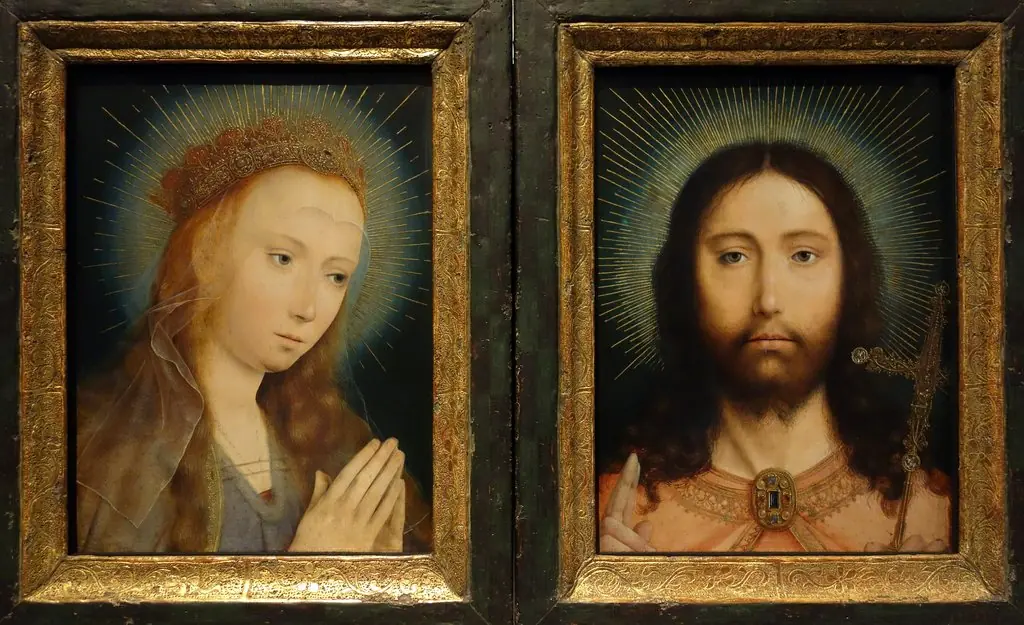 Christ Salvator Mundi and Mary at Prayer
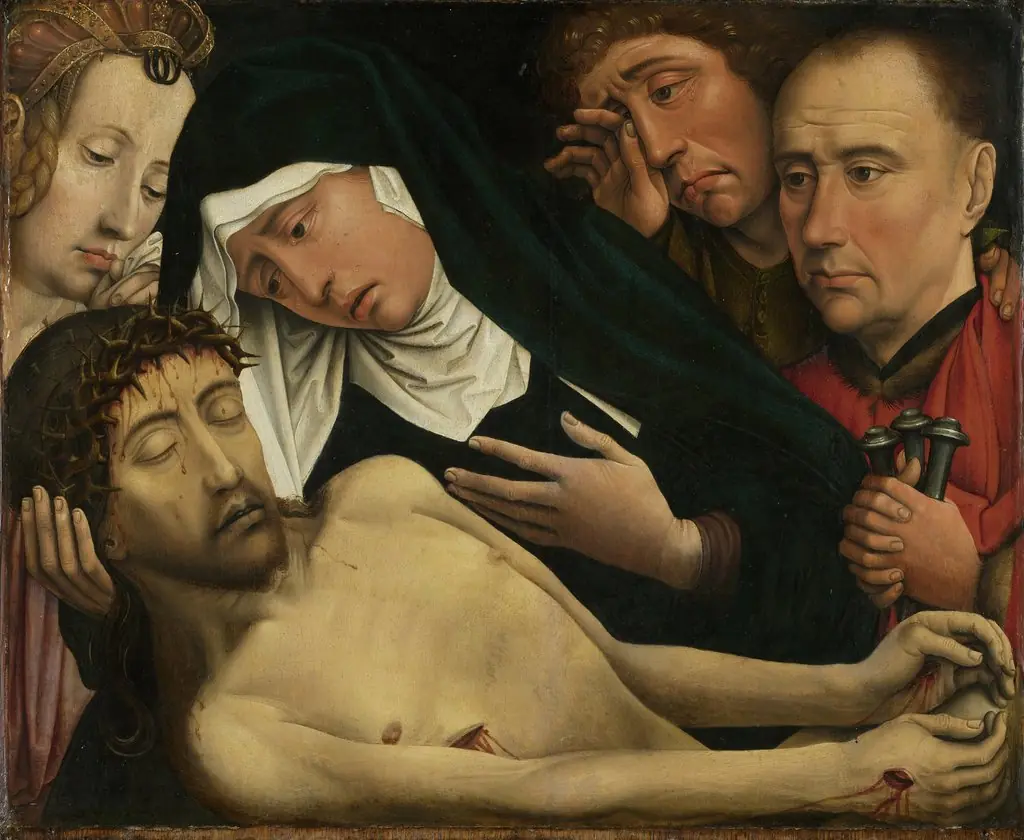 The Lamentation of Christ
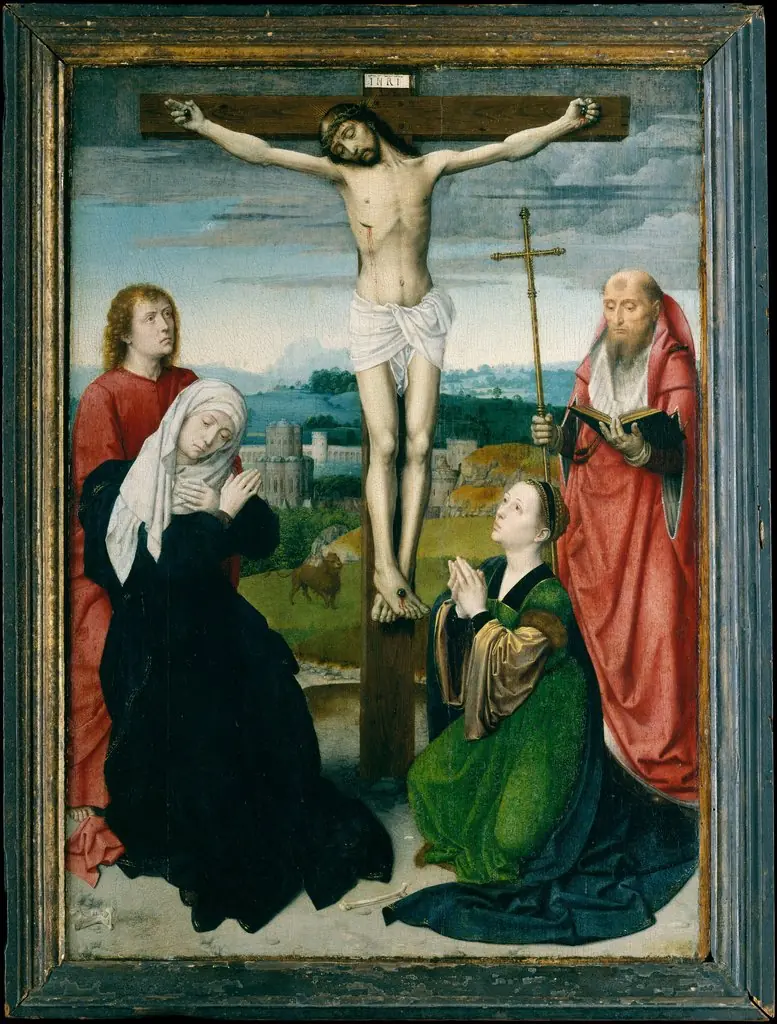 The Crucifixion
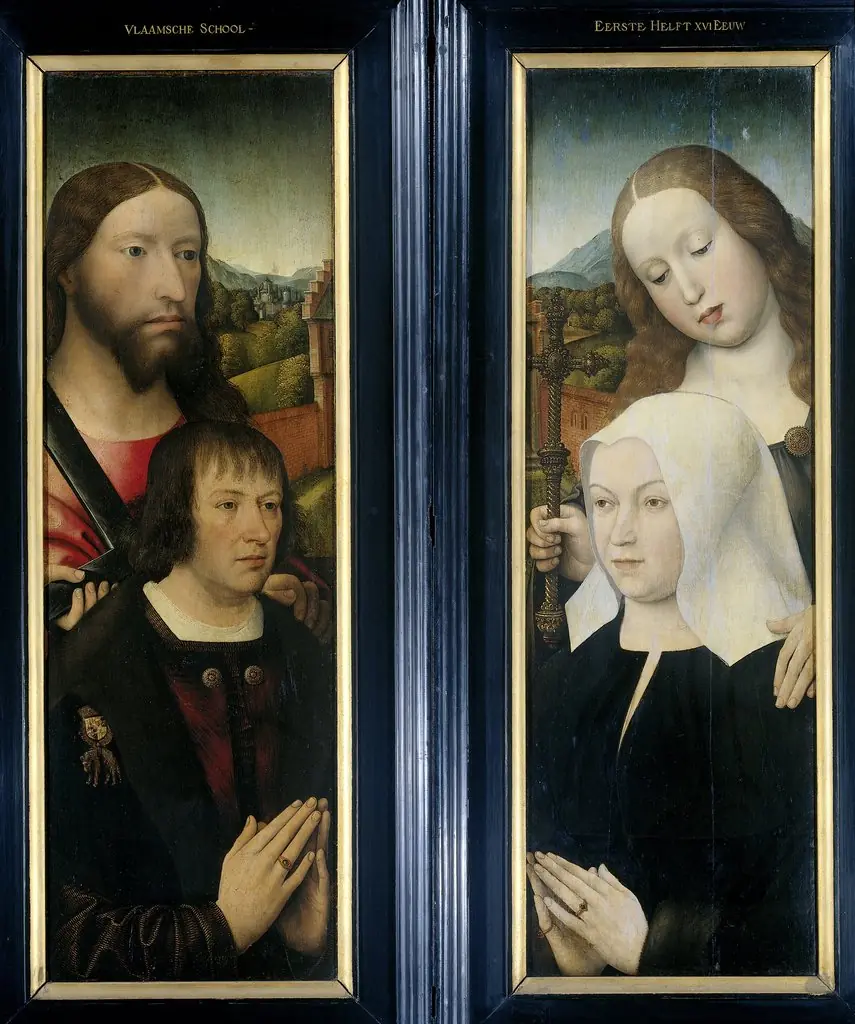 Two Wings of a Triptych with the Donor, Thomas Isaacq, accompanied by Saint Thomas (left, outer wing), and the Donor's Wife accompanied by Saint Margaret (right, outer wing)
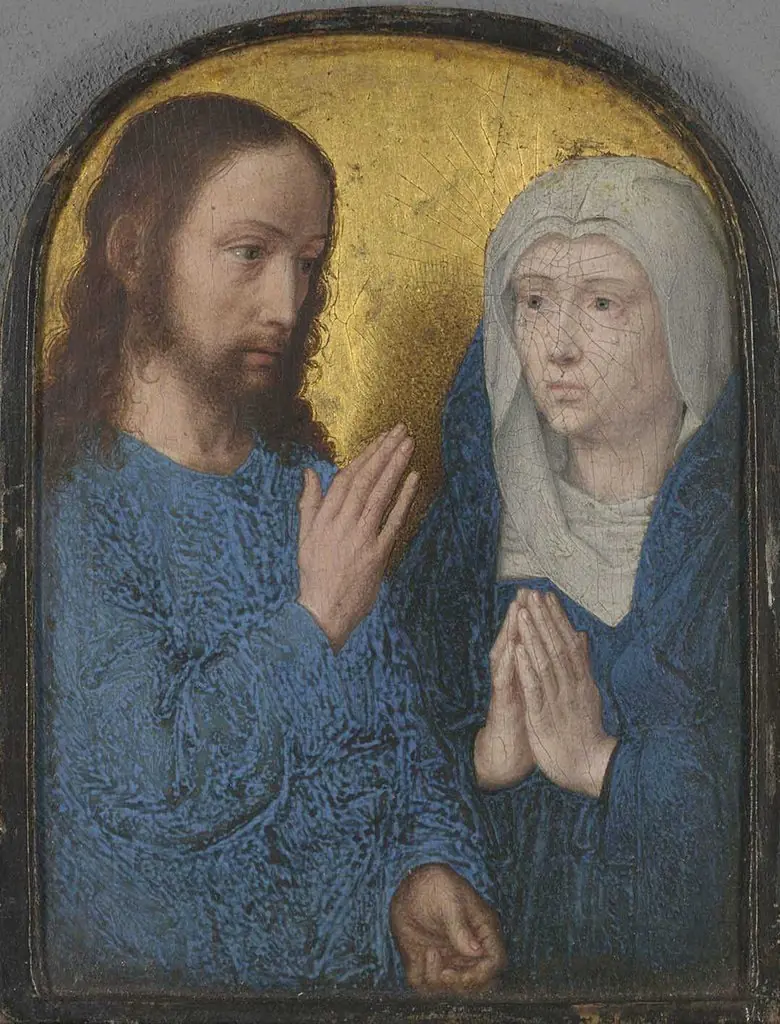 Teil eines Diptychons: Abschied Christi von Maria
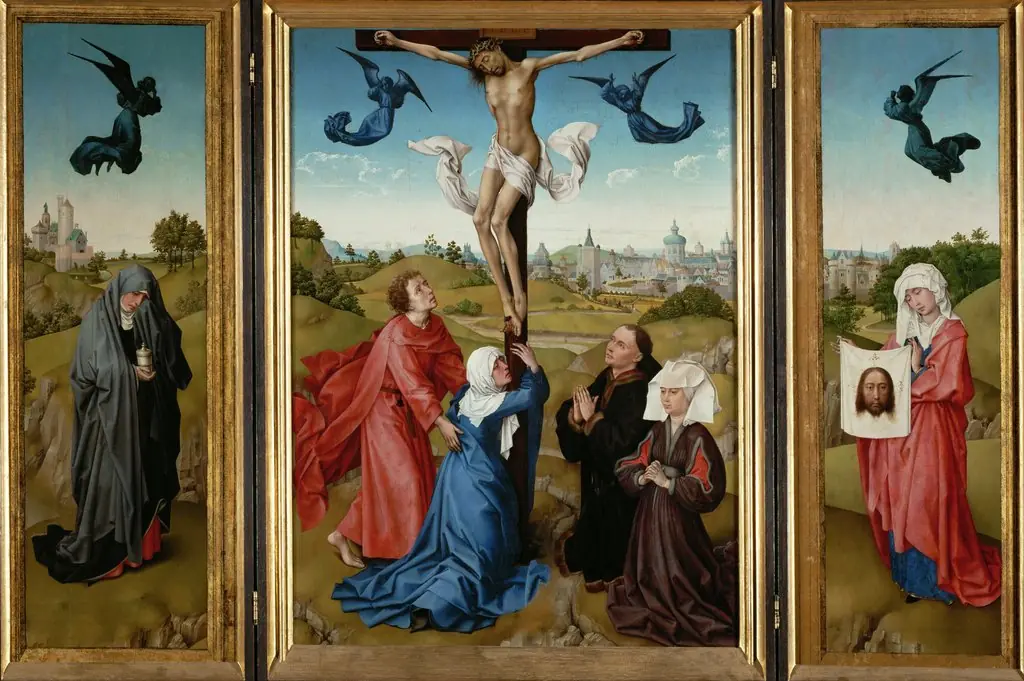 Crucifixion Triptych