Artwork
元 佚名 釋迦三尊圖 軸|Shakyamuni coming down from the mountains
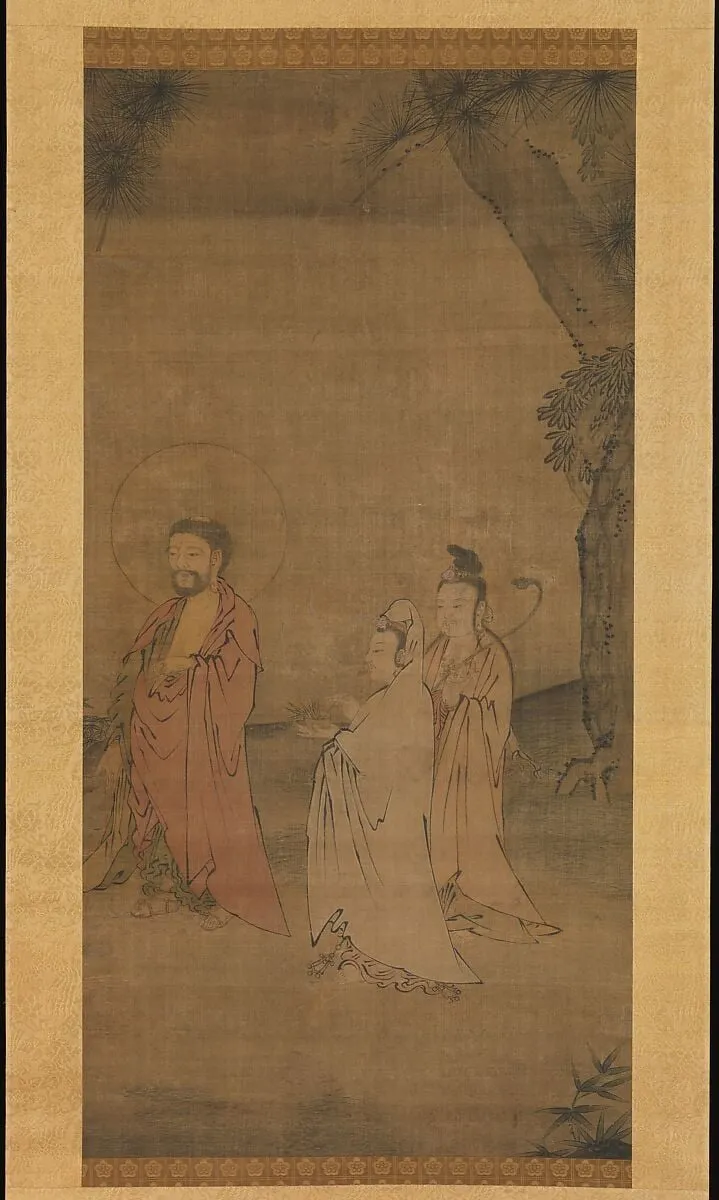
元 佚名 釋迦三尊圖 軸|Shakyamuni coming down from the mountains is an ink painting. It dates from 1300 and is held in the collection of the Metropolitan Museum of Art.
About this work
Shakyamuni descends from the mountains, surrounded by bodhisattvas and other figures. This anonymous hanging scroll dates to the late 13th or early 14th century, painted in ink and color on silk. The handling of color and composition gives the crowded scene depth and movement.
Subject & Meaning
The visual arrangement of the central Buddha flanked by Bodhisattvas emphasizes the hierarchy and spiritual relationships inherent in the faith.
The work depicts Shakyamuni Buddha accompanied by two attendant Bodhisattvas, forming a traditional 'Three Saints' composition central to Buddhist religious art. Originating from China around 1300, the painting illustrates the narrative of the Buddha descending from the mountains, a moment signifying his return to the world to teach the Dharma. As a hanging scroll created with ink and color on silk, the piece serves a devotional function within the Buddhist tradition.
The visual arrangement of the central Buddha flanked by Bodhisattvas emphasizes the hierarchy and spiritual relationships inherent in the faith. This iconographic grouping represents the core tenets of Buddhism, focusing on the figure of the Buddha and his enlightened companions, thereby functioning as a visual aid for meditation and veneration.
Technique & Style
The hanging scroll employs ink and mineral pigments on silk, a conventional Yuan-dynasty medium for devotional imagery. The composition is organized along a central vertical axis, with Shakyamuni flanked by attendant bodhisattvas, their halos and drapery rendered in delicate mineral blues, greens, and ochres over a faintly brushed cinnabar ground. Linework is fluid yet controlled, combining precise ink outlines with modulated washes to articulate volume and spatial recession.
The silk support shows typical matte sheen and slight undulation, while the pigments remain stable with only localized flaking along fold lines. Overall handling reflects professional atelier practice of the period, balancing decorative clarity with restrained modeling.
History & Provenance
The hanging scroll depicting Shakyamuni coming down from the mountains is attributed to an anonymous Chinese painter and dated to approximately 1300. Executed in ink and color on silk, the work falls within the religious genre of Yuan dynasty painting. While the specific commission details and original ownership records are not documented in available records, the piece is currently held in the collection of the Metropolitan Museum of Art.
The artwork represents a significant example of early fourteenth-century Buddhist religious art produced in China, though the identity of the artist and the precise circumstances of its creation remain unknown.
Context
The painting titled 'Shakyamuni Coming Down from the Mountains' is an anonymous Chinese hanging scroll dated to 1300, executed in ink and color on silk. It portrays the Buddha Shakyamuni surrounded by Bodhisattvas, embodying core Buddhist iconography. Classified as religious art, the work is part of the Metropolitan Museum of Art collection and was produced in China.
Its inclusion in a major museum highlights its significance as a representative example of 13th‑century Chinese Buddhist painting, illustrating the stylistic conventions of anonymous religious artists of the period.
Overview
This hanging scroll, titled "Shakyamuni Coming Down from the Mountains," is an anonymous work from the Yuan Dynasty, dating to the late 13th or early 14th century. Executed with ink and color on silk, the painting depicts a significant moment in the Buddha's spiritual journey. It presents a detailed narrative scene, centralizing Shakyamuni amidst a retinue of attendant figures.
Artist & collection

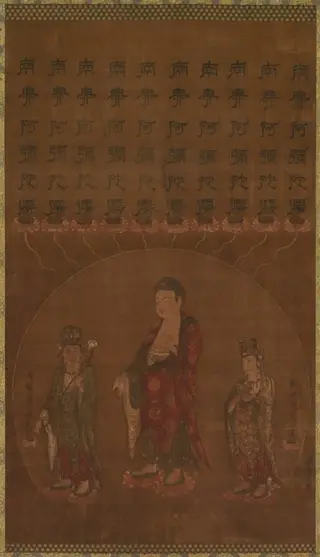 Buddha Amitābha with Two Attending Bodhisattvas
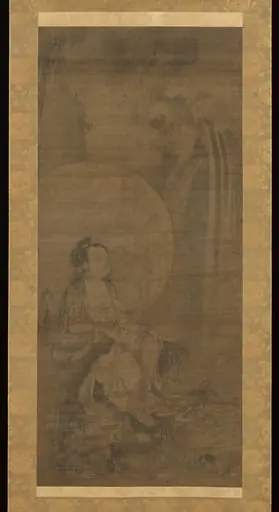 白衣観音図|White-robed Kannon
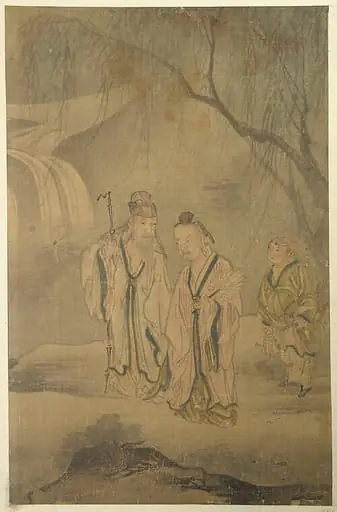 Untitled
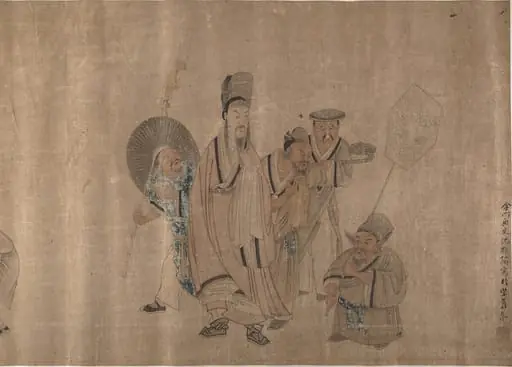 Untitled
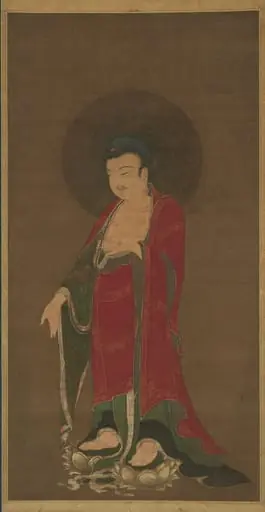 南宋 佚名 阿彌陀佛圖 軸|Buddha Amitabha Descending from His Pure Land
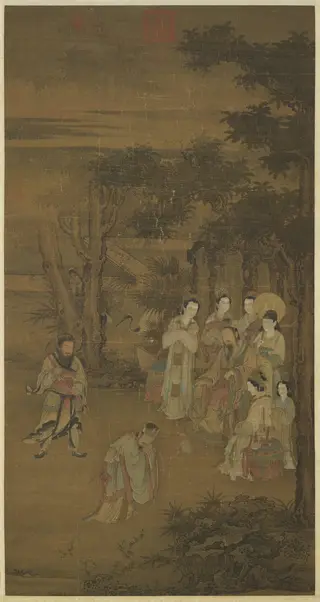 宋人卻坐圖 軸
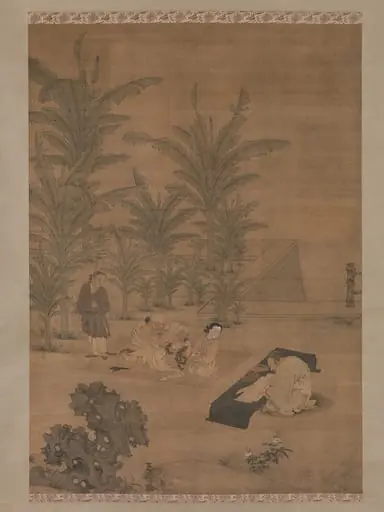 明 杜堇 伏生授經圖 軸|The Scholar Fu Sheng Transmitting the Book of Documents
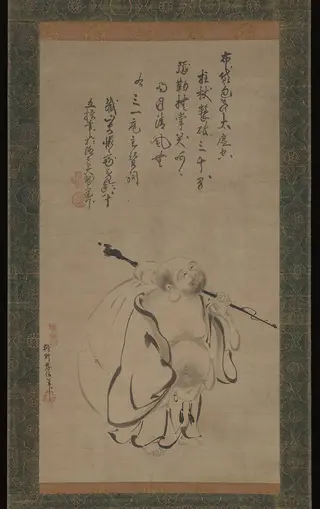 狩野孝信筆 布袋図「拄杖擊破三千界。彌勒撫掌笑呵呵,明月清風無。」|Hotei
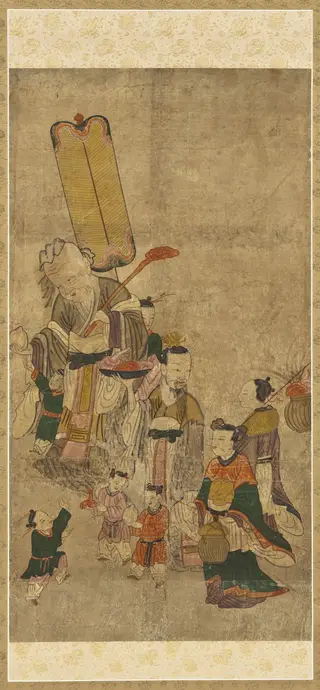 Dongfang Shuo (Tongbang Sak), one of the Eight Chinese Immortals
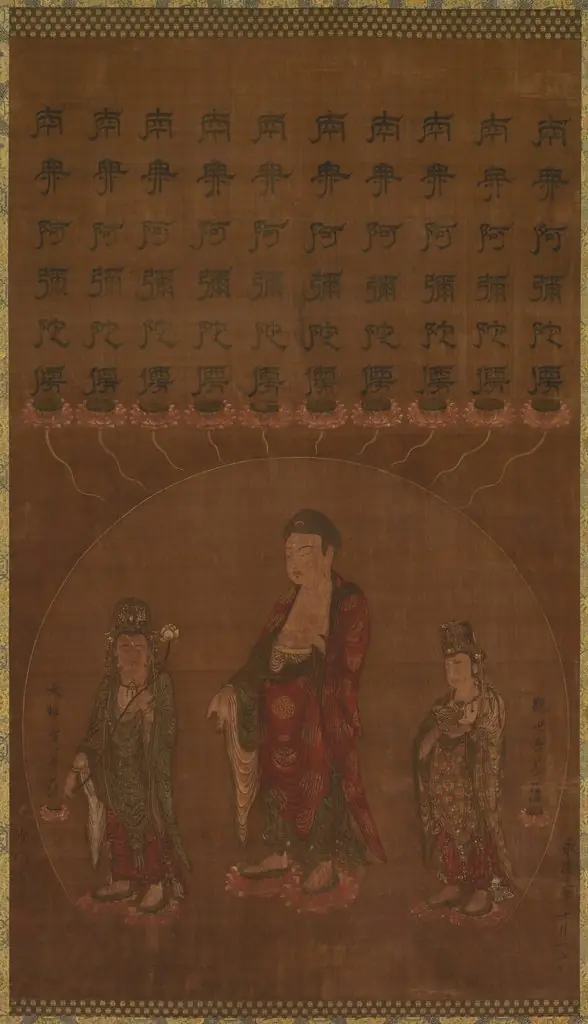 Buddha Amitābha with Two Attending Bodhisattvas