Artwork
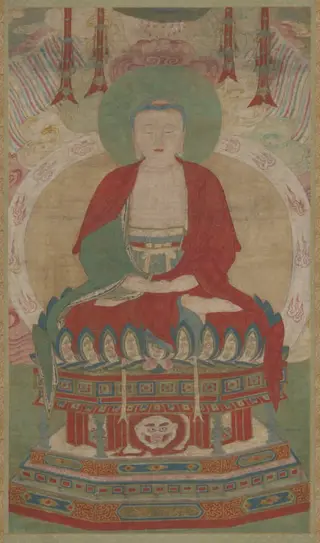
南宋 佚名 阿彌陀佛圖 軸|Buddha Amitabha Descending from His Pure Land
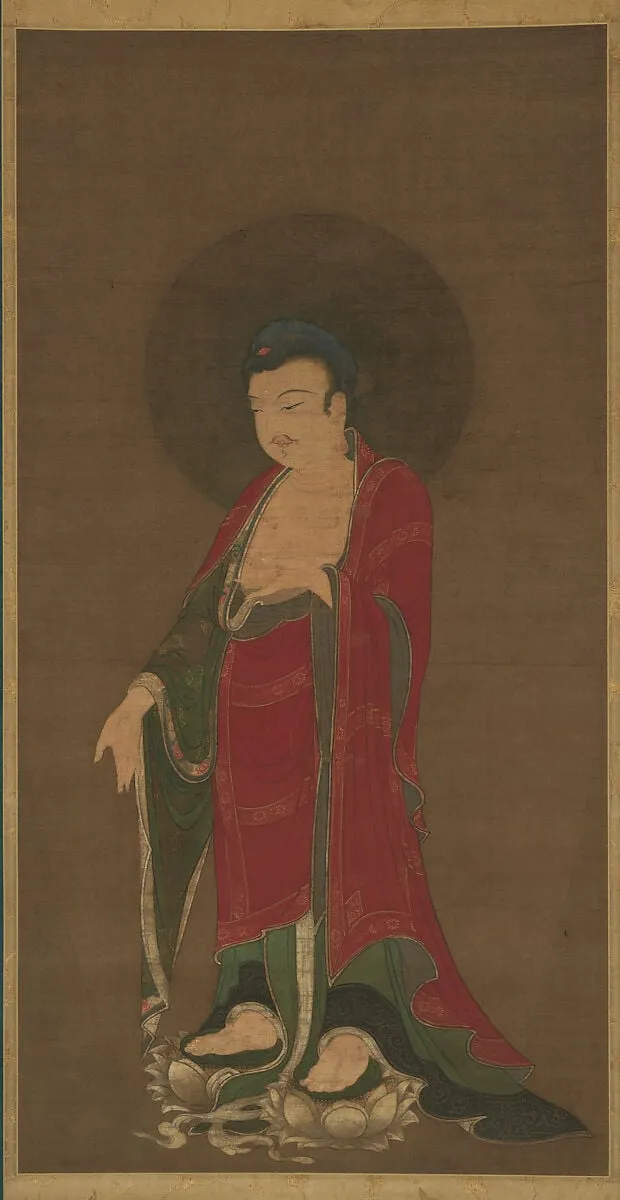
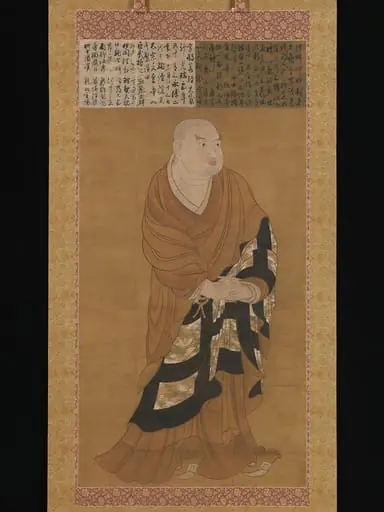
南宋 佚名 阿彌陀佛圖 軸|Buddha Amitabha Descending from His Pure Land is an ink painting. It dates from 1285 and is held in the collection of the Metropolitan Museum of Art. This hanging scroll, titled Buddha Amitabha Descending from His Pure Land, depicts the radiant figure of Amitabha Buddha.
- Accession no.
- 1987.148
- Credit line
- Rogers Fund, 1987
About this work
Subject & Meaning
The use of ink, color, and gold on silk underscores both the sacred nature of the scene and the high status of the patron who commissioned it.
The painting shows Amitābha Buddha descending from his Pure Land, a common motif in Chinese Buddhist art that emphasizes the deity’s compassionate intervention on behalf of devotees. The figure is rendered with a golden halo and a gentle, descending posture, symbolizing the descent of divine grace into the earthly realm. The use of ink, color, and gold on silk underscores both the sacred nature of the scene and the high status of the patron who commissioned it.
As part of the religious genre, the work serves as a visual meditation on salvation and the promise of rebirth in the Pure Land, reflecting the spread of Pure Land Buddhism during the Southern Song period.
Technique & Style
This Southern Song devotional painting is executed as a hanging scroll using ink, color, and gold on a silk support. The combination of mineral pigments and gold leaf or gold-based pigments applied to woven silk is characteristic of Buddhist icons produced in late 13th-century China, allowing for both luminous color and fine linear definition. The work is held in the collection of the Metropolitan Museum of Art, where its silk ground and pigment layers have been preserved as a religious painting dated to 1285.
History & Provenance
The painting is dated to 1285, placing its creation in the late Southern Song period, and was produced in China by an anonymous artist working in ink, color, and gold on silk. No information is available regarding the original commission or the circumstances of its production. The work is presently held in the collection of the Metropolitan Museum of Art, where it is classified as a religious painting depicting the Buddha and Buddhist themes.
The provenance chain between its thirteenth-century creation and its accession by the Metropolitan Museum of Art is not documented in the available sources.
The painting is held by the Metropolitan Museum of Art, as recorded in its collection data. Wikidata identifies the work as belonging to that institution, with no further accession number provided in the available sources. The work is classified as a painting within the museum's holdings and is associated with a Chinese origin.
No exhibition history is documented in the available sources, and no prior ownership, loan record, or display venue beyond the Metropolitan Museum of Art's collection is indicated.
Overview
This hanging scroll, titled Buddha Amitabha Descending from His Pure Land, depicts the radiant figure of Amitabha Buddha. Rendered in ink, color, and gold on silk, the artwork presents the deity floating amidst swirling clouds. His right hand is raised in a gesture of teaching, and his robes are adorned with intricate patterns, creating a shimmering effect. The composition includes smaller figures below, suggesting a devotional context for its creation.
Context
Created during the Southern Song dynasty, this artwork belongs to a tradition of Buddhist painting designed to support spiritual practice. Its purpose was to facilitate the visualization of key tenets of Pure Land Buddhism, particularly the aspiration for rebirth in Amitabha's Pure Land. Such images were integral to monastic and lay devotion, guiding meditation and prayer within the broader framework of Buddhist art.
Artist & collection

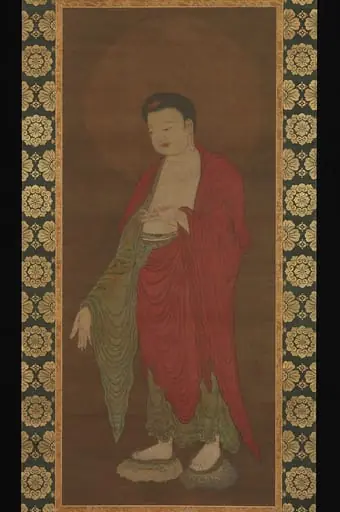
- 南宋 佚名 阿彌陀佛圖 軸|Buddha Amitabha Descending from his Pure Land
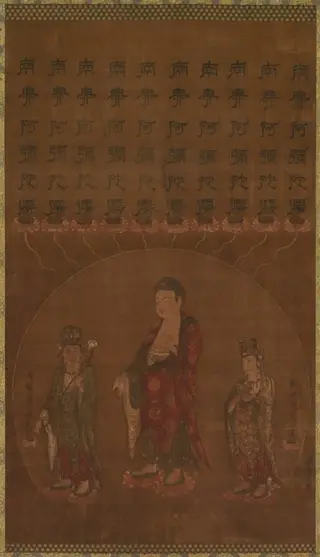 Buddha Amitābha with Two Attending Bodhisattvas
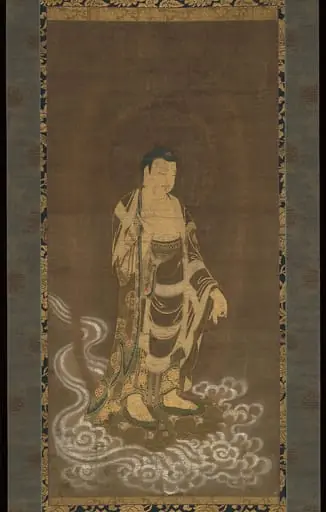 阿弥陀如来像|Welcoming Descent of Amida Buddha
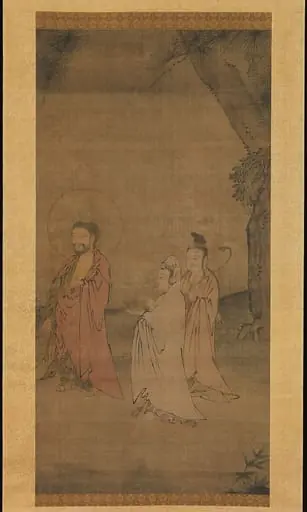 元 佚名 釋迦三尊圖 軸|Shakyamuni coming down from the mountains
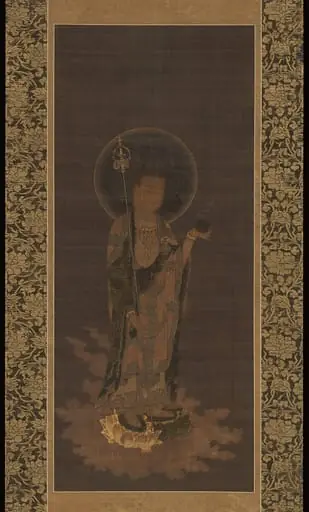 地蔵菩薩来迎図|Welcoming Descent of the Bodhisattva Jizō
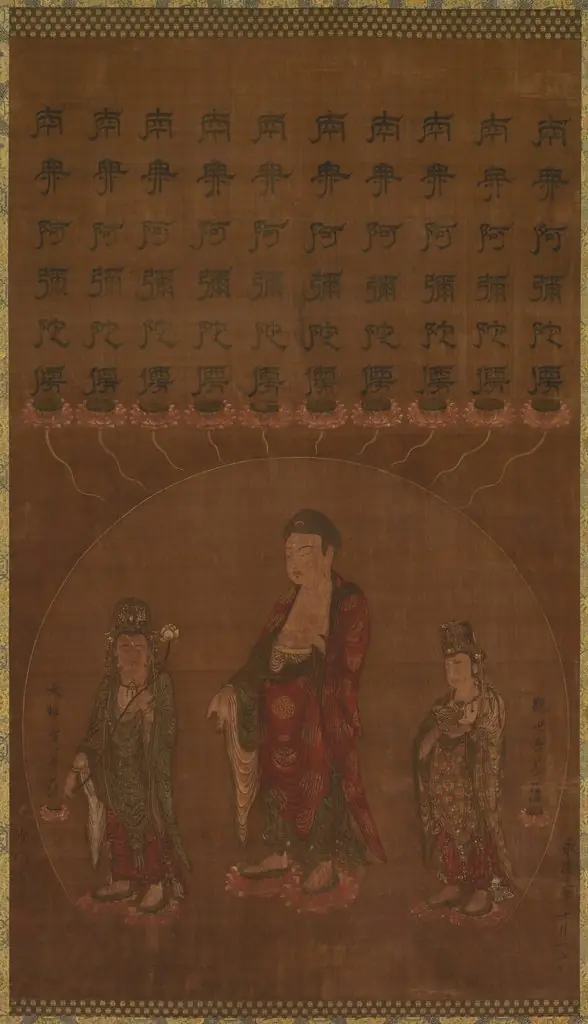 Buddha Amitābha with Two Attending Bodhisattvas
 Seated Amitābha