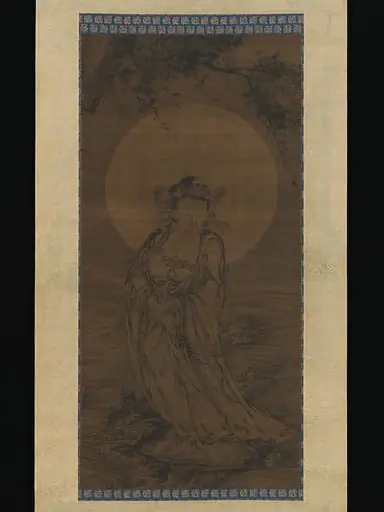
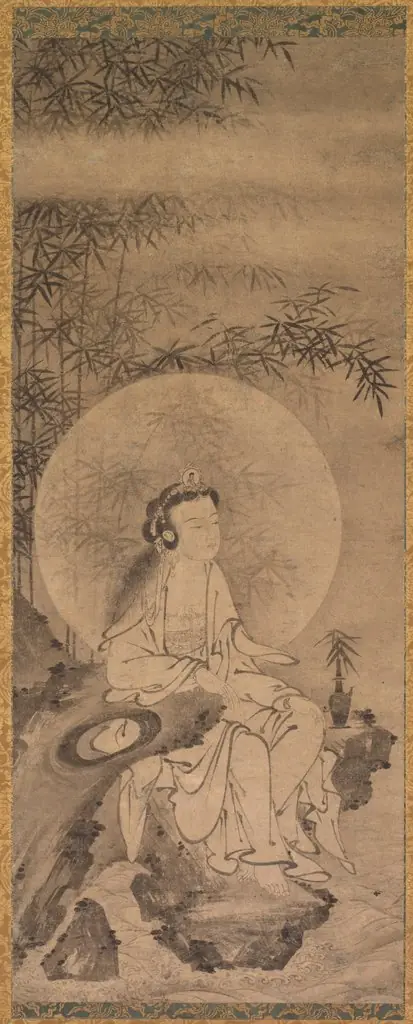
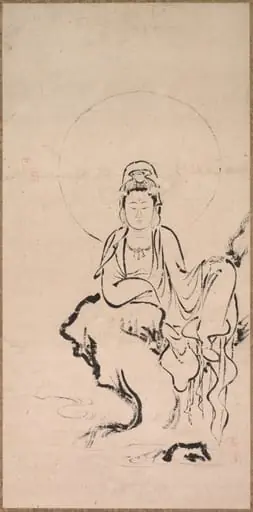
Artwork
白衣観音図|White-robed Kannon
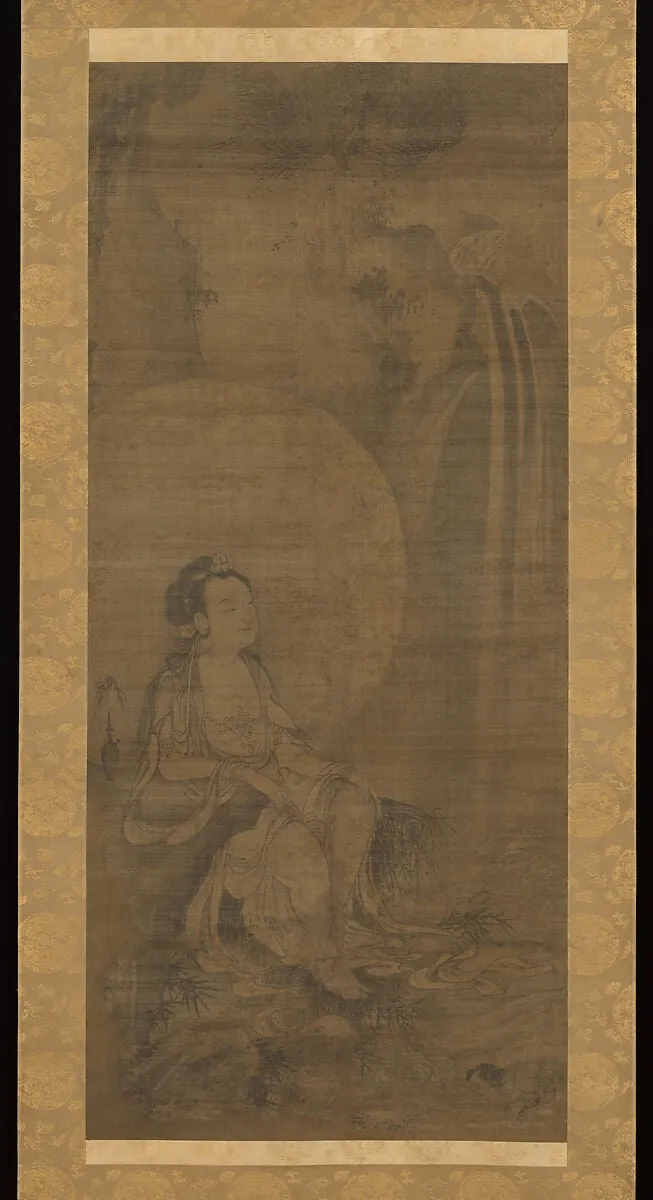
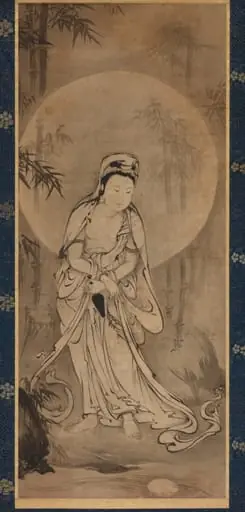
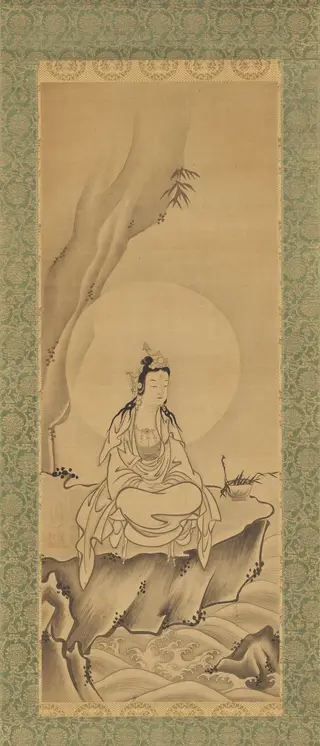
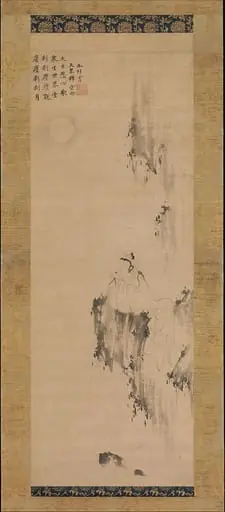
白衣観音図|White-robed Kannon is an ink painting. It dates from 1364 and is held in the collection of the Metropolitan Museum of Art. The "White-robed Kannon" is an ink on silk hanging scroll depicting the Buddhist deity of compassion.
About this work
Subject & Meaning
The painting depicts the bodhisattva Avalokiteśvara, known in Japanese as Kannon, robed in white.
The painting depicts the bodhisattva Avalokiteśvara, known in Japanese as Kannon, robed in white. The figure is shown with attributes typically associated with this deity, including a serene expression and flowing garments, rendered in monochrome ink on silk. The presence of a waterfall in the background underscores the bodhisattva's association with compassion and the salvific flow of Buddhist teachings, as waterfalls symbolize the continuous and boundless nature of mercy.
The anonymous artist's rendering emphasizes Kannon's role as a merciful savior, a central figure in East Asian Buddhist iconography, whose white robes signify purity and spiritual clarity.
Technique & Style
Executed as a hanging scroll, the work employs ink on silk, a support typical of Japanese Buddhist paintings from the mid-14th century. The brushwork combines delicate line rendering of the white-robed Kannon with atmospheric washes that suggest a cascading waterfall, creating a sense of ethereal movement. Stylistically, the composition follows fourteenth-century devotional conventions, emphasizing graceful drapery, subtle gradation of tones, and a balanced spatial arrangement that highlights the figure's serene expression.
The piece is classified as a religious painting of the Avalokiteśvara genre, reflecting contemporary devotional aesthetics. No detailed condition report is available in the cited records.
History & Provenance
The White-robed Kannon painting entered the collection of the Metropolitan Museum of Art in 1985 as accession number 1985.120.2. Its creation date is recorded as 1364. The work is attributed to an anonymous painter and depicts the bodhisattva Avalokiteśvara, also known as Kannon, in a white robe.
It is executed as a hanging scroll in ink on silk and features imagery associated with Avalokiteśvara, including a waterfall and Buddhist iconography. The object's provenance prior to its acquisition by the museum is not documented in the provided sources, which likewise contain no details regarding its exhibition history.
Context
The White-robed Kannon, a 14th-century hanging scroll attributed to an anonymous Japanese painter, exemplifies medieval Japanese Buddhist art. Executed in ink on silk in 1364, the work portrays Avalokiteśvara amid a waterfall, underscoring its devotional function. Its inclusion in the Metropolitan Museum of Art's collection highlights its significance within scholarly discussions of Asian religious painting.
As an anonymous piece, it reflects the collective production of devotional imagery in medieval Japan and serves as a key reference for studies of anonymous Buddhist art of the period.
Overview
The "White-robed Kannon" is an ink on silk hanging scroll depicting the Buddhist deity of compassion. The composition features a slender figure standing on a lotus leaf, poised above a cascading waterfall. The artist employs a monochromatic palette to render a serene landscape, where mist envelops rocky cliffs and a small deer drinks from a stream below. This work exemplifies a contemplative approach to sacred imagery.
Artist & collection