Artwork
明景泰 佚名 北斗中斗本命星君圖 軸|Star deities of the northern and central dippers
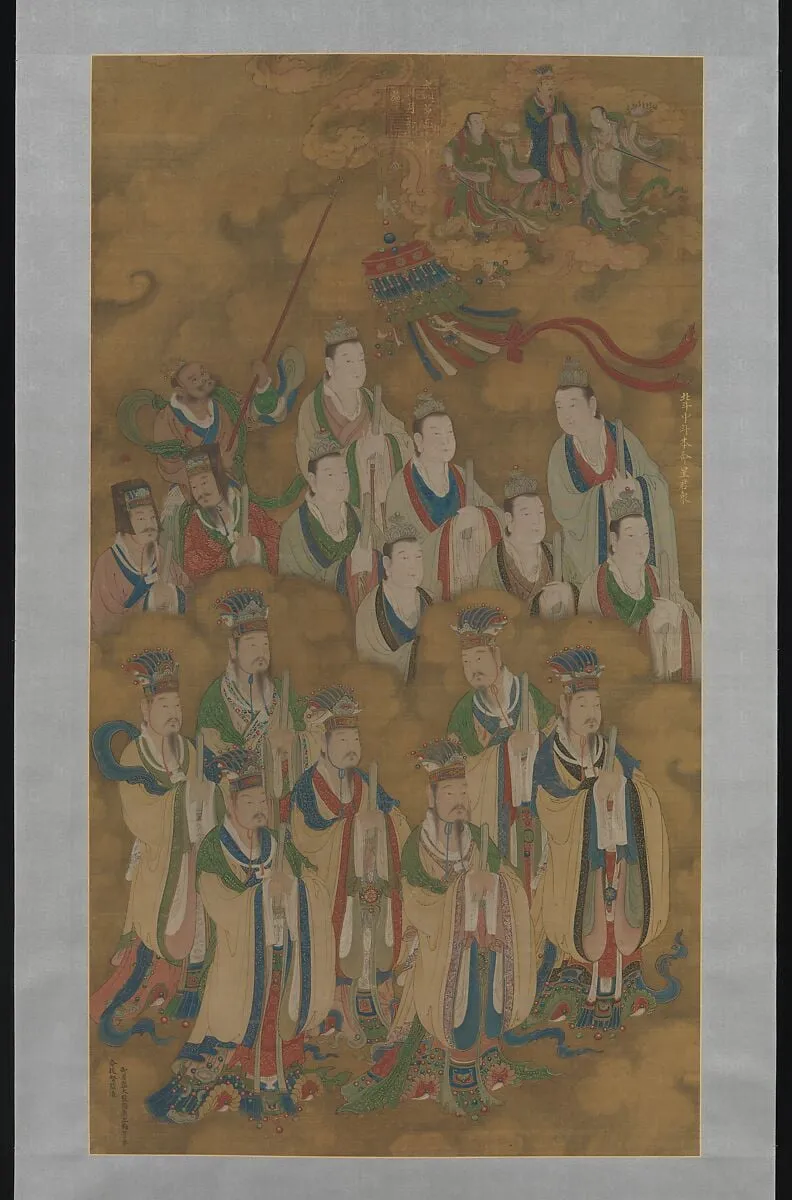
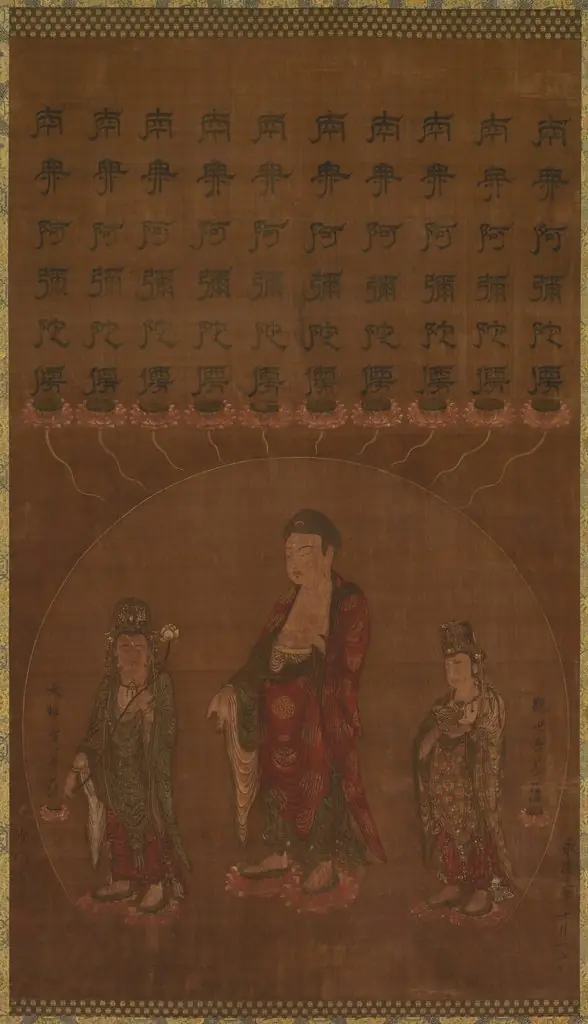
明景泰 佚名 北斗中斗本命星君圖 軸|Star deities of the northern and central dippers is an ink painting. It dates from 1454 and is held in the collection of the Metropolitan Museum of Art. This hanging scroll, dated 1454, depicts the Star Deities of the Northern and Central Dippers, two prominent figures in Daoist cosmology.
About this work
Two Daoist deities float above a blue sky, holding colorful disks, their robes flowing and their faces calm but stern. A date of 1454 on the scroll makes it one of the few dated works from this period, and the careful brushwork still reads clearly today.
Subject & Meaning
Created in 1454 by an anonymous artist, this hanging scroll depicts the Star Deities of the Northern and Central Dippers, figures central to Taoist cosmology.
Created in 1454 by an anonymous artist, this hanging scroll depicts the Star Deities of the Northern and Central Dippers, figures central to Taoist cosmology. The work functions as a religious icon representing specific celestial deities associated with the Big Dipper and its surrounding stars. In Taoist tradition, these star gods are believed to govern human destiny and longevity, often linked to an individual's birth year or 'benming' (本命).
The painting's classification as religious art underscores its role in spiritual practice, likely serving as an object of veneration or ritual focus. By visualizing these powerful astral entities, the artwork embodies the Taoist belief in the profound influence of the heavens on earthly existence and the potential for divine intervention in human affairs.
Technique & Style
Executed in 1454, this hanging scroll utilizes ink and mineral pigments applied to a silk support. The work functions as a religious painting within the Taoist tradition, depicting specific star deities associated with the Northern and Central Dippers. While the artist remains anonymous, the piece demonstrates the formal conventions of Chinese devotional art from the mid-Ming dynasty.
The combination of ink washes and opaque colors on the woven silk surface creates the visual texture characteristic of ritual imagery from this period. Currently held by the Metropolitan Museum of Art, the object's classification as a hanging scroll indicates its intended vertical display for worship or contemplation.
History & Provenance
The work titled 明景泰 佚名 北斗中斗本命星君圖 was painted in 1454 in China by an anonymous hand, as recorded in its internal catalogue entry and confirmed by the Metropolitan Museum of Art’s Wikidata entry. It is a hanging scroll executed in ink and colour on silk, depicting the Taoist star deities of the northern and central dippers. The painting is classified as religious art and is presently held in the Metropolitan Museum of Art’s collection, which notes its inception date as 1454 and its place of origin as China.
No documentation of a specific commission survives, and the work’s early ownership before museum acquisition is not detailed in the available sources.
Overview
This hanging scroll, dated 1454, depicts the Star Deities of the Northern and Central Dippers, two prominent figures in Daoist cosmology. Executed in ink and color on silk, the work features the deities suspended against a solid blue sky, a compositional choice that isolates their divine presence. The figures are rendered with flowing robes and hold colorful disks, likely representing celestial bodies or ritual implements.
Their expressions maintain a characteristic Daoist balance of serenity and stern authority. The inscription of the year 1454 on the scroll provides a rare chronological anchor for mid-15th-century Chinese religious painting, a period often lacking securely dated examples. Although the artist remains anonymous, the meticulous brushwork and precise application of pigment demonstrate a high level of technical proficiency typical of court or temple workshops of the Ming dynasty.
This piece serves as a significant document of Daoist iconography and devotional art from the景泰 (Jingtai) era, illustrating the visual language used to venerate astral powers believed to govern human destiny.
Context
This depiction of Daoist star deities connects to a broader tradition of religious iconography in Chinese art. Viewers interested in similar representations of divine figures can find comparable examples within the collection of Chinese paintings at the Metropolitan Museum of Art, illustrating the continuity and variations in the portrayal of such celestial beings across different eras.
Artist & collection

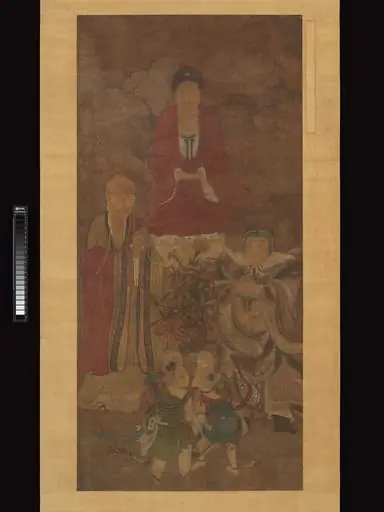 明 佚名 禮佛圖 軸|Shakyamuni with luohan, heavenly king, and boys
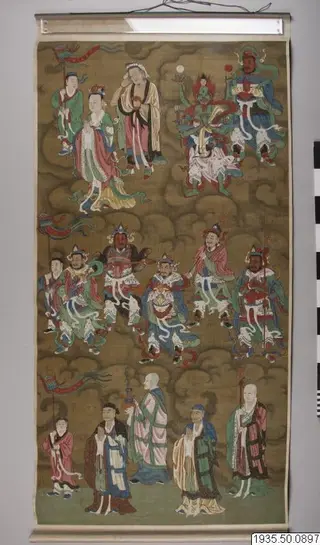 picture roller, duck, painting, painting,
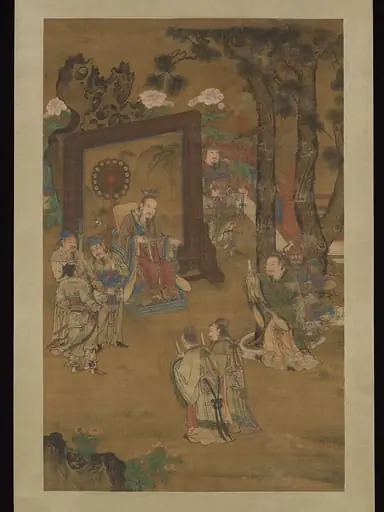 明 劉俊 納諫圖 軸|Remonstrating with the emperor
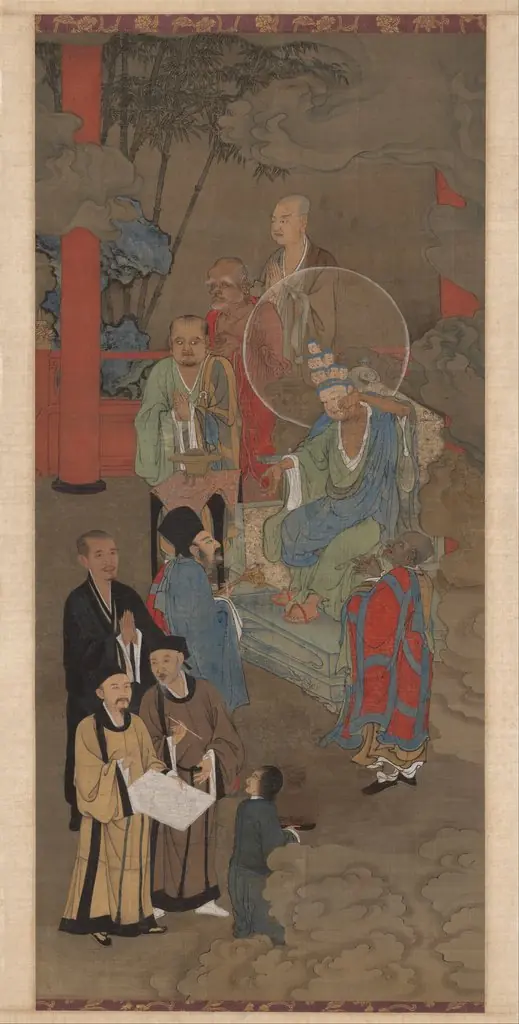 Lohan manifesting himself as an eleven-headed Guanyin
 明/清 佚名 舊傳李公麟 法海靈山圖 冊|Procession of Arhats
 The Eight Hosts of Deva, Naga, and Yakshi
 宋人卻坐圖 軸
 明嘉靖 佚名 王元帥圖 軸|Marshal Wang
 Buddha Amitābha with Two Attending Bodhisattvas