Artwork
明 佚名 奉神圖 卷|Canonization scroll of Li Zhong
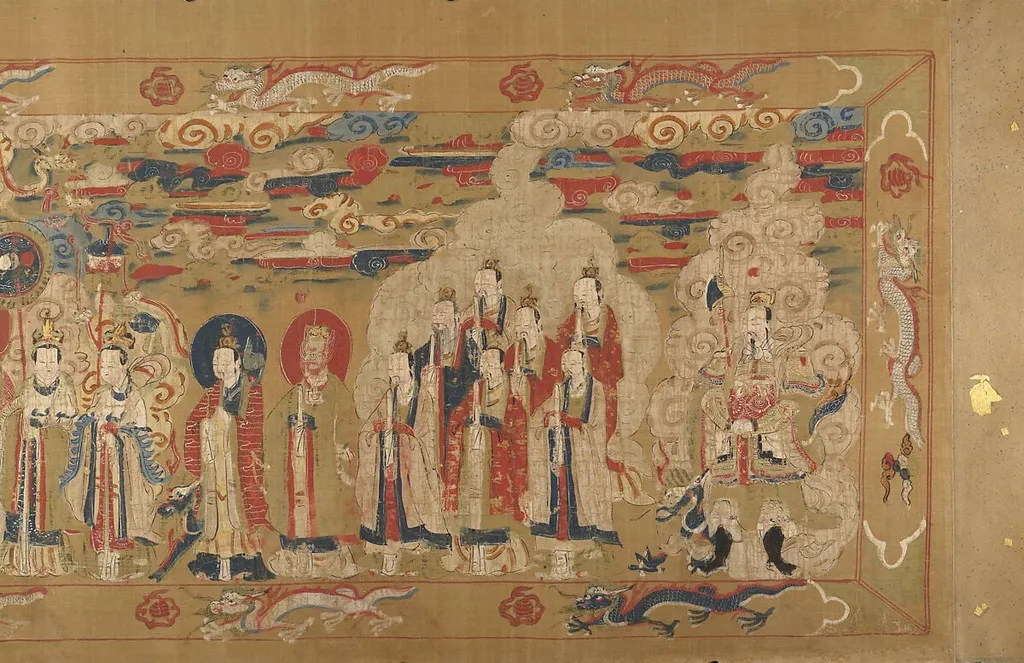
明 佚名 奉神圖 卷|Canonization scroll of Li Zhong is an ink painting. It dates from 1641 and is held in the collection of the Metropolitan Museum of Art. This handscroll, titled Canonization scroll of Li Zhong, is an anonymous Ming Dynasty painting rendered in ink, color, and gold on silk.
About this work
Subject & Meaning
This iconography reflects the work's function as a visual narrative of Taoist canonization and the political‑religious interplay of the period.
The 1641 handscroll, attributed to an anonymous painter, portrays a Taoist canonization scene that includes a dragon, a male figure, and a female figure, symbolizing the divine endorsement of Li Zhong; the dragon serves as a celestial emblem of authority, while the paired figures represent mortal participants in the ritual, together conveying spiritual legitimacy and imperial sanction within a religious context. This iconography reflects the work's function as a visual narrative of Taoist canonization and the political‑religious interplay of the period.
Technique & Style
The Canonization scroll of Li Zhong is executed as a silk handscroll using ink, color, and gold pigment. The composition employs delicate line work and subtle color washes to articulate the figures and dragon, characteristic of Ming-dynasty religious painting. Stylistic handling includes fine brushwork for facial features and flowing drapery, with gold accents, such as halos and decorative elements, applied selectively to highlight sacred or symbolic areas.
Formal qualities emphasize verticality and sequential movement, typical of handscroll format, guiding the viewer’s gaze through the narrative sequence. The overall condition appears stable, with no overt damage reported in available records.
History & Provenance
The handscroll known as the Canonization of Li Zhong is a Ming dynasty work created by an anonymous artist. A colophon inscribed on the silk supports dates the piece to 1641. Executed in ink, color, and gold, the religious painting depicts Taoist themes alongside figures of men, women, and a dragon.
While the specific commissioning patron and original creation context remain undocumented in available records, the work's provenance traces to the collection of the Metropolitan Museum of Art in New York. The scroll is currently housed in the museum, which identifies its origin as China. No further details regarding the chain of ownership prior to its acquisition by the museum are provided in the current sources.
The Canonization scroll of Li Zhong is held in the collection of the Metropolitan Museum of Art, as recorded in the institution's catalogue and confirmed by structured data linking the work to that museum's holdings. The painting, a handscroll executed in ink, color, and gold on silk, is classified under the museum's paintings department and is associated with a colophon dated 1641. No specific accession number, accession year, or detailed exhibition history is documented in the available sources for this work.
The available records establish the current custodial location at the Metropolitan Museum of Art but do not provide inventory identifiers, prior ownership chains, or a list of past exhibitions.
Legacy
The Canonization scroll of Li Zhong, produced in 1641 by an unknown Ming‑era hand, exemplifies religious painting through its ink‑color and gold decoration on silk. Depicting Taoist motifs such as a dragon alongside figures of a man and a woman, the handscroll was created for ritual purposes and later entered the Metropolitan Museum of Art, where it is catalogued as a work by an anonymous painter. Its presence in a major museum collection has made it a reference point for studies of anonymous Ming religious art, and scholars cite it when discussing the visual language of Li Zhong worship in early Chinese painting.
Overview
This handscroll, titled Canonization scroll of Li Zhong, is an anonymous Ming Dynasty painting rendered in ink, color, and gold on silk. It depicts a pivotal moment in a Daoist narrative: the apotheosis of a man into a deity. The vibrant composition features a kneeling couple before a majestic dragon, while celestial priests are shown amidst gleaming gold clouds, illustrating a significant spiritual transformation.
Artist & collection

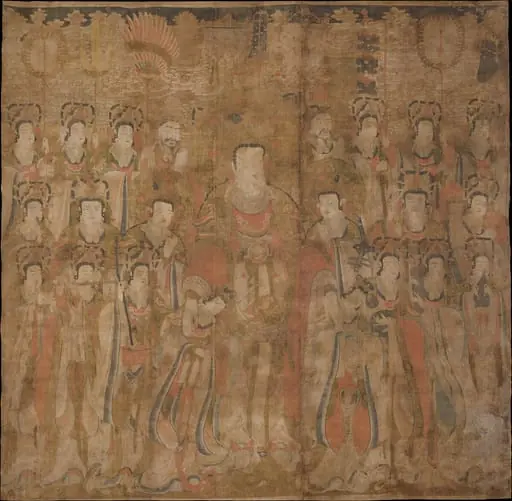 작자미상 범천왕을 중심으로 한 신중도 조선|作者未詳 神衆圖 朝鮮|Brahma with Attendants and Musicians
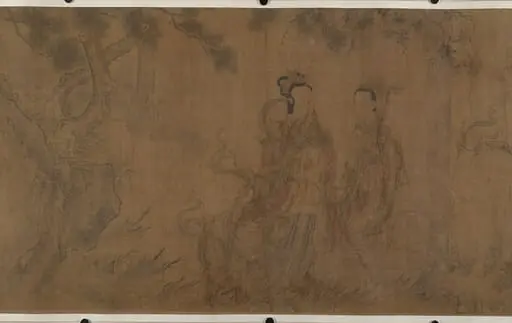 元? 佚名 仿李公麟 屈原九歌圖 卷|The Nine Songs: Illustrations to the poems of Qu Yuan (343–277 B.C.)
 Buddha Amitābha with Two Attending Bodhisattvas
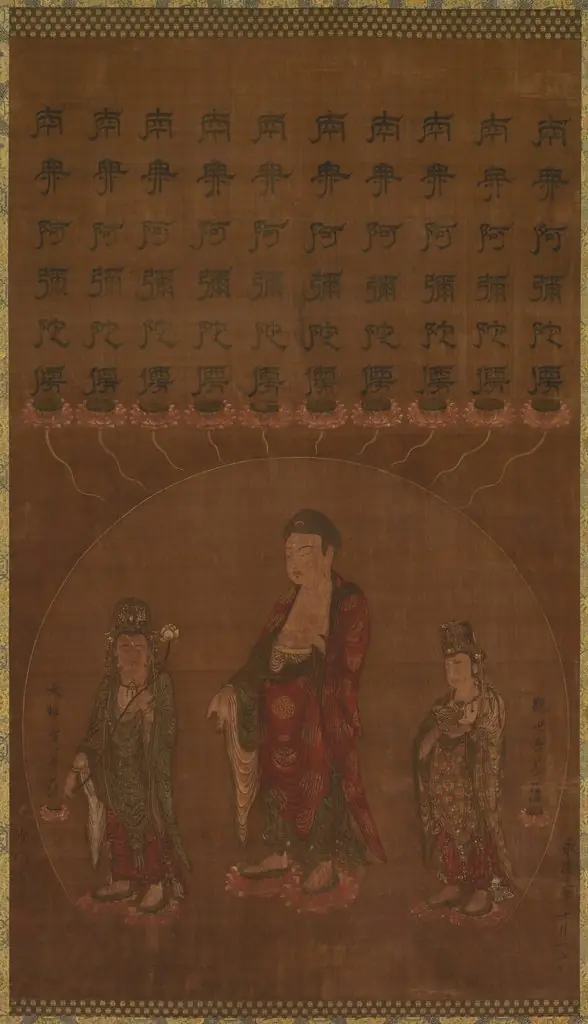 Buddha Amitābha with Two Attending Bodhisattvas
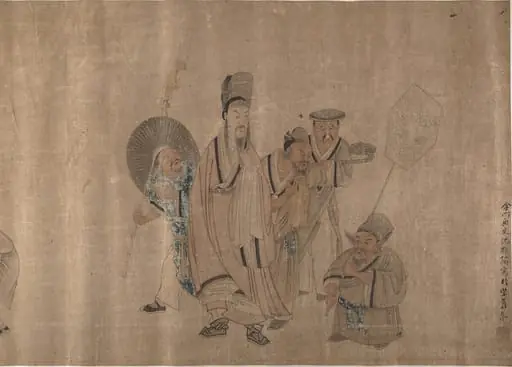 Untitled
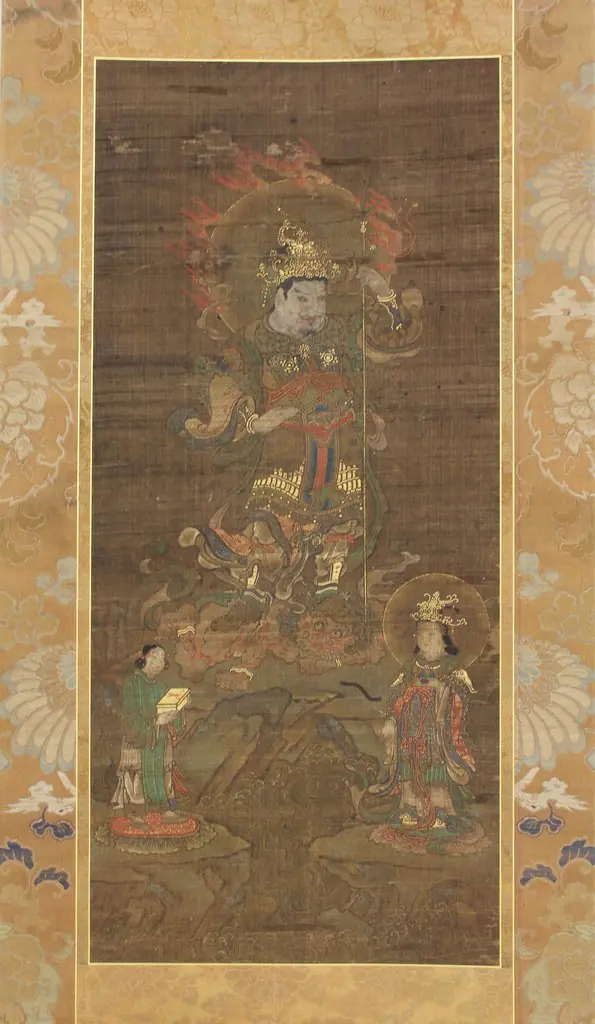 Mount Kurama Mandala: Bishamonten Triad (Kuramayama mandara: Bishamonten sanzonzō)
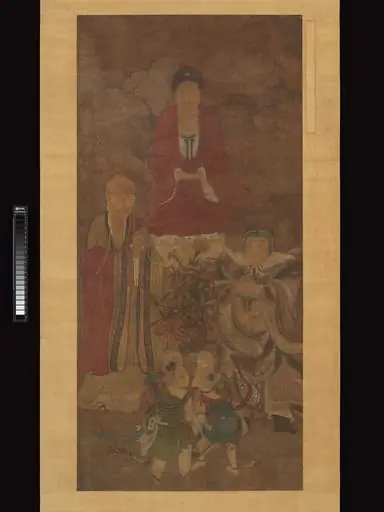 明 佚名 禮佛圖 軸|Shakyamuni with luohan, heavenly king, and boys
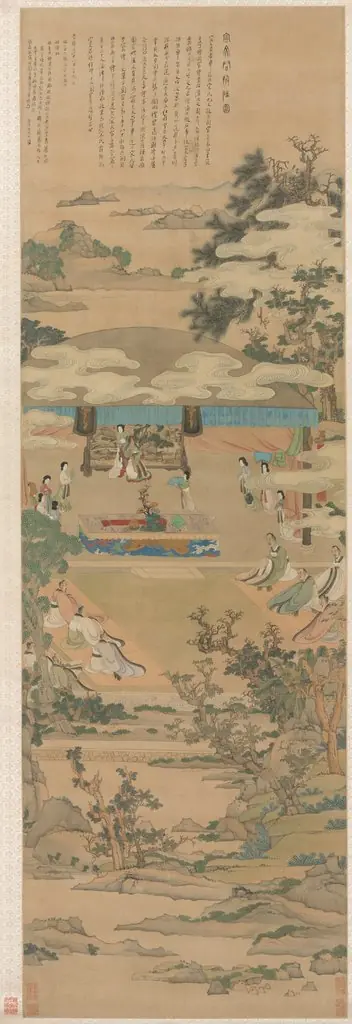 Lady Xuanwen Giving Instruction on the Rites of Zhou
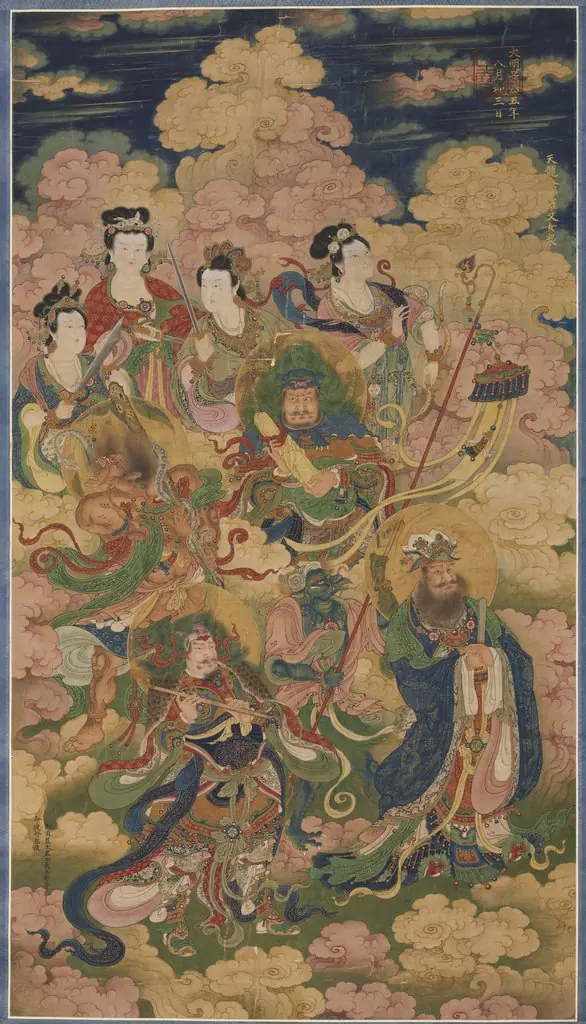 The Eight Hosts of Deva, Naga, and Yakshi