Artwork
Lohan manifesting himself as an eleven-headed Guanyin
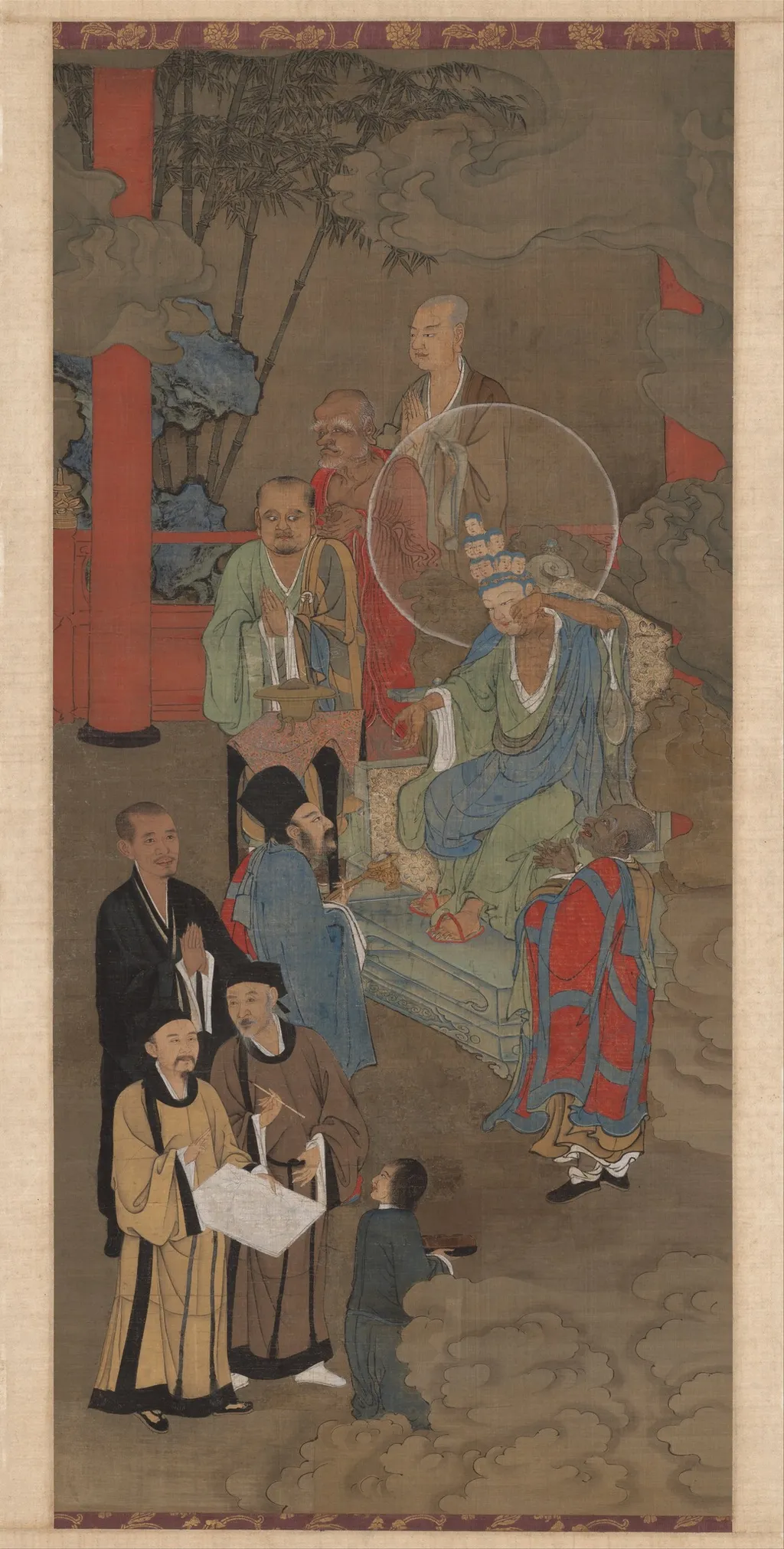
Lohan manifesting himself as an eleven-headed Guanyin is an unspecified painting by the Chinese Orthodox School artist Zhou Jichang. It dates from 1190 and is held in the collection of the Museum of Fine Arts Boston.
About this work
Overview
Created in 1190 by the Song‑period painter Zhou Jichang, this hanging scroll depicts a ritual scene centered on a multi‑headed deity. The work belongs to the Chinese Orthodox School and is now part of the Museum of Fine Arts, Boston’s collection. Its composition combines figures in colorful robes with a serene landscape of trees and clouds, conveying a tone of solemn devotion.
Subject & Meaning
The central figure is an eleven‑headed manifestation of Guanyin, the bodhisattva of compassion, presented here as a Lohan, a saintly disciple, embodying both Buddhist and folkloric attributes. Surrounding attendants in bright garments appear to be participating in a ceremonial offering, emphasizing reverence toward the divine presence and the transformative power of compassion.
Technique & Style
Executed with delicate brushwork characteristic of the late twelfth‑century orthodox tradition, the painting employs fine ink lines and subtle color washes.
Executed with delicate brushwork characteristic of the late twelfth‑century orthodox tradition, the painting employs fine ink lines and subtle color washes. The figure’s multiple heads are rendered with precise detailing, while the surrounding robes display a restrained palette of reds, greens, and yellows. Atmospheric elements such as misty clouds and distant trees are suggested through soft, layered strokes, creating depth without disrupting the focal ritual.
History & Provenance
Zhou Jichang, an active court painter during the Southern Song, produced this piece as part of his extensive output of Buddhist subjects. After remaining in private Chinese collections for several centuries, the scroll entered the Museum of Fine Arts, Boston, where it has been displayed as a representative example of Song‑dynasty religious painting.
Context
The work reflects the Song dynasty’s heightened interest in integrating Buddhist iconography with popular legend, a trend encouraged by imperial patronage of the Chinese Orthodox School. By portraying Guanyin in the guise of a Lohan, Zhou bridges doctrinal reverence with accessible narrative, aligning with contemporary devotional practices that emphasized visual mediation of spiritual ideals.
Artist & collection
Artist
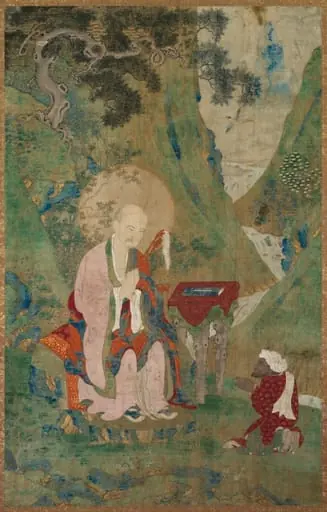
Zhou Jichang (Chinese: 周季常; pinyin: Zhōu Jìcháng; Wade–Giles: Chou Chi-ch'ang, Japanese: Shuu Kijou) (active in the late twelfth century) was a Chinese painter of the Song Dynasty (960 – 1279 AD).

 明 劉俊 納諫圖 軸|Remonstrating with the emperor
 Untitled
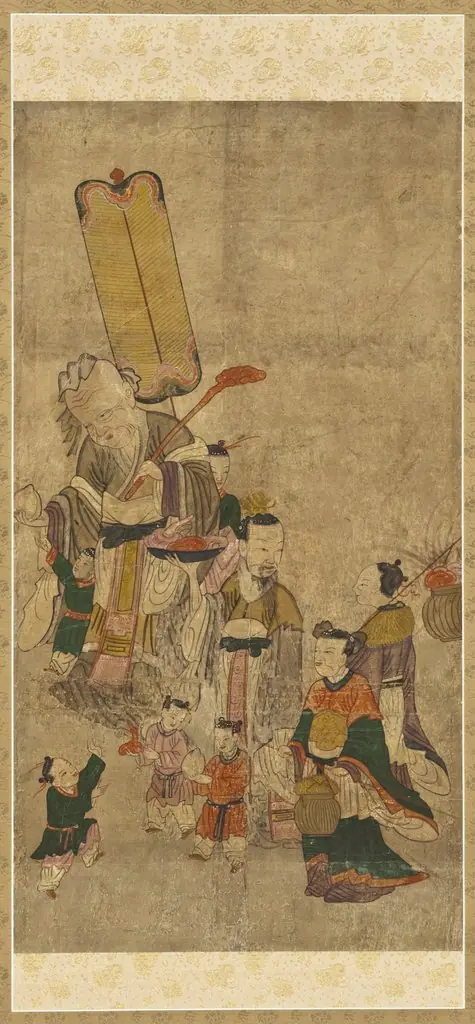 Dongfang Shuo (Tongbang Sak), one of the Eight Chinese Immortals
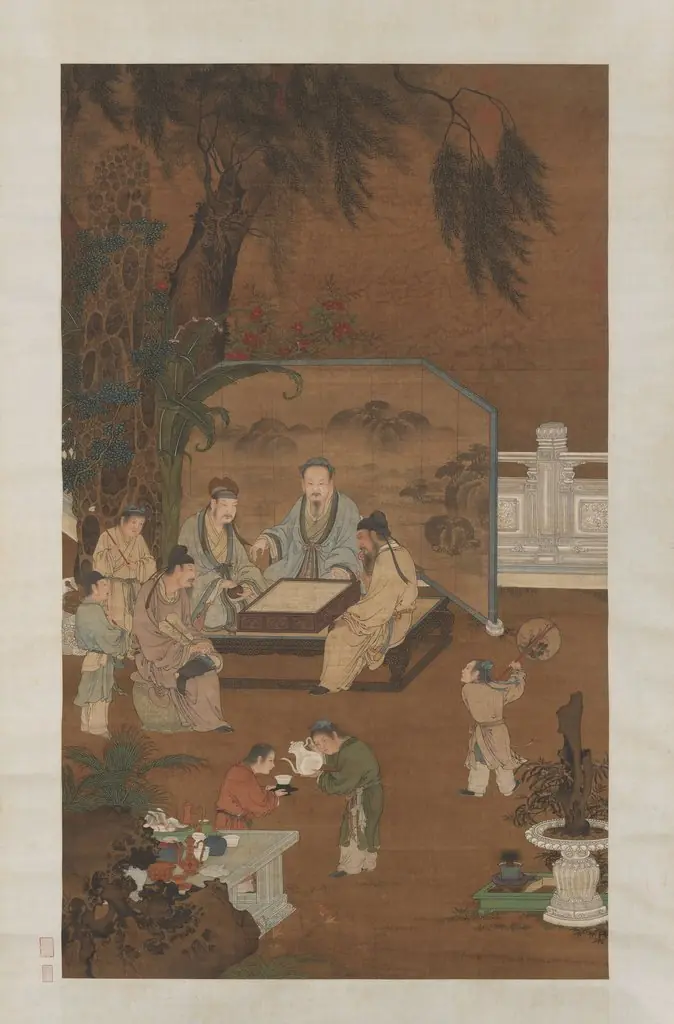 The Eighteen Scholars
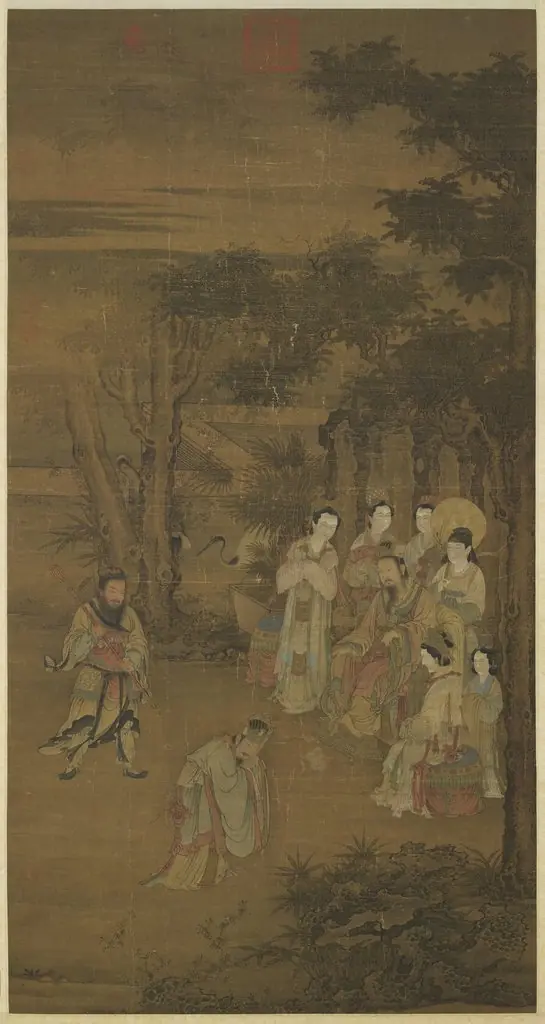 宋人卻坐圖 軸
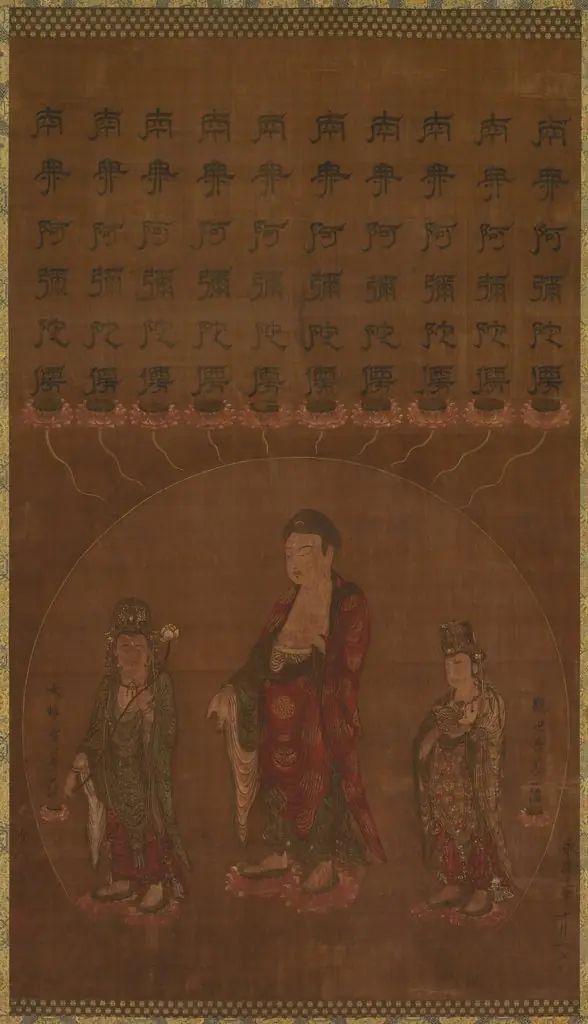 Buddha Amitābha with Two Attending Bodhisattvas
 Untitled
 Lady Xuanwen Giving Instruction on the Rites of Zhou
 名繪集珍 冊 宋劉松年天女獻花
 明太祖坐像(四) 軸
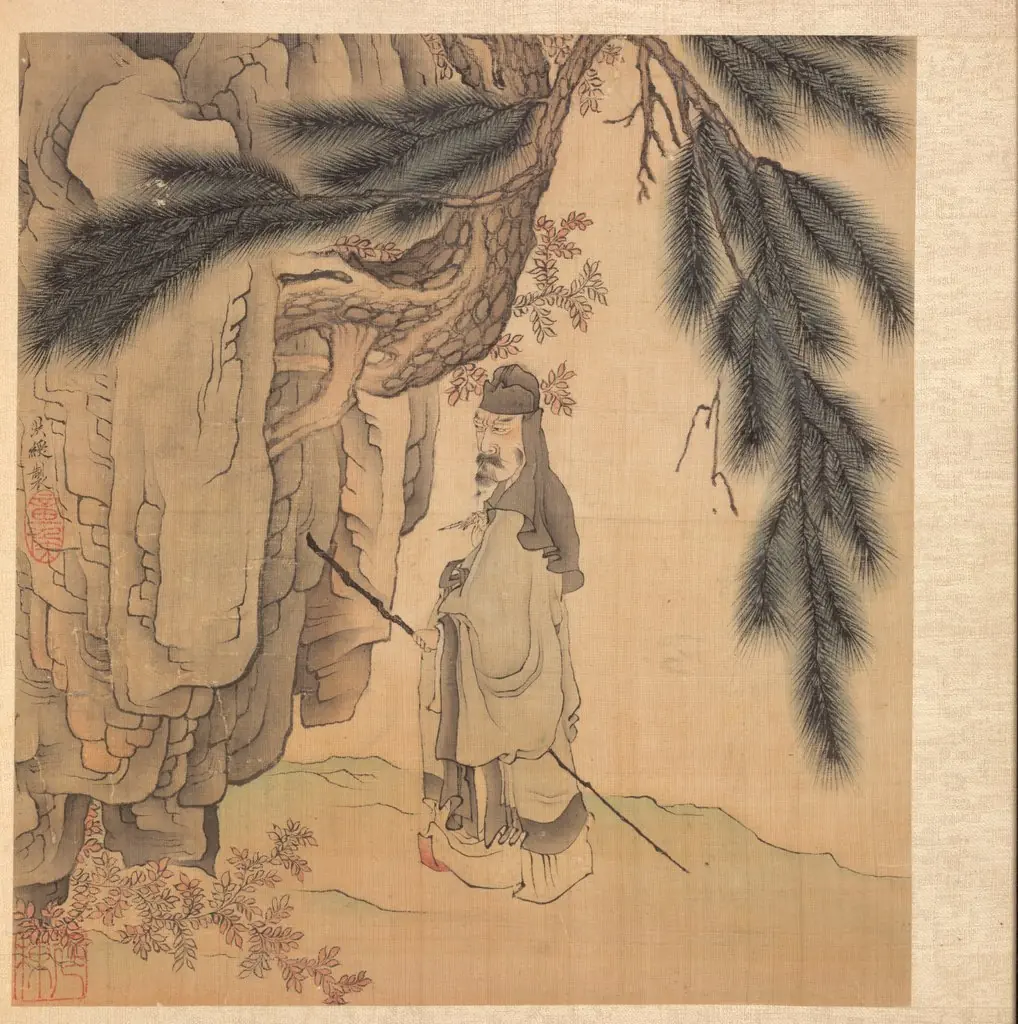 Paintings after Ancient Masters: Scholar with Staff and Brush
- Lohan (Immortal)