Artwork
親鸞上人絵伝|The Illustrated Life of Shinran (Shinran shōnin eden)
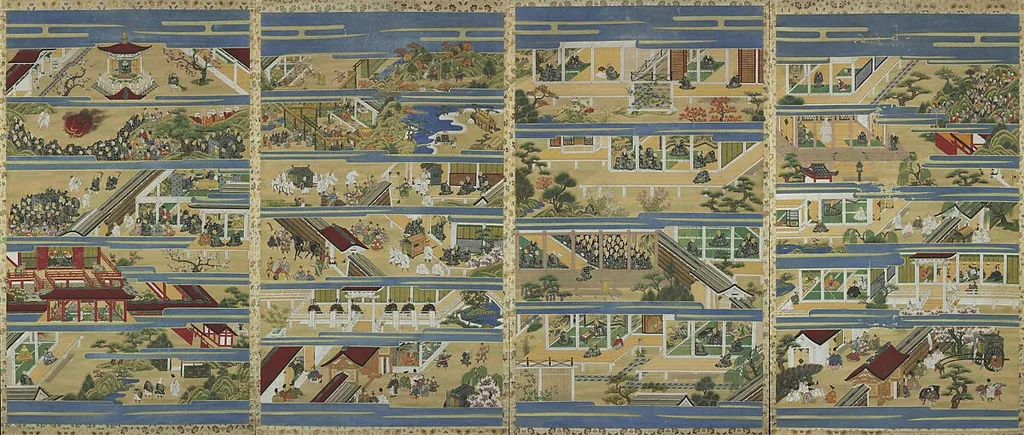
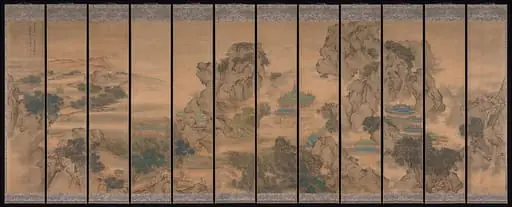
親鸞上人絵伝|The Illustrated Life of Shinran (Shinran shōnin eden) is an ink painting. It dates from 1707 and is held in the collection of the Metropolitan Museum of Art. This artwork, titled The Illustrated Life of Shinran (Shinran shōnin eden), comprises a set of four hanging scrolls.
About this work
Technique & Style
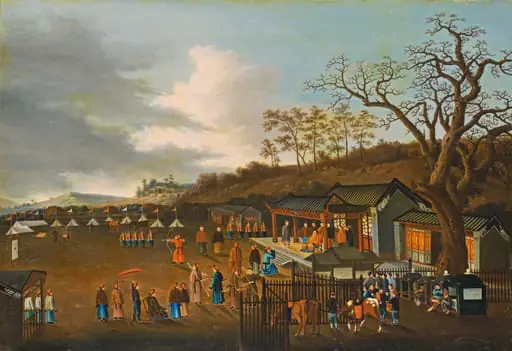
The imagery across the scrolls encompasses buildings, horses, and human figures, consistent with the biographical and didactic scope of a Shinran life-painting.
The Illustrated Life of Shinran is executed as a set of four hanging scrolls using ink, color, and gold on silk. The format and precious materials, particularly the gold and silk support, are characteristic of Japanese devotional painting of the early eighteenth century, suited to the work's religious subject matter.
The Metropolitan Museum of Art records the dimensions of the work at 132.7 cm in height and 77.5 cm in width, reflecting the vertical orientation typical of hanging-scroll narrative cycles. The imagery across the scrolls encompasses buildings, horses, and human figures, consistent with the biographical and didactic scope of a Shinran life-painting.
No information regarding the work's present condition, conservation history, or specific handling notes is documented in the available sources.
History & Provenance
The Illustrated Life of Shinran is a set of four hanging scrolls produced in Japan in 1707, executed in ink, color, and gold on silk by an unnamed painter. No information on the original commissioner or early custodial history is recorded in the available sources.
The work is now held by the Metropolitan Museum of Art, where it is documented as part of the institution's collection. The Wikidata entry confirms the painting's location at the Metropolitan Museum of Art and records its inception in 1707, with dimensions of 132.7 cm in height and 77.5 cm in width.
The Illustrated Life of Shinran (1707) is held in the collection of the Metropolitan Museum of Art. The set of four hanging scrolls is catalogued under the museum’s inventory without a specific accession number publicly linked to this work in the provided sources.
There is no documented exhibition history for this work in the available sources.
Legacy
The handscroll titled The Illustrated Life of Shinran, produced in 1707 as a set of four hanging scrolls, entered the collection of the Metropolitan Museum of Art, where it is exhibited as a representative example of Edo‑period Buddhist painting. Its inclusion in a major Western museum has contributed to ongoing scholarly discussion of Shinran’s doctrinal impact and the visual transmission of Jodo‑Shinshu teachings. The work’s religious genre and depiction of architectural and narrative motifs underscore its role in the historical reception of Shinran’s life story.
Overview
This artwork, titled The Illustrated Life of Shinran (Shinran shōnin eden), comprises a set of four hanging scrolls. Executed with ink, color, and gold on silk, these paintings visually narrate significant episodes from the life of Shinran, a revered Japanese Buddhist priest. The series serves as a pictorial biography, offering insights into his spiritual journey and historical context through its detailed visual storytelling.
Subject & Meaning
The scrolls meticulously chronicle the biography of Shinran, a pivotal figure in Japanese Buddhism. Beyond depicting his personal narrative, the artwork incorporates numerous figures and elements of everyday existence, such as various men engaged in daily activities. This inclusion of mundane details alongside the sacred narrative provides a broader glimpse into the social fabric and customs prevalent during the period it illustrates.
Artist & collection

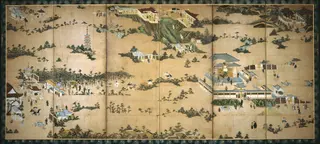 Pastimes and Pleasures in the Eastern Hills of Kyoto
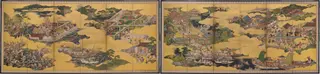 The Tale of Taishokan
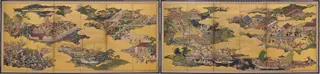 The Tale of Taishokan
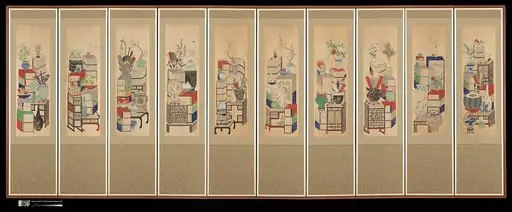 Untitled
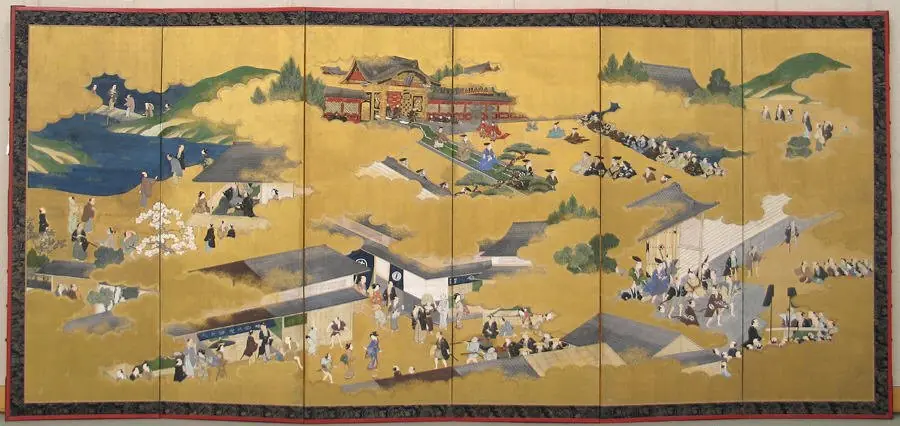 Daimyo Procession from Yūshō-in
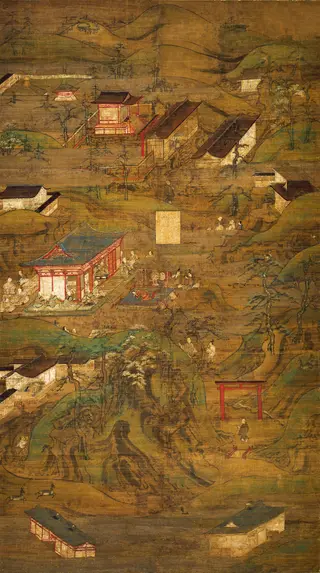 Illustrated Legends of the Tenchi-in (Tenchi-in engi)
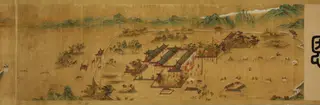 북새선은도
북새선은도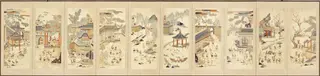 One Hundred Boys at Play
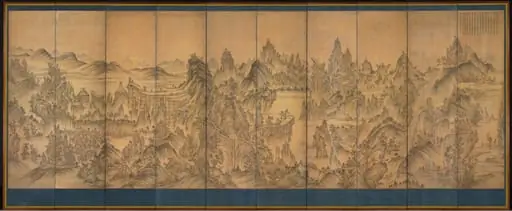 Seven Jeweled Mountain
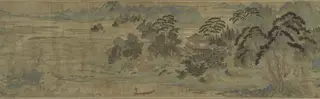 The Peach Blossom Spring
 清 袁江 九成宮圖 屏|The Palace of Nine Perfections
- 清 緙絲山水人物圖|Mythical landscape with immortals