Artwork
The Tale of Taishokan
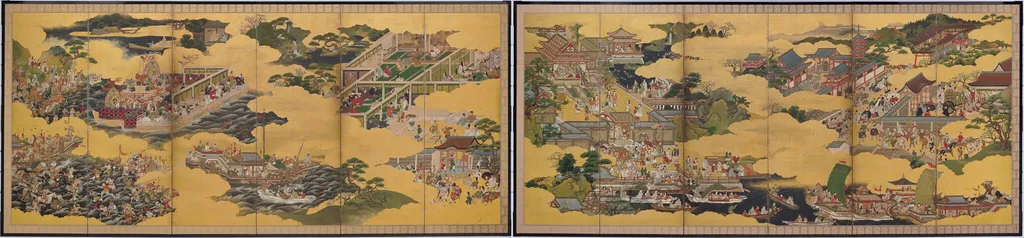
The Tale of Taishokan is an ink painting by the Baroque artist Unknown. It dates from 1660 and is held in the collection of the Art Institute of Chicago. The work consists of a pair of six‑panel folding screens painted with ink, color and gold on paper.
- Accession no.
- 145673
- Credit line
- Restricted gift of Charles C. Haffner III and Muriel Kallis Newman; Alyce and Edwin DeCosta and Walter E. Heller Foundation Endowment; through prior gift of Charles C. Haffner III
About this work
Overview
The composition depicts courtly scenes, sea voyages and battles, linking the Japanese court of the seventh century with a fantastical Chinese realm.
The work consists of a pair of six‑panel folding screens painted with ink, color and gold on paper. Arranged for viewing from right to left, the narrative follows the medieval legend of Taishokan, a story that blended early Japanese myth, Buddhist temple origin tales and later theatrical motifs. The composition depicts courtly scenes, sea voyages and battles, linking the Japanese court of the seventh century with a fantastical Chinese realm.
Subject & Meaning
The screens illustrate the legend of Fujiwara Kamatari, the sole holder of the title Taishokan, and his daughter Kohakunyo, whose famed beauty allegedly attracted the Chinese emperor Taizong. The narrative shows her departure for China, the exchange of precious gifts, including a jeweled Buddha statue, and a subsequent conflict between the Chinese general Wanhu and the sea‑dwelling dragon king, reflecting anxieties about foreign invasion and the protective power of Buddhist relics.
Technique & Style
Executed in traditional Japanese screen painting, the artist employed ink outlines, mineral pigments and extensive gold leaf to create luminous, atmospheric effects. Figures are rendered in bright armor, mounted on horses or poised with swords and bows, set against stylised mountains, rivers and clouds. The gold background enhances the otherworldly quality of the scenes, while the sequential panels guide the viewer through the unfolding drama.
History & Provenance
The Taishokan narrative was popular in medieval and early‑modern Japan, appearing in Noh, Bunraku and Kabuki performances as well as visual media. The screens, likely produced in the early Edo period, embody this cross‑genre appeal. Their provenance traces to a private collection before acquisition by the museum, where they now serve as a representative example of narrative folding screens that conveyed legendary histories to elite audiences.
Artist & collection









- The Tale of Taishokan
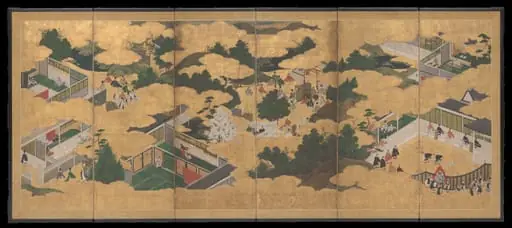 Scenes from the Tale of Genji
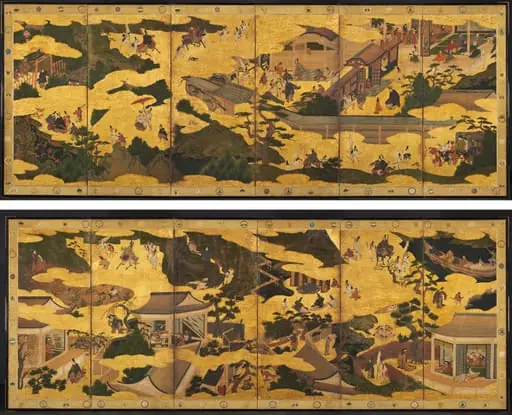 Scenes from the Tales of Ise
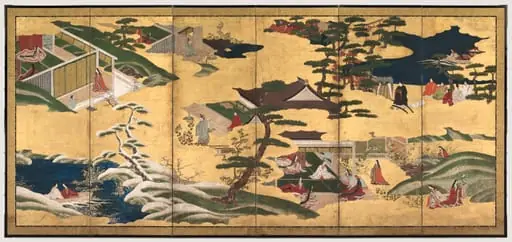 Scenes from the Tale of Genji
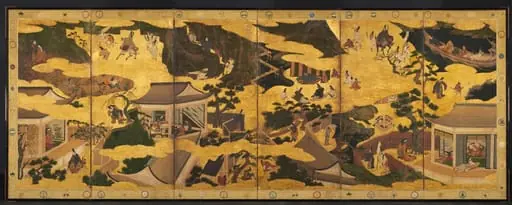 Scenes from the Tales of Ise
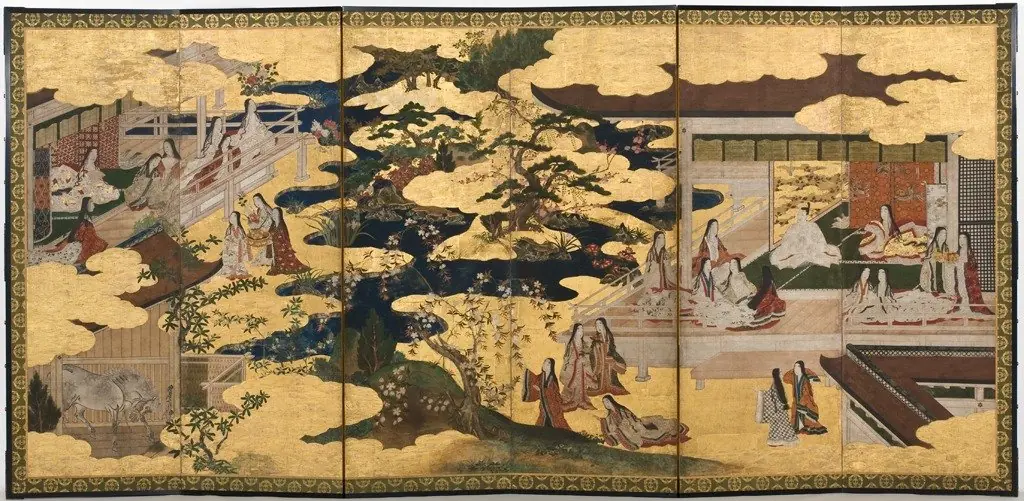 Scene from "The Tale of Genji": from the chapter "The Maiden"
 The Tale of Genji
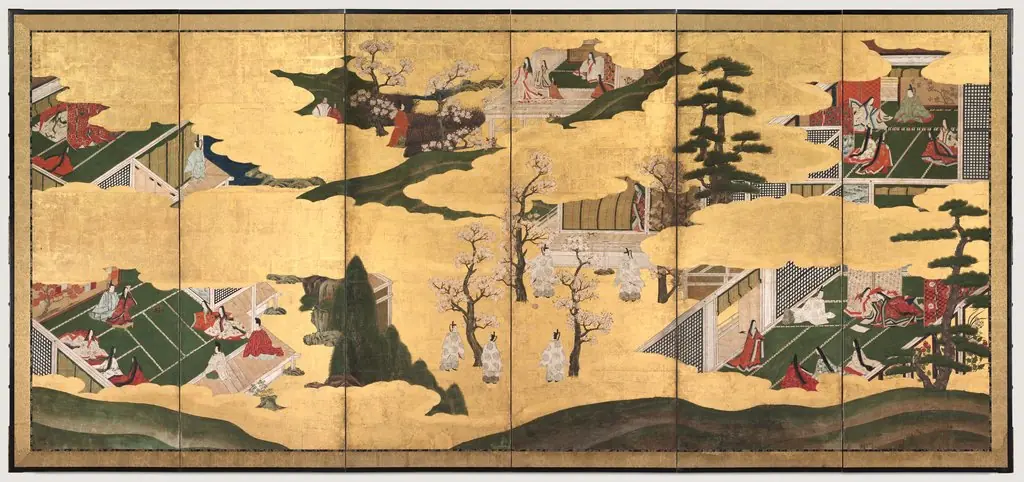 Scenes from the Tale of Genji
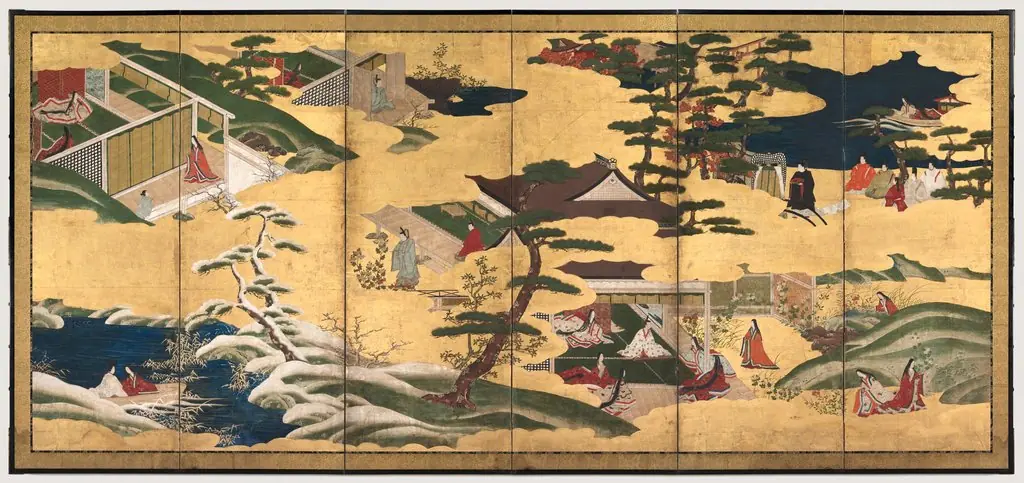 Scenes from the Tale of Genji
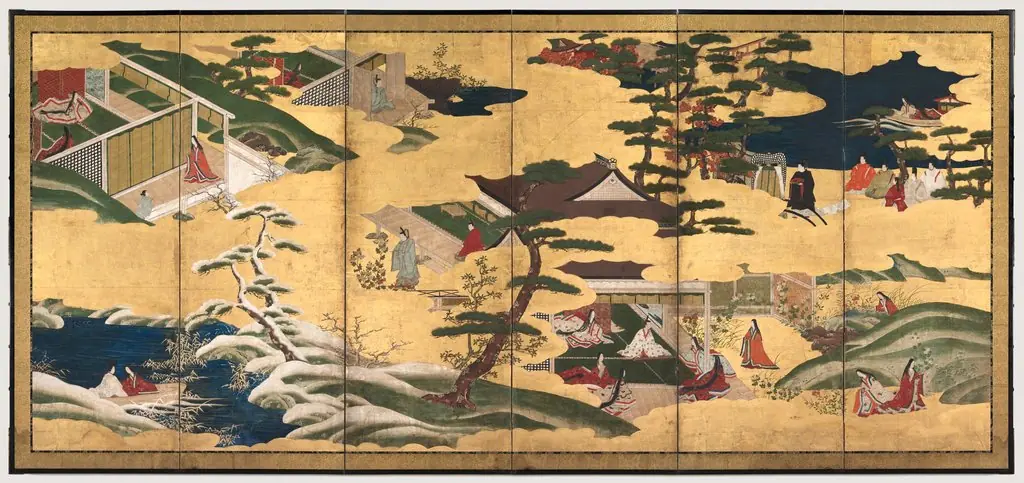 Scenes from the Tale of Genji
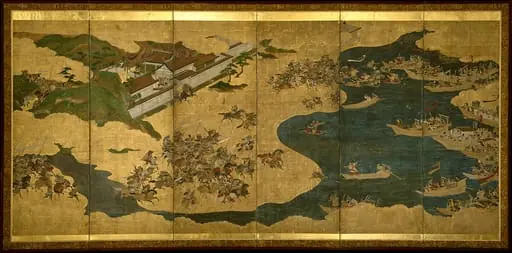 土佐派 屋島合戦図屏風|The Battle of Yashima, from The Tale of the Heike (Heike monogatari)